One-Stop OEM / ODM Custom Bag Manufacturing
At KeepDryBag, custom manufacturing is not an add‑on service, it is the heart of our factory. Every month we work with brands, importers, wholesalers, e‑commerce sellers and promotional agencies from all over the world to create waterproof bags, outdoor backpacks, gym bags and travel solutions that match their exact specs. From the first idea to final delivery, you work directly with an experienced project engineer who understands both design language and factory realities.
Whether you are creating your first private label dry bag or you already manage multiple collections and need a stable long‑term manufacturing partner, our team in Quanzhou, Fujian supports you with transparent communication, professional engineering suggestions and stable quality control.
Need help getting started right now? Call us at +86 17750020688 or email admin@junyuanbags.com. Share your idea, target price and quantity, and we will propose practical solutions within one working day.
Who Our Custom Services Are For
Different customers have different needs. Understanding your business model helps us design the right bag structure, choose the right material and control cost from the beginning.
- Brand owners and wholesalers: looking for long‑term cooperation, yearly product planning, stable quality, and on‑time delivery for global distribution.
- Importers and trading companies: focusing on competitive cost, flexible shipment plans, and the ability to adapt to different market regulations.
- Online sellers (Amazon / Shopify / DTC): needing differentiated designs, retail‑ready packaging, barcodes, FBA labels and small‑to‑medium order quantities.
- Corporate buyers and promotional agencies: using custom bags as gifts, event merchandise or loyalty program rewards where branding impact and deadline are critical.
- Outdoor, sports and travel brands: requiring waterproof performance, abrasion resistance and professional functional layouts suitable for real‑world use.
No matter which category you belong to, our engineers will first clarify your business goal before designing the product details. This ensures we do not over‑engineer the bag or miss important requirements such as shelf appeal, shipping carton size or specific testing standards.
Step‑by‑Step Customization Process
Over the years we have refined a clear and highly practical process so that even first‑time buyers feel confident. Below is what normally happens when you develop a new custom bag with KeepDryBag.
1. Requirement Collection
You share the basic information of your project: target market, usage scenario, rough target price, order quantity, and desired delivery time. You can send reference photos, competitor links or sketches. Even a simple drawing on paper is fine; our engineers will translate it into a manufacturable structure.
2. Engineering Evaluation
Our product engineers evaluate your idea from the perspective of material, structure and production. We check which parts need reinforcement, where stress points are located, and how to keep the bag waterproof and durable while controlling the cost. For complex projects, you will receive multiple方案 with pros and cons clearly listed.
3. Material & Component Selection
Together we choose the most suitable fabric and accessories based on your budget and performance requirements. For example, for a high‑end dry bag we may recommend 500D or 840D PVC tarpaulin with heat‑welded seams, while for a lightweight commuting backpack we might propose ripstop nylon or polyester with PU coating. We also choose zippers, buckles, webbings, hooks and trims from reliable suppliers.
4. Quotation & Project Confirmation
After material and rough structure are confirmed, we calculate a detailed quotation. The quotation usually includes unit price at different quantities, sample cost, tooling cost if any, estimated lead time and shipping suggestions. We explain how each factor influences cost so that you can make informed decisions or adjust the design to reach your target price.
5. Sample Development
Once you approve the quotation, we start sample development. Pattern technicians create paper patterns and cutting markers based on the confirmed measurements. Our sample workshop then produces the first prototype using the actual fabric and accessories. We pay attention to every functional detail, such as roll‑top height, pocket positions and strap comfort.
6. Review, Feedback and Refinement
We share detailed photos, videos and measurement reports with you before shipping the sample. You can check it in hand and send us comments. Typical revisions include changing logo size, adjusting capacity, improving pocket layout or fine‑tuning strap length. We repeat this step until the sample fully meets your expectations and becomes the golden sample for bulk production.
7. Mass Production Preparation
Before mass production we prepare bulk materials, confirm color consistency, create detailed operation instructions for each process and train line leaders. For waterproof bags we also set up special fixtures and testing methods to ensure seam strength and waterproof performance reach the expected level.
8. Production and In‑Line Quality Control
During production our QC team performs in‑line inspections at key steps: cutting, printing, sewing or welding, and final packing. Defects are caught early and corrected immediately, which protects your schedule and ensures a stable appearance for every carton of goods.
9. Final Inspection & Testing
After production we conduct final inspections based on AQL standards or your specific requirements. For waterproof bags we can perform water immersion tests, spray tests or real‑use simulations. We also check function points such as zipper smoothness, buckle strength and load‑bearing performance.
10. Packing, Shipping and After‑Sales Support
Once the goods pass inspection, we arrange packing according to your needs: polybag with warning text, color box, hangtag, barcode label or FNSKU label. Our logistics team then helps choose the best shipping method according to your destination, timeline and budget. Even after delivery, we remain available to support you with reorders, new color development and market feedback analysis.
Material Options for Different Bag Types
The right material is the foundation of a successful bag project. Our factory routinely works with a wide range of fabrics designed for outdoor, sports, travel and lifestyle products.
.jpg)
We use high-grade 500D PVC and TPU fabrics for maximum durability.
Waterproof and Outdoor Series
- PVC Tarpaulin: Commonly used for roll‑top dry bags, kayak bags and motorcycle panniers. Features excellent waterproof performance and high tear resistance.
- TPU Laminated Fabrics: Lighter, more eco‑friendly and softer than traditional PVC, suitable for premium waterproof backpacks and sports bags.
- High‑Denier Nylon / Polyester: With PU or PVC coating, providing a good balance between durability, water resistance and weight.
Daily Use and Fashion Series
- Canvas and Cotton: Ideal for totes, shopper bags and lifestyle backpacks with a natural look.
- Soft PU: Suitable for fashion handbags, small accessories and promotional gifts requiring a leather‑like appearance.
- Melange and Textured Fabrics: Provide a modern, tech‑inspired look for urban backpacks and office bags.
Sustainable and Special Options
- Recycled Polyester (rPET): Made from recycled plastic bottles, widely used for eco‑friendly collections with GRS‑compliant supply chains.
- Bio‑Based and Plant‑Derived Materials: For brands targeting low‑carbon, sustainable positioning, we can explore new materials with our partners.
- Fire‑Retardant or Special‑Performance Fabrics: Available for projects that must meet specific industry standards.
If you already have a reference sample or competitor bag, we can perform material analysis and propose close or improved alternatives that fit your target budget and performance level.
Branding, Printing and Logo Application
A custom bag is a moving advertisement for your brand. We combine different branding methods according to the material, logo design and usage scenario to achieve a premium look and long‑lasting effect.
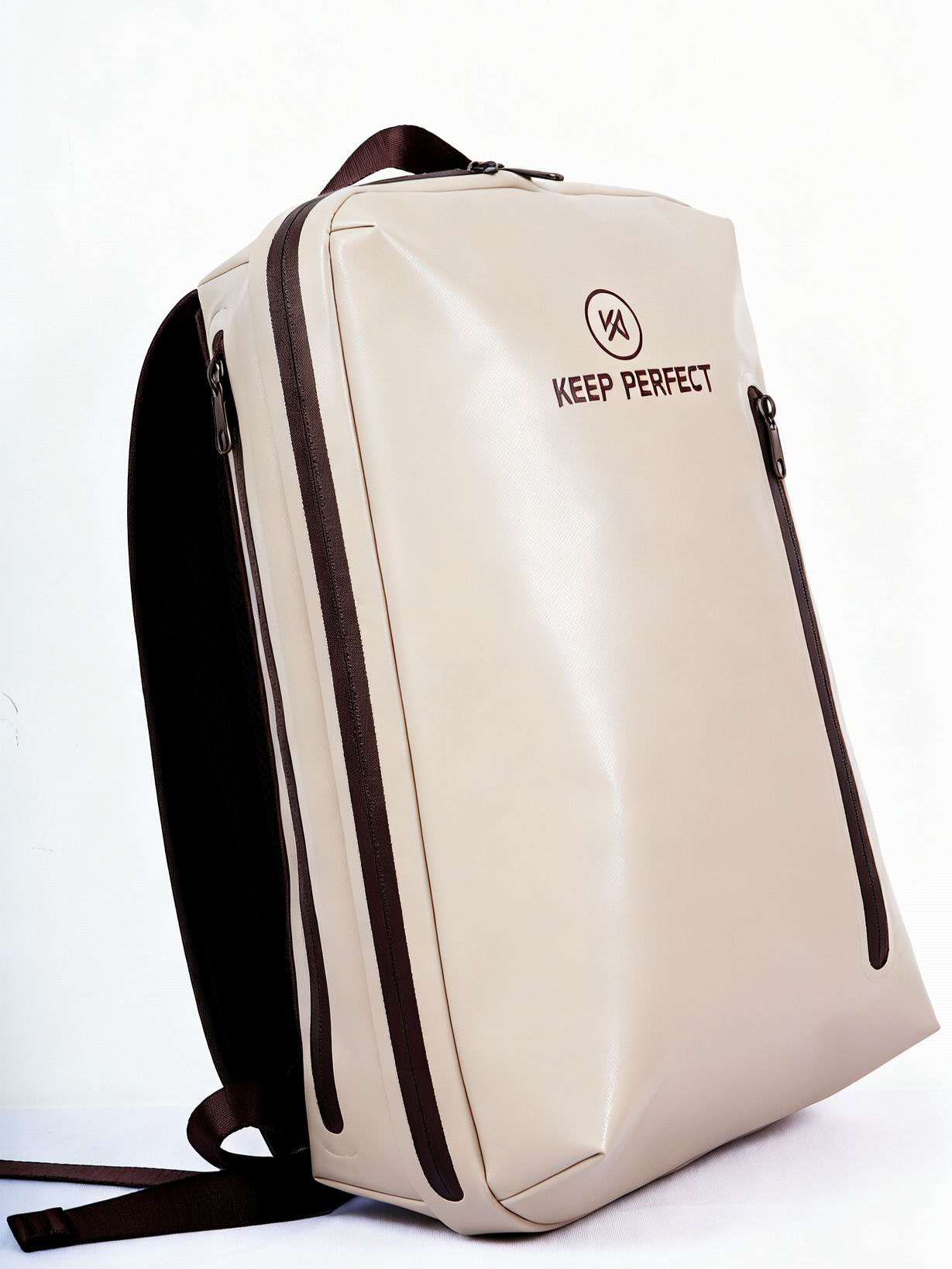
Screen Printing
Suitable for bold logos and strong colors on flat surfaces such as tote bags and flat panels. Screen printing is cost‑effective for medium to large quantities and delivers vivid colors with sharp edges.
Embroidery
Commonly used on backpacks, gym bags and caps. Embroidery adds a premium, textured look that enhances perceived value. Good for small to medium logos such as brand marks and badges.
Heat Transfer & Digital Printing
Ideal when your artwork includes gradients, photos or very fine details. We use high‑quality transfer films and controlled temperature settings to ensure adhesion and color stability over time.
Rubber, PVC and Woven Labels
For subtle, long‑lasting branding, rubber patches, PVC patches and woven labels are excellent choices. They can be placed on bag fronts, straps or internal pockets to reinforce your brand identity.
Send us your logo in AI, PDF, EPS, SVG or high‑resolution PNG format. Our designers will create digital mockups to show how your branding will look on the final product, including recommended size, placement and color combinations. We can also support color matching according to Pantone codes to keep consistency across your entire product line.
Quality Control and Compliance
Stable quality is the reason customers stay with us for years. Our factory follows a clear quality management process from the first sample to the final shipment.
Pre‑Production Control
- Verification of all bulk fabrics and trims against the approved sample.
- Color matching under standard light sources to avoid visible shade differences.
- Preparation of clear work instructions with photos for each operation.
In‑Line and Final Inspection
- Random in‑line inspection on each production line according to the control plan.
- Final inspections based on AQL or your specific standards before goods leave the factory.
- Functional tests such as waterproof tests, load tests and pull tests for buckles and straps when requested.
Regulatory and Lab Testing
For markets such as the EU and North America, many customers need their bags to comply with certain regulations (for example, REACH, California Proposition 65 or specific heavy‑metal limits). We can cooperate with third‑party labs to arrange chemical testing on materials and finished products. Test reports can be issued under your company name if required.
If a problem is ever found after goods arrive, we listen carefully, analyze root causes and work with you on a practical solution. Our goal is genuine long‑term cooperation, not one‑time transactions.
Pricing, MOQ and Lead Time
We know that clear cost and time information is crucial for your business decisions. The final price of a custom bag project is influenced by several factors, but we always explain everything transparently.
- Quantity: Larger quantities reduce material waste and spread fixed costs such as sample development and tooling across more units.
- Material: Premium fabrics like TPU or recycled materials cost more than standard polyester, but may add significant value to your brand.
- Structure Complexity: Multiple compartments, special pockets, molded parts or very complicated shapes require more production time.
- Branding Method: Simple one‑color screen prints are cheaper than large multi‑color or full‑color digital prints and embroidery.
- Packing Requirements: Retail packaging, gift boxes or special labels add extra cost but can strongly improve shelf presence.
For most custom projects, our typical minimum order quantity starts from a few hundred to one thousand pieces per design, depending on the material and complexity. For long‑term partners or projects that require market testing, we can discuss more flexible solutions.
Lead time for custom bags is usually:
- Sample development: around 7–15 days after confirming details.
- Mass production: around 30–60 days after receiving deposit and sample approval.
- Shipping time: from a few days (air express) to several weeks (sea freight), depending on destination.
Share your timeline with us and we will arrange the most suitable production and shipping plan so you can launch your products on schedule.
How to Prepare Your Custom Bag Brief
You do not need to be a professional bag designer to work with us. A clear and simple brief is enough for our engineers to turn your idea into a producible design. Here is what to include when you first contact us:
- Usage Scenario: For example, waterproof kayaking bag, commuting laptop backpack, travel duffel, gym bag or promotional tote.
- Target Users: Outdoor enthusiasts, students, office workers, travelers or event participants.
- Approximate Size or Capacity: Rough dimensions or liter capacity to indicate how much the bag needs to hold.
- Key Functions: Such as laptop compartment, shoe compartment, insulated pocket, waterproof roll‑top closure or hidden anti‑theft pocket.
- Preferred Materials: If you have any preference for PVC, TPU, nylon, polyester, canvas or eco materials.
- Branding Requirements: Logo placement, size, Pantone colors and additional elements like slogans or patterns.
- Estimated Quantity and Target Price: So we can balance design and cost from the very beginning.
- Deadline or Launch Time: Important if your project is linked to a promotion, season or event date.
Even if some of the above information is not decided yet, send us what you have and we will ask focused questions to fill in the gaps. Our goal is to make the process as easy and efficient as possible for you.
Deep Technical Guide to IPX-Rated Waterproof Bag Projects
When you plan a professional waterproof bag project, you are not just buying a product; you are investing in a system of engineering, materials science, testing standards and supply chain reliability. This section gives you a deeper, engineer-level view of how we approach IPX6, IPX7 and IPX8 waterproof performance for real-world applications such as kayaking, sailing, canyoning, motorcycle touring and daily commuting in heavy rain.
Understanding IPX6, IPX7 and IPX8 in Practical Terms
IPX ratings are not marketing slogans; they are repeatable test methods. IPX6 simulates powerful water jets, IPX7 simulates temporary immersion, and IPX8 covers long-term or deeper immersion under conditions defined between the brand and the lab. For example, an IPX7 backpack may need to withstand 30 minutes of immersion in 1 meter of water, while an IPX8 phone case might be designed for 2 hours in 3 meters of water.
When we design your bag, we match the required IPX level to the real usage scenario. A commuting backpack used in heavy city rain does not need the same structure as a dry bag used for white-water rafting. Over‑engineering can make the bag too stiff or expensive, while under‑engineering creates warranty problems. Our job is to find the right balance.
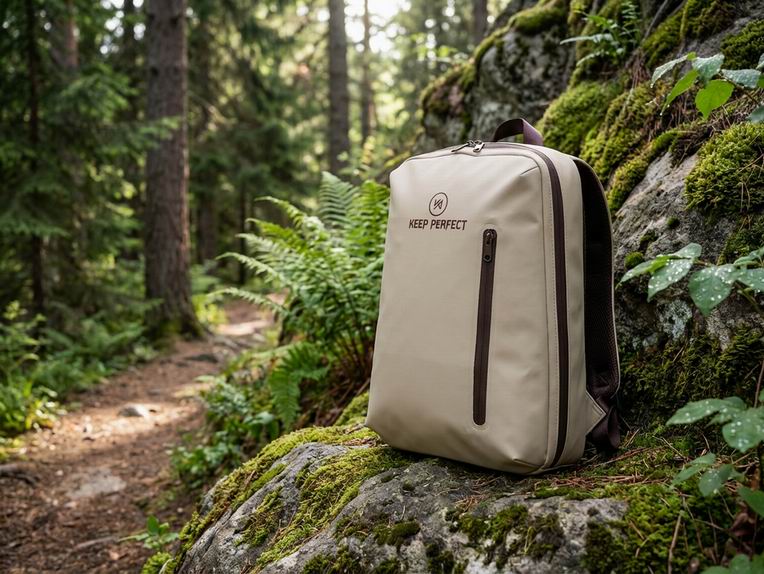
Key Engineering Decisions Behind an IPX Project
An apparently simple dry bag involves dozens of small engineering decisions. We decide the base fabric weight, coating type, number of layers, seam overlap width, welding parameters, reinforcement pattern at critical stress points, roll‑top height, buckle strength and even drainage strategy if the outer shell is combined with inner pockets. For IPX7 and IPX8 projects, these decisions are verified through prototypes and structured testing rather than guesswork.
We also analyze the weakest links: zipper junctions, strap attachment points, handle reinforcements and valve interfaces on inflatable designs. A chain is only as strong as its weakest link; the same is true for waterproofness. Our experience in different markets helps us predict common failure modes before they appear in your complaint list.
RF Welding vs Sewing vs Gluing
Traditional bags rely on sewing, which leaves needle holes in the material. To make such bags water‑resistant, seam tapes or coatings are added. For truly waterproof bags, especially IPX7/IPX8 products, we prefer high‑frequency RF welding on PVC or TPU materials. RF welding melts and fuses the layers into a single continuous film at the seam, eliminating the need for stitching and significantly reducing the risk of leaks.
Gluing is sometimes used for small components or mixed‑material junctions, but it is not our primary method for load‑bearing or high‑stress areas. Glue can age, especially under UV or chemical exposure. RF‑welded seams, on the other hand, maintain performance for many years if the base material is selected correctly. For your project we will explain which processes are used in each area and why.
Designing for Comfort, Durability and Brand Experience
A professional waterproof bag must do more than keep water out. Shoulder straps, back panels, hip belts and handles all influence how end users feel during a two‑hour hike or a daily commute. Our design team considers load distribution, padding density, mesh ventilation, strap adjustability and ergonomic shapes. These details often determine whether your bag becomes a “favorite piece of gear” or stays in the closet.
From a durability perspective, we reinforce corners, fold lines and high‑stress anchor points where straps meet the main body. We simulate real usage with repeated roll‑ups, buckling and load tests. For brand experience, we integrate logo placement with functional zones: for example, a heat‑transfer logo centered on the front panel, a rubber patch on the shoulder strap, and a woven label inside the laptop sleeve to communicate your brand story.
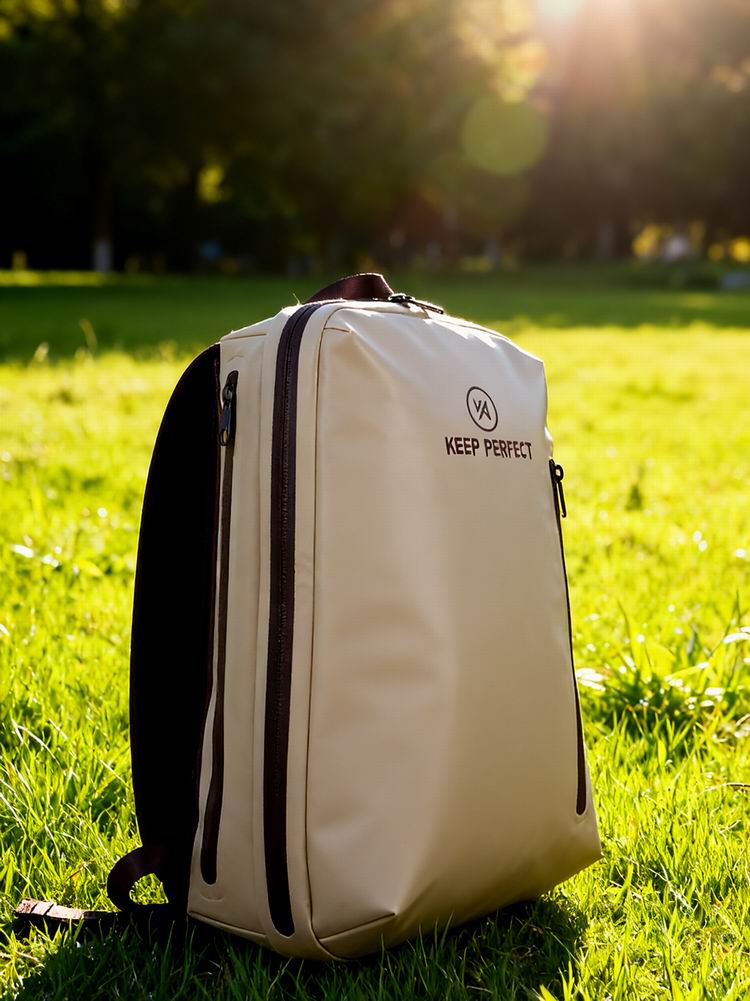
Application-Specific Recommendations
Kayaking and Paddle Sports: For river and sea kayaking, users often face splashes, waves and occasional capsizing. We typically recommend roll‑top dry bags in 10–30L sizes with D‑rings for deck attachment, bright high‑visibility colors, and optional transparent windows or internal pockets for organizing small items. Shoulder straps can be removable to avoid interference with PFDs (life jackets).
Motorcycle Touring and Overlanding: These users need abrasion resistance, UV stability and secure mounting more than full submersion performance. We suggest thicker PVC or TPU tarpaulin, reinforced base panels, multiple compression straps and webbing loops compatible with common rack systems. We also pay attention to exhaust heat and dust exposure when selecting materials.
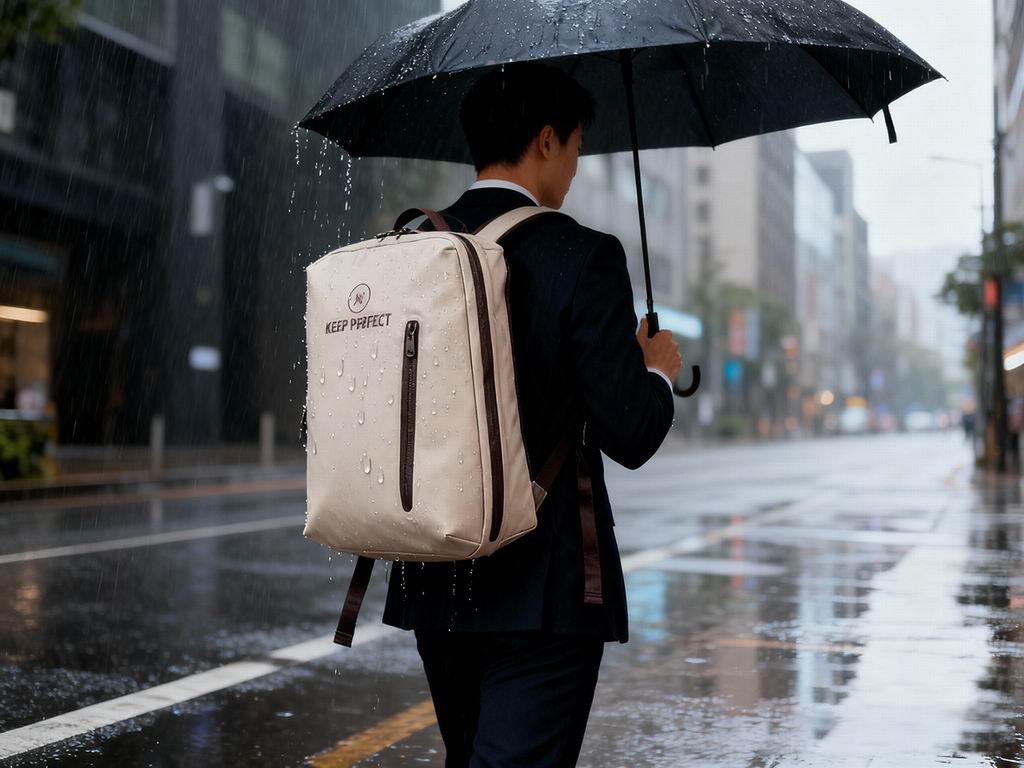
Urban Commuting and Business Travel: Here the expectations focus on a clean, modern look, laptop protection and organization. We often combine waterproof outer shells with padded inner sleeves, hidden pockets for passports and wallets, and a back panel that fits carry‑on suitcase handles. The IPX level usually targets heavy rain protection rather than long immersion.
Case Study: From Idea to IPX7 Certified Backpack
A European outdoor brand approached us to develop an IPX7 commuter backpack for cyclists who ride in heavy rain all year round. The project started with a simple mood board and a list of must‑have features: roll‑top closure, padded laptop compartment, reflective strips, and comfortable straps. Their target retail price was ambitious, so we needed to control cost across materials, construction and packaging.
We first proposed two material options: a heavier PVC tarpaulin version with a rugged look and a TPU‑laminated polyester version with a softer handfeel and lower weight. After comparing mockups and cost breakdowns, the customer chose TPU for its premium texture and better cold‑weather flexibility. We then fine‑tuned the strap design to reduce foam waste while keeping comfort.
Two rounds of prototypes were produced. The first sample went through in‑house immersion tests and load tests. We discovered that the initial roll‑top height was too short for some users, reducing waterproof margin when the bag was fully packed. In the second sample we increased the roll‑top height by 5 cm, adjusted the panel shape accordingly and added reinforcement tapes around the laptop sleeve corners to prevent stress marks.
Once the second sample passed our internal tests, it was sent to a third‑party lab for IPX7 verification. The test report, combined with production SOPs and QC checklists, became the technical foundation for ongoing orders. Today this backpack has been successfully sold in multiple markets with very low return rates and strong user reviews.
How We Collaborate With Your Engineering or Buying Team
Some customers have in‑house product designers or engineers; others rely on us as their external technical team. In both situations we adapt our communication style. For engineering teams we can share detailed drawings, tolerance requirements, test data and process parameters. For buying teams we focus on clear comparisons of cost, performance and lead time so that decisions are easy to explain internally.
We are comfortable working with existing tech packs, with simple sketches, or with just a sample from another brand as the starting point. When needed, we sign NDAs and follow your internal project codes rather than product names to protect confidentiality. Regular update reports during sampling and production keep everyone aligned on progress and next milestones.
Long-Term Support: Color Refreshes, Line Extensions and Re‑Engineering
A successful waterproof bag often becomes the foundation of a whole product family. After your first launch we can help you extend the line: new sizes, new colors, limited editions for special events and co‑branding projects with other partners. Because the core pattern and tooling are already in place, these extensions are cost‑effective and fast to develop.
Over time, market feedback may reveal opportunities for re‑engineering. Maybe users want additional pockets, lighter materials or improved ventilation. We can gradually refine the design while keeping the overall look recognizable, so that your supply chain and visual identity remain stable. This long‑term view is one of the reasons many customers treat us not just as a supplier, but as a strategic manufacturing partner.
Frequently Asked Questions
Can I start with a small order for testing?
Yes. We understand that many brands and sellers want to test the market before committing to very large orders. For some items we can support smaller trial orders. Share your plan with us and we will recommend the most suitable product and configuration.
Can you help improve an existing design?
Many customers come to us with an existing bag that is too expensive, has quality problems or lacks certain functions. Send us sample photos or an actual sample and explain what you want to improve. Our engineers will propose optimized structures, materials or production methods to enhance performance and control cost.
Do you protect my design and brand?
We respect every customer’s intellectual property. Your custom designs, artwork and technical drawings are only used for production under your authorization. We do not share them with third parties or publish them without your written permission.
Can you support drop shipping or direct shipment to Amazon warehouses?
For e‑commerce sellers, we can prepare products with barcodes, FNSKU labels and carton markings according to platform requirements. Goods can be shipped directly to designated warehouses, and we can help optimize carton sizes to reduce storage and shipping costs.
How do we start our first project together?
Simply send us an email with your idea, reference photos or drawings, and the basic information mentioned in the brief section above. Our team will reply within one working day with professional suggestions and the next steps. From there we will guide you through material selection, sampling and production, making the whole journey clear and manageable.