Home / Blog / Materials & Construction
Waterproof Zipper Types for Dry Bags
There are four zip families used on waterproof bags, and they differ by a factor of about forty in how much water pressure they hold: a coated coil zip sheds rain at roughly 1,500 mm of hydrostatic head, a laminated reverse-coil film zip reaches 5,000 to 10,000 mm, and a moulded-tooth zip with a sealing lip keeps a drysuit dry at 10 m of depth for years. Only the last two belong on a bag that is ever submerged. Choosing the wrong family is the single most common reason a bag with a zip leaks while its roll-top sibling stays dry.
This guide compares the families by seal mechanism, measured rating, weight per metre, cycle life and realistic cost, then covers where a zip belongs on a dry bag, how the tape joins the body, how each type fails in service, and what to write into a specification so the zip you approve is the zip you receive. Read it alongside the roll-top guides, because a zip is not a better closure, it is a different one with a different job.
- What a zip has to do that a roll-top does not
- Coated coil zips: the everyday water-resistant option
- Laminated and reverse-coil film zips
- Moulded tooth and injected-profile zips: the submersible class
- Metal zips and why they are rare on waterproof gear
- Airtight and compression zips on dry duffels
- Reading a waterproof rating on a zip
- Slider, puller and end-stop design
- Tape, film and how the zip joins the bag body
- Where a zip belongs on a dry bag, and where it does not
- How zips fail, ranked by how often it happens
- Rinsing, lubrication and alignment in the field
- Specifying a zip in a production brief
What a zip has to do that a roll-top does not
A roll-top closure seals by folding fabric against itself, so the seal is made by the bag material and degrades only as the film ages. A zip seals by pressing two engineered profiles together with a slider, which introduces five new failure surfaces: the tooth or coil interface, the tape-to-body joint, the end stops, the slider itself, and the coating on the face of the chain. Every one of them has to hold water back at the same time.
That is why a zip is never a free upgrade. It buys fast access and a flat opening, which is genuinely valuable on a duffel, a tote or a front pocket, and it costs pressure rating, abrasion life and repairability. A roll-top can be re-rolled a thousand times; a zip has a rated cycle life, typically 5,000 to 10,000 openings, and the failure is often sudden rather than gradual.
The practical question is therefore exposure, not preference. If the bag sits in a canoe in light rain, a laminated coil zip is more than adequate and far more pleasant to use. If the bag goes over the side of a kayak, nothing with teeth should be the primary closure, and a zip is acceptable only as a secondary pocket on a bag whose main closure is a roll-top.
Coated coil zips: the everyday water-resistant option
A coil zip is a continuous spiral of polyester monofilament sewn onto two tapes, closed by a slider. Water resistance comes from a polyurethane or silicone coating applied to the face of the closed chain, so water beads and runs off rather than passing through the spiral. It is the cheapest and lightest option at roughly 25 to 35 g per metre, and it is the zip you find on the majority of water-resistant daypacks.
The limit is hydrostatic head. A coated coil zip typically sheds rain and light spray at 1,000 to 2,000 mm of water column and will pass water the moment it is squeezed or immersed, because the coating is a surface treatment rather than a compression seal. It also wears: the coating sits on the outside of the chain, so every trip through sand or a boat rail abrades it, and a three-season bag can lose half its rating simply by being dragged.
Use a coated coil zip where the consequence of failure is a damp snack rather than a wet sleeping bag: an external pocket on a waterproof backpack, the lid of a tote, the organiser panel of a duffel. Never use one as the only closure on a bag whose contents must survive immersion, and never place one where it will be pressed against a hard surface under load, because pressure defeats a surface coating immediately.
| Zipper family | Seal mechanism | Hydrostatic head | Weight per metre | Relative cost | Right application |
|---|---|---|---|---|---|
| Coated coil | Surface coating on chain | 1,000-2,000 mm | 25-35 g | 1.0 | External pockets, totes |
| Laminated reverse coil | Film face bonded to tape | 5,000-10,000 mm | 40-55 g | 1.8-2.4 | Main opening, duffel lid |
| Moulded tooth with lip | Compression lip in the chain | Submersible to 10 m | 55-75 g | 4.0-6.5 | Drysuit-grade, submersion |
| Metal | None, mechanical only | 0 mm | 60-90 g | 1.5-2.5 | Decorative, or a cover flap |
| Airtight compression | Twin-lip profile, no weave | Airtight at low pressure | 45-60 g | 3.5-5.0 | Vacuum compression duffels |
Laminated and reverse-coil film zips
A laminated zip solves the coating problem by moving the seal off the chain. The coil is mounted on the reverse side of the tape so that the visible face is a continuous polyurethane or TPU film bonded to both tapes. Water running down the face meets film, not spiral, and the film carries the water past the chain to the end stop. Ratings of 5,000 to 10,000 mm of hydrostatic head are normal, which is enough for heavy rain, a deck wash and a brief dunking.
The construction detail that matters is how the film is bonded. A heat-laminated film with a weldable TPU tape can be radio-frequency welded straight into a TPU bag body, producing a continuous seal with no needle holes. A zip with a woven polyester tape can only be stitched, and the stitch line then needs tape or a weld over it. The first is a genuinely waterproof assembly; the second is a water-resistant one that wicks under pressure.
Field behaviour is good but not unlimited. A laminated zip survives years of rain and spray, degrades slowly under UV unless the film is stabilised, and fails abruptly if the slider is forced when grit is present in the chain. It is the correct choice for the main opening of a dry duffel or a waterproof tote and the correct choice for any bag where the user wants one-handed access without unrolling three folds. Our lamination comparison explains why the bonded film behaves differently from a coating sprayed onto a fabric.
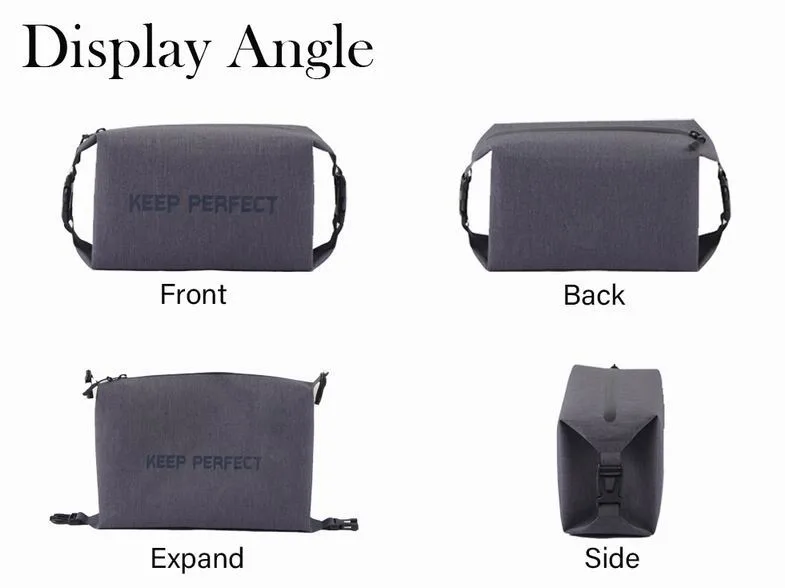
Moulded tooth and injected-profile zips: the submersible class
The submersible zip is a different machine. Instead of a spiral on a tape, two rows of moulded teeth interlock and a raised sealing lip on one side presses into a channel on the other, so the seal is a compression fit rather than a surface treatment. These zips are what keep drysuits dry at depth, and a well-maintained one will hold at 10 m for years while being opened and closed every day of a season.
They pay for that in weight, cost and feel. At 55 to 75 g per metre and four to six times the cost of a coated coil, a submersible zip dominates the bill of materials on a small bag, and the chain is stiff enough that the bag will not fold at the zip. Users also need training: the slider must be fully seated, the teeth must be aligned before the pull starts, and the zip must never be closed over a strap, a cord or a fold of fabric.
In practice, submersible zips appear on dry bags in three places: the entry of a drysuit-grade duffel, an access panel on an expedition bag, and a camera port that must stay sealed under water. For a general-purpose dry bag the honest answer is that a roll-top does the same job for a tenth of the cost and with no cycle limit, which is why the majority of expedition bags keep a roll-top as the primary closure and use a submersible zip only where geometry forbids rolling.
Metal zips and why they are rare on waterproof gear
Metal teeth seal nothing. A brass or nickel chain is an open mechanical interlock with gaps between every tooth, so it has no hydrostatic rating at all, and it is only ever made water-resistant by a storm flap or a cover strip over the top. That makes it a decorative or heritage choice rather than a technical one, and on saltwater gear it brings a second problem: corrosion.
Salt attacks both the plating and the base alloy, and a metal slider that has been left wet for a season will gall, drag and eventually seize. Nickel-free plating and regular fresh-water rinsing slow this down but do not remove it, which is why metal zips on marine gear are usually found under a welded cover that keeps the spray off. If you want the look, specify it on a pocket that has a cover flap and a drain path, never on the main closure.
One legitimate use remains. A metal chain tolerates heat and point loading better than polymer, so it appears on bags designed for fire, welding or industrial work where a film-faced zip would melt. That is a niche outside paddling, but it explains why the category has not disappeared entirely.
Airtight and compression zips on dry duffels
A compression dry duffel uses an airtight zip so the user can close the bag, expel the air through a valve and shrink a bulky load by 30 to 50%. The zip in that application is not resisting water ingress from outside, it is resisting air egress from inside, which is a much easier problem: a twin-lip profile with no woven tape holds a few kilopascals indefinitely.
The failure mode is specific and worth knowing. An airtight zip holds vacuum beautifully when the chain is clean and straight, and loses it the moment the chain is bent around a corner or a hard object presses on the lip. Pack a compression bag with soft items only, keep the zip on a straight run, and never close it over the corner of a book or a pot. Treated that way, the bag holds its compression for a full day of travel; treated badly, it re-inflates in an hour.
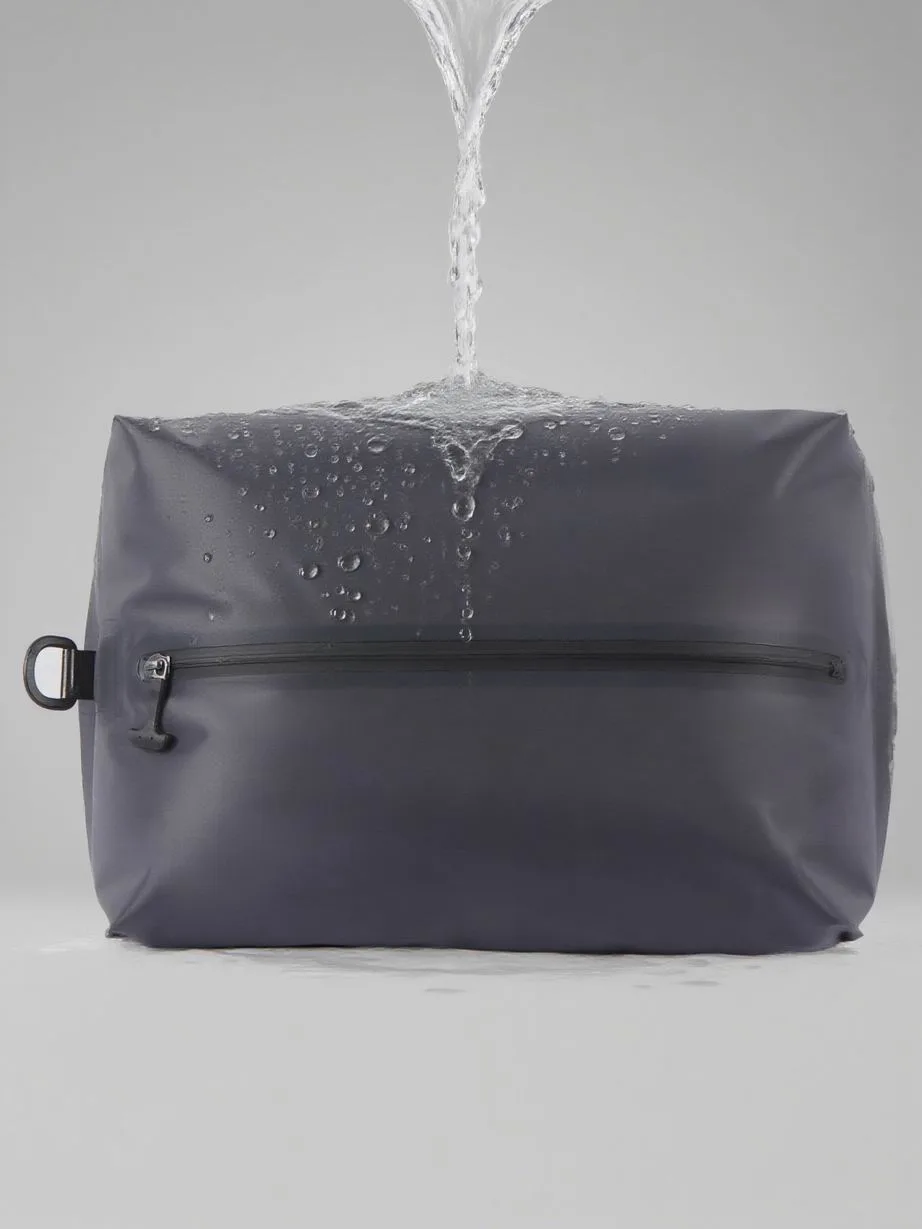
Reading a waterproof rating on a zip
Three numbers appear on zip specification sheets and they measure different things. Hydrostatic head in millimetres is the height of a water column the assembled zip resists before three drops penetrate; it is measured on fabric-and-seam standards maintained by the ISO. A spray rating describes performance under a directed shower. An IPX grade describes immersion for a stated time at a stated depth.
The trap is that a hydrostatic head figure for a zip alone is often measured on a flat, straight, unloaded sample. On a real bag the zip is curved over a corner, pulled by the tension of a packed load and pressed against whatever the bag is leaning on. Derate any flat-sample figure by roughly half for a curved installation, and by more again if the zip runs through a corner.
| Exposure | What the zip actually faces | Rating that survives | Zip family |
|---|---|---|---|
| Light rain, 30 min | Runoff, no pressure | 1,000 mm | Coated coil |
| Tropical downpour | High volume, low pressure | 2,000-3,000 mm | Coated coil with flap |
| Deck wash at 20 km/h boat speed | Directed water | 5,000 mm | Laminated film |
| Brief dunking to 0.5 m | Short immersion | IPX7, 8,000 mm | Laminated film, welded tape |
| Capsize recovery, 1 m for 30 s | Sustained pressure | IPX7-IPX8 | Moulded tooth with lip |
| Repeated submersion at 5-10 m | Continuous pressure | Depth-rated | Moulded tooth, drysuit grade |
Slider, puller and end-stop design
The slider is the part that determines whether a good zip performs. A single-pull slider on a long run tends to open unevenly, because the pull angle lifts one side of the chain; a long pull or a cord extension reduces that angle and makes the zip track straight. On a bag that will be opened with cold or wet hands, specify a moulded puller with a glove-friendly profile rather than a flat metal tab.
End stops carry more load than users expect. When a packed bag pushes against a closed zip, the bottom stop takes the load, and a moulded stop welded into the tape outlasts a crimped metal one on a welded bag. Ask for the stop to be welded or injection-moulded into the tape rather than clamped, and check that the top stops leave enough tape for the bag body to weld around them.
Locking sliders add a small amount of insurance on bags that are carried, because vibration and strap friction can walk a non-locking slider open by a few centimetres. The lock is not a seal, but a zip that has walked open 3 cm is a zip that is no longer sealed, which is the same outcome as a leak. Where the zip runs horizontally across the top of a bag, a locking slider is worth the very small cost.
Tape, film and how the zip joins the bag body
The joint between zip tape and bag body is where most zip-equipped bags actually leak, and it is almost never described on a specification sheet. There are three methods. Radio-frequency welding works only when the tape and the bag film are chemically compatible, typically TPU to TPU, and produces the strongest, most consistent seal. Hot-air or ultrasonic welding covers a narrower set of materials. Stitching plus seam tape is the fallback and the weakest of the three.
Compatibility is the constraint buyers forget. A zip with a PVC tape cannot be reliably RF welded into a TPU body, and a polyester-tape zip cannot be welded at all. Specify the tape polymer on the same line as the body film, and require a weld strength figure for the assembly rather than for the zip alone. Our comparison of welded and stitched seams sets out the peel numbers for each method.
Corner geometry is the second joint problem. A zip that terminates in the middle of a panel leaves a T-junction where two welds meet, and that point sees the highest peel stress in the whole assembly. The clean solution is to run the zip edge to edge across a panel so both ends terminate in a seam, or to weld a reinforcing patch over the terminal point. Bags that leak at the zip usually leak at one of those two ends.
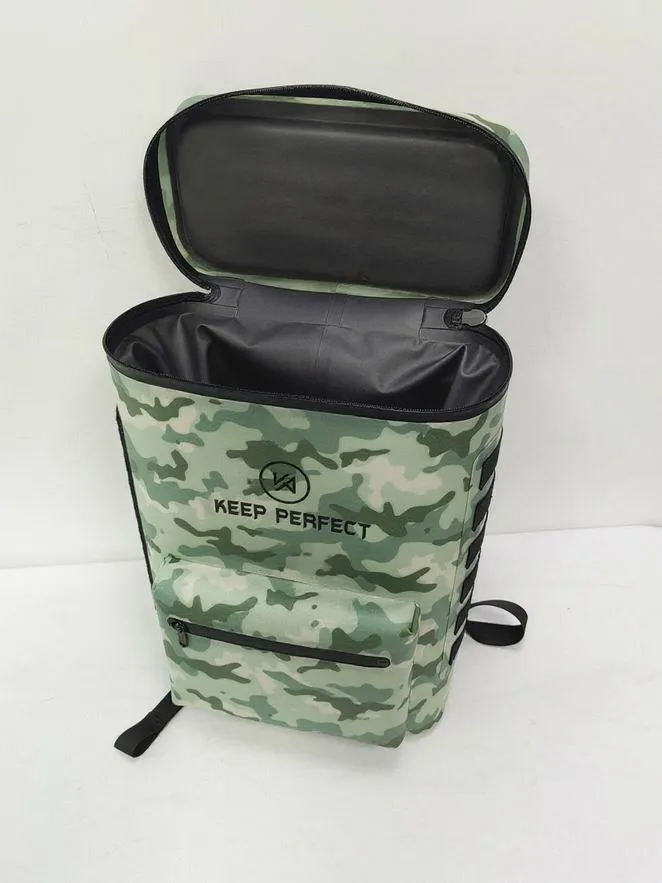
Where a zip belongs on a dry bag, and where it does not
Put a zip where the user needs frequent, fast, one-handed access to something that is not mission-critical: the top of a tote, the end pocket of a duffel, the front organiser panel of a waterproof backpack, a document sleeve. Put a roll-top where the consequence of failure is high: the main body of an expedition bag, a sleeping-bag compartment, anything going inside a kayak hatch.
Avoid zips on three specific placements. The base of a bag, because it is the surface that gets dragged. Any panel that will be pressed against a boat rail or a roof rack under strap tension, because pressure defeats every seal except a compression lip. And any horizontal run on a bag that is routinely over-filled, because load on the chain pulls the profiles apart.
The hybrid that works is a roll-top main body with a small laminated zip pocket high on the panel, above the waterline of a full immersion. That pocket stays reachable, the main volume stays sealed by film, and if the zip eventually wears out the bag is still a functioning dry bag. Our roll-top range is built around that principle, with zips reserved for pockets that sit above the closure line.
How zips fail, ranked by how often it happens
Across returned and repaired bags, the ranking is remarkably consistent. Slider problems lead, because a slider forced over grit deforms and then never fully closes the chain again. Abrasion of the film or coating is second, particularly on bags carried against a hip or a boat rail. Tape delamination from the body is third and usually traces back to an incompatible polymer pair. Tooth or coil separation is fourth and is nearly always caused by closing over a strap or over-filling.
End-stop blowout is rare but catastrophic: the bag opens from one end and the whole load is exposed. It is almost always a load problem rather than a manufacturing one, and it is why the packing rule for zip-equipped bags is stricter than for roll-tops: leave 15% of the volume free so the chain is never under tension when the bag is picked up.
| Failure | Share of zip warranty claims | Cause | Symptom in the field | Repairable? |
|---|---|---|---|---|
| Slider damage | 38% | Forced over sand or grit | Zip will not close fully | Slider replacement, yes |
| Film or coating abrasion | 24% | Dragging against a rail | Water beads stop forming | No, retire the bag |
| Tape delamination | 18% | Incompatible polymer pair | Leak along one tape edge | Sometimes, re-weld |
| Chain separation | 13% | Closed over a strap | Zip opens behind the slider | Sometimes, re-seat |
| End-stop failure | 5% | Over-filled bag under load | Bag opens from one end | Rarely, replace bag |
| Corrosion of metal parts | 2% | Salt left on the slider | Slider drags then seizes | Slider replacement, yes |
Rinsing, lubrication and alignment in the field
A zip survives on a five-minute routine. Rinse the closed chain in fresh water after every saltwater or sandy trip, working the slider through its full travel while the chain is wet so grit is flushed out rather than ground in. Dry with the bag open and the zip half closed, so both the chain and the tape dry rather than staying damp at the fold.
Lubricate sparingly and with the right product. A dry PTFE or silicone-free stick applied to the chain and worked in with the slider reduces drag and does not attract sand; an oil or grease does the opposite and turns the zip into a grinding paste within a week. Avoid petroleum jelly on TPU tapes, because it plasticises the film and softens the bond between tape and film.
Alignment is the habit that prevents the leading failure. Before you pull, check that the two sides of the chain are engaged at the bottom stop and that nothing is caught across the run, then pull in line with the zip rather than at an angle. A pulls that is angled up and away from the chain lifts the profiles apart, and doing that a few hundred times is how a chain becomes permanently loose. Full step-by-step care is in our zipper maintenance guide.
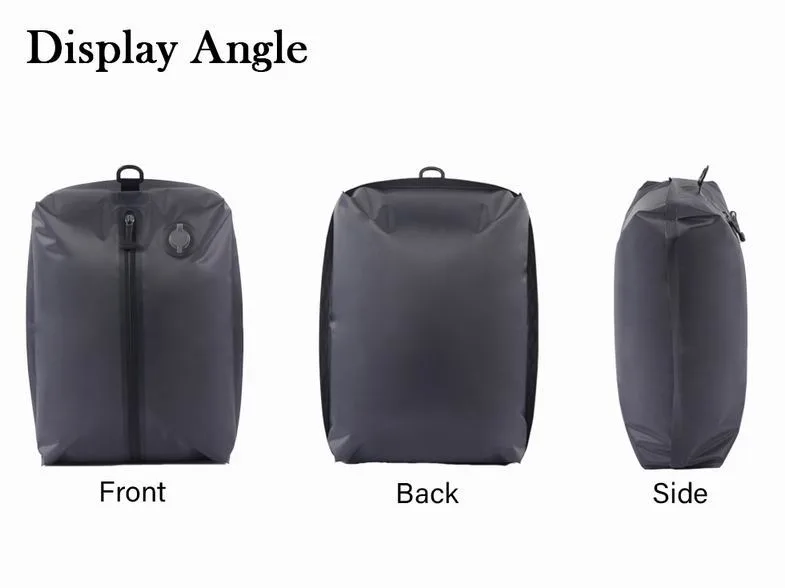
Specifying a zip in a production brief
- Name the zip family, not a brand adjective: coated coil, laminated film or moulded tooth with lip.
- State the hydrostatic head required for the assembled bag, measured at the zip, not on a flat sample.
- Specify the tape polymer to match the body film so the assembly can be welded rather than stitched.
- Require a weld peel strength figure in N per 25 mm for the zip-to-body joint.
- Set a cycle-life target, typically 5,000 cycles for a main opening and 3,000 for a pocket.
- Define slider type, puller profile and whether a locking slider is required.
- Specify end stops as moulded or welded, not crimped, and show the termination detail on the drawing.
- Ask for a salt-spray result on metal components and a UV result on film-faced tapes.
Cycle testing is the line most briefs omit and the one that separates a zip that lasts from one that returns. Zip durability is measured under published methods maintained by ASTM, and a production partner quoting a cycle figure should be able to name the method. Require the test to be run on the finished bag rather than on a loose chain, because the load path through the bag body changes the result substantially.
Where a programme needs a zip that is not in a standard catalogue, the realistic path is a graded sampling loop: approve a film and tape pair, weld trials on the actual body panel, then immersion and cycle testing on five finished samples before bulk. Our production partner has run waterproof bag programmes since 2014 in an SGS-verified 4,950 m2 facility, with sampling in 6 to 10 working days, bulk in 35 to 50 days and a 500-piece minimum.
Two related decisions round out the brief. Whether the bag needs a valve at all, which our valve comparison covers in detail, and which buckle and ladderlock hardware matches the load the zip will see, set out in the buckle load ratings guide. Both should be approved on the same sample build as the zip, because a change to one usually forces a change to the other.
Frequently asked questions
Q1. Are waterproof zippers actually waterproof?
Only two families are. A coated coil zip sheds rain at about 1,500 mm of water column and is water-resistant. A laminated film zip reaches 5,000 to 10,000 mm and a moulded-tooth zip with a sealing lip is genuinely submersible to about 10 m.
Q2. What is the most waterproof zip type for a dry bag?
A moulded-tooth zip with a compression sealing lip, the drysuit-grade family. It holds water at depth but costs four to six times more than a coil zip and weighs 55 to 75 g per metre, so it is reserved for bags that are genuinely submerged.
Q3. Can a zip replace a roll-top closure?
Not on a bag that will be submerged. A roll-top seals by folding film against film and has no cycle limit; a zip has a rated life of 5,000 to 10,000 cycles and fails more suddenly. Use a roll-top for the main body and a zip for pockets.
Q4. How is zip waterproofing measured?
Three ways: hydrostatic head in millimetres of water column, a spray test, and an IPX immersion grade. Hydrostatic head is the most useful, but derate a flat-sample figure by about half when the zip is curved over a corner on a finished bag.
Q5. Why does my waterproof zip leak at the ends?
Because the T-junction where the zip terminates in a panel is the highest peel-stress point in the assembly. Run the zip edge to edge so both ends terminate in a seam, or weld a reinforcing patch over the terminal point.
Q6. How do I lubricate a waterproof zip?
Use a dry PTFE or silicone-free stick on the chain and work it in with the slider. Never use oil, grease or petroleum jelly: oil attracts grit and petroleum jelly plasticises TPU tape and weakens the bond to the film.
Q7. How long does a waterproof zip last?
Typically 5,000 to 10,000 open-close cycles, which is several years of daily use on a duffel lid or a decade of weekend use. Film abrasion and UV exposure usually end the zip before the cycle count does.
Q8. Can a damaged zip slider be replaced?
Yes, in most cases. Slider damage is 38% of zip warranty claims and a replacement slider restores full function if the chain itself is undamaged. A torn tape or a delaminated film is not repairable.
Q9. Why will my zip not close any more?
Almost always grit in the chain or a deformed slider from being forced. Rinse the chain in fresh water, work the slider through its full travel, check that both sides are engaged at the bottom stop, then pull in line with the zip.
Q10. Do metal zips work on waterproof bags?
No. Metal teeth have no seal at all, so a metal zip only works under a welded cover flap, and salt corrodes the slider within a season. It is a decorative choice, not a technical one.
Q11. What zip should I use on a compression dry duffel?
An airtight twin-lip zip with no woven tape. It holds a few kilopascals of vacuum rather than resisting water from outside, which is an easier problem. Keep the chain straight and do not close it over a hard corner.
Q12. Can any zip be welded into a TPU bag?
No. Radio-frequency welding requires a compatible tape polymer, usually TPU to TPU. A PVC tape will not weld reliably into a TPU body, and a woven polyester tape can only be stitched and sealed, which is the weakest joint of the three.
Q13. Does a zip make a dry bag heavier?
Yes, by 25 to 75 g per metre of chain depending on family, plus the reinforcing patch and the termination hardware. On a small tote that is negligible; on an expedition duffel a full-length submersible zip adds 300 to 500 g.
Q14. Should a dry bag zip have a storm flap?
Yes for coated coil and laminated zips, because the flap takes the direct water load off the chain and doubles the effective rating. Moulded-tooth submersible zips do not need one and often cannot use one because of their stiffness.
Q15. Where should a zip never be placed on a dry bag?
On the base, which gets dragged; on any panel that will be pressed against a rail or a rack under strap tension; and on a horizontal run on a bag that is routinely over-filled, because load on the chain pulls the profiles apart.
Q16. Are zips repairable in the field?
Partly. A stuck or gritted zip can be rinsed and re-seated, and a slider can be swapped with a small tool. A separated chain, a torn tape or a delaminated film needs a bench repair, and most of those bags are retired rather than fixed.
People also ask
How does a waterproof zipper work?
Either by a surface coating that sheds water from the face of a coil, or by a compression seal where a raised lip presses into a channel. Coated coil zips are water-resistant; compression-lip zips are submersible.
Are waterproof zippers worth the extra cost?
For fast access on a duffel, tote or pocket, yes. For the main closure of a bag that gets submerged, no: a roll-top gives the same protection for a fraction of the cost and has no cycle limit.
What is the difference between water-resistant and waterproof zips?
A water-resistant zip sheds rain and spray at 1,000 to 10,000 mm of hydrostatic head. A waterproof or submersible zip uses a compression lip and is depth-rated, typically holding at 10 m for years of drysuit use.
Can you repair a split waterproof zip?
Sometimes. Rinse the chain, re-seat the slider at the bottom stop and pull in line. If the tape has torn away from the body film or the lip is deformed, the bag is normally retired rather than repaired.
How do you test whether a zip still seals?
Close it, lay the bag flat, and press a damp cloth along the chain while watching the inside for moisture. A spray bottle at 30 cm for 60 seconds is a reasonable field proxy for a light-rain rating.
Do waterproof zips need a cover flap?
Coated coil and laminated zips benefit greatly, because the flap removes the direct water load from the chain. Drysuit-grade moulded-tooth zips seal on their own and are generally too stiff to sit under a flap.
Need this in production volume?
QUANZHOU JUNYUAN BAGS has produced waterproof bags since 2014 in an SGS-verified 4,950 m2 facility in Fujian, China. Minimum order 500 pieces, sampling in 6–10 working days, bulk in 35–50 days, FOB Xiamen — write to service@junyuanbags.com with your spec and target market.