Eco-Friendly Dry Bags
An eco-friendly dry bag has to stay waterproof while removing the materials that cause the damage: virgin PVC, solvent coatings and fluorinated durable water repellents. The practical route is recycled TPU film bonded to a recycled PET face fabric, welded rather than glued, finished PFAS-free and fitted with REACH-screened hardware. This page explains what each claim actually requires in documentation and how the performance compares with conventional builds.
We produce recycled builds on the same lines as standard TPU models in an SGS-verified 4,950 m2 facility in Fujian. Minimum order stays at 500 pieces, sampling 6–10 working days, bulk 35–50 days, FOB Xiamen, and transaction records can be issued for the recycled content declaration.
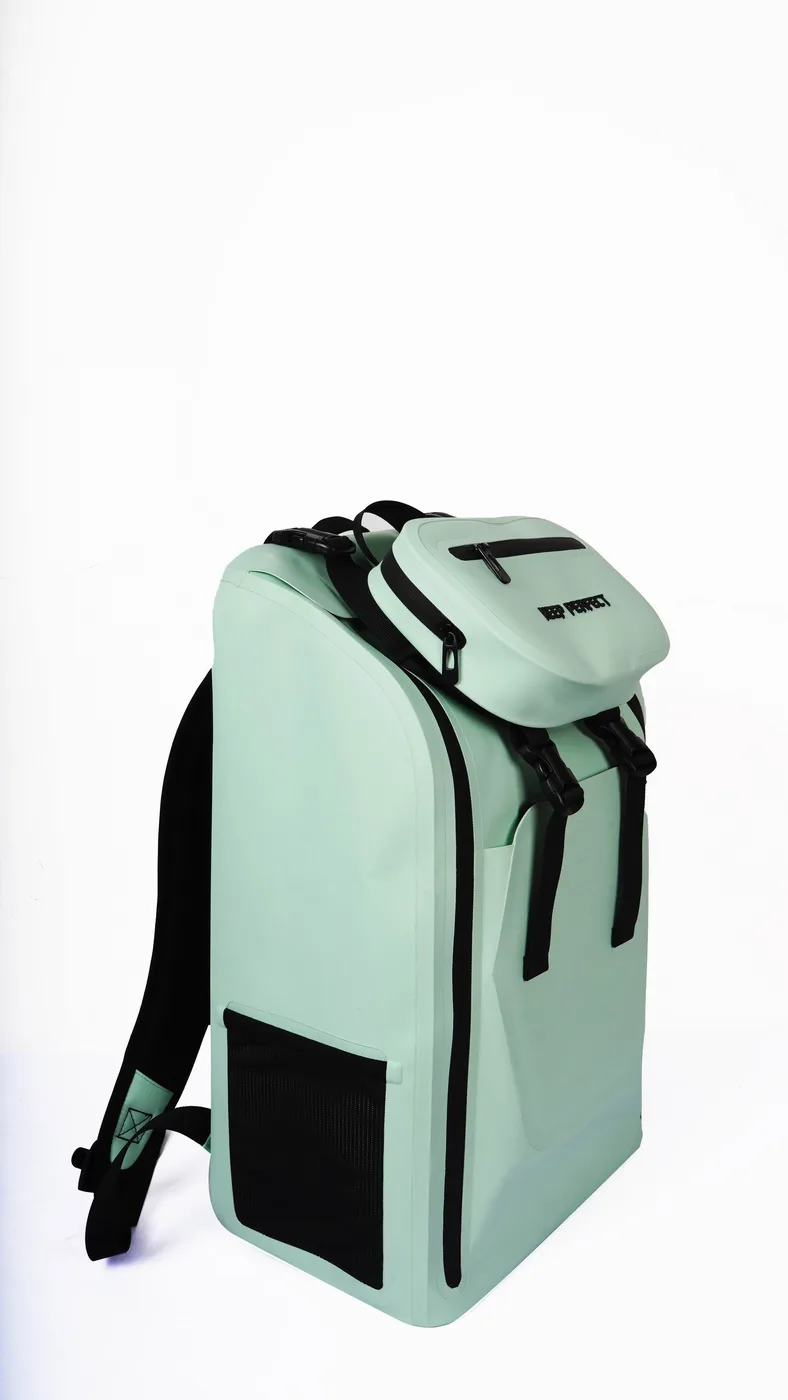
Specification
- Film: Recycled TPU 0.3–0.5 mm, GRS transaction records on request
- Face fabric: rPET 420D or 500D, recycled content stated on the label
- Finish: PFAS-free durable water repellent, water based
- Hardware: RoHS screened buckles and 316 fittings
- Rating: IPX6 standard, immersion tested per batch
- Minimum order: 500 pieces per colourway
- Sampling: 6–10 working days
- Bulk lead time: 35–50 days
Options
| Claim | Evidence available | Performance effect | Note |
|---|---|---|---|
| Recycled TPU film | GRS / transaction certificate | Same hydrostatic head as virgin film | Recycle content documented per batch |
| rPET face fabric | GRS-certified yarn | Comparable tear strength at equal denier | Slightly lower UV life |
| PFAS-free DWR | No long-chain fluorocarbons | Spray ratings hold for the first season | Needs re-treatment sooner |
| RoHS hardware | Screened POM and 316 steel | No restricted substances declaration | Higher unit cost |
| REACH SVHC screen | Declarations issued by the trim source | Below threshold by declaration | Annual re-verification advised |
| PVC-free constructions | No plasticised PVC | Avoids restricted phthalates | TPU film required instead |
Reading a sustainability claim
Ask three questions before accepting any green claim. What percentage is recycled, by weight or by fibre? Is there a transaction certificate that follows the batch, not just the mill? And is the finish PFAS-free, because a recycled bag finished with long-chain fluorocarbons has simply moved the problem downstream. We answer all three in writing before production starts.
What recycled content actually means
Recycled content can be measured two ways and the difference is large. Post-industrial recycled material comes from production offcuts and is comparatively easy to source and certify. Post-consumer recycled material comes from used products and is the claim most buyers actually want, but it requires a documented chain from collection through reprocessing to yarn or film. A bag described simply as recycled without saying which will usually be the former.
The evidence that separates a real claim from a marketing one is a transaction certificate tied to the batch, not to the mill. A mill-level certificate says the mill has recycled capacity; a transaction certificate says your specific lot contained it. Ask for the latter, check that the quantity on the certificate matches the order, and file it — regulators in the EU and several US states now treat vague environmental claims as actionable. The EPA and the European Chemicals Agency both publish guidance on what evidence a claim needs; check the current text before artwork goes to print.
PFAS-free finishes: what you give up
Fluorinated durable water repellents were the default for decades because they work well and last. They are also the reason outdoor gear has shown up in drinking water studies, and long-chain variants are now restricted. Water-based and silicone alternatives are available and perform acceptably, but they are not equivalent.
| Finish type | Initial spray rating | Durability | Restriction status | Retreatment needed |
|---|---|---|---|---|
| Long-chain PFAS (C8) | Very high | 50+ washes | Restricted in most markets | Rarely |
| Short-chain PFAS (C6) | High | 30–40 washes | Under review in several regions | Every 1–2 seasons |
| Silicone-based DWR | Medium-high | 20–30 washes | Not restricted | Every season |
| Water-based polymer | Medium | 15–25 washes | Not restricted | Every season |
| Hydrocarbon wax | Medium | 10–20 washes | Not restricted | Twice a season |
Read that table as a performance budget, not a problem. A dry bag gets its water resistance from the film, not from the finish; the finish only keeps the face fabric from wetting out and gaining weight. Choosing a PFAS-free finish costs you some spray performance on the outer face and costs the end user a retreatment once a season. It does not compromise the waterproof function of the bag.
Documentation you should demand before production
Five documents, and none of them should be a generic company statement.
- Transaction certificate for the recycled content, batch-matched to your order quantity, issued under a recognised standard.
- REACH SVHC statement covering the finished article, not just the fabric, because hardware and print inks are in scope.
- RoHS screening on metal and plastic trims, since buckles and D-rings are the parts most likely to fail a screen.
- PFAS-free declaration naming what was substituted, because ‘PFAS-free’ alone does not say which chemistry replaced it.
- Hydrostatic test data from the production batch, so you can confirm the recycled build performs to the same figure as the conventional one.
If a source cannot produce the third and fourth items, the recycled story is not yet backed by the trim supply chain, and claiming it on the finished product is a risk you would be carrying alone.
End-of-life and repairability
A recycled bag that cannot be repaired is a partial answer. Welded TPU construction can be re-welded with the right equipment, which means a punctured panel can be replaced rather than the whole bag discarded. Design choices that help: single-polymer construction where the film, face fabric and webbing are all from the same polymer family, hardware that is removable rather than permanently bonded, and no mixed-material laminates that cannot be separated at end of life.
Print method matters here too. A heat-transfer logo on a recycled TPU face is recyclable with the bag; a PVC plastisol print is not. If the recycled claim is central to the product, specify the print method at the same time as the film.
Cost, minimum order and lead time
Recycled film and rPET face fabric add roughly 12 to 20 percent to material cost at current volumes. Most of the rest of the difference is administrative: batch-level documentation is work, and it has to be done per order rather than once. Lead times lengthen only when recycled yarn has to be ordered specifically; the common rPET grades are stocked, as is recycled TPU film in the standard thicknesses.
Minimum order is 500 pieces per colourway, sampling 6–10 working days, bulk 35–50 days, FOB Xiamen, T/T 30/70, inspected to AQL 2.5.
Cost and lead-time reality
Recycled film and rPET face fabric add roughly 12 to 20 percent to material cost at current volumes, and both need batch-level documentation, which is administrative work rather than technical work. Most buyers absorb it because the recycled story is worth more than the margin difference at retail. Lead times lengthen only when recycled yarn must be ordered specifically; the common rPET grades are stocked.
A word of caution on marketing: a recycled badge with no transaction record behind it is a liability, not an asset. Regulators in the EU and several US states now treat vague environmental claims as actionable, so plan the documentation pathway before artwork goes to print.
Frequently asked questions
Are recycled dry bags as waterproof as standard ones?
Yes. Recycled TPU film is tested to the same hydrostatic head figures as virgin film at equal thickness, and it welds in the same process window. The waterproof performance comes from the film and the seam, neither of which changes with recycled content.
What does PFAS-free mean on a dry bag?
It means no fluorinated compounds were used in the durable water repellent finish. The finish keeps the outer face fabric from soaking up water; it is not what keeps the bag watertight. PFAS-free finishes need retreatment sooner but do not compromise waterproofness.
How do I verify a recycled content claim?
Ask for a transaction certificate matched to your batch quantity, not a mill-level certificate of capacity. Check that the quantity on the certificate matches your order and file it with the shipment documents.
Is recycled TPU more expensive?
Yes, typically 12 to 20 percent on material at current volumes. The recycled yarn and film are stocked in common grades, so lead time is affected only when a specific grade has to be ordered in.
Can an eco-friendly dry bag be repaired?
Yes. Welded TPU construction can be re-welded with the right equipment, so a damaged panel can be replaced. Specify single-polymer construction and removable hardware to keep that option open at end of life.
Which compliance documents come with a recycled order?
A transaction certificate for recycled content, a REACH SVHC statement on the finished article, RoHS screening on trims, a PFAS-free declaration naming the substitute chemistry, and hydrostatic test data from the production batch.
Guides in this category
28 detailed guides, each with its own specification tables and answers section.
Sustainability & Compliance
- Biodegradability Claims Explained
- Carbon Footprint of a Dry Bag
- Chemical Migration Testing for Bags
- EPR and Packaging Rules for Bag Brands
- Energy Use in TPU Welding
- Extending Product Life to Cut Waste
- Food-Safe Dry Bag Materials
- How Recyclable Are Dry Bags?
- Low-Carbon Production of Dry Bags
- Marine-Safe Materials for Water Gear
- OEKO-TEX and Textile Safety
- PFAS-Free Waterproof Fabric
- PVC-Free Dry Bag Alternatives
- Plastic-Free Packaging for Dry Bags
- Prop 65 Considerations for Bag Programs
- REACH Compliance for Dry Bags
- Recyclable Dry Bag Design Trends
- Recycled TPU Dry Bags
- Repairing Instead of Replacing
- RoHS and Dry Bag Hardware
- Sustainability Questions for Bag Makers
- Sustainable Dry Bag Buying Checklist
- Water-Based Printing Ink on Dry Bags
- bluesign-Certified Fabrics
- rPET Fabric Dry Bags
Buying & Comparisons
Care & Repair
Materials & Construction
Ready to move from reading to specifying? Send your brief to service@junyuanbags.com.