How Do You Know a Dry Bag Is Worn Out?
A dry bag is worn out when it fails one of four measurable checks: it cannot hold air for 10 minutes at hand pressure, the film goes tacky or powdery to the touch, the welded seams show whitened stress lines when flexed, or it lets more than 5 ml through a 30-minute immersion with three folds. Cosmetic scuffing, fading and surface marks are not those signals. A bag can look 10 years old and still seal, or look new and leak at the corners.
The useful part is that all four can be checked in about fifteen minutes at home with a bath and a towel, and each has a number attached rather than a judgement call. This guide sets out the symptoms in the order they usually appear, the thresholds that matter for different jobs, why calendar age is a weak predictor next to hours of wet use, and what to do with a bag that has clearly reached the end of its useful life.
- The four end-of-life signals, ranked by how often they appear
- Signal one: it will not hold air any more
- Signal two: the film has gone tacky, stiff or powdery
- Signal three: water appears inside a properly closed bag
- Signal four: whitened stress lines appear along the welds
- Two checks you can run with a towel and a bath
- Quantifying the leak: how many millilitres is too many
- Age against hours: which one predicts failure
- Where different jobs set different thresholds
- Hardware faults that end an otherwise healthy bag
- Odour and staining that mean more than dirt
- Second jobs for a bag that failed its protection test
- Keeping records so you stop guessing
The four end-of-life signals, ranked by how often they appear
Across reported failures there is a clear order. Closure problems come first and account for roughly half of all field leaks, because that is where the material is flexed on every single use. Weld degradation is second, appearing as fine cracking or whitening where the panel meets the base. Film degradation is third and usually follows long ultraviolet or heat exposure. Punctures are fourth and are normally accident rather than wear, though they are what most people first notice.
Only three of those four end a bag. A puncture can be repaired and the bag returned to full service with a correctly applied patch. A closure that has creased permanently cannot be repaired, because there is no way to replace the fold line; a perished film cannot be patched reliably, because the patch adheres to material that is itself breaking down; and a weld that has started to peel will continue to peel, because each flex lengthens the crack.
Everything else is cosmetic. Loss of print gloss, colour fading, scuff marks from a deck, a dull patch where webbing rubbed - none of these reduces waterproof performance. Buyers who replace bags for those reasons are discarding several seasons of service, which is worth knowing before spending money on a replacement that performs identically.
Signal one: it will not hold air any more
The air test is the fastest reliable diagnostic and needs no equipment. Roll the bag closed with three folds, clip the buckle, then sit on it or press it firmly with your forearms and hold for ten seconds. A healthy bag resists noticeably and slowly recovers; a tired one collapses with little resistance and hisses quietly at the closure or at a seam corner. Repeat with the bag wet, because a leak that only appears wet is a weld or pinhole defect, not a closure problem.
The formal version takes longer and is worth doing once a year. Inflate the bag gently by mouth through the closure or a valve, do not pressurise it hard, then leave it for ten minutes and check firmness by hand. A bag that has gone noticeably soft in ten minutes has a leak large enough to matter in real use; anything that holds most of its firmness for thirty minutes is still serviceable for splash duty even if it is past its best.
Signal two: the film has gone tacky, stiff or powdery
Run a clean fingertip over the inside of the bag and then over the fold line. A healthy TPU surface feels dry and slightly slippery. Three textures mean trouble: tackiness that drags under your fingertip indicates plasticiser or polymer breakdown at the surface; a stiff, board-like feel that does not relax after warming indoors indicates advanced ageing; and a fine powder residue indicates the film is actively shedding breakdown products.
Tackiness matters most because it precedes pinholing by a season or two. Once the surface starts to break down, it becomes sticky enough to pull at itself inside a fold, and repeated rolling then tears material away from the fold line. If you catch tackiness early the bag can still be demoted to splash protection or to internal organisation, but it should no longer be trusted with anything that must stay absolutely dry.
Stiffness is the one that owners misread, because cold bags feel stiff and recover. Test at room temperature after two hours indoors: if the film still feels rigid and springs back flat rather than draping, it has stiffened permanently. Our service life notes by material explain why PVC and aromatic TPU reach this point faster than polyether TPU laminates.
Signal three: water appears inside a properly closed bag
This is the symptom everybody waits for, and by the time it appears the bag has usually given months of warning. Before concluding anything, eliminate the four innocence explanations: the bag was overfilled so the folds never seated; there was grit in the fold line; something wet was packed inside; or the water came from a lid, hatch or pocket rather than through the fabric.
If none of those apply, find the entry point by process rather than guesswork. Dry the bag thoroughly, roll it closed with a paper towel inside, place it in a bath under 20 cm of water for five minutes, and note where the towel first becomes damp. Water enters at the lowest loaded point, so the towel marks both the existence and the location of the fault, and a corner result indicates a weld while a line along the closure indicates crease damage.
Signal four: whitened stress lines appear along the welds
Flex a welded seam outward along its length in good light. A sound weld stays glossy and uniform; a fatigued weld whitens along the edge of the bond, sometimes with a fine crazed pattern visible under magnification. Whitening is the polymer stretching and forming micro-voids, and those voids are the precursor to a slow seep rather than a dramatic burst. The reason this is the last signal rather than the first is that it usually takes several seasons to develop.
Location refines the diagnosis. Whitening at the corner where the base meets the side panel indicates a geometry problem, usually a tight radius, and it will eventually crack. Whitening along a straight run suggests the weld was made at the edge of its process window and the bond was never complete, which is why it appears relatively early. Either way the weld will not recover and cannot be reliably re-welded at home.
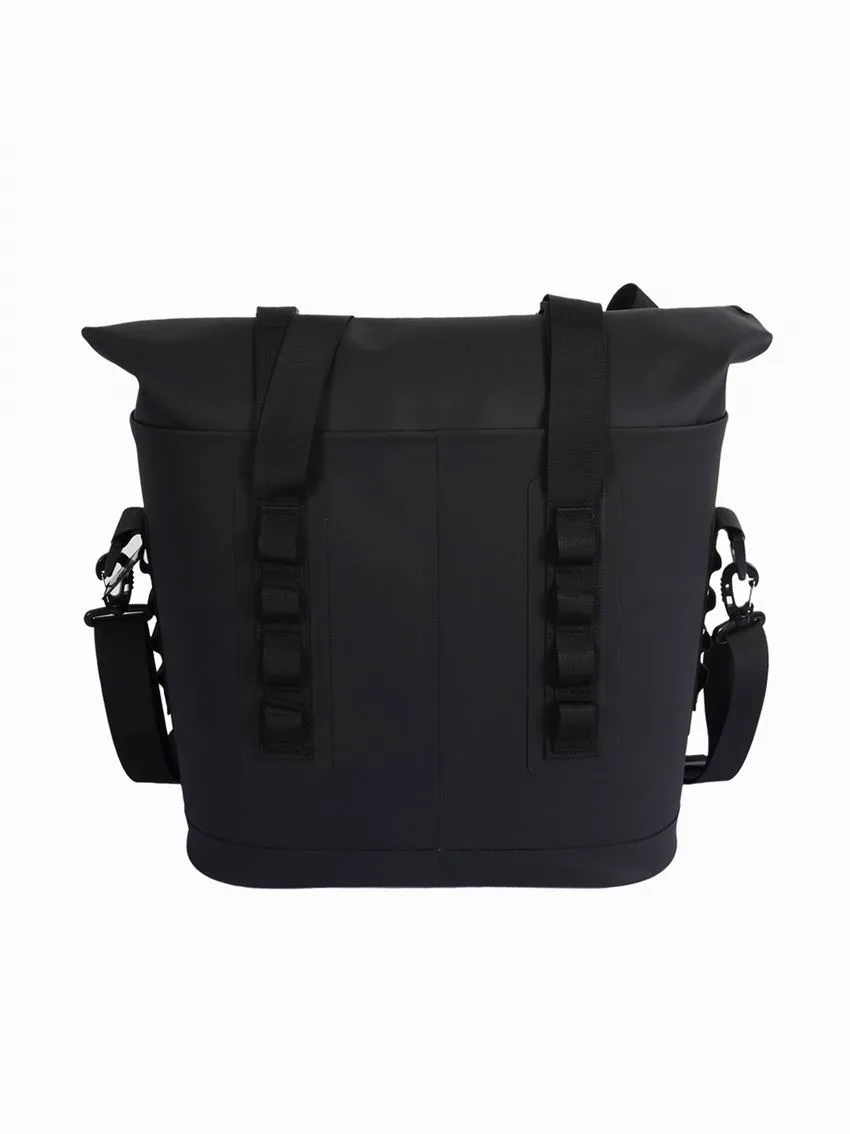
Two checks you can run with a towel and a bath
Neither test needs equipment beyond a bathroom, and together they take about fifteen minutes. Run them at the start of each season and after any impact, repair or long storage period. Do not run them straight after a wash: a bag that has not fully dried internally will produce damp results that have nothing to do with its condition.
| Check | Procedure | Pass criterion | Time |
|---|---|---|---|
| Squeeze-and-hold | Roll three folds, press firmly and hold ten seconds | Holds resistance for at least eight seconds | 1 minute |
| Ten-minute air test | Inflate gently, leave ten minutes, check firmness | Still mostly firm after ten minutes | 12 minutes |
| Towel immersion | Dry towel inside, roll closed, submerge 20 cm | Towel completely dry after five minutes | 8 minutes |
| Quantified immersion | Weigh dry contents, submerge thirty minutes, reweigh | Under 5 ml in thirty minutes | 35 minutes |
| Weld flex inspection | Flex each weld outward in good light | No whitening or crazing at the bond edge | 3 minutes |
A bag that fails any one of these has a defined problem rather than vague wear, and that distinction decides what happens next. A failure on the air test plus a dry towel immersion almost always indicates a closure issue, which may be cured by cleaning the fold line. Failure on immersion with a healthy air test points to a pinhole or a seam corner, which is usually repairable. Failure on weld inspection is terminal.
Quantifying the leak: how many millilitres is too many
Numbers settle arguments that adjectives cannot. Weigh a dry paper towel to a tenth of a gram, place it inside the rolled bag, submerge to 30 cm for thirty minutes, and reweigh; one gram of water gained equals one millilitre. Anything under about 5 ml in half an hour is a weep, which is acceptable for clothing and camp kit but not for electronics. Above about 30 ml the bag is effectively open as far as anything absorbent is concerned.
Depth changes everything, so always test at a realistic depth rather than a dramatic one. Water pressure rises by roughly one atmosphere for every ten metres, but even 30 cm adds enough head to turn a marginal pinhole into measurable ingress. A bag we are testing for laptop duty should be checked at the depth it would actually see, which for most people is a puddle or a wet deck, not a metre.
Formal immersion methods exist and are worth quoting if you need a defensible figure for a fleet or a warranty claim. The procedure in our immersion testing guide follows the same logic with tighter controls, and the underlying approaches are published by ISO and by ASTM, whose committees maintain the standard test methods for textile coatings and closures.
Age against hours: which one predicts failure
Calendar age is a weak predictor and usage hours are a strong one, because almost every degradation mechanism is driven by dose: ultraviolet dose, flex cycles, salt contact and heat history. A bag used on a hundred beach weekends has had far more UV and salt exposure than one carried on five week-long expeditions, even though both are five years old. Storage conditions account for the rest, and a bag kept dark and loosely rolled can stay serviceable for a decade.
| Usage profile | Typical weekly hours | First inspection | Expect replacement near |
|---|---|---|---|
| Occasional holidays, stored indoors | 2-4 h | 3 years | 8-12 years |
| Weekend paddling, rinsed every trip | 8-12 h | 1 year | 5-8 years |
| Coastal guiding, daily use | 25-40 h | 6 months | 2-4 years |
| Rental fleet, daily rotation | 30-50 h | 3 months | 1-3 seasons |
| Permanent deck bag, never stored | Continuous | 3 months | 1-2 years |
Note the shape of that table: the daily-use cases replace bags roughly every other year, and the occasional cases replace them after most people have stopped paying attention. Neither number is a failure of the product. Ultraviolet dose alone accounts for the largest share of the gap, which is why two identical bags can differ in service life by a factor of four depending on whether they were dried in shade or left on a deck.
Where different jobs set different thresholds
Retirement is contextual. The bag that still protects a spare fleece may be entirely unsuitable for a laptop sleeve, and the honest approach is to define what each bag protects and test accordingly. That way a tired bag gets demoted rather than binned, and a critical bag gets replaced before it fails rather than after. Write the job on the bag in permanent marker if you own several; it removes doubt in a hurry on a wet morning.
| Job | Consequence of failure | Acceptable ingress | Retire when |
|---|---|---|---|
| Sleeping bag storage | A cold, wet night | Under 10 ml in 30 min | Ingress exceeds 10 ml |
| Electronics and documents | Total loss | Zero | Any measurable ingress |
| Food storage | Spoilage, smell | Under 5 ml in 30 min | Odour or staining returns |
| Spare clothing | Discomfort | Under 25 ml in 30 min | Ingress exceeds 25 ml |
| Wet gear transport | Irrelevant | Any | Bag no longer holds its shape |
| Emergency kit | Safety margin lost | Zero | At the first failed test |
Two rows deserve emphasis. Anything protecting an emergency kit or communication equipment should be tested on the same schedule as the kit itself and replaced at the first failed test, because there is no second chance in the field. Anything protecting food should be retired for odour rather than leakage, since a bag that has absorbed oils will keep tainting whatever goes in it however well it still seals.
Hardware faults that end an otherwise healthy bag
Sometimes the shell is fine and the fittings are what fail, and this is common enough to check separately every time. Work each buckle through its full travel while the bag is wet: a side-release buckle that releases under light thumb pressure while loaded has worn its retention tabs, and a cam buckle that slips on 25 mm webbing has lost its tooth engagement. Both can be replaced on most bags, so this is a repair rather than a retirement.
Webbing is the more serious case. Pull the load-bearing straps between your hands and look for fraying, stiffness or colour loss, all of which indicate ultraviolet damage in the nylon. Load capacity falls sharply once webbing has chalked: a strap rated at 200 kg new may hold less than half that after two seasons of daily sun. Our buckle replacement notes set out what can be swapped and where to stop.
Welded attachment points are the awkward middle case. A D-ring welded to the shell cannot be replaced cleanly once it tears away, because the tear usually removes film along with it, and patching over a load point is unreliable. If a load-bearing D-ring fails, the bag should be demoted to a non-load-bearing job rather than repaired.
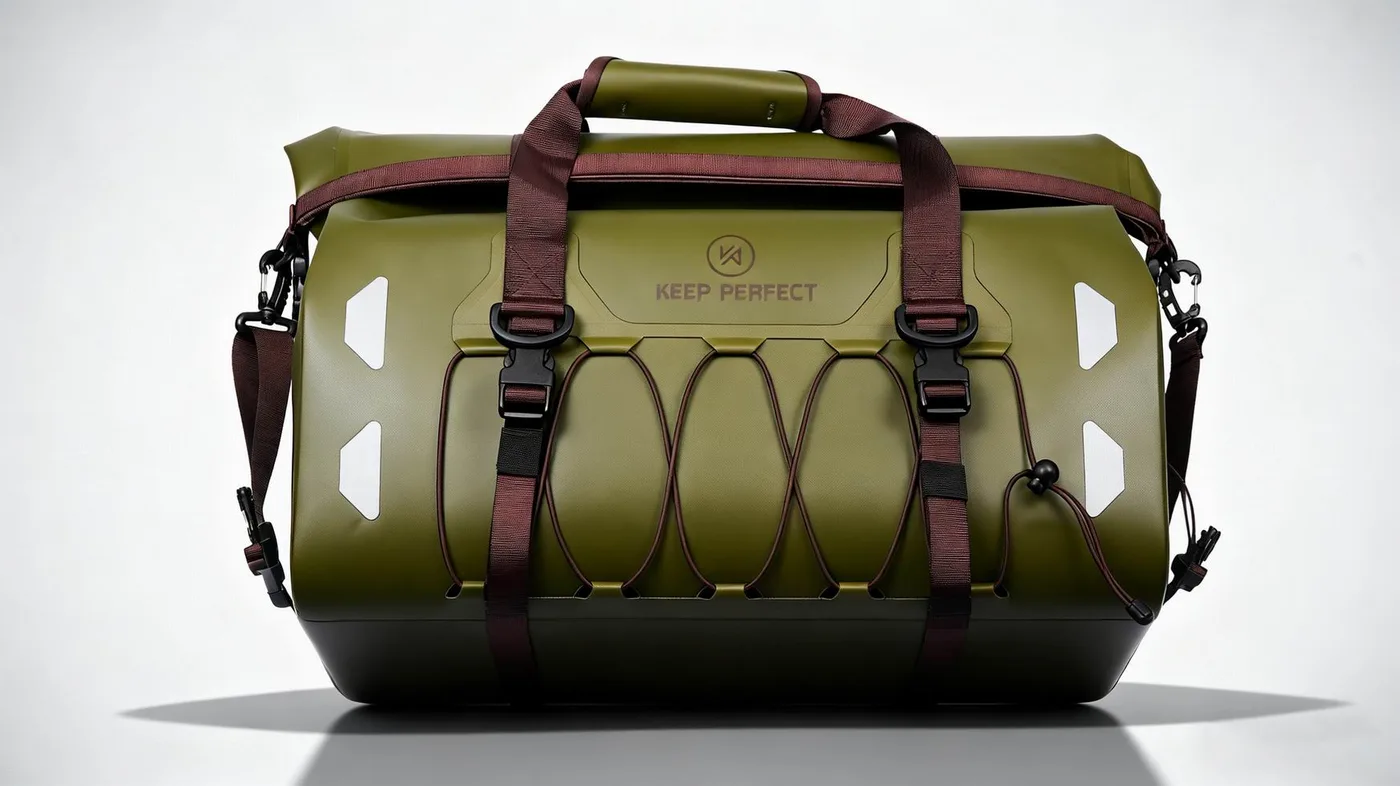
Odour and staining that mean more than dirt
Three smells carry information. A sharp vinegar or acetic note suggests hydrolytic breakdown in certain film types; a persistent rancid note that survives washing and drying suggests oils have penetrated the film rather than sitting on the surface; and a musty note that returns within days of drying suggests mould has colonised a seam rather than the surface. The first two are retirement signals for anything food-related, the third is fixable.
Staining follows similar logic. Uniform discolouration from sun is cosmetic. Localised dark patches that feel softer than surrounding material indicate chemical attack, most often from insect repellent, sunscreen or DEET, all of which attack coatings. Those soft patches are precursors to pinholes, so mark them, check monthly, and demote the bag the moment the surface texture changes.
Second jobs for a bag that failed its protection test
A bag that no longer seals has plenty of life left. The obvious demotions are wet-swimwear transport, laundry, muddy boots, sand toys, dirty fishing tackle and a vehicle boot organiser, all of which need containment rather than dryness. Keep a roll-top working for those tasks and you delay the purchase of a bin liner several times over, while nothing valuable is at risk.
- Wet swimsuit and towel transport, where drainage is irrelevant and closure still works.
- Muddy boot and shoe containment after a trail day.
- Laundry separation inside a bigger bag, which is what many roll-tops were designed for.
- Beach toys and sandy items, keeping grit out of the car rather than water out of the bag.
- Vehicle boot organiser for recovery gear, jumper cables and oily tools.
- Cushion or pillow case when stuffed with a jacket on camp duty.
Mark demoted bags clearly, because the failure mode people fear is picking up the wrong one in a hurry. A strip of tape on the closure, or a note inside on what it now does, prevents the mistake. Once material recovery arrives, our upcycling ideas and the notes on how recyclable these materials actually are cover the disposal path.
Keeping records so you stop guessing
One habit turns all of this from guesswork into a schedule: write the purchase date on the inside of every bag in permanent marker and keep a note of which buying batch it came from. With that, a failed bag tells you something about its siblings, because failures cluster by batch and usage pattern rather than being evenly distributed. It also makes warranty conversations far shorter.
- Mark purchase date and job on every bag when it enters service.
- Run the air test and towel immersion at the start of each season.
- Re-run both after any repair, puncture or long storage period.
- Note failure dates in one place so you can spot batch patterns.
- Rotate stock so that no single bag takes all the high-exposure trips.
- Demote rather than discard, and mark demoted bags clearly.
- Replace critical protection, such as first aid and communications, at the first failed test.
Groups benefit most from this. A rental operation or a club store with fifty bags cannot inspect by feel, but a simple record of purchase batch, jobs assigned and inspection dates reduces surprise failures sharply, and it identifies which part of the fleet is ageing fastest. Frequently asked questions about condition and warranty are answered in our FAQ section, and replacement options across the product range are listed there.
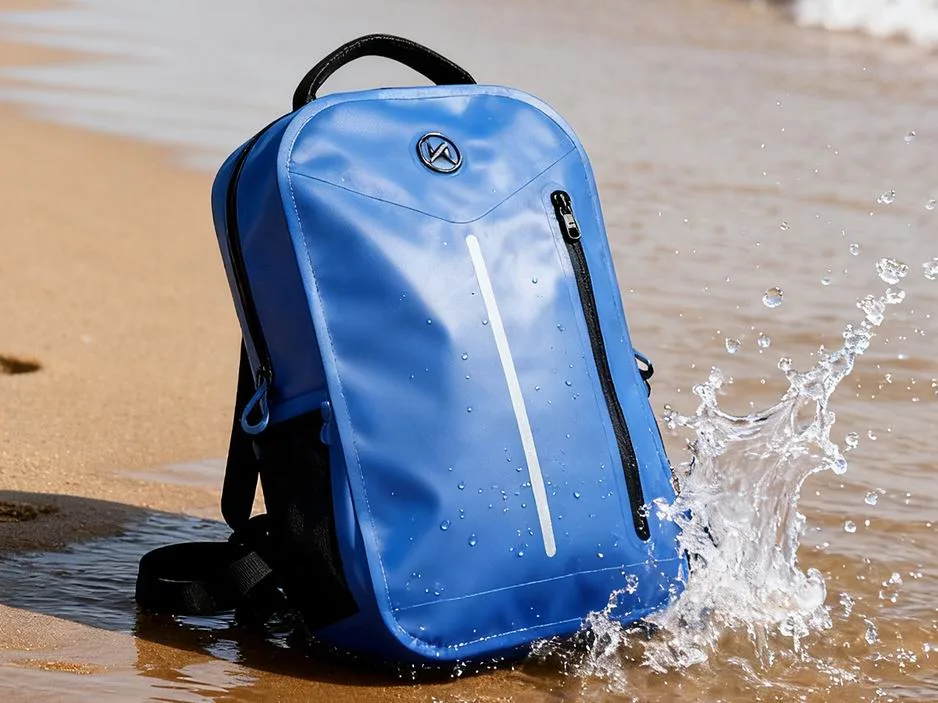
- Wash the closure and fold line first; most apparent closure leaks disappear after a proper clean.
- Retest after two hours indoors at room temperature before judging cold-related stiffness.
- Eliminate the four innocence explanations before blaming the bag for water inside.
- Ask whether the water came through the bag or through a lid, pocket or hatch.
- Confirm whether the problem is the shell, the weld, the closure or replaceable hardware.
- Compare against the job threshold rather than against how the bag looks.
- Try a repair first where the fault is a puncture or a buckle; both are straightforward.
- Demote rather than discard when only splash protection remains.
- Check the retirement decision tree for critical loads.
Most bags reach retirement through a specific cause rather than general tiredness, and knowing which one extends the life of the next bag considerably. If it was crease damage, store and roll differently. If it was ultraviolet exposure, dry in shade and store dark. If it was chemical soft spots, keep repellent and sunscreen out of contact. The mistake history is the best buying brief you will ever write for the replacement.
Teams replacing bags in volume should turn that history into a specification: target service life in hours, the environment multipliers involved, and the inspection interval that fits their operation.
Finally, keep perspective on what failure costs. A leaking dry bag is an inconvenience for almost every use case, and genuinely serious only where first aid, medication or communications depend on it. Test those bags rigorously and on schedule, accept weeping grades for sleep systems and clothing, and everything else can be judged by whether it still does the job it was assigned. More detail on testing regimes sits in our air inflation guide and the home testing procedure, both written for owners rather than laboratories.
Frequently asked questions
Q1. How do you know when a dry bag is worn out?
It fails a measurable check: it cannot hold air for ten minutes, the film feels tacky or powdery, the welds whiten when flexed, or it lets more than a few millilitres through a five-minute immersion. Scuffs and fading alone do not end a bag.
Q2. How long does a dry bag last before it wears out?
Anywhere from one season to twelve years. Daily coastal guiding typically wears a bag out in two to four years, weekend paddling with proper care in five to eight, and occasional holiday use stored indoors in eight to twelve.
Q3. Can a dry bag wear out from being used too much?
Yes, mainly through flex cycles at the closure and through ultraviolet dose. Rolling a bag daily for a season puts several hundred flex cycles on the same fold line, which is far more demanding than age alone.
Q4. What does a failing dry bag look like?
Whitened or crazed lines along welded seams, a fold line that no longer relaxes flat, dull or powdery patches on the film, and chalked or frayed webbing. None of these repairs themselves and all of them progress.
Q5. Why does my dry bag feel sticky?
Surface tackiness means the polymer is breaking down, usually from heat, ultraviolet exposure or contact with repellent and sunscreen. It precedes pinholing, so demote the bag from anything critical as soon as you feel it.
Q6. Is a leaking dry bag repairable?
If the leak is a puncture or a pinhole away from a seam, yes, with a correctly applied patch. If it is a peeling weld or a creased closure, no, because neither can be put back to its original condition.
Q7. Does a faded dry bag need replacing?
No. Colour loss means ultraviolet has reached the pigment, not that the barrier has failed. Test the bag rather than judging it; a faded bag that passes the air test is still doing its job.
Q8. How often should I test a dry bag?
At the start of each season, after any puncture or repair, and after long storage. Fleet and guiding operations should inspect every three months because their bags accumulate several hundred hours of use a year.
Q9. What is the simplest home test for a worn-out bag?
Roll three folds, press firmly and hold for ten seconds. A healthy bag resists noticeably; a tired one collapses with little resistance and may hiss at the closure or a seam corner.
Q10. How much water ingress is acceptable?
Depends on the job. Zero for electronics, documents and emergency kit; under 5 ml in thirty minutes for food; under 25 ml for spare clothing; effectively irrelevant for carrying already wet gear.
Q11. Do welds wear out before the fabric?
Usually no. The film tends to fail first through creasing or ultraviolet ageing, and the welds follow. The exception is a bag with a tight corner radius, where geometry fatigue shows within two seasons.
Q12. Can UV damage alone retire a bag?
Yes. A bag left permanently on a boat deck in strong sun can lose most of its useful life in one or two years, whereas the same bag dried in shade and stored dark may last eight or more.
Q13. Should I replace the hardware instead of the bag?
Yes when the shell is sound. Buckles and webbing can be replaced on most roll-tops, and doing so costs a fraction of a new bag. Welded D-rings that have torn away cannot be reliably restored.
Q14. What should I do with a dry bag that no longer seals?
Demote it. Use it for wet swimwear, muddy boots, laundry separation or vehicle organisation, and mark it clearly so it is never picked up for dry protection by mistake.
Q15. Does cold weather make a bag look worn out when it is fine?
Yes. Most films stiffen noticeably below 5 °C and feel board-like at minus 10 °C. Always test at room temperature after two hours indoors before concluding the film has perished.
Q16. How do I stop the next bag wearing out early?
Match the cause you diagnosed: shade drying and dark storage for ultraviolet failures, looser rolling and storage for crease failures, and keeping repellent away for chemical failures. Repair punctures promptly rather than packing around them.
People also ask
How can you tell if a dry bag still works?
Run the air test and a towel immersion: roll three folds, press and hold for ten seconds, then leave a weighed dry paper towel inside and submerge 20 cm for five minutes. Dry towel and firm resistance mean the bag is still serviceable.
What is the first sign of a dry bag failing?
Usually the closure. The fold line stops relaxing flat and the bag loses air resistance when squeezed, which typically precedes any visible damage by a season or two.
Do dry bags degrade over time even when unused?
Slowly, and mostly from storage conditions. Heat and sunlight drive degradation; a bag stored loosely rolled, dark and dry at stable temperature can remain serviceable for ten years or more.
Why does my dry bag smell bad even after washing?
Oils have penetrated the film rather than sitting on the surface, or mildew has colonised a seam. A rancid smell that survives drying is permanent, and the bag should be demoted from food duty.
Can you repair a leaking seam?
Not reliably at home. A peeling weld continues to peel because each flex lengthens the crack, and the re-weld needed is beyond any hand tool. Repair only punctures away from the seam.
How many years should a good dry bag last?
Five to eight years with regular weekend use and good care, two to four years under daily guiding use, and eight to twelve years for occasional holiday trips with indoor storage.
Need this in production volume?
QUANZHOU JUNYUAN BAGS has produced waterproof bags since 2014 in an SGS-verified 4,950 m2 facility in Fujian, China. Minimum order 500 pieces, sampling in 6–10 working days, bulk in 35–50 days, FOB Xiamen — write to service@junyuanbags.com with your spec and target market.