IPX6 vs IPX7 for Dry Bags
IPX6 covers a jet of 100 litres per minute fired through a 12.5 mm nozzle for three minutes; IPX7 covers thirty minutes submerged at one metre. Neither grade implies the other, and for a dry bag the practical choice is straightforward: buy IPX7 whenever the bag can end up in the water rather than merely under spray, and treat IPX6 as sufficient only for deck gear that is lashed and never falls overboard.
The confusion is understandable because the codes look like a scale. They are not a ladder; they are two different rigs measuring two different failure modes. This guide sets out the exact test parameters, what each failure mode looks like on a real bag, which activities push you from one grade into the other, and how to read a listing that prints a code without naming the standard behind it.
- The decision before the definition
- What the second digit is telling you
- Inside the IPX6 apparatus
- Inside the IPX7 apparatus
- Why one grade does not imply the other
- Mapping activities to a grade
- Seam construction behind each code
- What thirty minutes underwater really does
- How a bag loses the grade it earned
- Testing both codes at home honestly
- Reading a listing that only says waterproof
- Which one to put in the basket
- Sealed devices and dry bags are not the same test
The decision before the definition
Start from exposure, not from the number. If the worst realistic event is a bow wave, rain driven at 40 km/h, or a swimmer splashing a deck bag, then IPX6 is the honest requirement and anything more is insurance you will not claim. If the worst realistic event is the bag going over the side, being dragged under a hull, or sitting in a swamped cockpit, then IPX7 is the floor.
Price differences between the two are usually smaller than people assume, because the expensive part of a waterproof bag is the seam method, not the final grade. A radio-frequency welded construction tested to IPX7 against a stitched and taped construction tested to IPX6 can sit within 10 to 15% of each other at retail, which makes reaching for the higher figure the more durable choice in most purchases.
What the second digit is telling you
In the IP code published as IEC 60529, the first digit covers solid ingress and the second covers liquid ingress. A dry bag listing writes X for the first digit because nobody bothers testing dust protection on a bag, hence IPX6. That X is not a blank or a missing result; it simply means no claim was made, and it should not be read as a weakness.
The number after X identifies which apparatus the item survived, in conditions defined by the standard. It is a pass or fail against a described test, not a continuous score. The IEC maintains the definitions, which is why any listing worth trusting names IEC 60529 alongside the code rather than presenting six (numbers) as a rating invented in-house.
Inside the IPX6 apparatus
The jet rig is physical and unforgiving. Water is delivered at 100 litres per minute through a 12.5 mm nozzle from a distance of roughly 2.5 to 3 metres, for at least one minute per square metre of enclosure surface and not less than three minutes total. The bag is supported normally, usually upright, and every face that could meet spray is presented to the jet in turn.
What fails under that rig is rarely the fabric. A 0.5 mm TPU laminate has no difficulty with water arriving at speed; what fails is geometry at the closure and at any point where two panels meet. A jet hitting directly at the roll line can drive water past a two-fold closure that would sit happily through steady rain for an hour, which is why three folds and a buckle that pulls laterally both matter.
Duration of exposure matters as much as violence when you judge what you need. A commuter bag meets rain for forty minutes a day, five days a week, which adds up to more than 170 hours a year of persistent low-level assault. A sea kayak bag may see three minutes of genuine immersion a month. Read the specification against what your own year actually looks like rather than the worst story you have heard.
Inside the IPX7 apparatus
Immersion testing is quieter but asks a different question. The bag is submerged so that its lowest point sits around one metre below the surface and the highest point is at least 150 mm under water, held there for thirty minutes. Water temperature is controlled within a few degrees of ambient so that the air inside does not contract and fake a leak path.
Immersion punishes the things jets do not see. Pinhole-sized weld defects that a jet would miss become active conduits under sustained hydrostatic pressure. Any closure that relies on folded panels being compressed together under their own stiffness works less well when there is no dynamic force pushing contact together, which is precisely why some bags only perform when lashed tightly.
| Parameter | IPX6 test | IPX7 test | Why it matters |
|---|---|---|---|
| Delivery | 100 litres per minute | Static immersion | Jet is a pressure event, immersion is sustained |
| Nozzle or depth | 12.5 mm nozzle | 1 metre below surface | Determines local versus uniform loading |
| Duration | 1 min per sq m, min 3 min | 30 minutes | Long soak exposes slow capillary paths |
| Typical failure | Closure line, corners | Pinholes, welds | Different weak points entirely |
| Representation of | Bow spray, storms | Capsize, falling overboard | Choose by realistic worst event |
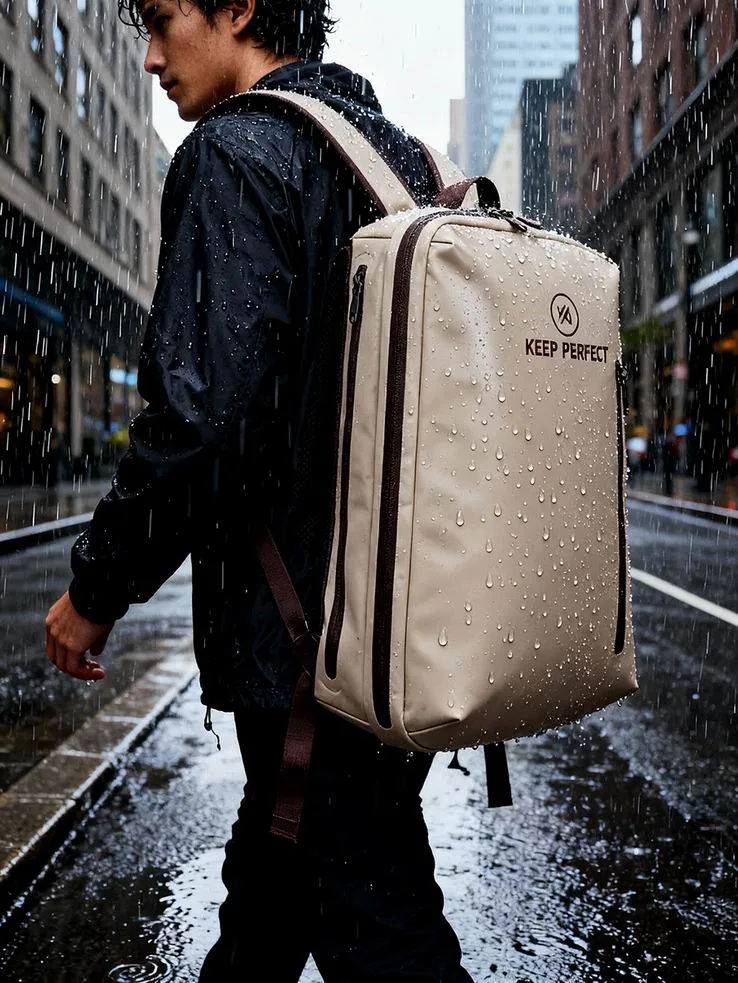
Why one grade does not imply the other
This is the single most useful fact in the whole comparison. A bag can survive thirty minutes underwater and fail a three-minute jet, because immersion applies uniform, low-velocity pressure that lets a flexible closure settle into a seal, while a jet applies high local velocity that lifts a poorly supported fold. Conversely, a bag that shrugs off a jet can slowly take water over half an hour at depth through a weld imperfection.
Reputable listings therefore say IPX6/IPX7 or IPX8 rather than the higher number alone, which tells you both rigs were passed. If only a single code is printed and no IEC reference appears, assume one test was run and pick the grade that matches how you use the bag. Our full rating guide covers the wider family including IPX5 and IPX8.
Mapping activities to a grade
Think about the worst event you would still consider ordinary. A commuter walking through a storm expects rain arriving sideways but does not expect the bag to fall into a harbour; IPX6 fits. A whitewater paddler expects the bag to be upside down in a hole for a few seconds several times a day; IPX7 fits, and arguably IPX8 with a documented depth would be better.
Then consider duration. A capsize in 1 metre of water that takes thirty seconds to recover is comfortably covered by IPX7 with margin. A bag dragged behind a boat at 6 knots for ten minutes is not covered by either code, because dragging creates pressure and abrasion that no ingress test models. In that case the construction matters more than the grade: heavier film, a reinforced base and a protected closure.
| Activity | Worst ordinary event | Grade that covers it | Construction note |
|---|---|---|---|
| City commute in storms | Sideways rain at 40 km/h | IPX6 | Welded seams, roll-top closed three folds |
| Sit-on-top paddling | Hull flip, brief immersion | IPX7 | Clip the bag; it will float |
| Day kayaking, coastal | Wet exit in 1 m of water | IPX7 | 0.5 mm film or heavier |
| Whitewater rafting | Repeated rolls in turbulent water | IPX7 or IPX8 | Reinforced corners, no valve |
| Motorcycle touring | Hours of driven rain | IPX6 | Straps must not chafe the closure |
| Dinghy sailing in chop | Bag swamped in cockpit | IPX7 | Tether; cockpit water sits for minutes |
Seam construction behind each code
There is no route to a credible immersion grade through a needle. Every stitch hole is a capillary, and under sustained pressure those capillaries feed. That is why the bags that honestly claim IPX7 use radio-frequency or hot-air welded seams, where two film surfaces fuse into a continuous bond without any hole through the membrane.
Bond quality is expressed in countable terms by anyone serious about the claim: typically 200 to 300 N of peel strength across every 25 mm of bond width, quoted with a method attached. The ASTM publishes standard peel and tensile procedures that make those figures comparable between sellers, so ask which procedure sits behind a claim before trusting it.
Jets are slightly more forgiving of stitched and taped seams, because a short-duration directional event may not have time to drive water through a well-taped line. It is still a compromise. If a listing quotes IPX6 and the photographs show stitching rather than a continuous weld, expect that bag to gain a little moisture over a long outing; see our notes on seam construction before buying.
What thirty minutes underwater really does
Immersion introduces hydrostatic load that grows with depth: roughly 0.1 bar for every metre, so one metre is about 10 kPa of uniform pressure across every square centimetre. That is not dramatic, but it is relentless and it acts for half an hour. Anything relying on friction between folded faces is being asked to hold indefinitely rather than to rebuff a moving jet.
Air inside the bag complicates matters further. If the bag is packed loosely with trapped air, internal pressure partially balances the outside load, and that air escapes through any defect it finds. If the air has been purged, the panels compress and contact area increases, which usually helps. This is the mechanism behind our write-up on pressure differentials and it explains why two users get different results from the same bag.

How a bag loses the grade it earned
A rating describes a new bag on the day of testing. Creasing is the main mechanism of decline: repeatedly folding a TPU film in exactly the same place creates a stress-whitened line, and after a few thousand cycles that line becomes a genuine leak path. Storing a bag rolled tightly for months does the same thing faster than using it does.
Two other factors accelerate the slide. Abrasion thins the film from outside, most often at the base of a bag that meets a boat deck, a board or a gravel car park every weekend. Then there is contamination: sunscreen, DEET-based insect repellent and some oils plasticise the surface and reduce its ability to hold a flat contact at the fold. None of these appear in the standard, all of them appear in the field.
| Factor | Effect after one season | Typical loss | Prevention |
|---|---|---|---|
| Fold creasing | Whitened line at the roll | Expect seal degradation | Vary the fold line |
| Sand in the closure | Grit path across the seal | Leaks within minutes | Rinse before rolling |
| Base abrasion | Film thinning, then pinholes | 20 - 40% thickness loss | Use a padded contact area |
| Plasticiser from sprays | Softened, tacky film | Poor fold contact | Wipe the closure after use |
| UV exposure | Surface chalking | Gradual embrittlement | Store out of direct sun |
Testing both codes at home honestly
- Close the bag with three folds and the buckle pulled laterally, then listen for a hiss while squeezing.
- For the jet check, use a garden hose on a jet setting for three minutes from about 2 metres.
- For the immersion check, fill a bath and submerge the bag with a weight, not your hand.
- Put dry tissue inside before each test so a trace of moisture is visible immediately.
- Dry the outside fully before opening, otherwise you will misread drainage as leakage.
The home version approximates rather than replicates, and every step above has a known source of error. A hose jet at domestic pressure delivers far less than 100 litres per minute, so a pass is meaningless. A bath gives only 300 to 400 mm of depth rather than a metre. What home testing does reliably is compare one bag against another and catch a closure failure before a trip; see the full home method for the detail.
Reading a listing that only says waterproof
- Look for the standard name, IEC 60529, next to any code rather than a bare number.
- Check whether both grades are claimed; IPX6/IPX7 means two separate rigs were passed.
- Look for the depth or nozzle figure in the fine print; a real test result includes them.
- Check the seam method in the photographs: continuous welds, not stitching.
- Beware any claim of a permanent rating with no time or depth qualifier attached.
- Compare against a model with a documented result elsewhere on the same page.
- Treat IPX8 with care unless the depth and duration are printed next to it.
Two phrases carry most of the signal. First, whether the seller says which evidence exists and offers it on request; a test report with a date, a sample description and a rig description is worth more than any adjective. Second, whether the listing acknowledges limits at all, since a company confident in its own result also tells you what would invalidate it.
Which one to put in the basket
Choose IPX7 unless the bag will never leave the deck or the rack. It costs a little more, it covers the accident that actually ruins trips, and it implies a construction standard that survives abrasion better. Choose IPX6 for motorcycle luggage, dry storage in a cabin, or any use where falling in the water is not part of the plan.
Then protect the grade you bought. Roll three times, vary the fold line weekly, rinse the closure before closing, and store the bag loosely with the buckle undone. Those four habits decide whether an immersion-rated bag still passes its own standard in year five, and they cost nothing compared with replacing gear because a bathroom test failed a week too late.
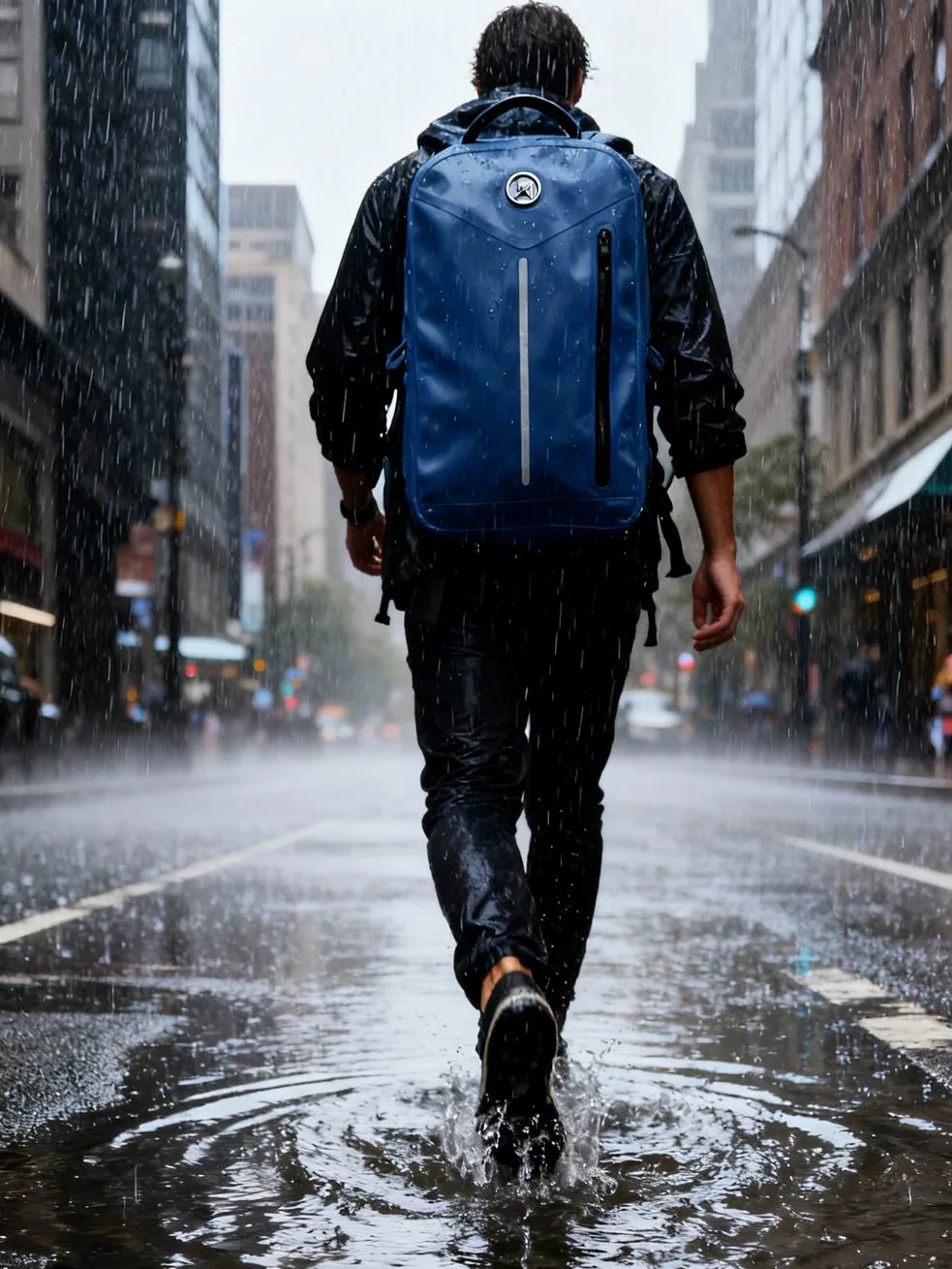
Sealed devices and dry bags are not the same test
Shoppers often transfer intuition from phone cases, where IPX7 and IPX8 are everyday claims. Those products are rigid enclosures with gasketed ports and precise tooling; their test result depends on geometry that never changes. A dry bag is flexible, its seal is created by the user each time it closes, and the result therefore depends on how it was packed.
That distinction is why a 20L model can pass an immersion rig in a laboratory and still take water in real use. The variable is the roll, and the person doing the packing controls it. Read the technique notes in closure guide, then check you are following them with two numbers in mind: three folds and no air trapped inside.
If you need the level of assurance that a rigid enclosure provides, put the item in a smaller roll-top inside the main bag. Two independent seals convert a user-dependent result into a largely user-independent one, which is the reason expedition paddlers double-bag electronics. Start from the roll-top dry bag range if you want one closure geometry across every size, and check answers to common listings questions in the site FAQ before you compare quotes.
Frequently asked questions
Q1. Should I buy an IPX6 or IPX7 dry bag?
Buy IPX7 unless the bag will stay lashed and never enter the water. IPX6 covers driven spray; IPX7 covers thirty minutes at one metre, which is closer to what happens when a bag goes overboard or sits in a swamped cockpit.
Q2. Does IPX7 automatically include IPX6 protection?
No. They are separate rigs with separate failure modes. A bag can sit happily underwater for thirty minutes yet lose its closure to a directed jet, and another can resist a jet while weeping slowly at depth through a weld pinhole.
Q3. What flow rate is used for the IPX6 test?
One hundred litres per minute through a 12.5 mm nozzle, delivered from roughly 2.5 to 3 metres, for at least one minute per square metre of surface and not less than three minutes in total.
Q4. How deep is the IPX7 immersion test?
The highest point of the item sits at least 150 mm below the surface and the lowest point around one metre down, held for thirty minutes, with water temperature close to ambient to avoid misleading results.
Q5. Is IPX8 better than IPX7?
Not necessarily. IPX8 means immersion under conditions agreed by whoever ran the test, so it is meaningless without a printed depth and duration. A documented IPX7 result is often more useful than an unqualified IPX8 claim.
Q6. Can I use a dry bag as a flotation device?
Never. A sealed bag traps air and will support some weight, but it can lose that air without warning and it is not designed to keep a person afloat. Carry a properly rated personal flotation device instead.
Q7. What does the X in IPX7 mean?
It means no claim was made about solid particle ingress rather than a failed test. Dry bag listings use X because dust protection is not what the product is being assessed for; the second digit is the one that matters.
Q8. Which grade do I need for kayaking?
IPX7. A wet exit, a swamped cockpit or a bag sliding overboard all involve immersion, and even a short one exceeds what a jet rating describes. Combine it with a welded seam and a three-fold closure.
Q9. Which grade do I need for a motorcycle journey?
IPX6 covers hours of driven rain at highway speed, provided the closure faces away from the airflow and the straps do not lift the fold. Add a rain cover if you expect long stretches above 100 km/h.
Q10. Do stitched seams reach either grade?
A well-taped stitched construction can often pass IPX6 and occasionally IPX7 on a fresh sample, but needle holes are capillaries and they open with age and flexing. Welded seams are the reliable route to any immersion grade.
Q11. How long does the IPX7 protection last?
As long as the film and closure stay uncreased and uncontaminated. Fold creasing, sand in the roll line and UV embrittlement are what retire a bag, typically after three to ten years depending on use and care.
Q12. Can I test either rating in a bath?
Partly. A bath gives 300 to 400 mm of depth, short of the full metre, so treat a pass as a check rather than evidence. Use dry tissue inside, weight the bag down, and dry the outside before opening.
Q13. Does trapped air help or hurt waterproofing?
It helps against the pressure gradient but hurts stability and, if the bag is squeezed, can push a closure open. Purge soft loads after packing, then roll three times, rather than relying on trapped air as a seal.
Q14. Why did one bag pass and its twin fail?
Because the seal is made by whoever does the packing. Fold count, trapped air, grit contamination and how tightly the buckle is pulled all change the result far more than small differences between identical bags.
Q15. Do valved bags hold their rating?
A cap-type valve with a sound gasket does not reduce the rating; it adds another possible leak path. Check that the valve closes flush and rinse the thread, since grit there prevents the last quarter turn from sealing.
Q16. Is there a higher grade than IPX7 for dry bags?
IPX8 exists but only has meaning with a printed depth and duration, plus the rig used. If a seller will not supply those three figures, compare on IPX7 results and on seam construction instead.
People also ask
What is the difference between IPX6 and IPX7?
IPX6 is a jet test delivering 100 litres per minute through a 12.5 mm nozzle for at least three minutes, while IPX7 submerges the item at about one metre for thirty minutes. Neither result guarantees the other.
Is IPX7 good enough for kayaking?
Yes. Every realistic kayaking failure involves immersion rather than spray, and thirty minutes at one metre covers a wet exit, a swamped cockpit and a bag going overboard with margin to spare.
Can a dry bag lose its waterproof rating?
Yes. Creasing along a repeated fold line, sand in the closure, thinning from abrasion and UV embrittlement all reduce performance. Care habits, not manufacture defects, retire most bags.
What does waterproof mean without a code?
Very little. Without IEC 60529 alongside a number, there is no defined test, duration or depth behind the claim. Ask which rig was used and request the date of the report.
Do you need IPX7 for everyday commuting?
Usually not. Driven rain is a jet event, so IPX6 covers it. Choose the higher grade only if you regularly cross water, cycle beside harbours, or carry items that cannot tolerate any immersion at all.
How deep can an IPX7 dry bag actually go?
About one metre for thirty minutes, since that is all the test defines. Deeper or longer is possible with heavier film and a strong closure, but it is untested territory rather than certified performance.
Need this in production volume?
QUANZHOU JUNYUAN BAGS has produced waterproof bags since 2014 in an SGS-verified 4,950 m2 facility in Fujian, China. Minimum order 500 pieces, sampling in 6–10 working days, bulk in 35–50 days, FOB Xiamen — write to service@junyuanbags.com with your spec and target market.