Multi-Day Dry Bag Plan for River Tubing
A three-day river tubing trip needs 60 to 90 litres of waterproof capacity per person, split across four bags rather than two: a 40L for the sleep system, a 20L for clothing, a 10L for food and cooking, and a 5L grab bag strapped where you can reach it while floating. Each bag rides lashed to a 1.2 m tube for six to eight hours a day, which means the strap points and the film thickness matter far more than they do on a day trip. Anything that cannot survive continuous low-speed abrasion against wet sand should not come.
What makes a float different from every other water activity is time. There is no put-in-and-take-out rhythm where you dry things between swims; a bag that takes water at 10:00 stays wet until you camp at 17:00, and it will be dragged over a gravel bar at least twice in between. The plan below covers volume maths, lashing geometry, abrasion limits, food security at night and the twice-daily packing rhythm that keeps a wet river trip comfortable rather than merely survivable.
- What a multi-day float demands of every bag
- Volume planning per person across three days
- Three waterproof tiers instead of one
- Lashing bags to a tube without losing them
- Abrasion: what dragging over gravel does to film
- Food, cooking and smell control at gravel-bar camps
- Keeping a sleep system dry for three nights running
- Daily rhythm: pack order and the evening dry-down
- Cold water, sun and storms on a slow river
- Failure modes seen after a three-day float
- River-specific numbers worth remembering
- Multi-day tubing checklist
What a multi-day float demands of every bag
A one-day float asks a bag to survive a few dunks. A three-day float asks it to survive continuous immersion zones, six to eight hours of dragging contact per day, four nights of dew at maybe 8 °C, and repeated loading against sharp sand while you strap it down. Very little of that involves clean water: river silt is finer than beach sand, stays in suspension, and works into every fold and buckle it touches.
The second detail matters: a tubing load sits low, so a bag that comes loose is going into the water with the current pushing it. Everything must be both separable and attached, meaning a quick-release lashing that can be undone one-handed in cold hands. Design the system around that contradiction, because the alternative is either a bag you cannot access or a bag you lose at the first riffle.
Volume planning per person across three days
Start from volume rather than weight, because tubes care about bulk per strap far more than kilograms. A realistic float is 20 to 22 litres for the sleep system, 14 to 18 litres for clothing, 12 to 15 litres for food and cooking, and about 5 litres of reachable daily items. Everything above those numbers is comfort padding that will get wet, so spend your weight budget on dry bags rather than on extra clothing.
| Category | Volume per person | Typical weight | Bag size | Notes |
|---|---|---|---|---|
| Sleep system | 20-22 L | 2.2-3.4 kg | 40 L loosely packed | One compressed bag and pad |
| Clothing and insulation | 14-18 L | 3.0-4.0 kg | 20 L | Includes one dry sleep layer |
| Food and cooking | 12-15 L | 4.5-6.0 kg | 10 L plus 10 L | Two days of food is the heavy part |
| Reachable daily items | 4-6 L | 1.0-1.5 kg | 5 L | Water filter, sunscreen, snacks |
| Group shelter share | 8-12 L | 3.5-5.0 kg | 20 L shared | Split between two people |
Those figures assume summer conditions with night temperatures of 8 to 12 °C. Drop the overnight low to 2 °C and the sleep system grows by roughly 5 litres and 1 kg, which usually means upgrading the 20L clothing bag rather than squeezing it. Use a shared shelter bag between two people and rotate who carries it each morning; resentment at camp is mostly about unbalanced loads rather than about distance travelled.

Three waterproof tiers instead of one
Sorting gear into tiers beats trying to waterproof everything equally. Tier one is the always-bone-dry category: sleeping bag, sleep clothing, insulation and electronics. Tier two tolerates damp because it will be used wet anyway: camp shoes, swimwear, quick-dry towel. Tier three is sacrificial: anything that can get thoroughly soaked without consequence, such as a dry change of shorts you intend to swim in.
| Tier | Contents | Construction needed | Test standard | Failure consequence |
|---|---|---|---|---|
| Always dry | Sleep bag, insulation, phone | Welded 0.5 mm film | IPX7 minimum | Cold night, end of trip |
| Tolerates damp | Camp shoes, swimwear, towel | Welded 0.3-0.4 mm | IPX6 | Uncomfortable, manageable |
| Sacrificial | River shorts, river shirt | Coated nylon | IPX4 | No consequence |
| Smell-proof | Food, wrappers, cooking kit | Welded plus sealed closure | IPX6 | Wildlife visit at 02:00 |
| Group safety | First aid, repair kit, documents | Welded 0.5 mm | IPX7 | Serious incident risk |
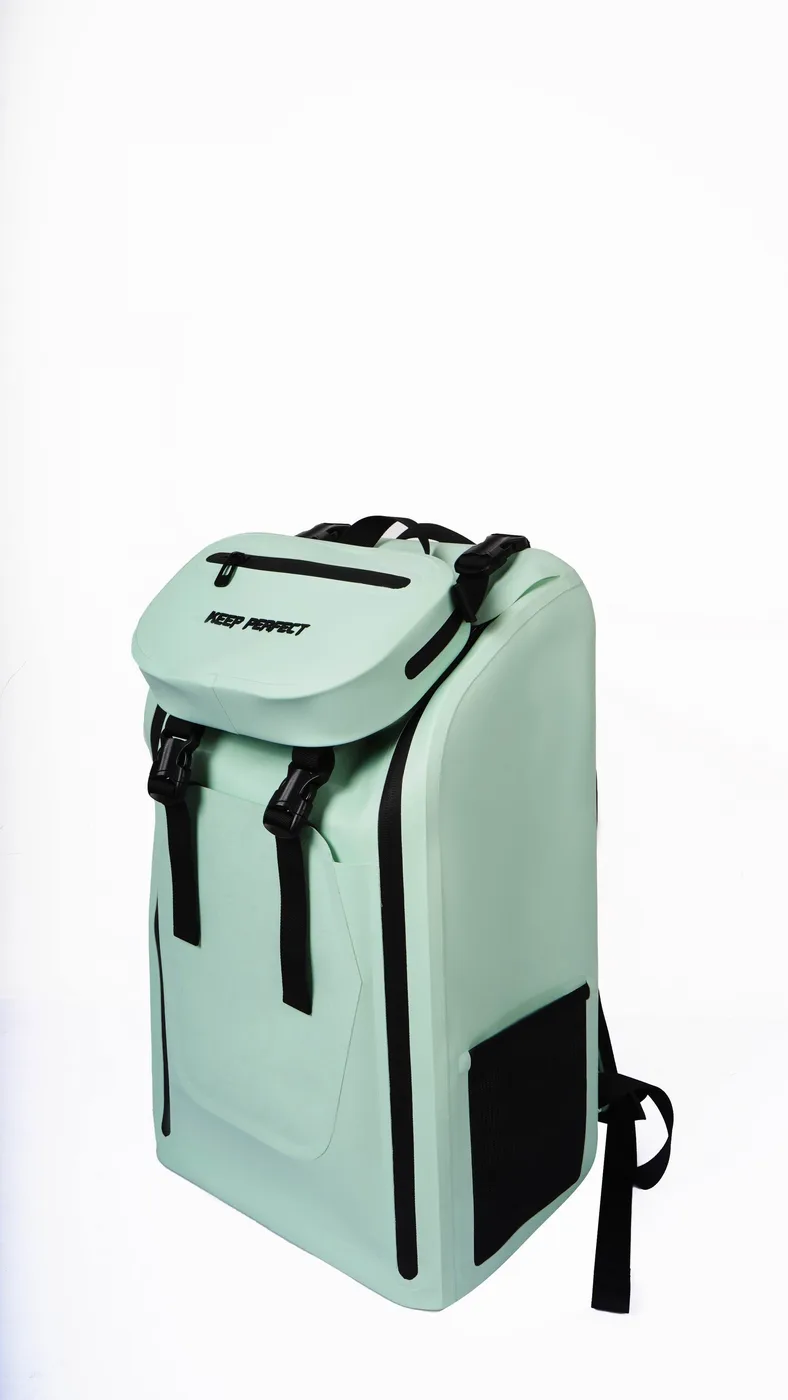
Assigning a colour to each tier makes the system work on a tired evening. Orange or mint for the always-dry tier, olive for items that tolerate damp, and black for sacrificial kit saves opening three bags in the dark to find the one you want. Colour coding also settles arguments about responsibility when two people share a tube.
The smell-proof tier is the one people skip and later regret. Raccoons, deer and occasionally bears investigate food odour at gravel-bar camps where there is no tree tall enough to hang anything. A sealed roll-top suppresses far more odour than a stuff sack, and combining it with a night cache 30 m from the sleeping area removes most of the risk without carrying bear canisters.
Lashing bags to a tube without losing them
Tubes have no hard points, which is the core problem. Everything you attach attaches either to the tube handles, to the valve, or to a rope girth you create yourself. The most reliable method is a 6 mm cord passed under the tube at two points, forming a saddle that the bag sits in, with two side straps taking the load when the tube rotates. A single centre strap allows the whole assembly to swing under the tube in rapids.
Use two attachment points per bag and keep the quick-release side oriented toward your body. Carabiners rated above 4 kN are overkill; what matters is that the gate cannot open under vibration, so screw-gate or locking types only, and never a plastic clip that UV has chalked for three summers. Expect each lashing to take a 12 to 18 kg load in static conditions and brief shock loads above 30 kg when the tube drops through a riffle.
Abrasion: what dragging over gravel does to film
This is the hidden killer of multi-day floats. A bag strapped to a tube touches something abrasive for most of the day: wet sand at maybe 60 grit equivalent, gravel with edges sharp enough to score, and occasionally submerged wood. At a drift speed of 3 km/h that contact is gentle but continuous, and over six hours it removes more material than a single violent scrape would.
Film thickness is the defence, and 0.3 mm is not enough for anything strapped low on the tube. A 0.5 mm TPU laminate with a 500D face fabric typically survives a full three-day float with visible scuffing but no loss of integrity, while thinner film comes back looking frosted and may have lost 15 to 20% of its thickness in the worst patches. If you own both grades, put the thick-film bags low and centre, and the light ones high and dry. More on this in our notes on TPU abrasion behaviour.
The second thing worth knowing is that abrasion and pressure interact. A bag wedged tightly between tube and frame carries a concentrated load at one point rather than spreading it, and the combination of pressure plus movement removes film much faster than movement alone. Loosen each strap by enough to slide a flat hand underneath, then check again after 30 minutes, because wet webbing stretches during the first hour of every float.
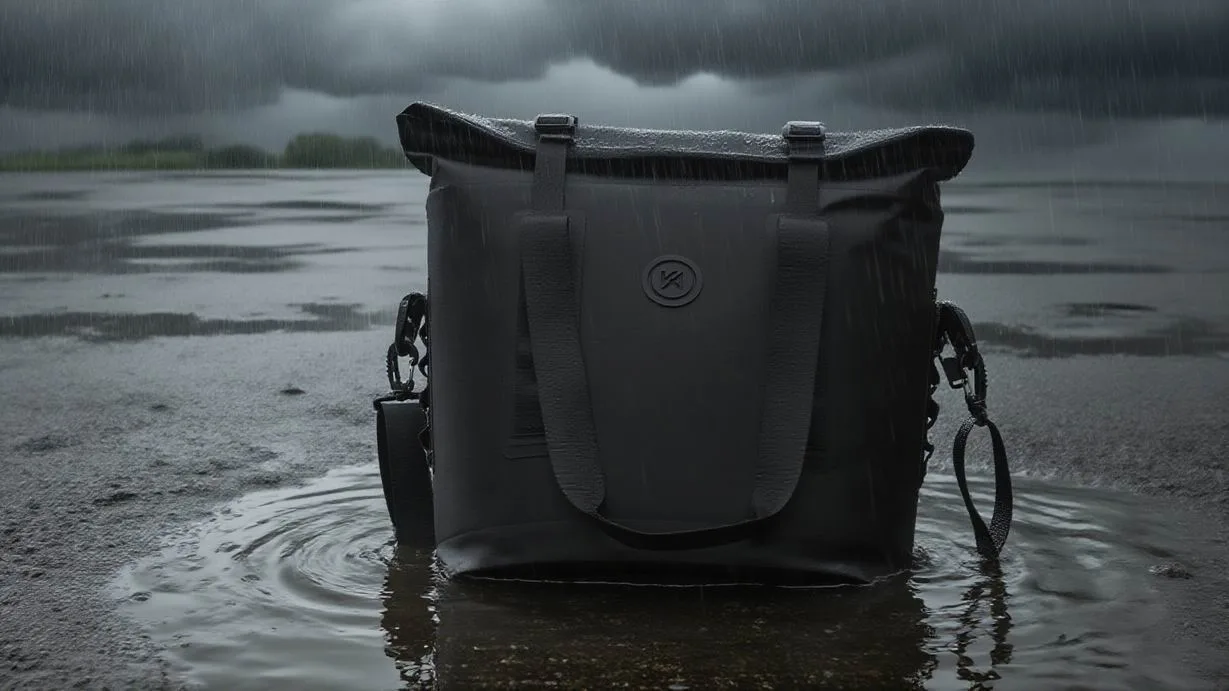
Food, cooking and smell control at gravel-bar camps
Multi-day food planning is mainly a moisture problem. Everything arrives pre-wrapped in a wet environment, and once packaging is opened it cannot be resealed against river humidity. Portion each meal into sealed pouches before the trip, then put those pouches inside a 10L roll-top so there is a second barrier between your dinner and the river. Cook 30 m downwind of where you sleep and treat grey water as something to carry rather than scatter.
Trash is the practical test of how well a group organises itself. Microtrash, twist ties, foil corners and bottle caps end up in gravel no matter how careful everyone is, which is why the 5L grab bag doubles as the daily rubbish bag. Everything comes out with you, and it all needs to be inside a sealed bag at night for the same odour reasons as food.
Keeping a sleep system dry for three nights running
The sleep system is the only category with zero tolerance for failure. A damp sleeping bag at 8 °C is not an inconvenience; it is the difference between rest and a genuinely cold night. Pack it in a 40L bag that is only 60% full so there is slack film to roll three times, then press the air out with your forearm rather than with your whole body, which avoids forcing air past the fold.
Double-bagging is worth the extra gram when the forecast is uncertain: sleeping bag inside a compression sack inside the roll-top gives two seals on the item you would pay most to replace. Our site guide to choosing a size for a sleeping bag covers how much slack to leave, and the general review in wild camping packing notes applies directly to riverbank camping.
Daily rhythm: pack order and the evening dry-down
Every float benefits from a fixed order, because searching costs daylight. In the morning, the sleep system goes in first and low, clothing second, food last and accessible, and the grab bag is clipped on only when you are ready to push off. In the evening, reverse the order but add a sorting step: dry things stay dry, damp things get an hour on a rope line before dusk, and nothing goes into a bag that will be sealed overnight.
| Time | Action | Why it matters | Duration |
|---|---|---|---|
| 06:30 | Air out sleep system in the sun | Removes overnight condensation | 20 min |
| 07:00 | Sleep bag into 40L, three folds | The zero-failure item goes first | 5 min |
| 07:30 | Clothing and food loaded | Accessible weight on top | 10 min |
| 17:00 | Tarp up if rain is coming | Everything else depends on this | 15 min |
| 18:00 | Sort dry, damp and wet piles | Stops odour and mildew at source | 15 min |
| 19:30 | Food and trash sealed at 30 m | Night wildlife and dew control | 10 min |
Build slack into that schedule. The line nobody plans for is the unplanned swim, the stuck tube, or the gravel bar that turns out to be privately owned. Thirty minutes of slack per day is what keeps the rhythm humane, and it is usually spent drying something.
Then there is the dust that arrives with the wind. Mid-summer river corridors generate their own breeze each afternoon, and a fine layer settles on every horizontal surface within 20 minutes, including the mouth of any bag left open while you sort kit. Keep the roll open for seconds, not minutes, during the evening re-pack.
Cold water, sun and storms on a slow river
Tubing exposes you to two extremes at once: skin in 18 to 22 °C water for hours while your head sits in 30 °C air at a UV index near 9. Sun protection has to be reapplied every two hours because no application survives a swim, and it needs to be in the grab bag rather than buried with the clothing. Hypothermia signs show up quietly on long floats; shivering and fumbling fingers are the early warnings, not the late ones.
Weather is the variable worth planning around. Afternoon thunderstorms build on most summer river corridors, so check forecasts each morning and plan to be off the water by 15:00 when convection is likely; forecasts from NOAA cover most US watersheds including river stage. Water quality matters too after heavy rain, since runoff raises bacterial load considerably, and the recreational-water pages at the CDC explain why nobody should swallow river water on day three.
Failure modes seen after a three-day float
- Frosted contact patches where a bag sat low on the tube and abraded for 20 hours.
- Silt-packed buckles needing over 60 N to release, sometimes doubled to jam entirely by day three.
- Sauce residue and crumbs inside food bags drawing wildlife within 30 m of the sleeping area.
- Sleeping bags compressed too hard at pack time, losing loft worth 2 to 3 °C of comfort.
- Grab bags lost overboard because they were clipped rather than lashed at two points.
- Print and colour fading faster than expected due to constant wet reflections off moving water.
Nearly all of these are prevented by either better lashing or better daily sorting. The frosted patches are the only genuinely irreversible item, which is why a cheap sacrificial layer between bag and tube pays for itself: an old foam pad or even a cut section of closed-cell mat takes the abrasion instead of the film, and costs almost nothing to replace.
Budget for wear rather than pretending it will not happen. A heavy float season costs roughly one contact patch repair per large bag and one set of webbing between trips, which is far cheaper than replacing a 40L bag that abraded through because nobody noticed the frosted patch in July. Track those costs and you will start rotating bags before they fail.
River-specific numbers worth remembering
Float speed on a lazy summer river runs 2 to 4 km/h, so a 20 km day is genuinely a full six to eight hours including stops, and the sun exposure clock runs the whole time. Rivers also change stage overnight; a gravel bar that looks permanent at 18:00 can be 300 mm under water by breakfast after upstream rain, so nothing important gets stacked lower than 500 mm above the waterline.
Sandbars hold daytime heat far longer than grass camps do. Surface temperatures of 45 °C at 16:00 are normal on dry gravel, and a black bag laid directly on that surface ages quickly and can soften prints. Everything goes on a tarp, a towel, or in the shade of the tube itself; three minutes of arranging prevents three seasons of regret.
Budget for wear rather than pretending it will not happen. A heavy float season costs roughly one contact patch repair per large bag and one set of webbing between two trips, which is far cheaper than replacing a 40L bag that has abraded through because nobody noticed the frosted patch in July. Track those costs and you will start rotating bags before they fail.

Multi-day tubing checklist
- Four bags per person: 40L sleep, 20L clothing, two 10L for food and cooking, 5L grab bag.
- All straps doubled and quick-release points turned toward you before every launch.
- Thick-film bags placed low and central where abrasion is worst.
- Sleep system double-bagged with slack for three folds and never compressed to the limit.
- Food and trash sealed inside one smell-proof roll-top, cached 30 m from camp.
- Reapply sunscreen every two hours and be off the water by 15:00 in storm season.
- Nothing stored lower than 500 mm above the waterline at night.
Trip organisers, clubs and resorts running float packages can turn that checklist into a specification: bag count, size split, film thickness, strap geometry, colour coding and test standard are the six lines that decide whether kit survives a season of commercial use.
Two companion guides cover adjacent ground if this is your first float: the canoe camping load plan uses the same tiered structure with paddles involved, while the weekend capacity guide scales down for shorter trips. Compare sizes in the roll-top dry bag range, browse formats across the full product line, or read about higher-risk water in packrafting durability notes.
Frequently asked questions
Q1. How much dry bag capacity do I need for a multi-day river tubing trip?
Plan 60 to 90 litres per person across four bags: a 40L for the sleep system, a 20L for clothing, 20L split across two food bags, and a 5L grab bag you can reach while floating.
Q2. How do you strap a dry bag to a river tube?
Create a saddle from 6 mm cord passed under the tube at two points, then secure the bag with side straps so it cannot rotate beneath you. Always use two attachment points and a quick-release gate turned toward your body.
Q3. Will a dry bag survive three days dragging on gravel?
Yes if the film is 0.5 mm and the contact patches are protected. A 0.3 mm bag typically returns frosted with 15 to 20% of film thickness lost in the worst spots after 20 hours of contact.
Q4. What is the best way to keep a sleeping bag dry while tubing?
Put it in a 40L bag that is only around 60% full, press the air out with your forearm, and roll three folds. Double-bagging inside a compression sack gives a second seal on the one item that cannot fail.
Q5. How much weight can I strap to one tube?
A standard adult tube handles 12 to 18 kg of strapped gear comfortably, with brief shock loads above 30 kg when dropping through a riffle. Above that, handling suffers and the lashing starts to slide.
Q6. Do I need different bags for different gear?
Yes. Use three tiers: always-dry welded film for sleep and electronics, thinner welded bags for things that tolerate damp, and cheap coated sacks for sacrificial river clothing and shoes.
Q7. How do I stop wildlife getting into food at a gravel bar camp?
Seal every meal portion inside a smell-proof roll-top, cook 30 m downwind of where you sleep, and cache food and trash 30 m away overnight. Where there are no trees to hang anything, a sealed bag plus distance is the practical method.
Q8. Should my dry bags be bright colours or muted?
Bright. Camouflage and dark bags disappear against willows and shade, while orange, mint or pink are visible from 200 m away, which matters when a bag goes into the water at the next bend.
Q9. What water temperature should make tubing a concern?
Below about 15 °C you need insulation planning, not just dry storage, because hours of skin contact at that temperature drains core heat quietly. Watch for fumbling fingers and shivering as the early signs rather than the late ones.
Q10. How far can you float in a day on a lazy river?
At 2 to 4 km/h, expect to cover 15 to 25 km in six to eight hours including stops. Plan to be off the water by mid-afternoon in storm season, since convection builds over most summer river corridors.
Q11. How often does the closing need to be checked during the day?
Twice: once after pushing off, once after the first riffle. Both checks take five seconds and catch the most common failure, which is a closure that was rolled over silt or opened slightly against the tube.
Q12. Can I use one big 60L bag instead of several?
It is possible but unwise. One closure is a single point of failure for everything you own, and a 60L bag weighing over 12 kg makes an unbalanced tube that spins in current and steers badly.
Q13. Is it safe to drink river water if I filter it?
Filtration handles microbes but not everything dissolved, and bacterial load rises sharply after upstream rain. Filter, then treat, and accept that day three water quality may differ considerably from day one at the same spot.
Q14. How should I deal with wet river clothing overnight?
Hang damp items on a rope line for an hour before dusk and sort into dry, damp and wet piles. Nothing still wet goes into a bag that will stay sealed until morning, because that is how odour and mildew start.
Q15. What should be in my 5L grab bag?
Sunscreen, water filter or treatment tablets, a snack, lip balm and a small first-aid pouch. It doubles as the daily rubbish bag, since microtrash accumulates on the tube and needs somewhere sealed to go.
Q16. Do I need a waterproof phone pouch as well as a dry bag?
Yes, ideally. The two-seal rule means the phone lives in its own small pouch inside the roll-top, so even if the main closure is compromised while you are swimming, the device still has an independent barrier around it.
People also ask
How do you pack for three days of river tubing?
Use four bags: 40L for the sleep system packed only 60% full, 20L for clothing, two 10L bags for food and cooking, and a 5L grab bag you can reach from the tube. Everything lashes at two points.
Are dry bags really needed for river tubing?
Yes, and welded ones rather than coated packs. A float puts bags in contact with water for six to eight hours a day and drags them over gravel twice daily, which no shower-resistant daypack is built to survive.
What size dry bag fits a sleeping bag and a sleeping pad?
Around 40 litres when packed loosely, leaving enough slack film for three folds. Compressing the bag to the absolute limit costs loft worth 2 to 3 °C of warmth and leaves too little fabric to roll properly.
How do you stop a dry bag rubbing through on a tube?
Move thick-film bags to the low contact positions and put a sacrificial layer such as closed-cell foam between bag and tube. Check that the bag moves less than 20 mm when pushed sideways before you launch.
Can you leave food sealed in a dry bag overnight?
Yes, and it is the recommended approach where there is nothing to hang from. A roll-top suppresses odour better than a stuff sack, and caching it 30 m from camp handles curiosity from raccoons and deer.
Why do dry bag buckles jam after river trips?
Fine silt packs into the spring channel rather than the visible surfaces. Rinsing under a tap for 20 seconds each evening keeps release force near 25 N instead of the 60 N or more that jammed buckles need.
Need this in production volume?
QUANZHOU JUNYUAN BAGS has produced waterproof bags since 2014 in an SGS-verified 4,950 m2 facility in Fujian, China. Minimum order 500 pieces, sampling in 6–10 working days, bulk in 35–50 days, FOB Xiamen — write to service@junyuanbags.com with your spec and target market.