Home / Blog / Buying & Comparisons
Single vs Double Layer Dry Bags
A single-layer dry bag is one laminated wall: film bonded to a woven face, welded at the seams. A double-layer bag adds a second wall, either a bonded inner laminate or a loose liner that carries the waterproof job while the shell takes the abrasion. In a 20L size the second wall adds roughly 130 to 160 grams and 8 to 12% to unit cost, and it buys about 2.5 to 3 times the abrasion life on gravel and boat decks.
That trade is worth taking for bags that get dragged, strapped to racks or packed beside metal hardware, and it is wasted on bags that live indoors or inside another pack. The sections below put numbers on each difference: weight per litre, cycles to wear-through, patchability after a puncture, fold behaviour at minus 5 °C, and the point at which paying for a second wall stops making sense.
- What single-layer and double-layer actually mean
- The weight penalty, litre by litre
- Abrasion: which wall survives being dragged
- Puncture and tear behaviour compared
- How seams differ when there is one wall, not two
- Cost across a size run
- Repair: patching one wall versus reaching a liner
- Cold weather flexibility and fold fatigue
- Where listing claims get vague
- Care differences that compound over five years
- Choosing by activity, not by marketing tier
- A two-minute decision rule at the shelf
- What line-ups usually get wrong
What single-layer and double-layer actually mean
Single-layer construction is exactly what it sounds like: one piece of laminated material per panel, usually 420D or 500D polyester or nylon face bonded to a 0.3 mm to 0.5 mm TPU film. The same material does two jobs at once, resisting abrasion and holding water out. It welds beautifully, which is why bags built this way tend to have clean, narrow radio-frequency seams and almost no bulk at the corners.
Double-layer construction splits those jobs. An outer shell of heavier denier or a tougher weave takes the scrubbing, while an inner liner of lighter film keeps water out. Sometimes the two are laminated into one composite; sometimes the liner is loose, welded only at the mouth and around openings. Loose liners are easier to build and to repair, but they can twist inside the shell and make packing feel odd.
The distinction people confuse this with is coating versus lamination, which concerns how the waterproof layer is applied rather than how many layers there are. If you want that comparison, read the laminated versus coated guide and the note on internal coating versus lamination. Both sit downstream of the choice you are making here.
The weight penalty, litre by litre
Weight scales with surface area rather than with volume, so the penalty is proportionally larger on small bags and smaller on big ones. A 5L double-layer bag may be 22% heavier than its single-wall equivalent, while a 60L duffel with a liner is only about 9% heavier. That is why makers who build both usually reserve the second wall for the sizes that meet the ground.
| Size | Single-layer weight | Double-layer weight | Added weight | Volume lost inside |
|---|---|---|---|---|
| 5 L | 150 g | 185 g | +35 g | Almost none |
| 10 L | 240 g | 295 g | +55 g | About 0.2 L |
| 20 L | 420 g | 550 g | +130 g | About 0.4 L |
| 40 L | 760 g | 950 g | +190 g | About 0.7 L |
| 60 L | 1,050 g | 1,280 g | +230 g | About 1.0 L |
Those extra grams are not wasted when the bag works for a living. A rescue bag that lives on deck, a dive bag dragged across a pontoon or a club kit bag thrown into a trailer is being abraded every single time it moves, and the liner absorbs that damage while the waterproof layer behind it stays intact. What you lose in grams you regain in years of service.
For anything carried on your back the calculus changes, because weight you feel for three hours costs more than abrasion you never see. A 20L lined bag at 550 g against 420 g is a difference many paddlers accept without complaint; the same 130 g matters more to someone counting every gram before a long approach.
Abrasion: which wall survives being dragged
Abrasion is the headline difference and the easiest to measure. Put panels of the two constructions through the rotary-platform method published by ASTM with the same wheel and the same load, and a single 0.5 mm laminate typically wears through after 1,200 to 1,600 cycles. The same single wall backed by a liner reaches 3,000 to 4,500 cycles before the waterproof layer is breached.
| Use condition | Single-layer cycles to breach | Double-layer cycles to breach | Field result |
|---|---|---|---|
| Dry rub against fabric | 4,000-5,000 | 8,000-10,000 | Both fine for years |
| Wet rub against concrete | 1,200-1,600 | 3,000-4,500 | Liner clearly wins |
| Sand-impregnated contact | 600-900 | 1,800-2,400 | Single wall fails first |
| Repeated boat-deck drag | 2,000-2,800 | 5,000-7,000 | Gap widens after season two |
| Strapped to a roof rack | Fails quickly | Holds with edge wear | Use a lined bag |
Translate those cycles into seasons. Six hundred sand-impregnated cycles is roughly eighteen months of weekend use for a bag that sits on a beach, whereas 2,000 cycles is closer to five years. Nobody replaces a bag because it looks old; they replace it because water got in, and the second wall pushes that moment much further down the road.
Note that a liner is no substitute for denier. A double-wall bag built from a 210D shell still abrades faster than a single-wall 500D bag on sharp surfaces, because thickness of the outer weave controls how quickly contact becomes cutting. Ask for the cycle number and the method together; neither figure means anything on its own.
Puncture and tear behaviour compared
Puncture resistance follows total thickness more than count of layers. A 0.5 mm single laminate resists a fishing hook or a tripod leg about as well as a 0.3 mm liner behind a light shell, because total film in the sandwich is similar. Where the second wall genuinely wins is in how a tear propagates: once the shell tears, the liner holds the load and the hole stays small and patchable.
Tear propagation is the failure mode that ruins trips. A single wall nicked at a corner can split 40 mm in one afternoon of handling, turning a pinhole into a seam problem that no field patch will hold cleanly. A lined bag with the same damage keeps its shape and can be taped and used for another week, which is the practical definition of a repair worth doing at the water’s edge.
How seams differ when there is one wall, not two
Single-layer bags weld exceptionally well. Two identical films meet, radio-frequency energy melts them and the joint is often stronger than the surrounding material, which is why thin, crisp welds with no bulk are the signature of good single-wall construction. The trade-off is that there is no redundancy: a bad weld or a creased seam takes the whole waterproof system down at once.

Lined bags need the two walls to be joined somewhere, and that joint is where engineering shows. The best versions weld the liner to the shell on an offset line so the two seams never sit on top of each other, distributing stress across maybe 8 mm of material instead of concentrating it. Poor versions weld both layers in one line, creating a stiff ridge that cracks after repeated folding.
Corner geometry deserves a look when you are holding a sample. Fold a corner over twice and watch for whitening at the film, which means the laminate is being over-stressed. A well-designed lined corner spreads over a radius; a cheap one folds to a point, and that point is where field failures begin after twelve to eighteen months of weekend use.
Cost across a size run
Cost tracks material area plus seam length, and lined construction adds both because every panel is cut twice and joined at least twice. Expect a single-wall 20L to sit at index 100 against roughly 112 for the lined version, widening to about 125 at 60L where the extra seam length grows. What you are buying is not better waterproofing but better survival of abuse.
| Size | Single-layer index | Double-layer index | Gap | Where the gap is worth paying |
|---|---|---|---|---|
| 5 L | 100 | 118 | +18 | Almost never |
| 10 L | 100 | 114 | +14 | Deck and rescue bags |
| 20 L | 100 | 112 | +12 | Boat decks, dive boats |
| 40 L | 100 | 118 | +18 | Expedition and raft support |
| 60 L | 100 | 125 | +25 | Rental fleets and outfitters |
The value picture flips when you look at cost per year rather than cost per unit. A single-wall bag replaced after three seasons costs more over a decade than a lined bag replaced after seven, even after paying a 20% premium up front. Fleet operators already understand this; identical arithmetic applies to anyone who uses a bag hard enough to wear it out.
Resale tells a similar story. Lined bags hold noticeably more second-hand value because buyers know what they are getting, whereas a heavily abraded single wall may be only a few sessions from leaking no matter how it looks in photographs. If you rotate kit every few years, part of the premium comes back at resale time.
Repair: patching one wall versus reaching a liner
Patching a single laminate is the simpler job: one surface to clean, one patch to weld or glue, finished in about fifteen minutes with a flat iron or a solvent cement made for TPU. Because nothing sits behind the film, the repair is visible from inside the bag and can be inspected every time you open it, which is a real advantage for anyone maintaining their own kit on a trip.
Lined bags have a hidden problem. A puncture through the shell may or may not have gone through the liner, so the first step is diagnosis: inflate slightly, listen, and dab soapy water on the area. If only the shell failed, no repair is needed at all. If both failed, you have to work through the shell-to-liner bond to reach the inner layer, and that is no longer a fifteen-minute job at a hotel sink.
The redeeming feature is that lined failures are usually small. Because propagation is arrested, a double-wall bag tends to arrive at the repair bench with a 5 mm hole rather than a 40 mm split, and small holes take patches well regardless of which layer is involved. Repair difficulty increases; repair frequency and severity both fall.
Cold weather flexibility and fold fatigue
Extra layers mean extra stiffness at the roll. A lined bag folded three times at minus 5 °C needs noticeably more hand force than a single wall, and that stiffness puts additional stress on the film at the fold line. Repeated cold folding is a recognised cause of crazing in TPU, so anyone paddling or skiing in winter should roll slowly rather than quickly.
Film choice mitigates this more than wall count does. A 0.3 mm polyether TPU stays workable well below freezing, while a PVC-coated alternative stiffens far earlier regardless of how many walls it has. If cold-weather folding is the dominant use case, prioritise the chemistry of the film over the count of layers, and accept that one wall of the right polymer beats two of the wrong one.
Where listing claims get vague
Listings rarely state wall count because it sounds unexciting, so the tell is usually in the specifications that are missing. A stated fabric weight in grams per square metre paired with a stated denier implies roughly how thick the composite is; if neither figure is given, assume the lighter build. Weight per size tells the story too: 240 g for a 10L means one wall, 295 g suggests two.
- Missing grams-per-square-metre figures almost always mean the lighter build is being sold.
- A weight figure quoted without its size cannot be compared across two listings.
- Heavy-duty or military-grade claims with no named test method carry no information.
- A film thickness plus a denier that add up to implausible numbers signals padded copy.
- One photograph of a cut corner reveals construction faster than any paragraph of sales text.
Ask one question and the answer usually settles it: what is the total fabric weight in grams per square metre, and is there a liner? Anyone who builds bags knows both figures immediately. The rest of the specification worth comparing is set out in our guide to reading a dry bag spec sheet, and the question of build tiers is handled in what a dry bag should cost.
Care differences that compound over five years
Single-wall bags dry faster and more completely, because there is nowhere for moisture to hide. Turn one inside out and it airs in about two hours of shade; a lined bag can hold damp between the layers for six to eight hours, which is exactly why liners develop mildew odour if they are packed away wet repeatedly. Drying discipline matters more the more walls you have.
Storage creasing hits constructions differently too. A single wall stored folded flat takes a set at one line and eventually cracks there; a lined bag resists taking that crease but generates more internal rubbing when flexed. Store either loosely rolled with the buckle unclipped, and never in direct sun, where an additional trapped layer holds heat between films.
Choosing by activity, not by marketing tier
The right question is not which construction is better but which failure you are protecting against. Bags that sit still inside a kayak hatch never meet abrasion, so weight and drying win. Bags that are slid along pontoons, tossed into trailers or strapped to racks are being cut every trip, and there the liner is not optional regardless of what the spec sheet suggests.
| Activity | Dominant risk | Recommended wall | Why |
|---|---|---|---|
| Day kayaking, hatch storage | Low abrasion | Single | Weight saving and faster drying |
| Beach days and lake shores | Sand abrasion | Double | Sand-impregnated rubbing is brutal |
| Dive boat and pontoon use | Wet concrete drag | Double | Three times the cycles to breach |
| Backpacking and thru-hiking | Carry weight | Single | Grams felt for six hours |
| Packrafting and canyoneering | Sharp rock contact | Double | Arrests tear propagation |
| Indoor storage and car boot | Almost none | Single | Second wall buys nothing |

A two-minute decision rule at the shelf
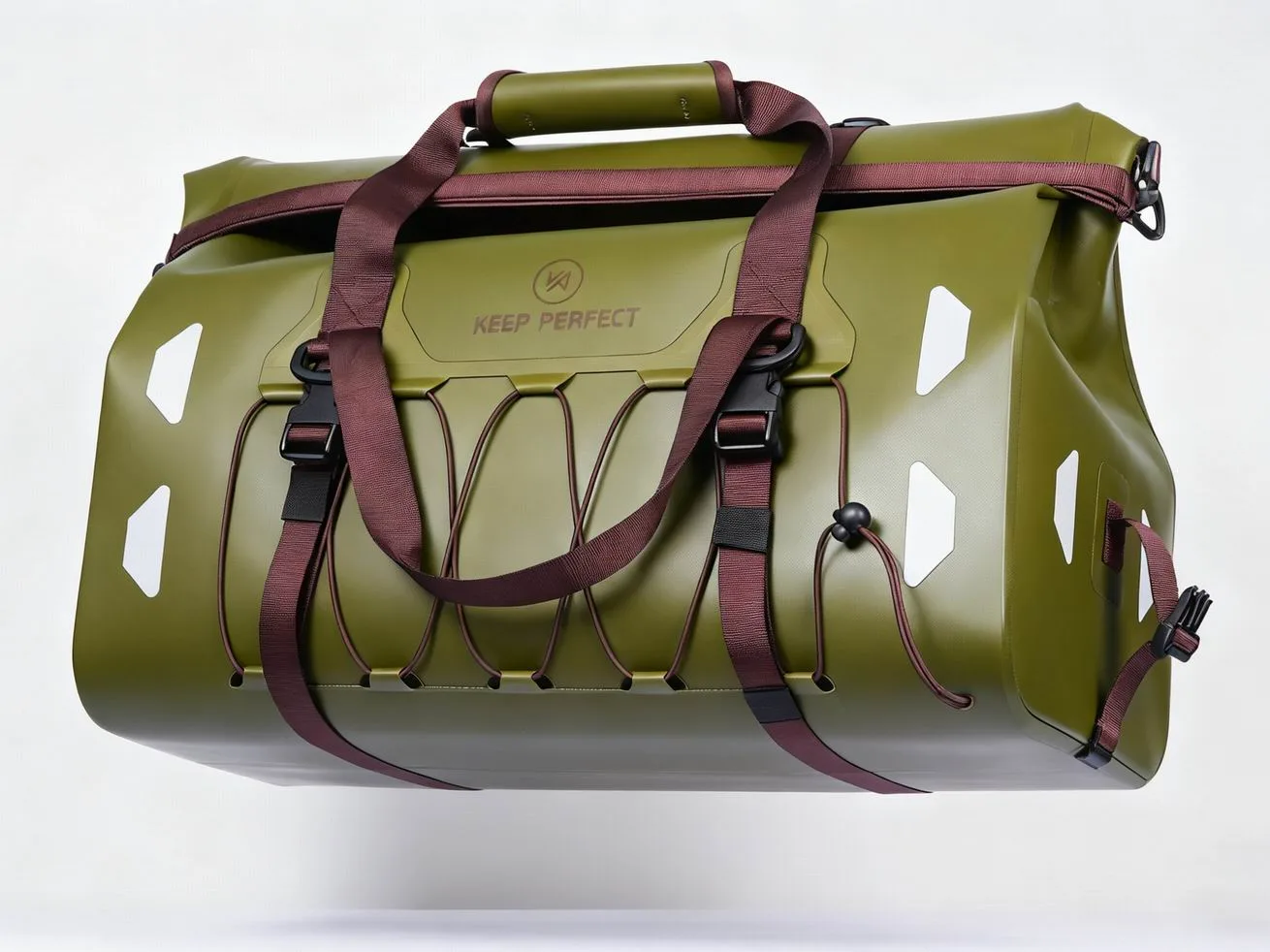
Run four checks and decide. Weigh the bag: if a 20L is near 420 g it is single-wall, near 550 g it probably has a liner. Ask for the abrasion figure and the method behind it. Look at a cut corner or an open seam edge to see whether there are one or two layers. Then ask yourself honestly whether this bag will ever touch ground, concrete or a rack in the next five years.
If the answer to the last question is no, take the single wall, enjoy the lighter carry and put the saving into something else in the kit. If it is yes, pay the premium: the alternative is buying the same bag twice inside six years. Either way, insist on a named standard rather than an adjective, because waterproof performance itself comes from the weld and the film chemistry rather than from wall count.
Independent test methods make that insistence easy to enforce. The ISO publishes textile water-resistance and colour-fastness methods alongside many others, so a quotation can require a result against a specific method instead of a marketing claim. Ask for the test report number, not a screenshot of a certificate logo.
What line-ups usually get wrong
Most ranges pick one construction and carry it across every size, which is convenient to build and wrong for users. The better approach is mixed: single wall for the small sizes that live inside other bags, lined for the mid sizes that meet the deck, and a heavier single wall or a duffel format for the largest sizes where weight is unavoidable anyway. Matching construction to size costs nothing in complexity at the bench.
The other common error is putting the liner everywhere inside a backpack-style product, adding grams to a thing already carried on the shoulders. Where a harness exists, the user feels every extra gram several thousand times a day, so the second wall should be reserved for the base and the wear panels rather than the whole body. Partial reinforcement wins over full lining in anything worn.
Our own ranges are built on that mixed logic, with production running since 2014 in an SGS-verified 4,950 m2 facility where sampling takes 6 to 10 working days and bulk runs 35 to 50 days. Size and tier comparisons continue in the light versus heavy-duty guide and across our roll-top dry bag range.
Frequently asked questions
Q1. Single vs double layer dry bags: which should I buy?
Buy single-layer unless the bag will touch ground, concrete, racks or a boat deck regularly. A single wall saves roughly 130 g in a 20L and dries twice as fast; a liner gives two-and-a-half to three times the abrasion life and is worth the premium for hard-use bags.
Q2. What is a double layer dry bag?
A bag with two walls: an outer shell that takes abrasion and an inner liner that keeps water out. The liner is either bonded into a composite or welded loosely at the mouth. The arrangement means damage to the outside does not immediately become a leak.
Q3. How much heavier is a double layer bag?
About 130 g in a 20L, 240 g versus 420 g becomes 295 g for a 10L, and roughly 230 g extra on a 60L duffel. Proportionally the gap is widest on small bags, because weight follows surface area rather than packed volume.
Q4. Does a second layer make a bag more waterproof?
No. Waterproof performance comes from film quality, laminate bond and seam construction, not from wall count. A well-welded single wall passes the same IPX7 immersion test as a lined bag; what the liner changes is how long that performance survives abrasion.
Q5. Which construction is easier to repair?
A single wall. One surface, one patch, about fifteen minutes with a heat-activated TPU film. Lined bags need diagnosis first, because the shell can be holed while the liner is intact, and reaching the inner layer means working through a bonded area.
Q6. How many abrasion cycles should I look for?
Ask for the figure together with the method. A single 0.5 mm laminate commonly reaches 1,200 to 1,600 cycles in a wet rub against concrete; a lined version reaches 3,000 to 4,500. Numbers quoted without a method are not comparable between brands.
Q7. Are double layer bags worth it for kayaking?
Usually not for hatch storage, where abrasion is near zero and every gram matters on the carry. They are worth it for deck bags that are dragged over shingle, dive bags pulled across pontoons and anything strapped to a trailer or roof rack.
Q8. Does a liner affect packing volume?
Slightly. Expect to lose around 0.2 L in a 10L bag and up to 1.0 L in a 60L duffel, because the liner takes internal space and adds stiffness at the roll. Check usable volume rather than the headline litre figure.
Q9. Is a loose liner a problem?
It can twist inside the shell, making packing feel odd and creating internal pockets of damp. Bonded composites avoid that but are harder to repair. If you choose a loose liner, dry it fully every time and check that it stays seated at the corners.
Q10. Which is better in freezing conditions?
Chemistry matters more than wall count. A 0.3 mm polyether TPU single wall stays flexible well below zero, while any PVC-coated construction stiffens early. Lined bags are simply stiffer to roll cold, which increases fold-line stress.
Q11. Why do listings not state the wall count?
Because it is not a headline feature, so you have to infer it. Weight per size is the fastest clue: 240 g for a 10L indicates one wall, 295 g suggests two. Asking for fabric weight in grams per square metre settles it immediately.
Q12. Do lined bags dry more slowly?
Yes. A single wall turned inside out airs in about two hours in shade, while moisture trapped between two layers can take six to eight hours to clear. That is why liners are more prone to mildew odour if they are packed away damp.
Q13. Is a second wall worth paying for in a rental fleet?
Yes. A single-wall rental bag replaced after three seasons costs more over ten years than a lined bag replaced after seven, even after paying about 20% more up front. Fleets should always buy on cost per year.
Q14. Is a laminated bag automatically double layer?
No. Lamination describes how layers are bonded into one material, not how many walls there are. A single-layer bag can be laminated, and a lined bag can use coated fabrics for either wall. Read the note on internal coating versus lamination for the distinction.
Q15. Can I add protection to a single-layer bag myself?
Reinforcing the base with a welded patch panel helps in the highest-wear zone, and many brands offer it from new. Local reinforcement is usually a better deal than a full liner: it protects where the bag actually meets the ground without adding weight everywhere.
Q16. What kills a dry bag first?
Abrasion at the base and the corners, followed by crease damage at the fold lines. Fabric rarely wears through in the middle of a panel. Choose construction for the abuse those two areas will see, then store the bag loosely rolled.
People also ask
What is the difference between a single layer and a double layer dry bag?
A single layer bag uses one laminated panel per wall, so that panel resists abrasion and holds water out at once. A double layer bag separates the jobs: a tough shell outside, a waterproof liner inside, which roughly triples abrasion life for about 130 g extra in a 20L.
Is a thicker dry bag more waterproof?
Thicker film improves puncture resistance and slows wear, but waterproof performance comes from the laminate bond and the quality of the weld. A well-welded 0.3 mm wall passes the same immersion standard as a 0.5 mm one; thickness mainly decides how long it lasts.
How can you tell if a dry bag has a liner?
Weigh it and look at a seam edge. A 10L single wall is around 240 g, while a lined version is nearer 295 g. An exposed edge shows either one material or two distinct materials, and asking for grams per square metre confirms it.
Are heavy-duty dry bags worth the money?
Yes if they meet abrasion: sand, concrete, boat decks and racks. No if they live inside another bag or sit in a dry garage. Compare cost per expected service year rather than sticker price, since a bag that lasts seven years beats two that last three.
Do double layer dry bags last longer in saltwater?
They resist the physical wear that salt accelerates, such as stiff film and sand-laden rubbing, but they do not resist chemical attack better. Rinse and dry any bag thoroughly; a trapped damp layer between walls is actually the higher mildew risk.
Which dry bag construction should a beginner buy?
A single-layer bag in the 10L to 20L range with welded seams and a named IPX7 result. It is lighter, cheaper, faster drying and easier to patch, which suits the first few seasons far better than paying for abrasion life that will never be used.
Need this in production volume?
QUANZHOU JUNYUAN BAGS has produced waterproof bags since 2014 in an SGS-verified 4,950 m2 facility in Fujian, China. Minimum order 500 pieces, sampling in 6–10 working days, bulk in 35–50 days, FOB Xiamen — write to service@junyuanbags.com with your spec and target market.