Waterproof Packing List for Canoeing
A two-person canoe on a three-day route carries 80 to 140 litres of waterproof volume split across five to seven bags, with each bag kept under 11 kg so a single person can lift it over a portage. Day trips need far less: 15 to 25 litres per person in two bags, one of which stays within arm's reach for a rain shell and a phone. Either way the rule is the same, pack to 85% of stated capacity so the roll-top can make three full folds.
This list gives real volumes and weights for every item, assigns each group to a bag size, and then places the bags in the canoe so the trim stays neutral in a 25 km/h crosswind. It also covers the two decisions people get wrong most often: whether to use a barrel instead of dry bags, and how to lash a load so it survives an unplanned swim. For the wider sizing logic, see our dry bag capacity guide.
- How much waterproof volume a canoe trip needs
- The core list: what must be in a dry bag
- Clothing and sleeping kit by volume
- Food, cooking and the odour problem
- Electronics, documents and the small pouch
- Choosing bag sizes for a two-person canoe
- Barrel versus dry bags in a canoe
- Getting the trim right in a loaded canoe
- Lashing so nothing walks or floats away
- Portaging a full waterproof load
- A day trip list, packed differently
- Cold water and shoulder season: the extra kit
- The pre-launch checklist
How much waterproof volume a canoe trip needs
Volume follows trip length, but not linearly. The first night costs the most, because a sleeping bag, a sleeping mat, a shelter and a cooking kit are fixed-volume items that do not shrink for a shorter trip. A one-night trip needs about 45 litres per person; a three-night trip needs about 60; a seven-night trip needs about 75, because food is the only category that keeps growing and it grows slowly once the stove and fuel are packed.
Two people sharing a canoe can consolidate some of that. One shelter, one cooking kit and one first-aid pouch are shared, which typically removes 25 to 35 litres from the combined total. A pair on a three-day route therefore needs about 100 litres between them rather than 120, and can carry it in five bags instead of eight.
Leave headroom in every bag. A 30L bag packed to 30 litres cannot be rolled three times, and a bag that cannot be rolled is a bag that leaks. The working rule is to pack to 85% of the stated volume, which means a 30L bag holds about 25 litres of gear and a 20L holds about 17.
| Trip | Waterproof volume per person | Shared kit | Suggested bag split | Total packed weight per person |
|---|---|---|---|---|
| Day trip, calm water | 15-25 L | Shelter not carried | 1 x 20L + 1 x 5L | 3.5-5.0 kg |
| Overnight | 40-50 L | Shelter, stove, first aid | 1 x 40L + 1 x 10L | 8-11 kg |
| Three-day route | 55-70 L | Shelter, stove, first aid | 2 x 30L + 1 x 10L | 11-14 kg |
| Five-day route | 65-80 L | Shelter, stove, repair | 2 x 30L + 1 x 20L | 13-17 kg |
| Seven-day expedition | 75-95 L | Shelter, stove, repair | 1 x 60L + 2 x 20L | 16-21 kg |
The core list: what must be in a dry bag
Start with the items that fail if they get wet, because those decide the bag count. A sleeping bag that gets soaked is a hypothermia risk rather than an inconvenience, so it gets its own compression dry bag. A down jacket loses most of its loft when wet and dries slowly, so it joins the sleeping bag or sits in the same bag as the insulation layer.
Next come the items that merely become useless: matches, a paper map, a phone, a satellite messenger, medication and a passport or park permit. These are small and light, so they travel together in a 5L bag that never leaves the canoe unlashed. Keeping all of them in one place means that one careful bag protects the entire trip administration.
Everything else is negotiable. A pot, a dry bag of pasta, a tarp and a spare paddle all survive a soaking, so they can ride in a bag that is more exposed or in a non-waterproof pack inside a larger liner. Sorting the list this way, into fails-if-wet, useless-if-wet and fine-if-wet, is the fastest way to size the bags correctly.
| Item | Packed volume | Weight | Bag | Consequence if wet |
|---|---|---|---|---|
| Sleeping bag, 3-season | 12 L | 1.40 kg | Compression 20L | Serious, hypothermia risk |
| Insulated jacket, down | 3 L | 0.45 kg | 10L with layers | Serious, loses all loft |
| Base layers and socks | 5 L | 0.80 kg | 10L | Uncomfortable, dries slowly |
| Paper map and permits | 0.4 L | 0.10 kg | 5L admin bag | Serious, cannot navigate |
| Phone and satellite messenger | 0.5 L | 0.30 kg | 5L admin bag | Serious, no communication |
| First-aid pouch | 1.2 L | 0.45 kg | 5L or outer pocket | Moderate, dressings useless |
| Stove, fuel, pot | 4 L | 1.10 kg | 20L kitchen bag | Minor, dries on the fire |
| Three days of food | 9 L | 4.50 kg | 20L kitchen bag | Minor unless it is bread |
| Tarp or shelter | 6 L | 2.20 kg | 30L with bag | Moderate, heavy when wet |
Clothing and sleeping kit by volume
Clothing is where people over-pack. Three days on the water in late spring, with daytime highs of 22 °C and nights near 6 °C, needs one insulating mid-layer, one rain shell, one set of base layers for camp, two pairs of socks and a hat. That is 8 to 10 litres and 1.6 to 2.2 kg, and it fits in a single 15L bag with room to roll.
The sleeping system dominates instead. A synthetic 3-season bag packed in a compression sack occupies 10 to 14 litres and a down bag 8 to 11, while an inflatable mat adds 3 to 5 litres and a pillow 1 to 2. Combined with a sleeping liner, the whole system is 15 to 20 litres, which is why the sleeping bag almost always gets a dedicated 30L compression dry bag rather than sharing.
Pack clothing by day rather than by type. Rolling each day's outfit together means you open one bag once a day instead of sorting through everything each morning, and it keeps the wet camp clothes away from the dry ones. A small 2L bag for the wet items is worth its weight on any trip longer than two days.

Food, cooking and the odour problem
Food volume is easy to underestimate because it is bought in rigid packaging. Decanted into soft pouches, three days of food for one person occupies 8 to 10 litres and weighs 4 to 5 kg; left in its original packaging the same food takes 14 litres and 6 kg. Repackaging is the single largest saving available in a canoe load and it takes 30 minutes at home.
The stove, fuel and pot travel in the same bag as the food, which keeps fuel smells away from the sleeping bag and means the whole kitchen comes out as one unit at camp. A 20L bag holds a stove, a 230 g gas canister, a 1.5 litre pot, a mug, a lighter and three days of food with room to spare. Keep the fuel canister upright in a side pocket and check the valve before packing.
In bear country, the rules change and the list grows. Odour-proof storage, a rope and a carabiner for a hang, and a separate bag for cooking clothes add about 2 litres and 1.2 kg. Do not put food in the same bag as anything you sleep with, and do not rely on a dry bag to be odour-proof: a welded TPU shell keeps water out but does nothing about smell.
Electronics, documents and the small pouch
Electronics deserve two layers. A phone or a camera goes into a small 2L welded pouch first, and that pouch goes into the 5L admin bag. Two independent seals cost 60 g and mean a single failed fold does not end the trip's navigation or photography. If you carry a power bank, keep it with the electronics rather than with the food, where it will get knocked.
Documents go flat. A passport, a permit, a vehicle key and a printed itinerary fit in a 0.5 litre flat pouch that slides down the side of the admin bag and stays readable without unpacking. Soggy paper is a genuine problem on a canoe trip because there is nowhere to dry it, and a permit you cannot read at a checkpoint costs a morning.
One habit makes the difference between a dry phone and a wet one: a dedicated dry pouch that never leaves your person. On a canoe trip that means a 1 to 2 litre pouch clipped to a belt or a PFD, holding the phone, a whistle and a small torch. Our documents guide and camera gear guide both cover the double-seal approach in more detail.
Choosing bag sizes for a two-person canoe
A pair on a three-day route does best with five bags: two 30L compression bags for the sleeping systems and clothing, one 20L for the shared kitchen, one 15L for shared shelter and tools, and one 5L admin bag that stays accessible. That is 100 litres of stated capacity holding about 85 litres of gear, and no single bag exceeds 11 kg.
Avoid one large bag for the pair. A single 90L bag sounds efficient and is a disaster on a portage: it cannot be lifted by one person, it does not fit between the thwarts cleanly, and if it is dropped in the water the whole trip gets wet at once. Five bags give redundancy, distribute weight and let two people carry a load in one trip each.
Colour coding is worth the small effort. Assign one colour to each person and a third to shared kit, so at camp and at a portage everyone knows which bag is theirs without opening anything. On a mixed fleet this also speeds up the morning pack, which on a cold wet morning is worth more than it sounds.

Barrel versus dry bags in a canoe
A 60 litre canoe barrel is a hard cylinder with a gasket lid. It is genuinely more waterproof under sustained immersion, it stacks, it doubles as a seat or a table, and it floats even when full. It is also rigid, heavy at 3.5 to 4.5 kg empty, and utterly useless on a portage unless you buy a harness for it.
Dry bags win on flexibility and weight. Five bags totalling 100 litres weigh about 3.2 kg combined and conform to the hull, so they sit lower and use space a barrel cannot reach. They lose on absolute submersion performance and on camp convenience, and they need to be lashed properly, because a soft bag that is not tied in will walk around the bilge all day.
The hybrid is common and sensible: one 30 or 60 litre barrel for the kitchen and food, which is the heaviest and most odorous group, plus dry bags for clothing, sleeping kit and admin. That keeps the weight low and gives you a camp table. Choose the barrel when the route has short portages and the dry bags when it has long ones.
| Factor | 60 L barrel | Five dry bags totalling 100 L | Winner |
|---|---|---|---|
| Empty weight | 3.5-4.5 kg | 3.0-3.4 kg | Dry bags |
| Immersion performance | Excellent, gasket lid | IPX7 when rolled properly | Barrel |
| Fits an awkward hull space | No, rigid cylinder | Yes, conforms to the bilge | Dry bags |
| Portage with a harness | Awkward above 20 kg | Two trips, balanced load | Dry bags |
| Camp convenience | Seat, table, wash basin | None, soft and round | Barrel |
| Floats when full | Yes, guaranteed | Depends on trapped air | Barrel |
| Odour control for food | Good with a gasket | Poor, TPU is not odour-proof | Barrel |
Getting the trim right in a loaded canoe
Trim is the difference between a canoe that tracks and one that weathers. In a crosswind of 25 km/h, a canoe loaded 5 kg too heavy at the bow will swing its stern downwind and demand constant correction; the same load centred slightly aft of the middle will hold a line with a small rudder input. Aim for the loaded waterline to sit level, or very slightly stern-down in a tandem boat paddled into wind.
Weight should also sit low. A barrel and the heaviest dry bags belong on the floor of the hull between the thwarts, not on top of softer bags, because a load that sits high makes the boat tender in beam waves. On a lake with a 40 cm chop, dropping the heavy items 15 cm lower is the single most effective stability change you can make without buying anything.
Check trim before you launch, not after. Float the loaded canoe in knee-deep water, sight along the hull from the side and look at where the waterline falls relative to the bow and stern. If the difference is more than about 3 cm, move one bag. It takes two minutes and it decides how the next six hours feel.
| Position in the hull | Weight limit | Effect on handling | What belongs there |
|---|---|---|---|
| Bow, forward of the first thwart | 8 kg | Bow-down, weathers into wind | Light clothing bag |
| Centre, between the thwarts | 25 kg | Neutral, best tracking | Barrel or heaviest bags |
| Stern, behind the rear thwart | 12 kg | Stern-down, bow lifts in chop | Food and kitchen bag |
| On top of the centre load | 5 kg | Raises centre of gravity | Soft items only |
| Clipped within reach of a paddler | 2 kg | Minimal | Admin bag, water, rain shell |
Lashing so nothing walks or floats away
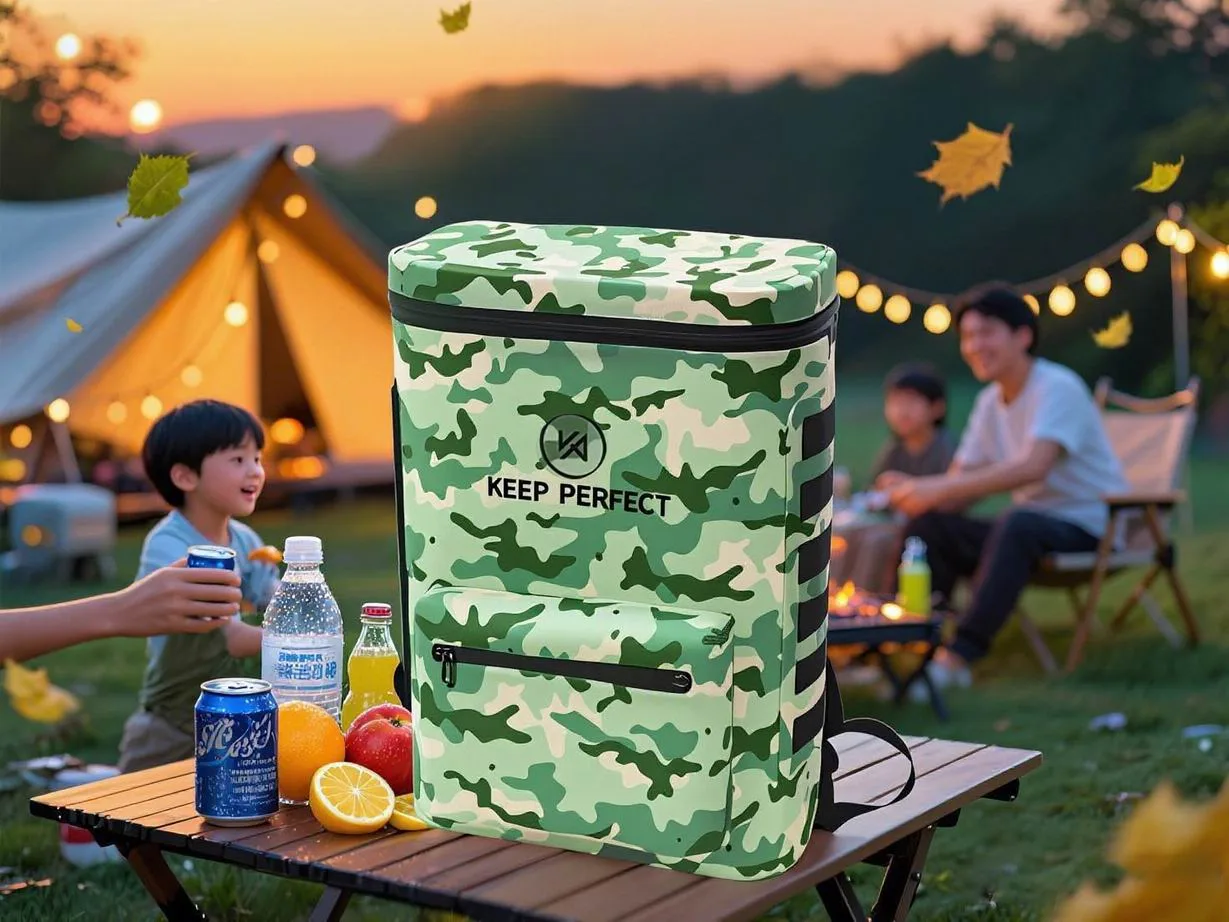
Every bag gets tied in. An unlashed bag in a canoe is not neutral: it slides on every turn, it collects bilge water and, if the boat goes over, it floats away while you are still holding the gunwale. Two short lengths of 6 mm cord per bag, clipped to a thwart or to a hull loop, is enough and costs 40 g.
Lash to a fixed point, not to another bag. Chaining bags together means one failure releases the whole train, and it makes it impossible to pull a single bag out at lunch. Run each cord from the bag's D-ring to a thwart, pull it tight enough that the bag cannot slide more than 50 mm, and finish with a quick-release knot you can undo with cold hands.
Leave one bag deliberately reachable. The 5L admin bag and a water bottle should sit within arm's reach of a paddler, clipped but not buried, because the moment you need a rain shell is usually the moment the weather has already arrived. Everything else can be packed into the hull properly.
Portaging a full waterproof load
Portage planning starts at the packing stage, because a bag heavier than about 11 kg cannot be carried comfortably by most people for more than 400 m. Split the load so the heaviest bag is the kitchen barrel or a 30L food bag, and keep the awkward bulky items, the shelter and the sleeping systems, in separate bags that can be carried one in each hand.
Two trips beat one heroic trip. On a 1 km carry, walking it twice with a balanced 10 kg in each hand is faster, safer and far less damaging to knees and to bags dragged on the ground. If you must single-carry, use a tumpline or a proper portage yoke rather than a shoulder strap, because a 20 kg soft bag on one shoulder twists the spine on every step.
Protect the bags on the carry. Set them down on grass or on a pack, not on gravel, and never drag a loaded dry bag, because dragging wears about 0.02 mm of film per 100 metres. On a route with six portages, that habit alone adds a season to the life of the base of every bag in the load.
A day trip list, packed differently
Day trips invert the priorities. There is no sleeping system and no kitchen, so the total volume drops to 15 to 25 litres per person, but the need for quick access rises, because you are stopping for lunch and swimming rather than making camp. Two bags work best: a 20L for layers and food, and a 5L that stays clipped within reach.
The reachable bag holds a rain shell, a phone in a pouch, sunscreen, a snack and a small first-aid kit. It should be possible to open it one-handed while the canoe is moving, which in practice means a bag that is not buried and a closure you can unroll without putting the paddle down.
Water is the item people forget. Two litres per person per day weighs 2 kg and occupies 2 litres, and it does not need to be in a dry bag at all, which is a useful reminder that not everything belongs in one. Carry water in a bottle, keep food in a soft bag, and reserve dry bag space for the things that fail if they get wet.
Cold water and shoulder season: the extra kit
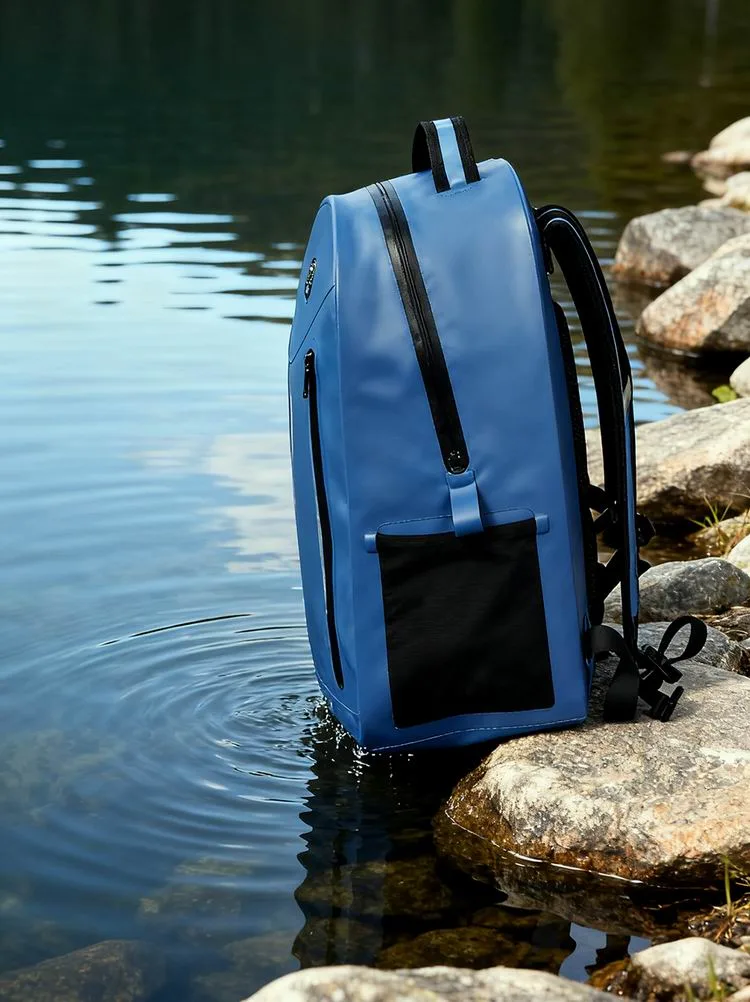
Cold-water canoeing adds two categories to the list. The first is immersion protection: a wetsuit or a drysuit, neoprene boots and a paddle jacket, which together occupy 12 to 18 litres and weigh 3 to 5 kg. The second is the consequence of a swim: a full change of clothing in its own bag, a thermos, and a means of starting a fire that will work with wet hands.
Water temperature drives the decision more than air temperature does. At 10 °C, cold shock and loss of dexterity begin within minutes, and the useful window for self-rescue is 10 to 15 minutes. That is why the spare clothing bag must be genuinely waterproof rather than splash-proof, and why it should be the bag you can reach fastest after the admin pouch.
Check the forecast and the water before you go, not the night before. River levels, wind forecasts and water temperature all change fast in shoulder season, and a route that was easy in August can be genuinely dangerous in April. NOAA publishes river and weather data through noaa.gov, and the CDC publishes cold-water and immersion safety guidance that is worth reading once a season.
The pre-launch checklist
- Sort every item into fails-if-wet, useless-if-wet and fine-if-wet before you pack anything.
- Pack each bag to about 85% of its stated volume and roll three full folds, not two.
- Weigh the heaviest bag; if it exceeds 11 kg, split it before you reach the put-in.
- Lash every bag to a fixed point with its own cord and a quick-release knot.
- Load heavy items low and between the thwarts, light items forward.
- Float the canoe and sight the waterline; move a bag if bow and stern differ by more than 3 cm.
- Clip the 5L admin bag and water within arm's reach of a paddler.
- Rinse the closure line of each bag if you launched from a sandy or salty put-in.
Run the list at the put-in rather than at home, because it takes three minutes and catches the two mistakes that cause most problems: a bag too full to roll and a bag that is not tied in. Neither is visible once you are on the water, and both are trivially fixable on the bank.
Two further items deserve a place in the list. If you are specifying the same list for a club, a rental fleet or a guiding operation, write it as a kit rather than as a shopping list: two 30L, one 20L, one 15L and one 5L per two paddlers, all welded, all with the same closure geometry, at a 500-piece minimum with sampling in 6 to 10 working days and bulk in 35 to 50 days. Our closure guide explains the three-fold rule that every item above depends on, and why three rolls rather than two is the number that actually matters. If you are planning a longer route, the canoe camping load plan takes the same list and scales it across a week, and the full product line lists every size used here.
Frequently asked questions
Q1. What size dry bag do I need for canoeing?
A three-day route needs 55 to 70 litres per person, carried as two 30L bags plus a 10L. A day trip needs 15 to 25 litres in a 20L and a 5L. Pack each bag to about 85% of its stated volume so the roll-top can still make three folds.
Q2. Should I use a barrel or dry bags in a canoe?
Dry bags for clothing and sleeping kit, a barrel for food and kitchen if the portages are short. A 60 L barrel weighs 3.5 to 4.5 kg empty, floats when full and doubles as a camp table, but it will not conform to an awkward hull space or carry comfortably over a long portage.
Q3. How many dry bags should two people take on a three-day trip?
Five: two 30L for sleeping systems and clothing, one 20L for the shared kitchen, one 15L for shelter and tools, and one 5L admin bag that stays within reach. That is 100 litres of capacity for about 85 litres of gear, with no bag over 11 kg.
Q4. Do I need to lash dry bags inside a canoe?
Yes, every one. An unlashed bag slides on every turn, collects bilge water and floats away if the boat goes over. Use two short cords per bag to a thwart with a quick-release knot, and never chain bags to each other.
Q5. How heavy should a canoe dry bag be?
Under 11 kg for comfortable carrying, and under 25 kg in total between the thwarts. Anything above 11 kg should be split, because a single heavy bag cannot be lifted by one person and makes a portage genuinely risky.
Q6. Can I put food and a sleeping bag in the same dry bag?
No. Food smells, attracts animals and can leak, and a sleeping bag is the one item that must never get wet. Keep the kitchen in its own 20L bag or a barrel, and keep cooking clothes separate as well in bear country.
Q7. What should be within reach while paddling?
A 5L bag holding a rain shell, a phone in a pouch, sunscreen, a snack and a small first-aid kit, plus a water bottle. It should open one-handed without putting the paddle down, which means it cannot be buried in the hull.
Q8. How do I trim a loaded canoe?
Load heavy items low and between the thwarts, keep light items forward, then float the canoe and sight the waterline. If bow and stern differ by more than about 3 cm, move one bag. In a strong crosswind, a slightly stern-down trim tracks better.
Q9. Is a dry bag enough for cold-water canoeing?
It is necessary but not sufficient. At 10 °C water, useful self-rescue time is 10 to 15 minutes, so carry immersion protection, a full change of clothing in its own waterproof bag, and a means of starting a fire that works with wet hands.
Q10. Do I need a dry bag for water bottles?
No. Water is already wet and weighs 2 kg for two litres, so it belongs in a bottle rather than in dry bag volume. Reserve waterproof space for items that fail if they get wet: sleeping kit, insulation, electronics and documents.
Q11. How much food volume should I plan for?
About 8 to 10 litres and 4 to 5 kg for three days per person once it is decanted from rigid packaging. Left in original packaging the same food takes around 14 litres and 6 kg, so repacking at home is the largest single saving in a canoe load.
Q12. What goes in the smallest dry bag?
The admin bag: paper map and permits, phone and satellite messenger, medication, keys and a printed itinerary. This is the group that becomes useless when wet and is light enough that one careful 5L bag protects the whole trip.
Q13. Can one person carry a full canoe load over a portage?
Not in one trip, and it is safer not to try. Split the load so nothing exceeds 11 kg and walk it twice with a balanced bag in each hand. A 20 kg soft bag on one shoulder twists the spine on every step.
Q14. Are dry bags odour-proof for food?
No. A welded TPU shell keeps water out but does nothing about smell, which is why a barrel with a gasket lid is the better food container where animals are a concern. Use odour-proof liners inside whichever container you choose.
Q15. How do I stop a dry bag walking around in the bilge?
Tie it to a fixed point rather than to another bag, pull the cord tight enough that it cannot slide more than 50 mm, and pack it full enough that it has some shape. A half-empty bag is the one that moves.
Q16. Should I pack clothing by type or by day?
By day. Rolling each day's outfit together means one bag is opened once a day instead of sorting through everything each morning, and it keeps wet camp clothes away from dry ones. Add a small 2L bag for wet items.
People also ask
How do you pack a canoe with dry bags?
Sort gear by consequence, pack each bag to 85% of its stated volume, roll three folds, then load heavy items low and between the thwarts with light items forward. Lash every bag to a fixed point and check the waterline before launch.
What size dry bag for a 3 day canoe trip?
About 55 to 70 litres per person, best carried as two 30L bags plus a 10L. A pair can share shelter, stove and first aid, so five bags totalling roughly 100 litres covers a three-day route for two people.
Are barrels better than dry bags for canoeing?
For food and kitchen, yes: a barrel floats when full, doubles as a camp table and controls odour better. For clothing and sleeping kit, dry bags win because they conform to the hull, weigh less and carry over a portage.
How much weight can go between canoe thwarts?
About 25 kg in total, kept as low as possible. Individual bags should stay under 11 kg so one person can lift them, and anything above that should be split before you reach the put-in.
Do dry bags need to be tied into a canoe?
Always. Use two short cords per bag to a thwart with a quick-release knot, tied to a fixed point rather than to another bag. Chaining bags means one failure releases the whole train if the canoe goes over.
What should I keep within reach when canoeing?
A 5L bag with a rain shell, a phone in a pouch, sunscreen, a snack and a small first-aid kit, plus a water bottle. It must open one-handed without putting the paddle down, so it cannot be buried in the hull.
Need this in production volume?
QUANZHOU JUNYUAN BAGS has produced waterproof bags since 2014 in an SGS-verified 4,950 m2 facility in Fujian, China. Minimum order 500 pieces, sampling in 6–10 working days, bulk in 35–50 days, FOB Xiamen — write to service@junyuanbags.com with your spec and target market.