Home / Blog / Travel & Packing
Documents and Passport Protection
A passport dropped in seawater is damaged far faster than most travellers expect: the cover warps within 30 seconds, the ink on the identity page starts to bleed at about 90 seconds, and the contactless chip can fail permanently after roughly 5 minutes of immersion even if the document later dries out. Rain is slower but more common, and a 20-minute walk in a tropical downpour with documents in a coat pocket is enough to produce the same result.
The fix is boring and it works: keep every paper document flat inside a welded dry bag rated IPX7, sized to A4 or letter with at least 20 mm of margin, and packed so that you can reach it in under 15 seconds at a checkpoint. This guide covers the water-damage timeline, the sizes that actually fit a passport and an A4 folder, the closure types worth carrying, humidity and condensation in a sealed pouch, what happens at airport security, and how to recover documents that have already got wet.
- Why paper and passports fail near water
- What water does to a passport, minute by minute
- Sizing a dry bag to A4 and letter documents
- Flat documents versus rolled documents
- Choosing the closure: roll-top, waterproof zip or sleeve
- Ratings that actually cover a tender ride
- Humidity, condensation and the sealed-pouch trap
- Airport security and document access
- Layering: pouch inside bag inside daypack
- Border, ferry and tender transfers: the highest-risk hour
- Protecting vaccine cards and paper permits
- A packing order that keeps documents reachable
- Field recovery: what to do when documents get wet
Why paper and passports fail near water
Paper fails structurally before it fails visually. A sheet of 80 gsm office paper absorbs water through its cut edges first, which is why a document that touches water only along one edge still ends up cockled across the whole page. Within two minutes in seawater the sizing agent that holds the fibres together starts to dissolve, and the sheet loses most of its tensile strength, so a page rescued at minute three is often destroyed by the rescue itself.
Passports add two failure modes on top. The identity page is printed with inks that are water-resistant but not waterproof, and the polycarbonate data page on newer models can delaminate at the edges once water gets between its layers. The chip and its antenna are laminated into the cover or the data page and are protected by that lamination, which means the electronics usually survive longer than the printing, but a chip with a cracked antenna is dead in a way no amount of drying fixes.
Salt makes everything worse. Seawater carries roughly 35 g of dissolved salt per litre, and when it dries it leaves crystals that continue to absorb moisture from the air, so a document that has been splashed once and dried badly keeps degrading afterwards. Fresh water is the better accident; a tender ride in a choppy bay is the worst realistic case for a travel document.
What water does to a passport, minute by minute
The useful thing about a damage timeline is that it tells you how much urgency is warranted. There is no point sprinting for a document that was submerged for an hour, and there is every point in acting within the first two minutes. The figures below assume seawater at 25 °C; cold fresh water slows every stage by roughly a factor of two, and warm tropical rain sits somewhere in between.
| Exposure time | What is happening | Damage | Recovery action |
|---|---|---|---|
| 0-30 s | Cover wicks water at the edges | Cosmetic, fully recoverable | Blot, air-dry open |
| 30-90 s | Identity page ink begins to move | Minor legibility loss | Blot, do not rub, separate pages |
| 90 s-5 min | Page block saturated, polycarbonate edge lift | Print degraded, possible chip fault | Rinse in fresh water, dry with interleaving |
| 5-30 min | Chip antenna corrosion begins | Chip may fail permanently | Dry, then test at a reader |
| Over 1 h | Sizing dissolved, mould risk within 48 h | Usually not usable | Replace the document |
Two practical rules follow. The first is that rinsing matters more than drying: if a document has been in seawater, the salt has to come out before anything else, and that means a brief rinse in clean fresh water even though it sounds counter-intuitive. The second is that a hairdryer is a bad idea, because heat above roughly 40 °C accelerates polycarbonate delamination and sets cockled paper permanently.
Sizing a dry bag to A4 and letter documents
Document protection starts with a size that lets paper lie flat. A4 is 210 by 297 mm, US letter is 216 by 279 mm, and a legal folder is 216 by 356 mm. Add 20 mm of margin on each dimension for the thickness of a folder and the curvature of a soft bag, and the smallest useful flat dry bag is about 250 by 340 mm internally, which lands you squarely in the 5L class.
A passport on its own needs far less: 125 by 88 mm closed, so it fits a 1L pouch with room to spare. The reason to size for A4 anyway is that nobody travels with a passport alone. Vaccination certificates, boarding passes, insurance printouts, rental agreements and a printed itinerary are all A4 or letter, and a bag sized for the smallest item forces you to fold everything else.
| Document | Dimensions (mm) | Fits flat in 2L | Fits flat in 5L | Fits flat in 10L | Notes |
|---|---|---|---|---|---|
| Passport, closed | 125 x 88 | Yes | Yes | Yes | Add a sleeve to stop corner curl |
| Boarding pass | 203 x 82 | Yes | Yes | Yes | Thermal paper, heat-sensitive |
| A4 sheet | 210 x 297 | No | Yes | Yes | Needs 250 x 340 internal |
| US letter sheet | 216 x 279 | No | Yes | Yes | Same class as A4 |
| Legal folder | 216 x 356 | No | Tight | Yes | Choose 10L for legal size |
| A4 folder, 30 sheets | 220 x 300 x 15 | No | Yes | Yes | Thickness eats closure room |
Thickness matters as much as footprint. Thirty sheets of A4 in a folder adds about 15 mm of stack height, and a soft bag that is packed to its full footprint cannot be rolled three times. Buy one size above the flat minimum whenever documents travel with anything else; the sizing notes for laptop and document loads show how quickly a 5L fills once a tablet joins the pile.
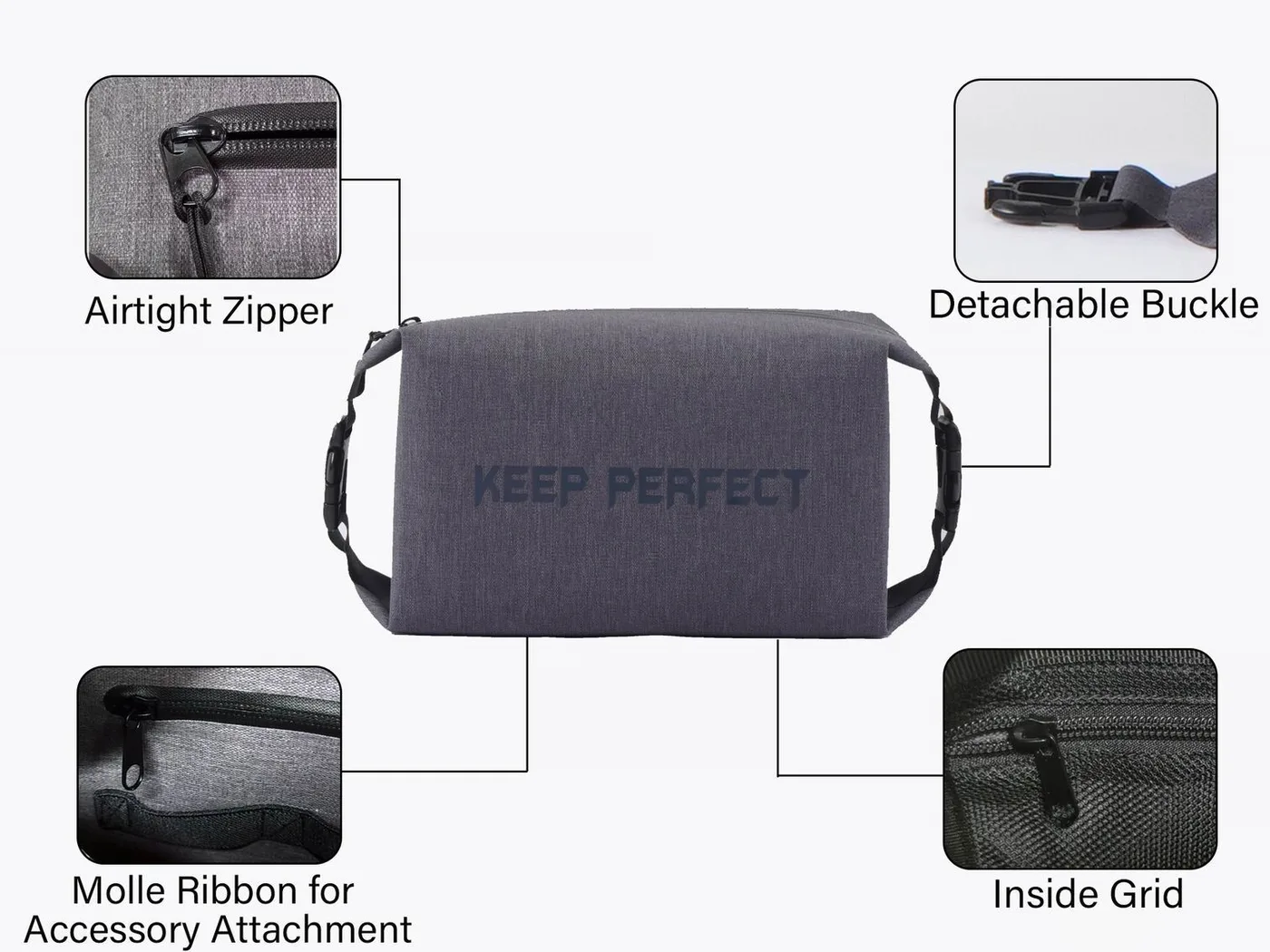
Flat documents versus rolled documents
There is a persistent habit of rolling documents inside a dry bag because the bag is cylindrical. It works for a T-shirt and it is wrong for paper. Rolled paper takes a permanent set: an A4 sheet held at a radius under about 40 mm for eight hours will not lie flat again, and a passport rolled the short way puts a crease right across the data page.
The alternative is a flat-pack approach. Put the documents in a rigid or semi-rigid sheet of 1.5 mm polypropylene or a simple folder, slide that into the dry bag, and close the bag around it. The folder becomes an internal spine that holds everything flat, and it costs about 60 g. This is also the easiest way to keep a document stack findable, because a folder slides out in one motion where loose sheets have to be fished.
If the bag has to be rolled tightly for the closure, roll the empty top of the bag rather than the contents. Pack the folder low, press the air down toward the folder, and make all three folds above the top edge of the folder. That way the paper never enters the fold radius at all, which is the whole point of packing this way.
Choosing the closure: roll-top, waterproof zip or sleeve
Three closure types are realistic for documents, and they trade access speed against rating. A roll-top gives the highest protection and the slowest access, typically 10 to 15 seconds to open and 20 to 25 seconds to re-roll properly. A waterproof zip gives access in about three seconds and a lower and less predictable rating, because zip performance depends on the slider being seated and the teeth being clean.
A welded sleeve with a simple fold-over flap and no hardware at all is the fastest and the least protective; think of it as rain protection rather than immersion protection. For most travel the right answer is a two-layer system: documents in a flat sleeve or zip pouch for access, and that pouch inside a roll-top dry bag for protection during the part of the trip where water is genuinely likely.
| Containment | Access time | Realistic rating | Weight | Best role |
|---|---|---|---|---|
| Welded A4 sleeve with flap | 2-3 s | IPX4, rain only | 45-70 g | Checkpoint and daily access |
| Waterproof zip pouch, A4 | 3-5 s | IPX6 if seated clean | 90-130 g | Documents plus phone |
| Roll-top 5L, 0.3 mm TPU | 10-15 s | IPX7 | 110-150 g | Tender rides, open boats |
| Roll-top 10L, 0.5 mm TPU | 12-18 s | IPX7 | 180-240 g | Documents plus tablet |
| Two-layer pouch in roll-top | 15-20 s | IPX7 outer | 200-300 g | Full trip, mixed exposure |
The pattern that works in practice is to keep the outer roll-top closed for the entire water-exposed leg and open it only on dry land. If you find yourself opening the roll-top three times a day, the system is wrong: move the documents you need often into a sleeve that lives in a pocket, and leave the roll-top for the things you need once a week.
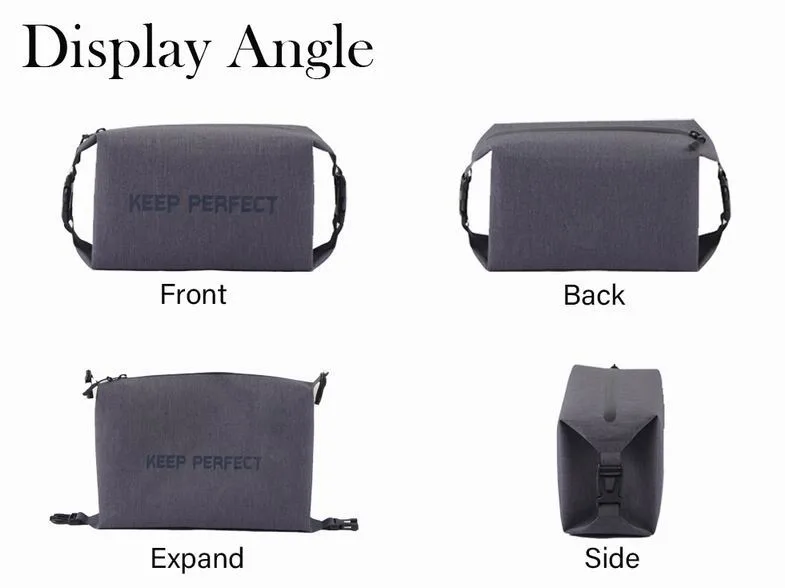
Ratings that actually cover a tender ride
A tender transfer from a ship to a shore is the single highest-risk hour for travel documents in a normal holiday. You are in an open boat, there is spray over the gunwale, the bag is on a bench that is often wet before you sit down, and the boarding itself involves stepping across a gap with your hands occupied. That is an IPX6 event at minimum and an IPX7 event whenever the boat slams into a swell.
Rain is the more common exposure and the easier one. A genuine downpour at 25 mm per hour with wind is roughly what IPX4 testing simulates from all directions, and any welded bag with a folded closure handles it comfortably. The reason to buy above that is not the rain; it is the one time in a thousand when the bag goes in the water, and the cost difference between IPX4 and IPX7 on a 5L bag is a few dollars.
Ingress grades are defined by IEC 60529, published by the IEC, and the number tells you which test the product passed. IPX7 means 30 minutes at one metre, which comfortably covers a bag dropped overboard and recovered. Ask which standard a claim was tested against; a bag described only as waterproof with no grade has told you nothing at all.
Humidity, condensation and the sealed-pouch trap
The counter-intuitive failure in this category is the document that gets damp inside a bag that never leaked. Air sealed at 30 °C and 85% relative humidity holds around 26 g of water per cubic metre; cool that air to 20 °C overnight in an air-conditioned room and it can only hold about 17 g, so the difference condenses on the coolest surface inside the bag, which is usually your paper.
For documents this is more damaging than for clothing, because paper is both the condensation surface and the thing being protected. The controls are simple: pack documents dry, do not seal a bag around anything warm and damp, and put a 5 g silica sachet in the pouch when travelling in the tropics. A sachet costs pennies and absorbs roughly 1.5 g of water before it needs regenerating in an oven at 120 °C.
Air-conditioning cycles make it worse. A bag carried from a 32 °C street into a 21 °C hotel room six times a day will condense repeatedly, and each cycle deposits a little more moisture. Let the bag reach room temperature before you open it, or keep documents in an outer pocket through the transition and only seal them when you are about to face water.
Airport security and document access
Security is an access problem, not a protection problem, and it is where most document systems fail in practice. A roll-top bag buried at the bottom of a pack costs you two minutes at a tray, and two minutes at a checkpoint is what makes people rush the re-roll. Plan a document pocket you can reach without putting the bag down, and rehearse the open and close before you travel.
Screeners can and do ask for bags to be opened, and a dry bag is no exception to that. A welded roll-top opens quickly if it has been rolled three times but tightly; it opens slowly if it has been over-filled and the folds have jammed. Keep the document pouch in the top third of the bag so that a partial unroll is enough, and never pack documents under a laptop, which is the item most likely to be asked for at the same moment.
Thermal boarding passes deserve a specific warning. The paper is heat-sensitive and will turn grey if it sits against a hot surface, and it also degrades in a sealed humid pouch faster than ordinary paper. Photograph the pass as a backup the moment you receive it, and keep the physical copy flat and dry rather than folded into a pocket. Full checkpoint guidance is in our airport security notes.
Layering: pouch inside bag inside daypack
A three-layer system sounds excessive and is actually the minimum for a trip that mixes airports with open boats. Layer one is a flat sleeve holding passport, cards and boarding pass, small enough to sit in a jacket pocket. Layer two is a 5L roll-top holding the sleeve, the A4 folder and a phone. Layer three is whatever daypack or cabin bag carries the 5L, chosen so the dry bag can be lifted out in one motion.
The redundancy is the point. If the daypack is soaked in a downpour, the roll-top keeps the sleeve dry. If the roll-top is dropped in the water, the sleeve keeps the passport dry long enough to reach shore. If the sleeve itself is compromised, the passport is still a lacquered booklet that survives 30 to 60 seconds of contact, which is usually enough. Each layer adds seconds of access and buys minutes of protection.
| Layer | Contents | Typical size | Protection | Access |
|---|---|---|---|---|
| 1. Flat sleeve | Passport, cards, boarding pass | 150 x 110 mm | Splash, brief contact | 2-3 s, pocket |
| 2. Roll-top dry bag | Sleeve, A4 folder, phone, permits | 5L or 10L | IPX7 immersion | 10-18 s |
| 3. Daypack or cabin bag | Dry bag, clothing, water | 20-35 L | Rain only unless lined | Open the main compartment |
| Backup | Phone photos of every document | 0 g | Independent of the paper | Instant |
The last row is the one travellers skip and later regret. Photographs of the passport identity page, the visa, the insurance policy and the vaccination record, stored on a phone and in a cloud account, turn a lost or destroyed document from a trip-ending event into a bureaucratic afternoon. Take the photos on day one, in good light, before the documents have a chance to get damaged.
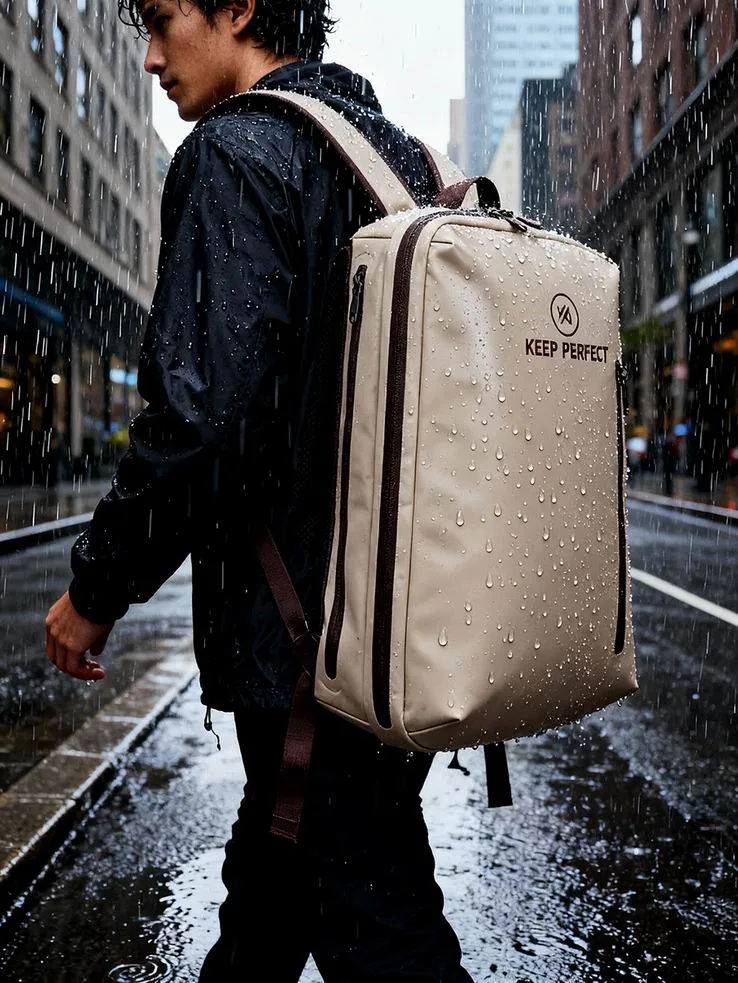
Border, ferry and tender transfers: the highest-risk hour
Land borders and ferry terminals combine three hazards: crowds, weather and distraction. Documents come out of the bag, get held in a hand while you manage luggage, and go back in somewhere different. This is when a passport ends up in a coat pocket during a squall, or in the bottom of a bag that is then set down on a wet dock.
Build a fixed habit. Documents come out, get handed over, and go straight back into the same flat sleeve, and the sleeve goes straight back into the same 5L bag, every single time. The bag stays closed for the crossing and is opened on land. A habit that survives fatigue and queues is worth more than any piece of equipment in this category.
On open boats, think about tethering. A 5L bag sealed with air displaces about 5 kg of water and will float away faster than you can swim after it in a current. Two metres of cord and a welded D-ring turn a lost-document incident into an annoyance, and the cord weighs 15 g. Our carry-on-only packing guide covers the same discipline with a smaller load.
Protecting vaccine cards and paper permits
Health documents are the awkward case because they are paper, they are A4 or letter, they are irreplaceable in the short term, and they are increasingly required at short notice. The International Certificate of Vaccination or Prophylaxis is a folding A4 booklet with a handwritten or stamped entry, and the ink in those stamps is frequently not water-resistant at all.
Treat these as the highest-value paper in the bag and put them in the flat sleeve next to the passport rather than loose in the folder. If a certificate is handled frequently, a cheap heat-laminate sleeve over the open page protects the ink from both water and abrasion; keep the document's official seal visible through the laminate, because some border officials will not accept a fully encapsulated page.
For authoritative guidance on which health documents a destination requires, check the travel health pages maintained by the CDC and the international travel and health material published by the WHO before you fly. Requirements change, and the certificate you need is often the one nobody thought to protect.
A packing order that keeps documents reachable
- Photograph passport, visa, permits and insurance; store on the phone and in a cloud account.
- Put passport, cards and boarding pass into a flat sleeve that fits a jacket pocket.
- Slide the sleeve and the A4 folder into a 5L roll-top, folder low and flat.
- Add a 5 g silica sachet if the destination is humid, and replace it every two weeks.
- Press the air down, fold three times above the top of the folder, and clip.
- Place the 5L bag in the top third of the daypack, never under a laptop.
- Clip a 2 m tether to a welded D-ring before any open-boat transfer.
- Rehearse the open-close cycle once at home until it takes under 20 seconds.
Rehearsal is the step everyone skips, and it is the one that decides whether the system survives contact with a real queue. A roll-top that has never been opened under pressure is a different object from one you have opened fifty times in your kitchen. Twenty minutes of practice removes the fumbling that leads to documents being stuffed into a pocket at the worst possible moment.
Weight and bulk are worth checking against cabin allowances at the same time, because a document bag inside a cabin bag still counts. A 5L roll-top with a folder and sleeve weighs about 700 g packed, which is negligible against a 7 kg limit but worth knowing if you travel with an already-tight personal-item allowance; the numbers are set out in our cabin size and weight guide.
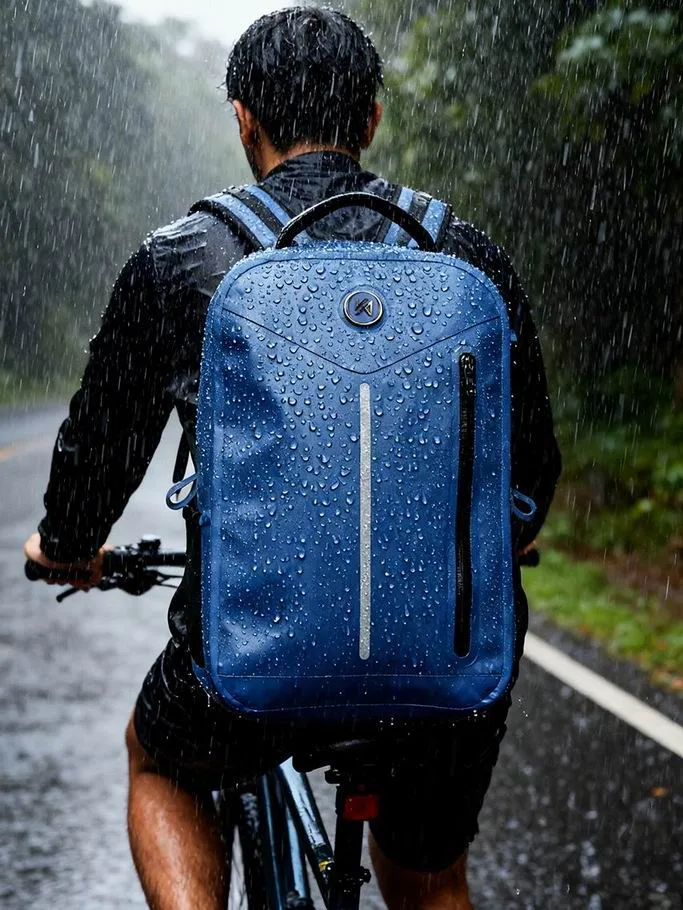
Field recovery: what to do when documents get wet
Act in the first two minutes and accept that the outcome depends on what happened. For seawater, rinse the document in clean fresh water for 20 to 30 seconds to remove the salt, because salt crystals keep pulling moisture and will keep degrading the paper long after it looks dry. For rain or fresh water, skip the rinse and go straight to drying.
Dry flat, in shade, with air moving. Interleave absorbent paper such as a plain notebook page or paper towel between the passport pages, change it every 15 minutes for the first hour, and stand the passport on its edge so air reaches the spine. Keep the temperature below 40 °C; a hairdryer, a radiator or a sunny car dashboard will set cockled paper and lift polycarbonate laminate permanently.
Then test the electronics. Once the passport is fully dry, usually 12 to 24 hours, take it to any e-gate or hotel card reader and check that the chip responds. A chip that fails cannot be repaired, and a passport with an unreadable chip will be treated as damaged at a border even if the printing is legible, so find out early and replace the document while you still have time and a local address.
| Situation | First action | Then | Expected outcome |
|---|---|---|---|
| Splashed with seawater | Rinse 20-30 s in fresh water | Interleave and air-dry flat | Usually usable |
| Caught in heavy rain | Blot the surface, do not rub | Interleave and air-dry flat | Usually usable |
| Dropped overboard, 1 min | Rinse, dry, test the chip | Replace if the chip fails | Print may degrade |
| Submerged over 30 min | Rinse and dry anyway | Apply for a replacement | Assume replacement |
| Damp from condensation | Air-dry open, add silica | Check for mould at 48 h | Usually fine |
Finally, report and replace. Most passport-issuing authorities treat water damage as a damaged document rather than a lost one, which usually means a faster and cheaper replacement and sometimes requires you to surrender the old document. Do it before you need to travel again, and keep the photographs you took on day one, because they are what makes the replacement process quick.
For readers building a full wet-climate travel kit, the tropical rainy-season guide covers clothing and electronics alongside documents, and the laptop protection notes cover the other item that rarely survives a wet transfer. Our product line includes flat-format 5L and 10L roll-top bags sized for A4 folders. Production has run since 2014 in an SGS-verified 4,950 m2 facility, with sampling in 6 to 10 working days and bulk in 35 to 50 days.
Frequently asked questions
Q1. Will a dry bag protect a passport?
Yes. A welded roll-top bag rated IPX7 keeps a passport dry through rain, spray and 30 minutes at one metre. Keep the passport in a flat sleeve inside the bag so it lies flat and can be pulled out in seconds rather than fished from a rolled cylinder.
Q2. What size dry bag fits A4 documents?
A 5L roll-top with roughly 250 by 340 mm of internal flat space takes A4 and US letter without folding. Legal-size folders at 216 by 356 mm need a 10L. A passport alone fits a 1L pouch, but nobody travels with a passport alone.
Q3. How long does a passport survive in water?
The cover warps in about 30 seconds, identity-page ink starts to move at 90 seconds, and the chip can fail permanently after roughly 5 minutes of immersion. Saltwater is worse than fresh water because the crystals keep drawing moisture after drying.
Q4. Should documents be rolled or packed flat?
Flat, always. Rolled paper takes a permanent set below a 40 mm radius within hours, and rolling a passport the short way creases the data page. Use a folder as an internal spine and make all three folds above the top edge of the folder.
Q5. Is a waterproof zip pouch enough for a passport?
For rain and splash, yes. A clean, correctly seated waterproof zip reaches about IPX6. It will not reliably survive immersion, so for open boats and tender rides put the zip pouch inside a roll-top bag rated IPX7.
Q6. Do I need IPX7 for travel documents?
You need it for the rare case, not the common one. Rain is an IPX4 event, but a bag dropped off a dock is an IPX7 event, and the cost difference on a 5L bag is small. Buy for the once-in-a-thousand incident.
Q7. Can airport security open a dry bag?
Yes, and they will ask. Keep the document pouch in the top third of the bag so a partial unroll is enough, rehearse the open-close cycle at home, and never pack documents beneath a laptop, which is usually requested at the same moment.
Q8. Why are my documents damp inside a sealed dry bag?
Condensation. Air sealed at 30 °C and 85% humidity holds far more water than the same air at 20 °C, and the surplus condenses on the coolest surface, which is your paper. Pack dry, add a silica sachet, and let the bag reach room temperature before opening.
Q9. How do I dry a wet passport?
Rinse seawater out for 20 to 30 seconds, blot rather than rub, interleave absorbent paper between the pages every 15 minutes, and stand it on edge in shade. Keep it below 40 °C; heat sets cockled paper and lifts polycarbonate laminate permanently.
Q10. Does a wet passport chip still work?
Sometimes. The chip is laminated and often survives longer than the printing, but antenna corrosion can kill it. Once the document is fully dry after 12 to 24 hours, test it at an e-gate or card reader and replace it if it fails.
Q11. How do I carry documents on a tender ride?
Passport in a flat sleeve, sleeve in a 5L roll-top rolled three times, and the bag tethered with 2 m of cord to a welded D-ring. A 5L bag sealed with air displaces about 5 kg of water and will drift faster than you can swim.
Q12. Should I laminate my vaccination certificate?
Partly. A heat-laminate sleeve over the open page protects stamp ink from water and abrasion, but keep the official seal visible, because some border officials will not accept a fully encapsulated page. Photograph it as a backup regardless.
Q13. Do thermal boarding passes survive in a dry bag?
They survive water but not heat or humidity. Thermal paper greys out against a hot surface and degrades faster than ordinary paper in a sealed humid pouch. Photograph the pass on receipt and keep the physical copy flat and dry.
Q14. What is the best two-layer system for travel?
A flat sleeve holding passport, cards and boarding pass for pocket access, inside a 5L IPX7 roll-top holding the sleeve, an A4 folder and a phone. Open the roll-top only on dry land and you will rarely need the second layer.
Q15. How much does a packed document bag weigh?
About 700 g for a 5L roll-top with a sleeve and a 30-sheet A4 folder. That is negligible against a 7 kg cabin allowance but worth counting if your personal-item limit is tight.
Q16. Can I keep documents in a dry bag for the whole trip?
You can, and for the water-exposed legs you should. Just make sure the documents you need several times a day live in a sleeve that is reachable without opening the roll-top, otherwise you will start leaving the bag unrolled at exactly the wrong moment.
People also ask
How do you keep a passport dry while travelling?
Put it in a flat sleeve, put the sleeve in a welded roll-top dry bag rated IPX7, and keep the bag closed for every water-exposed leg. Pack documents flat rather than rolled so the pages never take a permanent crease.
What size dry bag holds A4 paper?
A 5L roll-top with about 250 by 340 mm of internal flat space. A4 is 210 by 297 mm and US letter is 216 by 279 mm, and both need roughly 20 mm of margin plus room for the closure to fold three times.
Can a wet passport still be used?
Often yes if it was wet for under two minutes and dried properly. Rinse out salt, interleave absorbent paper, dry flat in shade below 40 °C, and test the chip after 12 to 24 hours. Replace it if the chip fails or the identity page is illegible.
Are dry bags allowed through airport security?
Yes. Screeners may ask you to open them, so keep documents in the top third of the bag and rehearse the opening. A welded roll-top opens quickly if it was rolled three times and not over-filled.
Why do documents get damp inside a waterproof bag?
Condensation, not leakage. Humid air sealed in a bag releases water when the bag cools in an air-conditioned room, and the moisture lands on the paper. Pack items dry, add a silica sachet, and let the bag warm to room temperature before opening.
Do I need a waterproof bag for a ferry or tender transfer?
Yes. An open tender is an IPX6 to IPX7 event depending on the swell, and the bench is usually wet before you sit down. Use a welded roll-top and tether it, because a sealed 5L bag will float away faster than you can swim.
Need this in production volume?
QUANZHOU JUNYUAN BAGS has produced waterproof bags since 2014 in an SGS-verified 4,950 m2 facility in Fujian, China. Minimum order 500 pieces, sampling in 6–10 working days, bulk in 35–50 days, FOB Xiamen — write to service@junyuanbags.com with your spec and target market.