Does a Dry Bag Need a Purge Valve?
A purge valve is worth having on dry bags above roughly 20 litres that carry compressible loads such as sleeping bags, jackets or towels. A 30L bag holding a three-season sleep system traps 6 to 10 litres of air; a valve removes most of that in about 8 seconds, while rolling and kneeling on the bag takes 40 to 60 seconds and rarely gets below 3 litres. The valve itself adds 6 to 12 grams and one more seal to inspect.
That trade-off flips for small bags and dense loads. Under 10 litres, or when the bag carries food, water, tools or camera gear, there is almost no air to remove and the valve becomes an extra failure point for no benefit. This guide sets out the compression maths, the valve types available, where each one helps, the effect on buoyancy, the correct operating sequence and the maintenance that keeps a valve from becoming the leak you did not expect.
- The short answer, by bag size and load
- What a purge valve actually does
- The compression maths: how much air is really inside
- Valve types and how they differ
- Where a valve helps most, ranked by activity
- Where a valve is dead weight
- Does a valve make a bag less waterproof?
- Buoyancy: the other reason to purge
- How to use a purge valve correctly
- Valves versus rolling technique
- Valve maintenance and failure modes
- Alternatives to a valve
- A decision checklist for specifying a valve
The short answer, by bag size and load
Decide on two variables: how much air your load actually contains, and how much you care about the bag's packed volume. Soft, lofty items trap air between fibres and between layers; dense items do not. If the air volume is under about 2 litres, a valve is unnecessary. Above 4 litres, it starts saving real time and real space, particularly when you are packing inside a tent, a kayak hatch or a rucksack.
The second consideration is where the bag lives. A bag that must slide into a kayak day hatch or a narrow pannier benefits from compression regardless of load, because the constraint is the opening rather than the weight. A bag that rides on a deck or in a canoe, where volume is not constrained, gains almost nothing. Match the feature to the constraint you actually have rather than to a spec sheet habit.
| Bag size | Typical trapped air | Valve useful? | Why |
|---|---|---|---|
| 2-5 L | 0.3-1.0 L | No | Too little air to matter |
| 10 L | 1.5-3.0 L | Rarely | Rolling removes most of it |
| 20 L | 3-6 L | Usually | Saves 30-40 seconds per pack |
| 30-40 L | 6-12 L | Yes | Real volume saving in a hatch |
| 60-90 L | 12-25 L | Yes | Kneeling on a full bag is impractical |
| Any size, dense load | 0.5-2.0 L | No | No air to remove |
What a purge valve actually does
A purge valve is a one-way or manually opened port moulded into the bag body. Squeeze the bag and air leaves through the port; release and the port closes so water cannot come back in. The mechanism is usually a flexible diaphragm or a screw cap with a gasket, welded into a reinforced patch so the film around it does not tear under the pressure of squeezing.
It does not create a vacuum and it is not a compression system in the rucksack sense. Removing air simply lets the fabric collapse around the contents so the bag occupies less space and sits flat. A bag squeezed to its minimum will spring back somewhat within a few minutes as the load relaxes, which is normal and why valves are used at the moment of packing rather than as a permanent state.
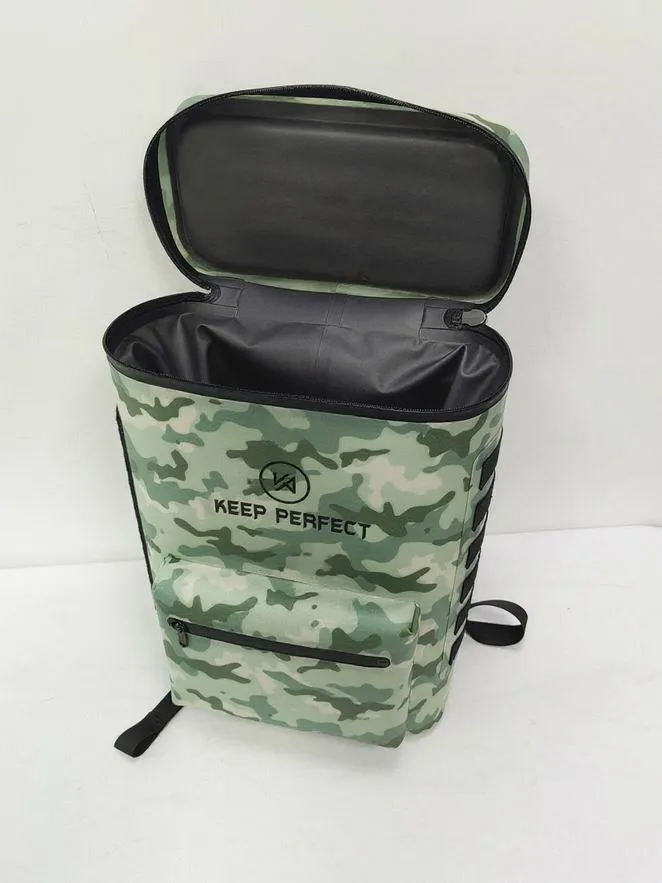
The compression maths: how much air is really inside
Lofty insulation is mostly air by volume. A three-season synthetic sleeping bag that fills 9 litres of space may contain only 1.4 litres of actual fibre, so the remaining 7.6 litres is air that a valve can expel. A down bag behaves similarly, and a pile fleece or a microfibre towel follows the same pattern. That is why compressible loads are the ones that justify the feature.
Dense loads behave completely differently. Four litres of canned food, a 2 kg camera body and lens set, or 3 litres of water in bladders contain almost no trapped air, and squeezing a bag full of them does nothing but stress the weld. If you know your load is dense, spend the money on film thickness or on a better harness rather than on a valve.
| Load | Packed volume | Air fraction | Valve benefit |
|---|---|---|---|
| Three-season sleeping bag | 9 L | 80-85% | High, saves 6-7 L |
| Two fleece jackets | 5 L | 70-75% | High, saves 3-4 L |
| Microfibre towel and base layers | 4 L | 60-65% | Moderate, saves 2-3 L |
| Canned food for four days | 6 L | 5-10% | None |
| Camera body plus two lenses | 4 L | 10-15% | None, adds risk |
| Mixed: bag, clothing, food | 14 L | 45-55% | Moderate, saves 5-7 L |
Valve types and how they differ
Four mechanisms dominate. A simple press valve opens when you squeeze and closes under its own diaphragm tension; it is the lightest and the easiest to use one-handed. A screw valve gives a positive seal that you control, at the cost of a part that can be dropped. A twist valve sits between the two. A welded one-way membrane with no moving user part is the most reliable but the least controllable.
The choice is mostly about how the bag will be used. A screw valve is right when the bag will be submerged repeatedly or carried on a deck where spray pressure varies, because the positive seal does not depend on diaphragm tension. A press valve is right for travel and rucksack use where speed matters more than depth. Our valve type guide covers each mechanism with its service life.
| Valve type | Weight added | Ease of use | Best application |
|---|---|---|---|
| Press diaphragm | 6-8 g | One-handed, fastest | Travel, rucksack, daily packing |
| Screw cap with gasket | 10-14 g | Two hands, positive seal | Sea kayaking, repeated submersion |
| Twist lock | 8-12 g | One hand, moderate seal | General paddling |
| Welded one-way membrane | 4-6 g | No action required | Light-duty compression only |
| No valve | 0 g | Roll and kneel | Small bags, dense loads |
Where a valve helps most, ranked by activity
Kayak touring and canoe camping sit at the top of the list, because both pack soft loads into constrained hull openings. A 40L bag that has to pass through a 28 cm hatch needs every litre it can give up, and compressing it on a wet bank without a valve means kneeling on a bag that is trying to float away. Bikepacking comes next, since a handlebar or saddle bag benefits from a tight, stable load.
Travel and commuting sit in the middle. A compression valve genuinely helps pack a 30L bag into a cabin sizer, but most travellers pack denser loads than paddlers and gain less than they expect. Beach and pool use sits at the bottom: those bags carry towels, which are compressible but rarely need to fit anywhere specific, and the valve spends its life full of sand.
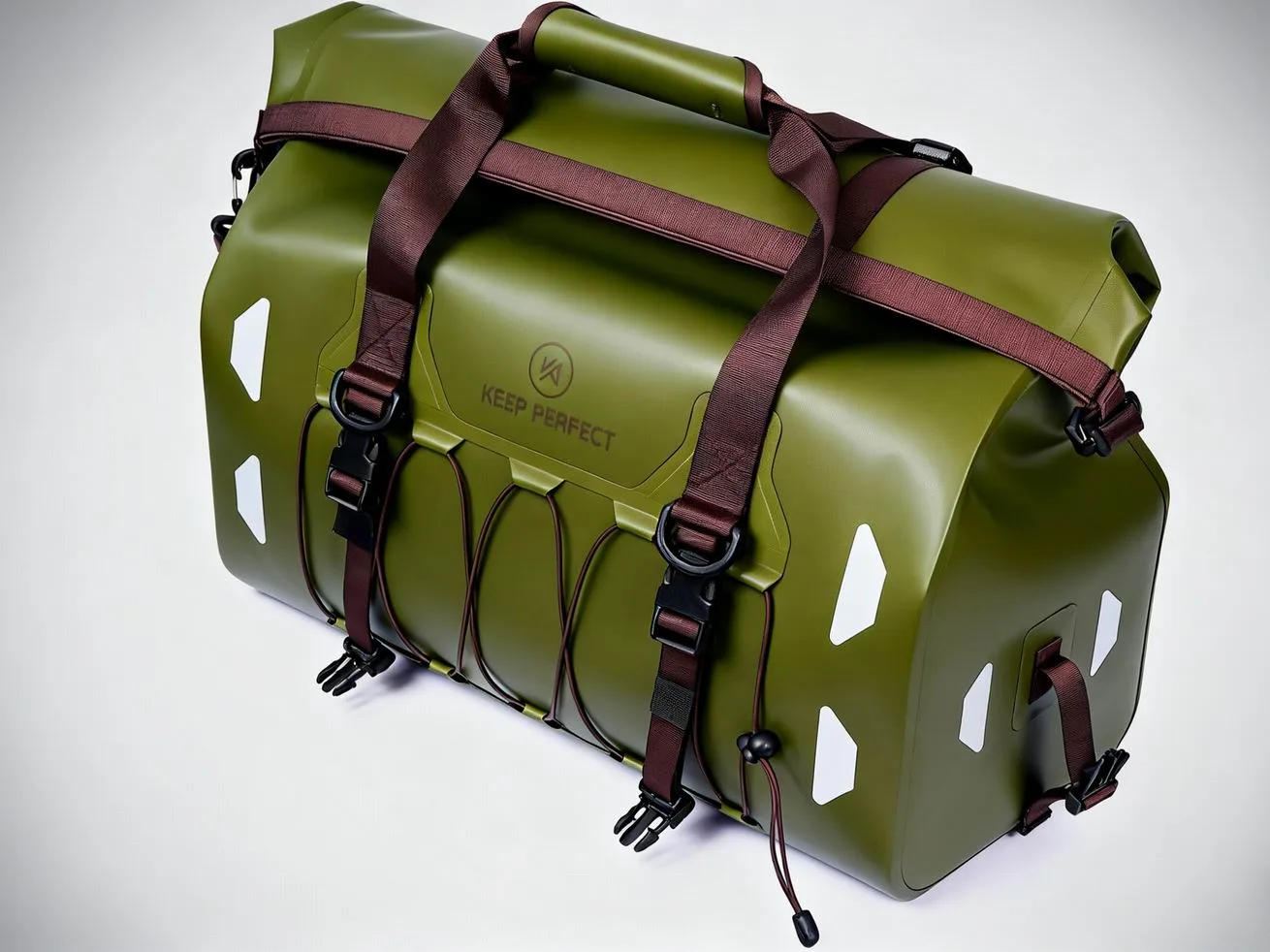
Where a valve is dead weight
There are three situations where a valve costs more than it returns. Small bags under 10 litres, where the air volume is too small to matter. Dense loads, where there is nothing to expel. And harsh grit environments, where an open port near the ground collects sand that then works into the diaphragm and stops it sealing.
There is also a straightforward cost and complexity argument. A valve is a second welded component in a panel, which means a second weld to inspect and a second place for a manufacturing defect to hide. On a bag that will never need compression, that is risk taken on for no gain. The cleanest specification is honest about which bags in a range get one and which do not.
Does a valve make a bag less waterproof?
Properly made, no. A valve is welded into a reinforced patch and the mechanism itself carries a gasket or diaphragm, so the assembly should hold the same immersion rating as the bag body. The important word is properly: a valve bonded into a thin panel with an undersized patch will peel under the load of squeezing, which is a well-known failure mode on low-grade product.
What a valve does add is a maintenance requirement. The seal depends on a small surface staying clean, and a grain of sand or a crystal of salt on a diaphragm is enough to hold it open. That is the real compromise: not a lower rating on day one, but a component that needs a rinse and a functional check at a frequency the rest of the bag does not. Guidance on the physics is in our air trap guide.
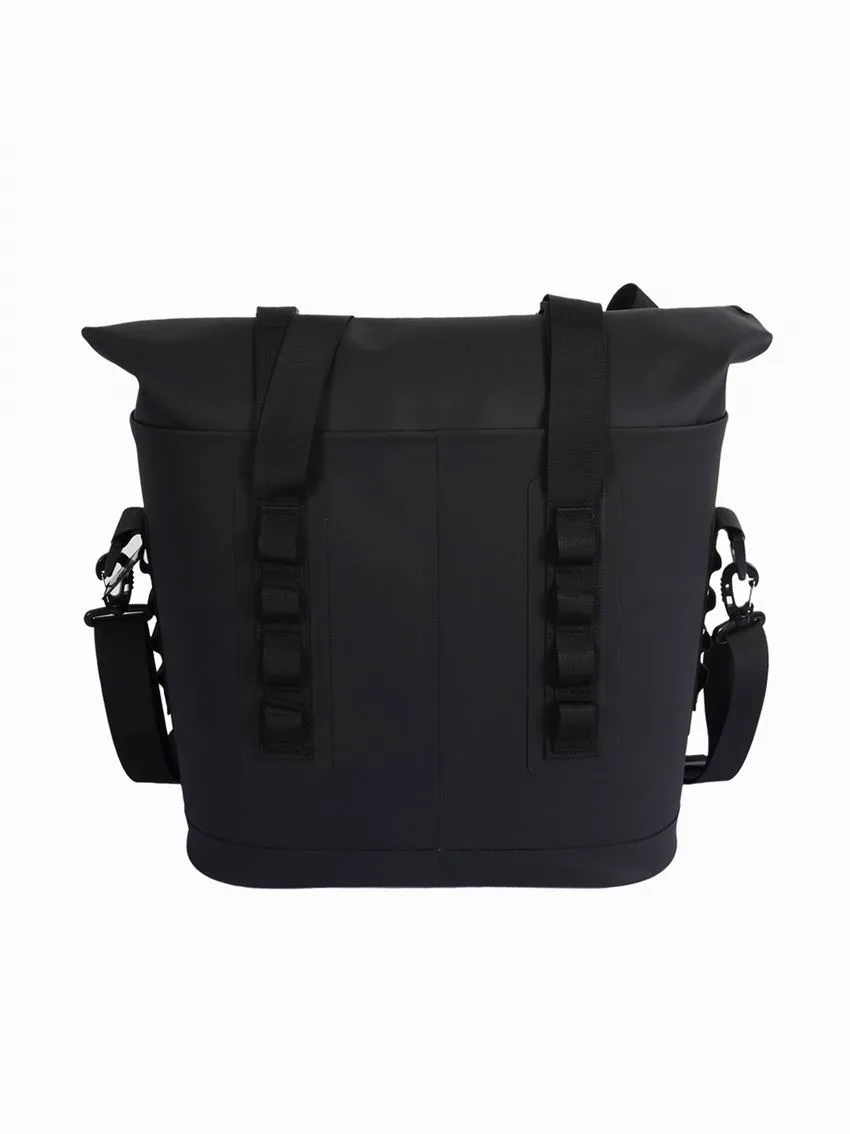
Buoyancy: the other reason to purge
Air inside a sealed bag is flotation. Six litres of trapped air will support roughly 6 kg of load in fresh water, which is why an un-purged bag of clothing floats high and a purged bag of the same clothing floats low or sinks. Whether that is good or bad depends entirely on what you want the bag to do after it goes in the water.
If you want the bag to float so you can recover it, do not purge: leave 3 to 5 litres of air in, close it, and treat it as a float. If you want the bag to sit low in a hatch or under a deck net, purge it and accept that it will sink if it goes overboard. These are opposite requirements, and a valve lets you choose at the moment of packing rather than at the moment of purchase.
| Trapped air | Buoyant support in fresh water | Behaviour | Suitable use |
|---|---|---|---|
| 1 L | About 1 kg | Sinks slowly under load | Hatch storage, deck bag |
| 3 L | About 3 kg | Neutral to slightly positive | General paddling |
| 6 L | About 6 kg | Floats high, easy to recover | Overboard recovery, swim support |
| 10 L | About 10 kg | Floats very high, unstable | Emergency flotation only |
| 0 L, fully purged | None | Sinks | Never as a buoyancy aid |
The safety point needs stating plainly. A dry bag is not a buoyancy aid and should never be relied on as one. Air escapes when a bag is squeezed, rolled or dragged, and a bag that floated on launch may not float after an hour in the water. For the science of why bags float and when they stop, the NOAA Ocean Service material on buoyancy is a clear reference, and our buoyancy guide applies it to dry bags specifically.
How to use a purge valve correctly
- Pack the bag to no more than 85% of its volume so the closure has fabric to fold.
- Roll the closure three times and clip the buckle before touching the valve.
- Open the valve, then press the bag firmly from the base upward toward the port.
- Hold the compression for two or three seconds and close the valve while still pressing.
- Release and check that the bag holds its compressed shape for at least ten seconds.
- Re-open the valve before unrolling so the bag does not suck air through the closure.
- Rinse the valve and work the mechanism after every salt or sand exposure.
The sequence matters more than the hardware. Purging before closing the roll-top is pointless, because the air simply comes back through the mouth. Purging after closing is what compresses the load. Equally, opening the valve before you unroll prevents a partial vacuum that can pull water past the fold if the mouth happens to be near the surface.
One field detail: press from the base upward, not from the sides inward. Squeezing the middle of a bag pushes air into the corners where it cannot reach the port, and it puts the load against the weld corners rather than along the panel. A slow, deliberate press from the bottom takes about three seconds and removes noticeably more air than a hard sideways squeeze.
Valves versus rolling technique
A skilled packer can remove a surprising amount of air without any valve at all. Rolling the bag from the base before closing, then expelling the remainder with a forearm across the top of the closed bag, typically gets a 20L load down by 3 to 4 litres. The technique costs about 40 seconds and works best with a soft load that is already loosely packed.
The valve wins on consistency and on large volumes. It removes air that no amount of rolling will reach, because the closed bag has no escape path, and it does the job in under 10 seconds rather than under a minute. For anyone packing in the dark, in rain, or on a moving boat, that consistency is worth more than the technique saves in weight. Our roll count guide covers the closure side of the same problem.
Valve maintenance and failure modes
Three faults account for nearly every valve problem. The first is contamination: sand or salt on the diaphragm holds it open, which shows up as a bag that re-inflates by itself after purging. The second is a cracked housing from over-tightening a screw cap, which is the most common user-caused failure. The third is a patch that has begun to peel because the bag was squeezed by the valve rather than by the body.
A monthly functional check takes one minute. Close the empty bag, open the valve, squeeze until the bag is flat, close the valve, and wait 30 seconds. If the bag re-inflates, the seal is compromised: rinse it, work the mechanism, and retest. If it still fails, the bag should be retired from immersion use rather than trusted on a trip. This is the same discipline we recommend for closures in our home testing routine.

Alternatives to a valve
Compression straps are the main alternative and they solve a different part of the problem. Straps compress the load mechanically and hold it compressed, which a valve cannot do once you release the squeeze. They add 30 to 60 grams and four weld points, and they work best on duffels and larger bags where the load is broad and flat.
The other alternative is simply better packing discipline: fold soft items rather than stuffing them, pack in layers, and put dense items at the base. That approach costs nothing and gets a 20L load within a litre or two of what a valve achieves. It is also the only approach that works on a bag you already own, which makes it the right first step before buying anything.
A decision checklist for specifying a valve
- Estimate the trapped air in your real load; under 2 litres means you do not need one.
- Size matters: valves earn their place from about 20 litres upward.
- Choose the mechanism by exposure: screw valve for repeated submersion, press valve for travel.
- Decide the buoyancy outcome first: purge to sink low, leave air in to float.
- Confirm the valve is welded into a reinforced patch, not bonded into a thin panel.
- Purge only after the closure is rolled and clipped, never before.
- Rinse and functionally check the valve monthly, and after every salt or sand trip.
- Consider compression straps instead if the load must stay compressed.
- Compare the options across the full product range before deciding.
Two closing points on specification. If you are buying for a fleet or a retail range, decide once and apply it consistently: a mix of valved and unvalved bags in the same size confuses users and doubles the spare-part list. And if the bag will be used as a float, say so in the brief, because the air-retention requirement changes the specification rather than just the accessory list. Our floating dry bag range is built around that requirement.
Related reading closes the remaining gaps. For the direct comparison of the two options, see purge valve versus no valve; for how compression changes the usable figure on a bag label, read roll-top capacity loss; and for what happens when a full bag goes into the water, see does a dry bag float when full.
Frequently asked questions
Q1. Does a dry bag need a purge valve?
Only if it is above about 20 litres and carries compressible gear such as a sleeping bag or clothing. Under 10 litres, or with dense loads like food, tools or camera bodies, there is too little air to remove and the valve is unnecessary.
Q2. How much air does a purge valve remove?
On a 30L bag with a three-season sleeping bag, a valve removes 6 to 10 litres of trapped air in about 8 seconds. Rolling and kneeling on the same bag takes 40 to 60 seconds and rarely gets below 3 litres.
Q3. Does a purge valve make a bag less waterproof?
Not if it is properly made. A valve welded into a reinforced patch with a gasket or diaphragm should hold the same immersion rating as the bag body. What it adds is a maintenance requirement, because grit on the seal can hold it open.
Q4. Can I use a purge valve to make a dry bag a float?
The opposite: purging removes the flotation. Six litres of trapped air supports roughly 6 kg in fresh water, so if you want the bag to float, leave 3 to 5 litres in and do not purge. Never rely on a dry bag as a buoyancy aid.
Q5. When should I open the purge valve?
After the closure is rolled three times and the buckle is clipped. Purging before closing is pointless because air simply comes back through the mouth. Open it again before unrolling so the bag does not pull air past the fold.
Q6. What are the most common valve failures?
Contamination from sand or salt holding the diaphragm open, a cracked housing from over-tightening a screw cap, and a patch peeling because the bag was lifted by the valve rather than by the body.
Q7. How do I test if a purge valve still seals?
Close the empty bag, open the valve, squeeze flat, close the valve and wait 30 seconds. If the bag re-inflates, the seal is compromised. Rinse, work the mechanism and retest; if it still fails, retire the bag from immersion use.
Q8. Is a screw valve better than a press valve?
A screw valve gives a positive seal that does not depend on diaphragm tension, which suits repeated submersion. A press valve is faster and one-handed, which suits travel and daily packing. Choose by exposure, not by price.
Q9. Do compression straps work better than a valve?
They do a different job. Straps hold a load compressed continuously; a valve expels air but the bag springs back within minutes. Straps add 30 to 60 grams and four weld points and suit broad, flat loads in duffels.
Q10. How much weight does a purge valve add?
Between 4 and 14 grams depending on the mechanism: about 6 to 8 g for a press diaphragm, 8 to 12 g for a twist lock, and 10 to 14 g for a screw cap with a gasket.
Q11. Should small dry bags have valves?
No. A 2L to 10L bag traps only 0.3 to 3.0 litres of air, and most of that escapes through the mouth before the first fold. The valve adds a weld to inspect for almost no functional gain.
Q12. Can I add a valve to a bag I already own?
It is possible to weld a patch valve into a TPU bag, but the result is rarely as reliable as a valve fitted during production, because the patch has to be welded to a curved, finished panel. Replacing the bag is usually the better value.
Q13. Does purging damage the bag?
No, if you press from the base upward rather than squeezing the middle. Sideways pressure pushes air into the corners and puts the load against the weld corners, which is where fatigue starts.
Q14. Why does my purged bag re-inflate by itself?
Almost always contamination on the seal, or a diaphragm that has lost tension. Rinse the valve, work the mechanism through its travel while wet, and retest. Persistent re-inflation means the seal is worn.
Q15. Are valves worth it for travel?
Sometimes. A valve helps compress a 30L bag into a cabin sizer, but travellers usually pack denser loads than paddlers and gain less than expected. Try the rolling technique first before paying for the feature.
Q16. How often should I check the valve?
Monthly in regular use, and after every salt or sand exposure. The check takes about one minute and is the same discipline you should apply to the closure fold line and the buckles.
People also ask
What is a purge valve on a dry bag?
A small one-way or manually opened port welded into the bag body that lets you squeeze trapped air out after the closure is sealed, so the bag takes up less space and sits flat.
Do you need a valve on a 10L dry bag?
Rarely. A 10L bag traps only 1.5 to 3.0 litres of air, and most of that escapes through the mouth before the first fold. Rolling the bag from the base removes nearly all of the remainder.
Can you compress a dry bag without a valve?
Yes. Roll the bag from the base before closing, then press a forearm across the top of the sealed bag. Expect to remove 3 to 4 litres from a 20L load in about 40 seconds.
Why do dry bags puff up in an aeroplane?
Air inside the bag expands as cabin pressure drops at altitude. Opening the valve or loosening the closure at cruising altitude releases it, and prevents the bag from stressing its own welds.
Does a dry bag float better with air in it?
Yes. Trapped air is the flotation: about 1 kg of support per litre in fresh water. A fully purged bag of clothing will sink, so leave air in if you want the bag recoverable after going overboard.
Is a valve a leak risk on a dry bag?
It is a maintenance item rather than an inherent risk. A well-welded valve with a clean seal holds the bag's rating; the practical risk is grit or salt holding the diaphragm open, which a monthly check catches.
Need this in production volume?
QUANZHOU JUNYUAN BAGS has produced waterproof bags since 2014 in an SGS-verified 4,950 m2 facility in Fujian, China. Minimum order 500 pieces, sampling in 6–10 working days, bulk in 35–50 days, FOB Xiamen — write to service@junyuanbags.com with your spec and target market.