Home / Blog / Sustainability & Compliance
Recycled TPU Dry Bags
A recycled TPU dry bag typically carries 30 to 70 percent recycled content by film weight, loses 4 to 9 percent of tensile strength against virgin film at the same 0.5 mm thickness, and costs 8 to 18 percent more per square metre. What does not change is the waterproofing: a 0.5 mm laminate at 50 percent recycled content still clears 10,000 mm hydrostatic head and welds at 86 N per 25 mm.
The difficult part is not the material, it is the claim. This guide sets out where recycled TPU comes from, how the four feedstock streams differ in cost and availability, what each one does to measurable performance, which certificates actually verify a percentage, and how to write a brief that survives a retailer audit rather than just a marketing review.
- What recycled TPU actually contains
- Post-industrial and post-consumer feedstock compared
- How recycled film is made: grinding, pelletising, re-laminating
- Measured performance against virgin film
- Reading a recycled-content claim on a spec sheet
- Traceability paperwork worth asking for
- Chemical compliance and recycled feedstock
- Carbon and energy: where the saving really is
- Welding and processing behaviour on the line
- Colour, clarity and print limits
- End of life: what happens to the bag
- Writing a recycled-content brief that survives audit
- What a recycled programme costs and how it runs
What recycled TPU actually contains
Recycled TPU is not one material. It is a polyurethane that has been recovered, reprocessed and re-formed, and its properties depend entirely on what it used to be. The cleanest stream is post-industrial: trim from film production, off-cuts from the cutting table, and rejected laminate that never reached a finished bag. That material has a known formulation and a known history, which is why it performs closest to virgin film.
The harder stream is post-consumer: TPU recovered from shoe midsoles, phone cases, cable jacketing and industrial rollers. It arrives with unknown stabiliser packages, mixed hardness grades and contamination, so it needs more sorting and more reformulation. Most commercial recycled TPU films blend the two, and the blend ratio is the number that should appear on a spec sheet but often does not.
| Property | Virgin TPU | 30% recycled | 50% recycled | 70% recycled |
|---|---|---|---|---|
| Tensile strength | 38 MPa | 36.5 MPa | 35 MPa | 32.5 MPa |
| Elongation at break | 520% | 500% | 470% | 410% |
| Tear strength | 95 N | 91 N | 86 N | 76 N |
| Cold bend pass | -30 °C | -30 °C | -28 °C | -25 °C |
| RF weld peel strength | 92 N/25 mm | 90 N/25 mm | 86 N/25 mm | 79 N/25 mm |
| Haze on a clear film | 6% | 11% | 18% | 29% |
| Hydrostatic head | 20,000 mm | 19,000 mm | 18,000 mm | 15,000 mm |
| Cost index per m² | 100 | 108 | 114 | 122 |
Post-industrial and post-consumer feedstock compared
Post-industrial scrap is the workhorse of the category. Film extruders generate edge trim on every run, and bag lines generate cutting waste on every panel; both are clean, single-polymer and available in volume. Because the material never left the plant, traceability is straightforward and the cost premium over virgin film is typically 5 to 10 percent.
Post-consumer feedstock costs more and buys a better story. Recovering TPU from end-of-life products requires collection, sorting by hardness, washing and re-compounding, and yields are lower at every step. Expect a 15 to 25 percent premium, longer lead times and more batch-to-batch variation in colour. Ocean-bound and bio-attributed streams exist but are small, heavily audited and priced accordingly.
| Feedstock stream | Source | Availability | Cost premium vs virgin | Verification route |
|---|---|---|---|---|
| Post-industrial film trim | Extruder edge trim | High | +5 to +10% | Internal mass balance |
| Post-industrial cutting waste | Panel off-cuts | Moderate | +8 to +15% | GRS or RCS |
| Post-consumer TPU | Shoe soles, phone cases | Limited | +15 to +25% | GRS |
| Ocean-bound plastic | Coastal collection schemes | Very limited | +25 to +40% | Programme specific |
| Bio-attributed, mass balance | Renewable feedstock allocation | Moderate | +10 to +20% | ISCC or equivalent |
How recycled film is made: grinding, pelletising, re-laminating
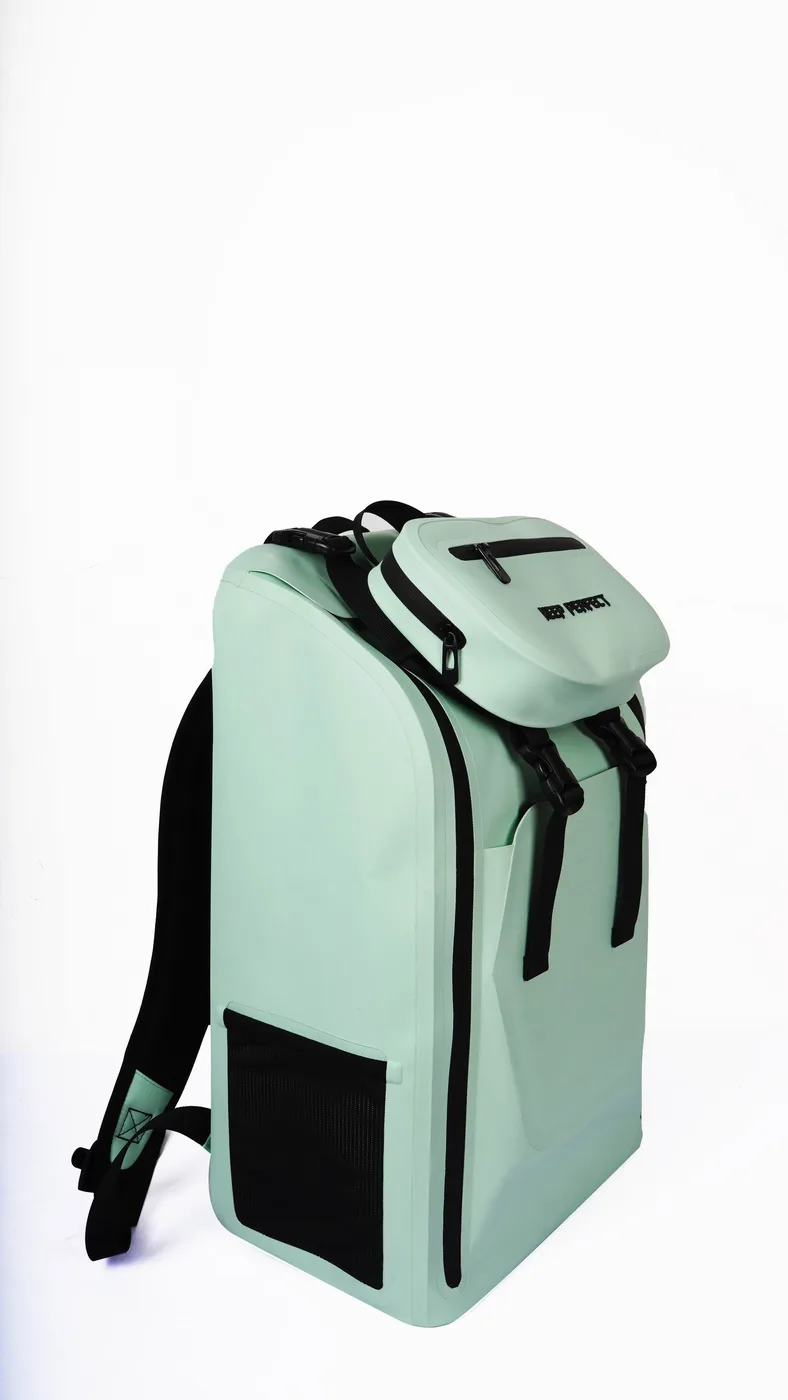
The route is short but each step costs a little performance. Waste film is first sorted by hardness and colour, then ground into flake, washed and dried. The flake is melt-filtered to remove gel particles and any non-TPU contamination, then re-pelletised with a fresh stabiliser package, because the original stabilisers were partly consumed during the first service life.
The pellet is then extruded or calendered into film again and laminated to the face fabric under heat and pressure. Every melt cycle shortens the polymer chains slightly, which is the physical reason tensile strength falls by about 4 percent at 30 percent content and 14 percent at 70 percent. Good processors compensate by adding a chain extender or by blending in virgin resin at the compounding stage.
Measured performance against virgin film
The numbers that matter for a dry bag are tear strength, cold bend and weld peel, and all three degrade gently rather than sharply. At 50 percent recycled content, tear strength falls from 95 N to 86 N and the cold-bend pass moves from -30 °C to -28 °C, both of which are inside the normal batch-to-batch variation of a virgin film. Weld peel drops from 92 to 86 N per 25 mm, still well above any seam load a bag sees in use.
Where the difference does show is clarity and colour consistency. Haze on a clear film roughly triples between virgin and 50 percent recycled, which is why clear-window bags are the hardest product to build with high recycled content. Colour matching is also harder: recycled pellets carry a grey cast, so a brand-matched colourway needs a tolerance of about 2 Delta E rather than the 1 Delta E typical of virgin production.
Reading a recycled-content claim on a spec sheet
Percentage claims are meaningless without a basis. Thirty percent by film weight, thirty percent of the total bag weight and thirty percent of the shell laminate are three different numbers, and the first is the largest because the film is the densest component. Ask which one is being quoted, and ask whether hardware, webbing and packaging are included or excluded.
The second question is whether the figure is a minimum or an average. A claim of at least 50 percent means every batch is tested; an average of 50 percent can hide batches at 35 percent. Environmental claim terminology is standardised in the ISO 14000 series, and a bag maker quoting that language is usually one that has had its claims reviewed.
| Scheme or standard | What it verifies | Typical validity | Relative cost to a brand | Limitation |
|---|---|---|---|---|
| GRS | Recycled content plus chain of custody | 1 year | Moderate | Includes social and environmental criteria |
| RCS | Recycled content only | 1 year | Low | No environmental or social criteria |
| OEKO-TEX | Absence of listed harmful substances | 1 year | Low | Not a recycled-content claim |
| REACH screening | SVHC below threshold | Per revision | Moderate | European Union scope only |
| Prop 65 assessment | Listed substances and warnings | Per formulation | Low | California scope only |
| ISCC mass balance | Renewable or recycled allocation | 1 year | Moderate | Allocation, not physical content |
Traceability paperwork worth asking for
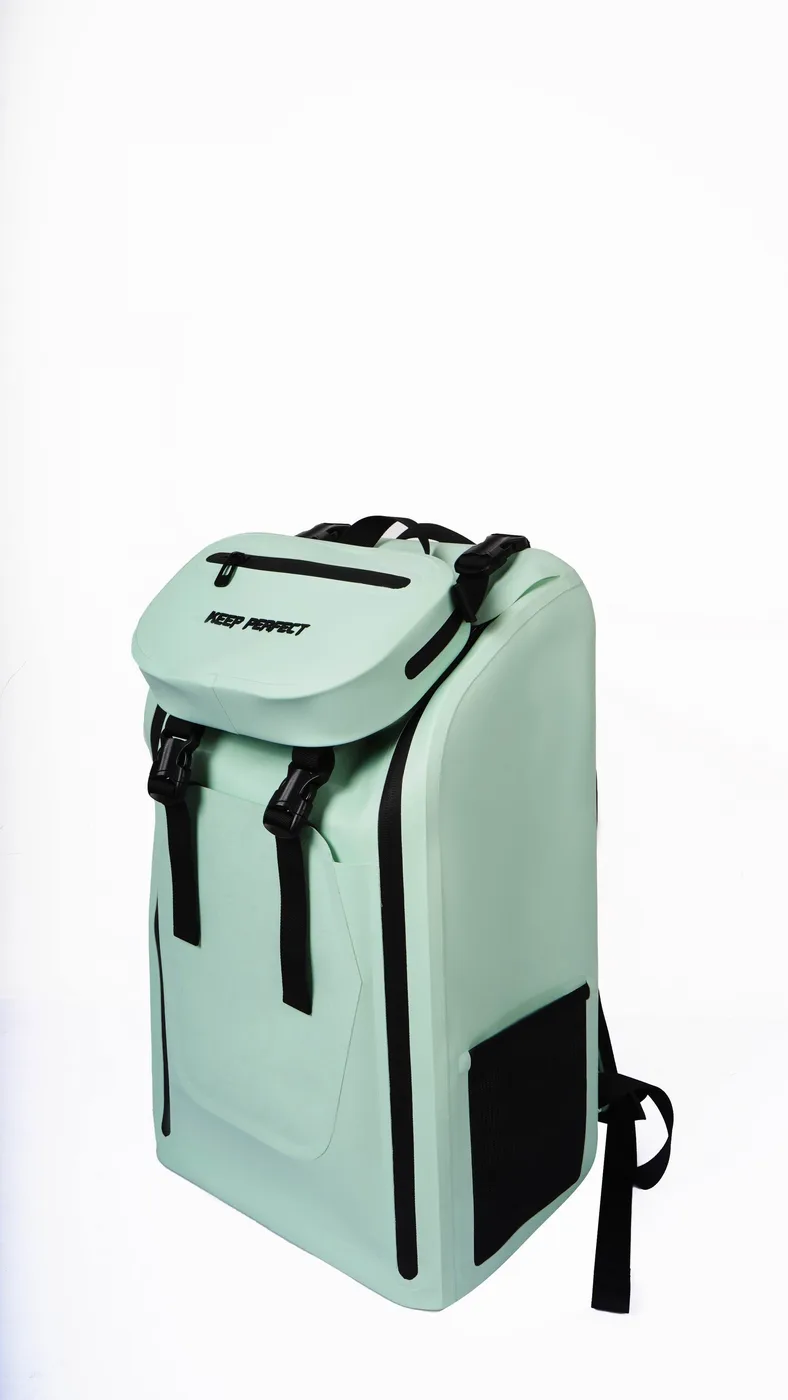
- A transaction certificate for the specific batch, not a copy of the mill certificate.
- A scope certificate covering the film extruder and the laminator separately.
- A mass-balance calculation showing input waste and output film for the period.
- The percentage basis: film weight, laminate weight or finished bag weight.
- A statement of whether the figure is a guaranteed minimum or an average.
- Third-party test reports for tensile, tear and cold bend on the same batch.
- A restricted-substance screening report dated within the last twelve months.
The transaction certificate is the one people forget, and it is the one an auditor asks for first. A scope certificate proves a site is capable of making certified material; a transaction certificate proves your specific order was made from it. If a bag maker cannot produce one within a day, the percentage on the hang tag is not defensible, whatever the marketing says.
Ask for the paperwork before you place the order rather than after. Retrospective certificates are slow, sometimes impossible, and always expensive in goodwill. Build the requirement into the purchase order: no transaction certificate, no shipment release. That single clause removes most of the risk from a recycled-content programme.
Chemical compliance and recycled feedstock
Recycled input carries a specific compliance risk: you inherit whatever was in the previous life of the material. A TPU phone case may have contained flame retardants, a shoe sole may have contained a colourant that is now restricted, and none of that appears on the incoming material declaration. Screening the incoming flake is the only way to know.
The standard mitigation is a full restricted-substance screen on every incoming lot of post-consumer feedstock, plus a finished-bag screen once a quarter. Budget for both, and expect occasional failures: a batch that screens positive for a listed substance has to be rejected, which is why post-consumer content is usually capped at 30 to 50 percent in practice. Guidance on chemicals of concern is published by the EPA.
Carbon and energy: where the saving really is
For a mid-size 20L bag, film production accounts for roughly 46 percent of cradle-to-gate emissions, so that is where recycled content does its work. Moving from virgin to 50 percent recycled film typically removes 0.35 to 0.45 kg of CO2 equivalent per bag, about 9 to 11 percent of the total. It is a real reduction and a smaller one than most hang tags imply.
The rest of the footprint is distributed, and several levers are cheaper than recycled resin. Switching the face fabric to rPET removes about 0.15 kg, moving from air to sea freight removes roughly 0.25 kg on a long haul, and cutting one metal hardware component saves around 0.08 kg. A programme that only buys recycled film and ignores freight has usually picked the most expensive tonne of carbon in the bill.
| Life-cycle stage | kg CO2e for a 20 L bag | Share of total | Practical reduction lever |
|---|---|---|---|
| Film production | 1.85 | 46% | Recycled TPU content |
| Face fabric | 0.62 | 15% | rPET instead of virgin polyester |
| Welding and assembly | 0.55 | 14% | Renewable electricity at the plant |
| Hardware | 0.42 | 10% | Fewer metal components |
| Printing and packing | 0.28 | 7% | Water-based ink, paper tags |
| Freight to market | 0.33 | 8% | Sea freight instead of air |
Welding and processing behaviour on the line
Recycled film welds, but the window narrows. Because the melt history is longer and the stabiliser package is fresh, the radio-frequency response shifts slightly, and a line tuned for virgin film will show more under-welded seams at the same power and dwell. In practice that means retuning by about 5 to 8 percent on power and adding one second of dwell, then revalidating peel strength on every lot.
Cutting and handling behave the same as virgin film; there is no special tooling. The one operational difference is colour sorting: because pellets carry a grey cast, mixing lots from two compounders in the same production run produces visible shade banding across a panel. Run one lot per colourway, and hold a retained sample from every lot so a later claim can be traced back to a physical piece.
Colour, clarity and print limits
Recycled TPU takes print well on opaque colourways and poorly on clear ones. Screen and digital inks bond to the surface in the same way, with adhesion results within about 5 percent of virgin film, and a water-based ink system works unchanged. What changes is the substrate colour underneath: a grey cast shifts pastel and white shades noticeably, so artwork proofed on virgin film may not match production.
Clarity is the hard limit. A clear window at 6 percent haze on virgin film becomes 18 percent at 50 percent recycled and 29 percent at 70 percent, which reads as cloudy rather than transparent. If a design depends on seeing the contents, cap recycled content at 20 percent in the window panel and take the higher content in the opaque body, where nobody can see the difference.

End of life: what happens to the bag
A monomaterial bag is the recyclable bag. If the body, the window and the welds are all TPU and the face fabric is polyester, a mechanical recycler can grind the whole shell without separating layers, and the resulting flake goes back into the same stream the film came from. Add a PVC window, a metal eyelet or a glued label and that path closes.
Be honest about the reality, though: collection infrastructure for soft TPU goods is thin in most markets, and a bag handed in at a general textile bank is more likely to be incinerated than re-granulated. The highest-value end-of-life intervention is not recycling at all, it is service life. A bag that lasts ten years instead of four avoids roughly two and a half replacement bags, which dwarfs the 0.4 kg saved by the recycled resin.
Writing a recycled-content brief that survives audit
A defensible brief is short and specific. State the percentage, state the basis, state the feedstock stream, state the minimum rather than the average, and require a transaction certificate with every shipment. Name the certification scheme. Name the screening standard. Everything else is decoration, and the more adjectives a brief contains, the harder it is to verify.
Then decide where the content goes. A 50 percent body with a virgin clear window and recycled polyester face fabric is a realistic, certifiable, buildable specification. A 100 percent post-consumer claim across a bag with metal hardware is not, and it is the kind of claim that fails in a retailer review and costs far more than the resin saving was worth.
| Product | Recommended recycled content | Reason | Watch out for |
|---|---|---|---|
| Light-duty tote | 30% | Print quality and colour match | Grey cast on white artwork |
| General roll-top bag | 50% | Best balance of cost and claim | Haze if a window is added |
| Harness backpack | 50% | Abrasion is unchanged | Weld retuning on thicker panels |
| 90 L expedition bag | 30-50% | Keeps cold-bend margin | Weld peel at 70% content |
| Clear-window bag | 0-20% | Haze becomes visible above 20% | Visible haze reads as low quality |
| Kids sizes | 50% and above | Compliance optics for the channel | Full phthalate statement needed |
What a recycled programme costs and how it runs
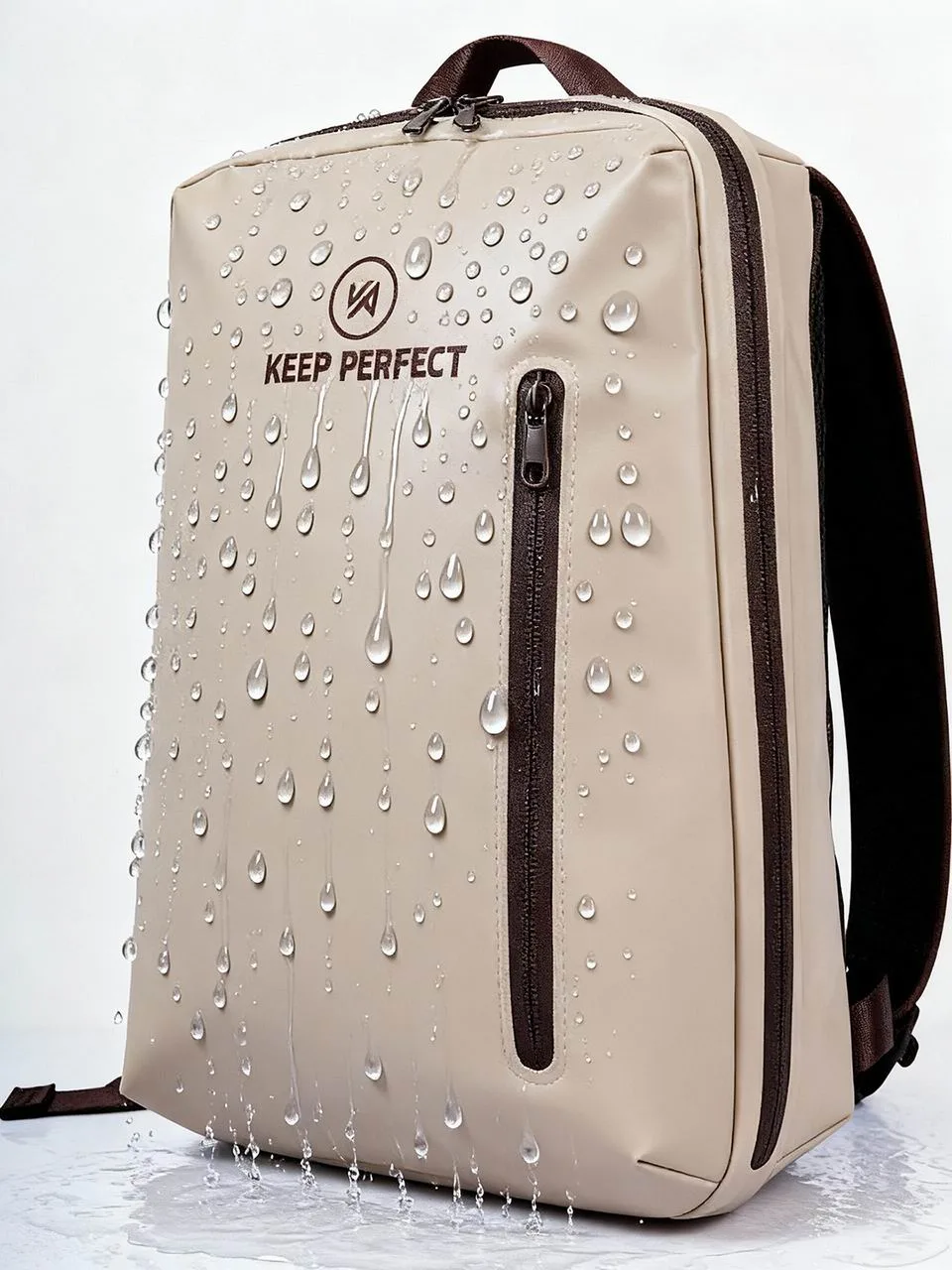
Budget for three premiums rather than one. The resin costs 8 to 18 percent more, certification and transaction certificates add a per-order administrative cost, and restricted-substance screening adds a per-lot laboratory cost. On a first order of 500 pieces the non-resin costs are often the larger share, which is why small ranges are better served by a single certified construction across several sizes than by different films per product.
Timing is the other practical point. Certified film is made to order in most mills, so add two to three weeks to material lead time on the first run; repeat orders can be forecast. Our own line has produced waterproof bags since 2014 in an SGS-verified 4,950 m2 facility, with sampling in 6 to 10 working days and bulk in 35 to 50 days from FOB Xiamen at AQL 2.5, and recycled-content runs follow the same schedule with the material lead time added in front.
For the surrounding topics, see the eco-friendly dry bag range, the full product line, and the deeper cuts on rPET face fabric, how recyclable dry bags are, low-carbon production and the carbon footprint of a bag.
Frequently asked questions
Q1. What does recycled TPU mean on a dry bag?
It means the waterproof film contains TPU that has been recovered, reprocessed and re-extruded, usually 30 to 70 percent by film weight. The feedstock is typically post-industrial trim and cutting waste, sometimes blended with post-consumer material from shoe soles or phone cases.
Q2. Does recycled TPU make a dry bag less waterproof?
No, not meaningfully. A 0.5 mm laminate at 50 percent recycled content still clears 18,000 mm hydrostatic head and welds at 86 N per 25 mm. Both figures are far above what a bag experiences in normal use.
Q3. How much weaker is recycled TPU than virgin TPU?
About 4 percent lower tensile strength at 30 percent content, 8 percent at 50 percent and 14 percent at 70 percent. Tear strength follows a similar curve, falling from 95 N to 76 N across the same range.
Q4. Is recycled TPU more expensive?
Yes: 8 to 18 percent more per square metre of film at 30 to 70 percent content, before certification and screening costs. On a first small order the administrative and laboratory costs are often larger than the resin premium itself.
Q5. Can recycled TPU be welded the same way?
It can, but the welding window narrows. Expect to retune radio-frequency power by 5 to 8 percent and add about a second of dwell, then revalidate peel strength on every lot rather than assuming the virgin settings transfer.
Q6. What is the difference between GRS and RCS?
GRS verifies recycled content plus chain of custody, and adds social and environmental criteria for the site. RCS verifies recycled content only. Both require a transaction certificate per shipment, and GRS is the more widely accepted of the two in retail channels.
Q7. How do I check a recycled-content claim is real?
Ask for a transaction certificate for your specific order, not a scope certificate for the mill. Then ask for the percentage basis, whether it is a minimum or an average, and a mass-balance calculation for the production period.
Q8. Does recycled TPU look different?
In opaque colourways, barely. In clear panels, yes: haze rises from about 6 percent on virgin film to 18 percent at 50 percent content, which reads as cloudy. Recycled pellets also carry a grey cast that shifts white and pastel shades.
Q9. Is post-consumer recycled TPU better than post-industrial?
It is a stronger story and a harder material. Post-consumer feedstock costs 15 to 25 percent more, varies more between batches and needs per-lot chemical screening, so it is usually capped at 30 to 50 percent in a practical specification.
Q10. Can a recycled TPU dry bag be recycled again?
Yes, if it is built as a monomaterial shell with a polyester face fabric and no PVC window or metal fittings. In practice collection infrastructure for soft TPU goods is thin, so extending service life matters more than the recycling route.
Q11. How much carbon does recycled TPU actually save?
On a 20L bag, moving from virgin to 50 percent recycled film removes about 0.35 to 0.45 kg of CO2 equivalent, roughly 9 to 11 percent of the cradle-to-gate total. Switching to sea freight saves a comparable amount, usually at lower cost.
Q12. Which certification should I ask for on a recycled dry bag?
GRS for the recycled claim, plus an OEKO-TEX or restricted-substance screen for chemical safety, plus REACH or Prop 65 documentation depending on the market. Ask for all of them before you place the order, not after.
Q13. Does recycled content affect how long a bag lasts?
Not measurably within the range most brands use. At 50 percent content the cold-bend rating moves from -30 °C to -28 °C and tear strength falls by 9 percent, both inside the normal variation of a virgin film.
Q14. Can I get 100 percent recycled content in a dry bag?
Not realistically across a whole bag, because hardware, webbing and any clear window cannot be made from the same stream. A 100 percent claim on a bag with metal fittings is the kind of statement that fails an audit.
Q15. Why is the recycled percentage quoted differently by different brands?
Because the basis differs. Thirty percent of film weight is a much larger number than thirty percent of finished bag weight, and averages hide low batches. Always ask which basis is being used and whether the figure is a guaranteed minimum.
Q16. How long does certified recycled film take to source?
Add two to three weeks to material lead time on a first run, because certified film is usually made to order. Repeat orders can be forecast, and sampling then takes 6 to 10 working days with bulk in 35 to 50 days.
People also ask
Are recycled TPU dry bags as waterproof as normal ones?
Yes. At 50 percent recycled content a 0.5 mm laminate still reaches 18,000 mm hydrostatic head and 86 N per 25 mm weld peel, both well above the loads a bag meets in use.
What is recycled TPU made from?
Usually post-industrial trim and cutting waste from film and bag production, sometimes blended with post-consumer TPU recovered from shoe soles, phone cases and cable jacketing. The blend ratio should appear on the spec sheet.
How can you tell if a recycled claim is genuine?
Request a transaction certificate for your specific order plus a mass-balance calculation, and check whether the percentage is a guaranteed minimum or an average. A scope certificate alone does not prove your batch.
Is recycled TPU worth the extra cost?
For a bag that is folded and used for years, yes: the premium is 8 to 18 percent on the film and it buys a defensible claim. For a single-use giveaway bag, spending the same money on service life is a better outcome.
Does recycled TPU smell or discolour?
It carries a slight grey cast that shifts white and pastel colourways, and haze triples on clear film. Odour is no different from virgin TPU once the bag has aired for a day.
What percentage of recycled content should you specify?
Fifty percent for general roll-top bags and backpacks, 30 percent where print quality or cold-bend margin matters, and 0 to 20 percent in any clear window panel where haze would be visible.
Need this in production volume?
QUANZHOU JUNYUAN BAGS has produced waterproof bags since 2014 in an SGS-verified 4,950 m2 facility in Fujian, China. Minimum order 500 pieces, sampling in 6–10 working days, bulk in 35–50 days, FOB Xiamen — write to service@junyuanbags.com with your spec and target market.