Home / Blog / Buying & Comparisons
Roll-Top vs Zipper Dry Bags
A roll-top closure costs roughly US$1.20 in webbing and buckle, reaches IPX6 to IPX7 with three folds, and has no moving parts to wear out. A #10 waterproof zipper adds US$7 to US$14 to the cost of a bag, reaches IPX7 to IPX8 when it is clean and lubricated, and needs silicone care every three to six months. The roll-top wins on service life and price; the zipper wins on access speed and one-handed opening.
The right answer depends on three questions: how often you open the bag, how much grit it will meet, and whether you will maintain it. A camera bag opened forty times a day wants a zipper; an expedition bag lashed to a deck for nine days wants a roll-top. This guide compares the two closures on sealing mechanics, realistic ratings, weight, maintenance, failure modes and unit cost, then gives a decision matrix by activity.
- What a closure actually has to do to keep water out
- How a roll-top closure seals
- How a waterproof zipper seals
- Realistic ratings: what each closure achieves in the field
- Access speed and one-handed use
- Weight, bulk and usable volume
- Service life and what kills each closure
- Maintenance effort across a season
- Sand, grit and abrasion: the deciding environment
- Cold, heat and altitude
- What each closure adds to the cost of a bag
- Repair, spares and end of life
- Which closure to choose: a decision matrix
What a closure actually has to do to keep water out
Waterproofing is a barrier problem, and the closure is always the weakest part of the barrier. The shell of a modern dry bag is a continuous laminated film with welded seams, which is genuinely watertight. The opening is where that continuity has to be broken and then re-established, and every dry bag closure is a different answer to the same problem: how do you close a hole you deliberately made?
Two physical mechanisms are available. You can press two surfaces together hard enough that water cannot find a path between them, which is what a roll-top does, or you can interlock a toothed track and seal the gap with an elastomeric coating, which is what a waterproof zipper does. The first relies on the user; the second relies on the component. That single difference explains most of the trade-offs that follow.
How a roll-top closure seals
Folding the mouth of the bag three times creates three parallel contact lines where the inner faces of the film press against each other. Water entering from outside has to cross each line in turn, and each crossing costs pressure. The clip does not do the sealing; it holds the folds in contact so the pressure is maintained when the bag is squeezed, dropped or submerged.
This is why technique matters so much. Two folds hold paddle spray but fail a brief immersion because there is only one pressure break. Four folds add stiffness at the crease and accelerate fatigue without adding meaningful protection. Three folds, taken after most of the air has been pressed out, is the point where protection, usable volume and fabric life all land in an acceptable place.
How a waterproof zipper seals
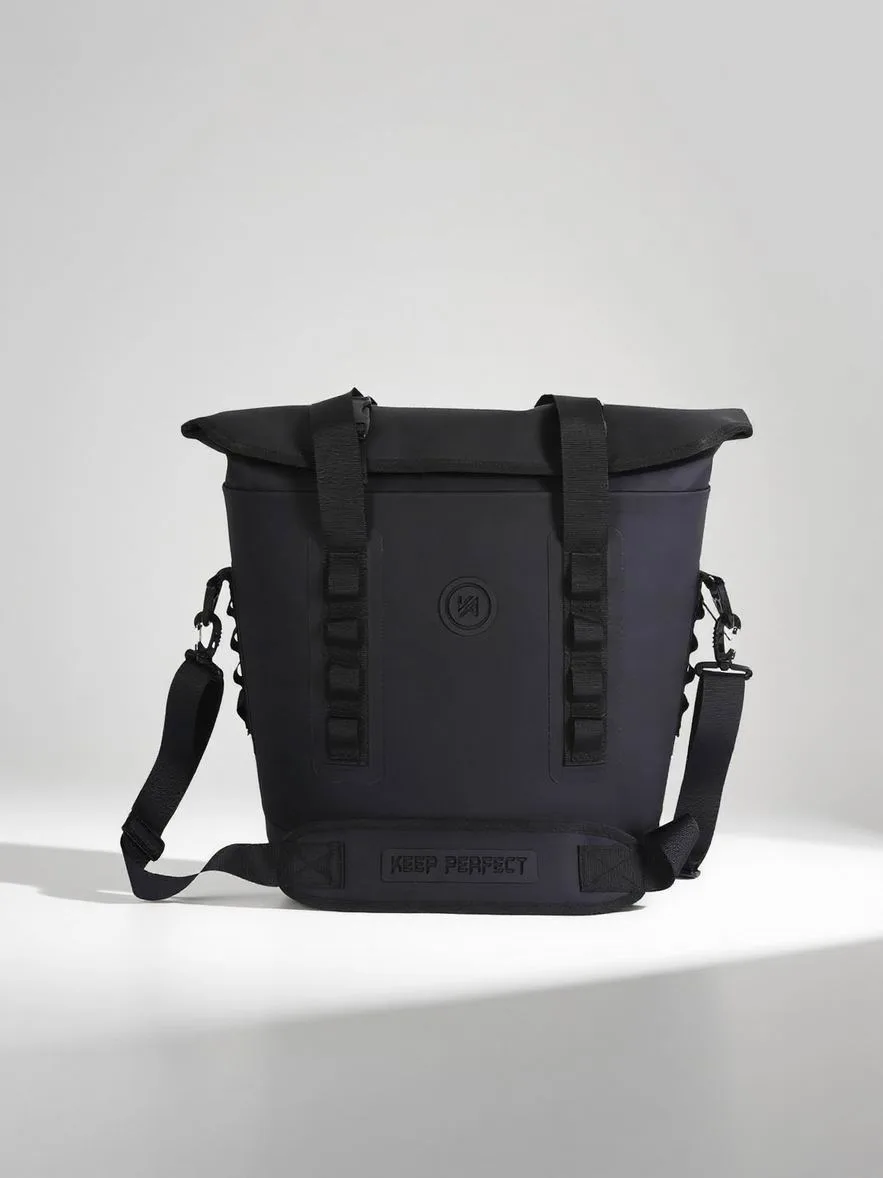
A waterproof zipper is a coil or toothed track laminated with a polyurethane or thermoplastic elastomer coating, closed by a slider that squeezes the two coated faces together. The seal is a line contact between two elastomer surfaces, held by the geometry of the slider and the interlocking elements underneath. It is a genuinely engineered seal, not a covered zipper, and a new one will hold back a sustained immersion.
The weakness is that the seal is a moving contact. Every opening cycle flexes the coating, grit that lands on the track is dragged across the sealing faces, and the elastomer loses plasticiser over years. Strength and cycle behaviour of zippers are covered by test methods such as ASTM D2061, which is a useful reference when a spec sheet quotes a cycle life without saying how it was measured.
Realistic ratings: what each closure achieves in the field
Ignore the marketing grade and look at the test. Ingress protection grades are defined by IEC 60529, published by the IEC, and the distinction that matters here is between a jet test and an immersion test. A zipper that has never been cleaned will pass a jet test and may fail an immersion test; a roll-top that was closed carelessly fails both, while the same roll-top closed properly passes both.
In practice a well-made roll-top bag is specified at IPX6 or IPX7, and a bag with a quality waterproof zipper at IPX7 or IPX8. The higher grade for the zipper is real but conditional: it assumes a clean track, an intact coating and a slider that has been run fully home. Our IPX ratings guide sets out what each grade actually tests.
| Exposure scenario | Roll-top, three folds | Waterproof zipper, #10 | Failure mode if it goes wrong |
|---|---|---|---|
| Heavy rain for 2 hours | Passes | Passes | Neither should fail |
| Deck spray at 40 km/h wind | Passes | Passes | Zip slider not fully home |
| Wave over the gunwale | Passes | Passes | Zip coating scuffed by grit |
| Wet exit, 30 s at 1 m | Passes | Passes if clean | Two folds only, or sand in the track |
| Sustained immersion, 30 min | Passes at IPX7 | Passes at IPX7-IPX8 | Rolled once, or zip left 2 cm open |
| Dragged under for 5 min | IPX7 bags only | IPX8 zip assemblies | Fabric creep at the fold |
Access speed and one-handed use
This is the zipper’s strongest argument and it is not a small one. A waterproof zipper opens with a single pull across the full width of the bag, in about two seconds, with one hand, while wearing gloves. Getting into a roll-top means releasing the clip, unfolding three creases, reaching in, then re-pressing the air out and re-rolling, which is realistically eight to twelve seconds and needs both hands and a stable surface.
Multiply that by frequency. A photographer working a shoreline will open a bag thirty to fifty times a day; at ten seconds a cycle, a roll-top costs eight minutes of shooting time and a great deal of patience. A sea kayaker opening a hatch bag twice a day loses nothing. Frequency of access is the cleanest predictor of which closure a person will be happy with six months in.
Weight, bulk and usable volume
A roll-top closure is lighter and simpler: roughly 30 to 50 g of webbing and a side-release buckle, and it folds flat when the bag is empty. A #10 waterproof zipper weighs 45 to 70 g per metre of track before the slider and the welding labour, and it will not fold flat because the track has to stay unbent. On a 20L bag the difference is typically 60 to 120 g, which matters on a long carry and not at all on a boat.
Usable volume favours the zipper. A roll-top gives up 15% to 20% of its nominal capacity to the closure, so a 20L bag delivers about 16 usable litres. A zippered bag delivers closer to 90% of nominal volume because the opening is at one face and the box keeps its shape. If you are packing rectangular objects — camera bodies, lunch boxes, a laptop — that difference is worth more than the weight saving.
| Attribute | Roll-top | Waterproof zipper, #10 | Practical winner |
|---|---|---|---|
| Closure weight | 30-50 g | 95-140 g including slider | Roll-top |
| Usable volume | 80-85% of nominal | 90-95% of nominal | Zipper |
| Opening time | 8-12 s | 2-3 s | Zipper |
| One-handed opening | No | Yes | Zipper |
| Component cost | About US$1.20 | US$7-US$14 | Roll-top |
| Field repair | Buckle swap, 2 min | Workshop only | Roll-top |
Service life and what kills each closure
A roll-top has no moving parts, so its life is the life of the film at the crease. With sensible use — roll rather than fold for storage, keep grit off the fold line, avoid over-filling — a 0.5 mm TPU roll-top typically gives eight to twelve years of weekend use. What kills it is crease fatigue: a hard fold stored in the same place for months becomes a crack line.
A waterproof zipper has a defined cycle life. Quality assemblies are quoted at several thousand open-close cycles, but in the field the coating usually degrades before the cycle count is reached: UV, salt and abrasion thin the elastomer, and a thinned coating stops sealing long before the teeth fail. Realistic expectation with regular freshwater rinsing and lubrication is three to six years of active use, and much less in a sandy or high-UV environment.
Maintenance effort across a season
Roll-top maintenance is almost nothing. Rinse the fold line with fresh water, run a thumb along it to check for grit, dry the bag open and store it rolled loosely with the clip undone. That is a minute per trip, and it is the same minute you would spend on any bag. The buckle is the only component that wears, and it is replaceable.
Zipper maintenance is a task with a schedule. Rinse the track with fresh water after every saltwater or sandy outing, let it dry, then apply a thin silicone lubricant to the sealing faces every three to six months, working the slider through its full travel a few times. Skip the rinsing and the track becomes a grinding paste; skip the lubrication and the slider starts to drag, which is how coatings tear.
Sand, grit and abrasion: the deciding environment
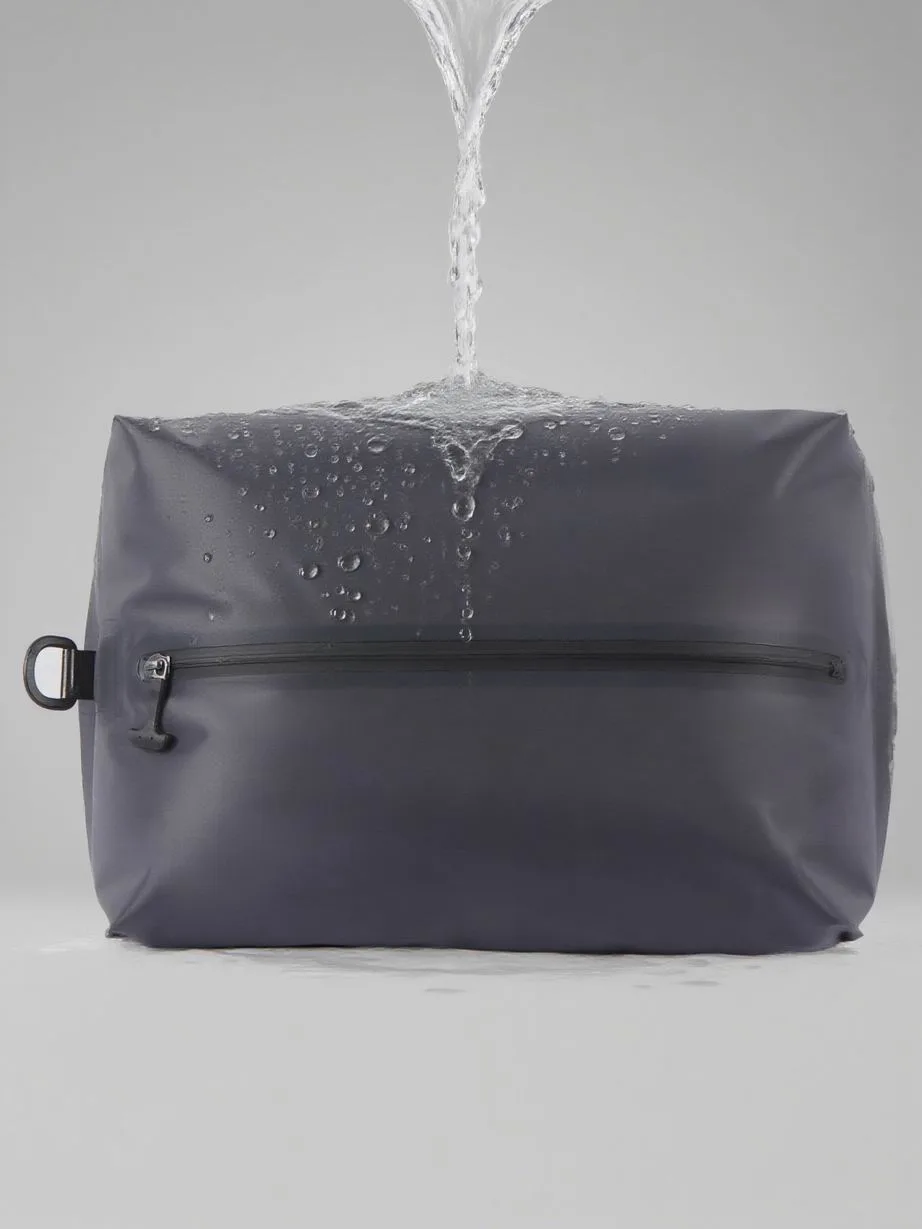
Grit is the tie-breaker in most real decisions. A grain of sand on a roll-top fold line creates a capillary path, but you can see it, rinse it off, and the seal is restored in seconds; the failure is visible and recoverable. The same grain inside a zipper track is dragged along the sealing faces by the slider, scoring the coating irreversibly, and the failure is silent until the bag leaks.
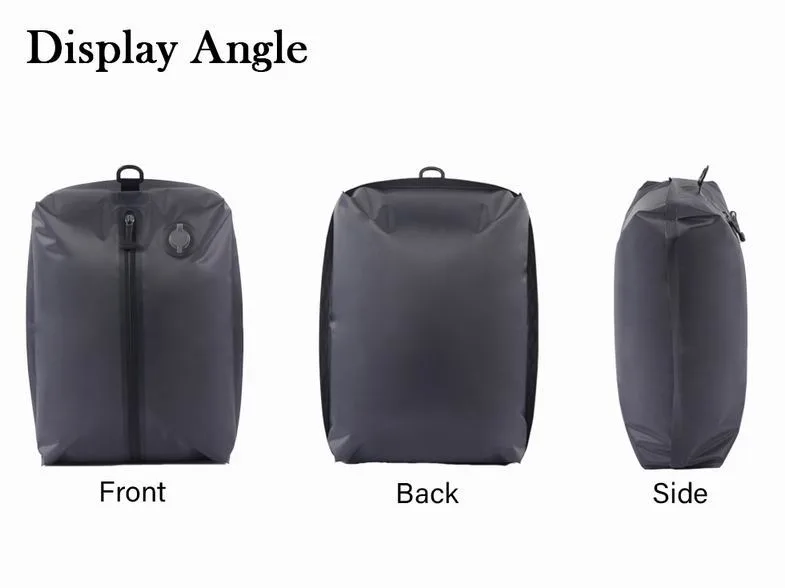
That is why desert trips, surf launches, beach days and canyoneering all push towards roll-tops, while clean-water sailing, urban commuting and camera work push towards zippers. If grit is unavoidable and the bag must stay sealed, some designs use both: a roll-top over a zippered opening, so the zipper provides access and the roll-top provides the environmental seal.
Cold, heat and altitude
Temperature separates the two more than people expect. A TPU roll-top stays flexible well below freezing, and a 0.5 mm film can be rolled with bare hands at minus 15 °C without cracking. Polyurethane zipper coatings stiffen noticeably below about minus 10 °C, which makes the slider hard to pull and the seal less compliant, and that is the point at which a zipper starts to leak on a winter trip.
| Condition | Roll-top behaviour | Zipper behaviour | Field note |
|---|---|---|---|
| Minus 20 °C, dry | Rolls with bare hands | Coating stiff, slider drags | Roll-top |
| Minus 5 °C, wet | Normal | Usable but slow | Either, allow extra time |
| 25 °C, high UV, 6 h/day | Film stable | Coating loses plasticiser | Roll-top for long exposure |
| 60 °C surface in sun | Softens slightly | Coating softens, creeps | Shade both |
| Cabin pressure change | Tightens as air escapes | Burps if not fully home | Close the zip fully |
Heat and altitude affect both, though in different ways. Left in direct sun, a dark bag surface reaches 60 °C to 70 °C, which softens an elastomer zipper coating and accelerates plasticiser loss, while a roll-top loses nothing but a little film flexibility. In an aircraft hold or a high mountain pass the pressure differential pushes air out of a sealed bag, and both closures cope, but a partly closed zipper will burp where a rolled top simply tightens.
What each closure adds to the cost of a bag
Cost is where the two diverge most sharply. A roll-top closure is a length of webbing, a buckle and a welding operation; the added component cost is around US$1.20 and the added labour is small. A #10 waterproof zipper is a bought-in engineered component costing US$7 to US$14 depending on length and brand, plus slower assembly because the track has to be welded into the panel with registration held across the whole seam.
That difference shows up in the retail price and in the repair economics. Replacing a buckle costs cents and takes two minutes in a campsite; replacing a failed zipper costs more than the hardware, needs a workshop with the right welding jig, and is often the point at which a bag is retired. Over a ten-year horizon the roll-top is dramatically cheaper to own, even if the zippered bag is nicer to use every single day.
| Cost line | Roll-top | Waterproof zipper | Comment |
|---|---|---|---|
| Components | US$1.20 | US$7-US$14 | Zipper is a bought-in assembly |
| Assembly labour | One weld, one bar-tack | Registered weld along the track | Zip adds several minutes per unit |
| Quality risk | Low | Moderate | Zip welding is the highest-scrap operation |
| Field repair cost | Under US$2 | Not field-repairable | Buckles are a spare part |
| Replacement cycle | 8-12 years | 3-6 years | Assumes freshwater rinsing |
Repair, spares and end of life
A roll-top bag is repairable by its owner. Buckles are standard side-release parts, webbing can be re-welded or replaced by any repair shop with an RF welder, and a puncture in the film takes a patch. A zippered bag is repairable only by someone with the same component and the right jig, which in practice means the brand or a specialist, and the cost often exceeds the residual value of the bag.
End-of-life is worth considering too. A roll-top bag is essentially one polymer family plus a buckle, so it is far easier to separate and recycle at the end of its life than a bag with a multi-material zipper assembly bonded into the panel. If you are specifying a range with a recycling or take-back story, the closure choice has consequences beyond the first owner.

Which closure to choose: a decision matrix
- Open the bag more than ten times a day: choose a waterproof zipper.
- Bag will meet sand, surf or desert grit: choose a roll-top.
- Must survive immersion after months of neglect: choose a roll-top.
- Need rectangular packing efficiency: choose a zipper, or size up a roll-top.
- Working in sub-zero temperatures: choose a roll-top.
- Wearing gloves on a moving deck: choose a roll-top for grip, a zipper for speed.
- Budget under US$40 per unit: choose a roll-top.
- Want the lowest ten-year cost of ownership: choose a roll-top.
Read those together and a pattern appears. The zipper is a convenience upgrade that you pay for in money and maintenance; the roll-top is the default that fails gracefully and can be repaired in a field. Most people who own both reach for the zippered bag on a working day and the roll-top on a trip, which is the honest answer to a comparison that has no universal winner.
Two further comparisons help when you are choosing a format rather than just a closure: the bucket versus roll-top guide covers open-mouth designs, and the dry bag, dry sack and duffel comparison puts the closure question in the context of shape. For component detail, the waterproof zipper types guide explains the #5, #8 and #10 sizes, and the maintenance guide gives the full lubrication routine.
If you are weighing closure choice at a range level rather than for one bag, the cost and scrap columns above are the ones that decide it, and they interact with volume: a zipper programme needs tighter process control and carries a higher defect rate on the weld. Our production team has built waterproof bags since 2014 across seven lines with AQL 2.5 inspection and a 500-piece minimum per colourway, and the closure is the single biggest variable in both unit cost and inspection yield.Compare the two closures side by side in the product line, and read the roll-top sealing mechanics guide for the physics behind the three-fold rule.
Frequently asked questions
Q1. Which is more waterproof, a roll-top or a zipper dry bag?
A quality waterproof zipper can reach IPX8 where a roll-top typically reaches IPX6 to IPX7, but the zipper grade is conditional on a clean, lubricated track. A roll-top closed with three folds gives reliable IPX7 performance with no maintenance.
Q2. How long does a waterproof zipper last?
Three to six years of active use with regular freshwater rinsing and silicone lubrication every three to six months. The elastomer coating usually degrades from UV, salt and abrasion before the teeth or the cycle count give out.
Q3. How long does a roll-top closure last?
Eight to twelve years of weekend use for a 0.5 mm TPU bag, because there are no moving parts. The limiting factor is crease fatigue at the fold line, which is why bags should be stored rolled loosely rather than folded flat.
Q4. Are waterproof zippers worth the extra cost?
Yes if you open the bag many times a day or need rectangular packing efficiency. At roughly US$7 to US$14 added component cost plus slower assembly, they are poor value for a bag that is opened twice a day in a gritty environment.
Q5. Can a roll-top bag be opened with one hand?
Not reliably. Releasing the clip, unfolding three creases and re-rolling takes eight to twelve seconds and needs both hands and a stable surface, whereas a waterproof zipper opens in two to three seconds with one hand.
Q6. What grade should I look for on a zippered dry bag?
IPX7 as a baseline and IPX8 where the brand names the test depth and duration. Check that the grade is tied to IEC 60529 rather than an invented adjective, and ask what the zipper size is: #10 for big openings, #5 or #8 for small ones.
Q7. Does sand damage a waterproof zipper?
Yes, and irreversibly. Grit on the track is dragged across the sealing faces by the slider and scores the coating, so the bag leaks later with no visible cause. Rinse with fresh water after every sandy outing.
Q8. Can I repair a failed waterproof zipper myself?
No. Replacement needs the same component and a jig to weld the track into the panel with registration held, which is a workshop job. A roll-top buckle, by contrast, is a standard part that costs under US$2 and takes two minutes to swap.
Q9. Should I store a waterproof zipper open or closed?
Closed. Keeping the slider home holds the elements aligned and protects the sealing faces. Never store the bag folded across the track, because a permanent kink in the coating will leak.
Q10. Do waterproof zippers work in freezing conditions?
Poorly below about minus 10 °C. The polyurethane coating stiffens, the slider becomes hard to pull and the seal loses compliance, whereas a TPU roll-top can still be rolled with bare hands well below that.
Q11. How much volume does a roll-top closure cost me?
About 15% to 20% of nominal capacity, so a 20L bag gives roughly 16 usable litres. A zippered bag keeps 90% to 95% of nominal volume because the opening sits on one face and the box holds its shape.
Q12. Which closure is better for kayaking?
A roll-top. Kayaking combines grit, immersion and long periods between openings, which is exactly the profile where a roll-top wins. Zippered bags suit camera and phone access in a clean, sheltered cockpit.
Q13. Which closure is better for travel?
A zipper for anything you open repeatedly, such as a camera insert or a laptop pocket, and a roll-top for wet kit and shoes. Most one-bag travellers carry both.
Q14. Can a bag have both closures?
Yes, and it is a good design when access and environment both matter: a zippered opening behind a roll-top gives fast access when it is dry and a fold-down environmental seal when it is not.
Q15. Is a roll-top bag cheaper to own over ten years?
Yes, substantially. The closure costs about US$1.20 against US$7 to US$14, buckles are field-replaceable for under US$2, and the typical service life is eight to twelve years against three to six for a zipper.
Q16. Does a zippered dry bag need lubrication?
Yes. Apply a thin silicone lubricant to the sealing faces every three to six months, and more often in saltwater or high-UV use, working the slider through its full travel a few times after each application.
People also ask
Are zipper dry bags as waterproof as roll-top ones?
A quality waterproof zipper can achieve a higher grade, IPX8 against IPX6 or IPX7, but only while the track is clean and lubricated. A roll-top gives more consistent real-world protection because it has no component to degrade.
Why do dry bags use roll-tops instead of zippers?
Because a roll-top is cheaper, lighter, has no moving parts, survives grit and freezing, and can be repaired in the field. Those properties matter more than access speed on a boat.
How do you maintain a waterproof zipper?
Rinse the track with fresh water after every saltwater or sandy outing, dry it, then apply a thin silicone lubricant to the sealing faces every three to six months and work the slider through its full travel.
Can you replace a waterproof zipper?
Only in a workshop. The track has to be welded into the panel with registration held across the whole seam, which needs the right jig, so most zippered bags are retired rather than repaired.
Which dry bag closure lasts longest?
A roll-top, at roughly eight to twelve years against three to six for a waterproof zipper, because the limiting factor is film crease fatigue rather than a wearing elastomer seal.
Is a roll-top dry bag hard to open?
Compared with a zipper, yes: about eight to twelve seconds against two to three, and it needs both hands. That is irrelevant on a trip and significant if you open the bag thirty times a day.
Need this in production volume?
QUANZHOU JUNYUAN BAGS has produced waterproof bags since 2014 in an SGS-verified 4,950 m2 facility in Fujian, China. Minimum order 500 pieces, sampling in 6–10 working days, bulk in 35–50 days, FOB Xiamen — write to service@junyuanbags.com with your spec and target market.