Protecting Gear During Triathlon
A triathlon creates three wet zones in ninety minutes: an open-water swim that soaks a wetsuit, goggles and a swim cap, a bike leg that throws road spray and sweat at everything in a bento box, and a run leg that finishes with a soaked kit weighing 1.5 to 2.5 kg. Protecting gear means one 20L to 30L transition bag for dry kit and one 5L wet bag for the wetsuit and swim kit, both with welded seams, because a bag that sits on wet transition ground for three hours is standing in water, not near it.
This guide sets out the volume and weight figures by race distance, what each transition does to the bag, the ratings that matter at swim exit and on a wet road, a packing order for 05:00 on race morning, and a post-race cleaning sequence. Numbers are drawn from a standard Olympic distance event: a 1.5 km swim in 18 °C water, a 40 km bike leg, a 10 km run and a transition area holding roughly 600 bags.
- Three disciplines, three wet zones
- Sizing by race distance: sprint to long course
- Transition one: the swim exit and the wetsuit problem
- The bike leg: road spray, sweat and the bento box
- The run leg and the finish-line bag
- Electronics: watch, phone, bike computer and earbuds
- Race morning: the packing order that saves minutes
- Ratings that matter in a transition area
- Closing a bag at five in the morning with cold hands
- Finding your bag: labelling and rack position
- After the race: wet kit, cleaning and the drive home
- Travelling to the race: bike box, checked kit and swim gear
- Race-week checklist
Three disciplines, three wet zones
Triathlon is unusual among endurance sports because the water source changes three times inside one race. The swim is full immersion in open water, which is the only true submersion event and the one that soaks the wetsuit, cap, goggles and any timing strap you wear. The bike leg is a spray and sweat event: road film thrown up by the rear wheel plus roughly 0.8 litres of sweat an hour in warm conditions.
The run leg is a sweat event plus whatever the weather does, and it ends with a finish-line bag that holds a soaked kit, a wet towel and shoes full of water from a run through sprinklers or rain. None of those three sources is violent, but each lasts long enough that slow wicking rather than dramatic failure is what ruins gear.
That distinction drives the whole plan. You are not buying protection against a capsize at depth; you are buying a bag that can sit on wet grass for three hours, be opened and closed eight times with wet hands, and keep a dry jersey, a phone and a car key dry through all of it. Seam construction and closure discipline matter far more here than a headline immersion rating.
Sizing by race distance: sprint to long course
Distance changes the kit list less than people expect, because the swim and the run kit are the same at every distance. What changes is nutrition volume and clothing options: a sprint needs one gel and no spare layer, while a long-course race needs six hours of nutrition, arm warmers, a rain shell and often a second pair of socks.
| Race distance | Time racing | Dry bag | Wet bag | Packed weight |
|---|---|---|---|---|
| Super sprint | 40-60 min | 1 x 10L | 1 x 5L | 1.2-1.8 kg |
| Sprint | 1-1.5 h | 1 x 15L | 1 x 5L | 1.8-2.4 kg |
| Olympic | 2-3 h | 1 x 20L | 1 x 5L | 2.4-3.2 kg |
| Half distance | 4-6 h | 1 x 25L | 1 x 10L | 3.2-4.2 kg |
| Long course | 9-14 h | 1 x 30L | 1 x 10L | 4.0-5.5 kg |
Take the larger size whenever you are between two. A half-filled dry bag rolls more times, seals better and packs flatter on the transition rack, whereas an overpacked bag cannot seal at all and the failure is invisible until you reach for a dry jersey after the swim. The cost of going one size up is about 60 g and 3 cm of rack width.

Transition one: the swim exit and the wetsuit problem
The first transition is where gear gets ruined. You come out of the water in a wetsuit that is carrying 0.5 to 1.2 litres of water in the neoprene and on the surface, you strip it in about forty seconds, and everything it touches is immediately wet. A wetsuit folded into a bag with dry cycling kit will transfer most of that water within ten minutes.
So the wetsuit needs its own 5L wet bag, and it needs to go in there first, before anything else is unpacked. Roll the top three times, clip it, and put it at the edge of your transition space rather than in the middle. Everything else you wore in the water, meaning goggles, cap and swim skin, goes in the same bag; a swim cap left loose on the ground will be stepped on inside five minutes.
One detail specific to open water: check the venue water quality before you race. Freshwater and coastal venues are monitored differently and the EPA publishes recreational water quality guidance that explains what the advisories mean. A wetsuit from a venue under advisory should be rinsed in fresh water with a mild disinfectant the same day, not left sealed in a bag in a hot car.
The bike leg: road spray, sweat and the bento box
The bike leg is a directed-water event at its worst in the first twenty minutes after rain, when the road film is still liquid. Spray off the rear wheel reaches a saddle bag or a jersey pocket at speed, and it carries grit. Anything mounted low and behind is in the firing line, which is why a top-tube bag and a jersey pocket are safer places for a phone than a seat pack.
Sweat does the rest. A rider producing 0.8 litres an hour will saturate a jersey and a bento box interior within ninety minutes, and sugar from spilled gel accelerates bacterial growth in that environment. Keep nutrition in a separate pouch from electronics, wipe the inside of any mounted bag after every long ride, and never store a wet gel wrapper in the same space as a bike computer.

The run leg and the finish-line bag
The run leg is the least technically difficult and the most consistently damp. By the time you finish, the kit you are wearing holds 300 to 600 g of sweat, and if the course has been watered or it rained, your shoes hold another 200 to 300 g. That is the load that goes into the wet bag at the finish, alongside the wetsuit that has been sealed in there for two hours.
Plan the finish-line bag around the drive home rather than the race. A dry bag with a spare layer, dry socks, a towel and a pair of sandals turns a miserable two-hour drive into a comfortable one, and it is the single most appreciated item in any triathlete’s kit. Put the sandals in a 2L pouch so they do not sit against the clean clothing.
Electronics: watch, phone, bike computer and earbuds
Electronics fail in triathlon from a combination of water and sugar rather than from water alone. A bike computer that has been ridden through spray and then had gel residue wiped across its contacts will corrode within a season. The countermeasure is separation: electronics in one pouch, nutrition in another, and a quick wipe of any mounted device after every wet ride.
| Device | Main threat | Where it rides | Protection that works |
|---|---|---|---|
| GPS watch | Chlorine and salt under the bezel | On the wrist | Rinse in fresh water after the swim |
| Phone | Road spray in a pocket | 2L pouch, top of the dry bag | Two independent seals |
| Bike computer | Spray and gel on contacts | Mounted, wiped after rides | Rinse the contacts, dry upright |
| Earbuds | Sweat in the case | Separate pouch from nutrition | Silica sachet in the case |
| Power bank | Condensation in a sealed bag | Wrapped in the spare layer | Open the bag before it warms up |
The phone row is the one worth acting on before your next race. A phone in a jersey pocket during a wet bike leg is exposed to spray for forty kilometres, and a phone in the dry bag is exposed to nothing. Two independent seals, meaning a 2L roll-top inside the main transition bag, cost 90 g and remove the risk entirely.
Race morning: the packing order that saves minutes
Transition at 05:30 is cold, dark and crowded, and that is when bags get packed badly. Do the work the night before and use the same order every race so it becomes automatic. The point of a fixed order is that it puts the wet bag on the outside and the dry bag on the inside, so the first thing you touch after the swim is not the thing that must stay dry.
- Pack the dry bag at the hotel the night before: spare layer, socks, towel, sandals, phone pouch, car key.
- Rack the dry bag first, mouth-up, with the closure towards the aisle so you can reach it fast.
- Lay the wet bag open beside it, unfolded and ready, at the outside edge of your space.
- Set the bike kit out in race order: helmet, glasses, shoes, number belt, then nutrition.
- Rinse goggles and cap at the swim exit, drop them straight into the wet bag.
- Strip the wetsuit, roll it into the wet bag, close it, and only then touch the dry bag.
Step five and six are the ones that matter. Every second the wetsuit is out of the water it is dripping onto whatever is beneath it, so the sequence is always wet bag first, dry bag second. Practise it at home once with your eyes closed and you will save twenty to thirty seconds in transition, which is more than most people gain from a season of bike fitting.
Ratings that matter in a transition area
Transition is a standing-water environment. Six hundred bags on damp grass for three hours means the ground under your bag is wet regardless of the weather, and if it rains the ground becomes a shallow puddle. An IPX5 or IPX6 rated welded bag keeps its contents dry in both cases; a coated fabric bag with a stitched base will wick water up from underneath over the same period.
| Exposure at a race | What reaches the bag | Rating that covers it | Construction |
|---|---|---|---|
| Bag standing on wet grass | Ground moisture under the base | IPX5 | Welded, no stitched base |
| Bag in a rain-soaked field | Standing water to 2 cm | IPX6 | Welded, closure up |
| Wetsuit sealed inside | 1.2 L of water held in neoprene | No rating applies, seal it | Welded, 0.5 mm film |
| Road spray on the bike | Directed water with grit | IPX6 | Welded, wipe the contacts |
| Kit dropped at swim exit | Brief submersion in the shallows | IPX7 | Welded, continuous |
The third row is the one people get wrong. A wetsuit carries 0.5 to 1.2 litres of water and no ingress rating helps, because the water is already inside the bag with the suit. What helps is volume: make sure the wet bag is large enough that the suit is not compressed against the dry kit, and keep the wet bag separate from the dry bag entirely.
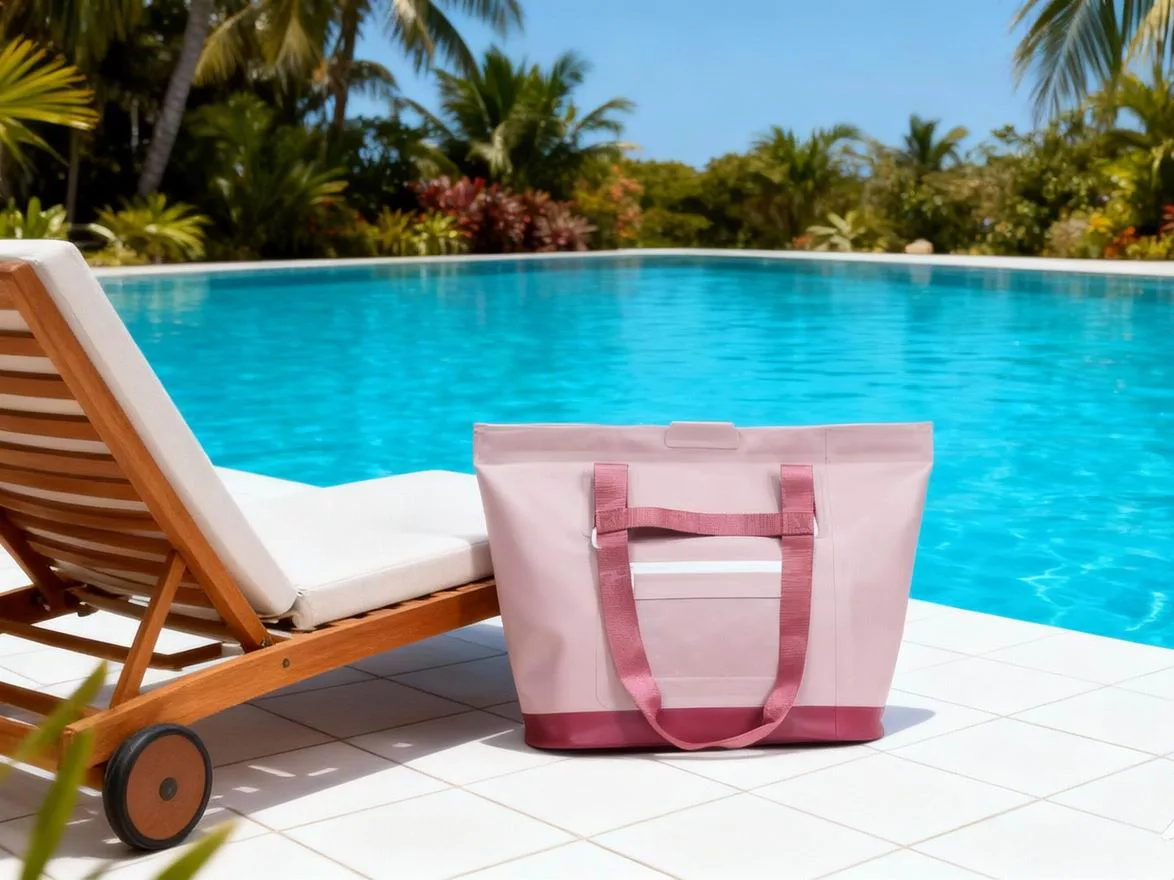
Closing a bag at five in the morning with cold hands
Cold fingers are the practical reason bags end up badly closed at races. Below about 8 °C, dexterity drops enough that a three-fold closure pressed by fingertips will not seat evenly, and an uneven fold is what lets standing water track in over three hours on damp grass. Press the fold with the heel of the hand instead of pinching it, and do the closure before you warm up for the swim.
A second trick helps at open-water venues: roll the bag while it is dry, at the hotel, and do not reopen it at the venue at all. Take what you need for the swim from a separate pocket, leave the transition bag sealed, and only open it after the race when you are warm and dry. A bag that is never opened at the venue cannot be badly closed at the venue.
Finding your bag: labelling and rack position
Transition racks are organised by race number and they are long. At a 600-bag event, finding your own bag takes twenty seconds if it is labelled and two minutes if it is not, and that is two minutes you do not have in a race against the clock. Use a rigid tag with your number on both sides and pick a colourway that is not black.
Position within your own space matters too. Put the dry bag at the front of the space with the closure facing the aisle so you can grab and open it in one motion, and put the wet bag behind it. Colour-code them: one colour for dry, another for wet, and tell anyone helping you which is which. The logic is identical to a team kit room, and our club bag guide covers how a colour split gets specified.
After the race: wet kit, cleaning and the drive home
Everything that touched open water needs a fresh-water rinse the same day, and that starts with the wetsuit rather than the bags. Rinse the suit inside and out, hang it inside-out over a wide hanger away from direct sun, and do not fold it for at least twelve hours. Salt and chlorine left in neoprene stiffens the panels and shortens the suit’s life by seasons, not months.
- Rinse the wetsuit inside and out first; it is the item that degrades fastest.
- Empty the wet bag completely and hose it at normal pressure, never a pressure washer.
- Work a thumb along the fold line to push out sand and grit from the swim exit.
- Wipe the dry bag interior; expect 20 to 40 ml of condensation after a warm day.
- Flush the buckles through their full travel while they are still wet.
- Dry both bags in shade with the mouth open, then store loosely rolled.
Do not leave the wet bag closed in a hot car for the drive home and then overnight. Two days of warmth and darkness is enough to start mildew in a welded shell, and the smell does not come out. If you genuinely cannot deal with it that evening, open the bag and air it, which buys you another day. Full washing steps are in our roll-top cleaning guide, and storing wet kit is covered in the wet swimwear guide.
Travelling to the race: bike box, checked kit and swim gear
Fly-in races add a fourth wet zone: the luggage system. A bike box left on a wet apron transfers water to everything packed against it, and a checked duffel on a tarmac in the rain will be damp on the outside when you collect it. Pack the swim kit and race kit in welded bags inside the checked luggage, and keep the wetsuit in its own bag so it cannot wet the race clothing.
Cabin luggage is worth a moment too. Goggles, a watch, a bike computer and any race licence belong in the cabin bag, not in the hold, and a small roll-top inside that cabin bag protects them from a leaking water bottle. Our carry-on travel guide covers the size limits, and the TPU waterproof backpack line covers the formats that fit under a seat.
Race-week checklist
- One dry bag of 20L to 30L for race kit, packed the night before and never opened at the venue.
- One 5L wet bag for the wetsuit, cap and goggles, racked at the outside edge of your space.
- Phone and car key in a 2L pouch at the top of the dry bag for two independent seals.
- Welded seams throughout, closure facing up, bag standing mouth-up on damp ground.
- Dry bag and wet bag in different colours, both tagged with your race number.
- Spare layer, dry socks, towel and sandals in the dry bag for the drive home.
- Fresh-water rinse for wetsuit and both bags on the day of the race, not the day after.
Run that list at the hotel the evening before and you remove almost every gear failure that ruins a race day. The two that remain are a punctured tyre and the weather, and neither is a bag problem.
Clubs, event organisers and teams ordering bags for a race series work from the same list converted into a specification: volume, film thickness, seam type, hardware grade, colourway and the test data behind the waterproof claim. Compare those figures with the product line before you fix a size.
Two risks sit outside what a bag can manage. Open-water swimming carries an infection risk from contaminated venues, and the CDC publishes guidance on waterborne illness that any athlete racing in unfamiliar water should read. Open-water conditions themselves, including currents and water temperature, are forecast by NOAA for US coastal venues. For the swim-leg kit specifically, our paddleboarding gear guide covers the same wet-zone logic from a different angle.
Frequently asked questions
Q1. What size dry bag do I need for a triathlon?
One 20L to 30L dry bag for race kit plus one 5L wet bag for the wetsuit, cap and goggles. At Olympic distance the two together hold 2.4 to 3.2 kg; long course needs a 30L and a 10L.
Q2. Why does my wetsuit need its own bag?
Because it carries 0.5 to 1.2 litres of water in the neoprene and on the surface. Folded in with dry cycling kit it transfers most of that within ten minutes and takes the whole bag with it.
Q3. What waterproof rating do I need for a transition bag?
IPX5 for standing on wet grass and IPX6 for a rain-soaked field. Welded seams matter more than the number, because a stitched base wicks water up from underneath over three hours on damp ground.
Q4. Should I keep my phone in the transition bag?
Yes, in a 2L pouch at the top of the dry bag so it has two independent seals. A phone in a jersey pocket is exposed to road spray for the whole bike leg.
Q5. How do I stop the bag leaking when I close it with cold hands?
Press the fold with the heel of your hand rather than pinching it with fingertips, and close the bag at the hotel before you warm up. Below about 8 °C dexterity drops enough that a finger-pressed fold will not seat evenly.
Q6. Can I leave the wet bag closed until I get home?
No. Two days of warmth and darkness starts mildew in a welded shell and the smell does not come out. If you cannot wash it that evening, at least open the bag and air it.
Q7. How much water does a wetsuit actually hold?
Between 0.5 and 1.2 litres depending on the suit and whether you rinsed it before stripping. That is why the wet bag needs its own volume rather than sharing space with dry kit.
Q8. Where should the dry bag sit on the transition rack?
At the front of your space with the closure facing the aisle, standing mouth-up, so you can grab and open it in one motion. Put the wet bag behind it at the outside edge.
Q9. How do I find my bag in a field of six hundred?
Use a rigid tag with your race number on both sides and choose a colourway that is not black. Colour-code the dry bag and the wet bag differently so a helper can grab the right one.
Q10. What happens to a bike computer in the wet?
Road spray plus gel residue on the contacts corrodes it within a season. Wipe it after every wet ride, keep nutrition in a separate pouch, and rinse the contacts in fresh water.
Q11. Does a dry bag protect gear inside a bike box?
Yes, if the swim kit and race kit are packed in welded bags inside the box. A bike box standing on a wet apron transfers water to anything packed against it.
Q12. Should race documents travel in a dry bag?
In a small roll-top or a waterproof tote in your cabin bag, yes. Keep the licence, goggles, watch and bike computer with you rather than in the hold.
Q13. How much volume does rolling the top cost?
About 2 to 3 litres on a 20L bag rolled three times. Pack to roughly 85% and check the bag closes before you leave the hotel, because an overpacked bag cannot seal.
Q14. Can I machine wash a triathlon dry bag?
No. Machine washing abrades the film and twists welded seams. Rinse by hand, wipe the interior and the fold, flush the buckles, then dry in shade with the mouth open.
Q15. How often should I replace the buckles?
Every three to four seasons of heavy racing, sooner if the bag sees salt water. A buckle that has been left gritty will slip under load, and it is the cheapest part to replace.
Q16. Do I need a bag for a sprint distance race?
Yes, but smaller: a 15L dry bag and a 5L wet bag covers a sprint at 1.8 to 2.4 kg packed. The wet bag is still non-negotiable because the wetsuit problem exists at every distance.
People also ask
How do you keep triathlon gear dry?
Split into a dry bag and a wet bag. Race kit, spare layer and electronics go in a 20L to 30L welded dry bag packed the night before; the wetsuit, cap and goggles go straight into a separate 5L wet bag at the swim exit.
What should be in a triathlon transition bag?
Spare layer, dry socks, towel, sandals, phone and car key in a 2L pouch, race nutrition, number belt and a first-aid pouch. Everything that will be wet goes in the separate wet bag, not here.
Are dry bags needed for triathlon?
Yes for the wetsuit and the post-race kit. A wetsuit carries up to 1.2 litres of water and a transition field is damp ground for hours, so a welded bag is what keeps the drive-home kit dry.
How do you dry a wetsuit after a race?
Rinse it inside and out with fresh water the same day, hang it inside-out over a wide hanger away from direct sun, and do not fold it for at least twelve hours. Salt and chlorine left in neoprene stiffens the panels.
Why does my transition bag get wet inside?
Condensation and ground moisture. A bag sealed in a cool morning and opened after a warm race holds 20 to 40 ml on the inner wall, and a stitched base wicks damp from wet grass within hours.
Can you check a dry bag on a plane?
Yes, and it is a good way to protect race kit inside a bike box. Keep goggles, watch, computer and licence in the cabin bag in a small roll-top instead, in case the hold gets wet.
Need this in production volume?
QUANZHOU JUNYUAN BAGS has produced waterproof bags since 2014 in an SGS-verified 4,950 m2 facility in Fujian, China. Minimum order 500 pieces, sampling in 6–10 working days, bulk in 35–50 days, FOB Xiamen — write to service@junyuanbags.com with your spec and target market.