Home / Blog / Travel & Packing
Dry Bags for Carry-On-Only Travel
A carry-on-only trip works with 30 to 40 litres of packed volume against a 7 kg to 10 kg cabin allowance, which leaves roughly 5.5 kg for contents once you deduct a 1.0 to 1.2 kg carry bag and 280 to 420 g of dry bags. Five dry bags do the job on a five-day trip: a 20L for clothing, a 10L for the wet kit and laundry, a 5L for electronics and cables, a 2L for documents and medication, and a 1L flat pouch for liquids under the 100 ml rule.
The reason dry bags earn their weight on a one-bag trip is not rain; it is separation. A roll-top lets you isolate a wet swimsuit, a leaking shampoo bottle or a pair of worn shoes from clean clothing inside a single cabin bag, and it compresses as you roll it. This guide sets out the litre plan, the gram budget, what arrangement survives a security tray, and how to re-pack in a hotel room in under ten minutes.
- What carry-on-only actually allows you to carry
- Why dry bags beat packing cubes on a one-bag trip
- The gram budget: what the bags themselves weigh
- Choosing the cabin bag: 30 L, 40 L or a backpack
- A five-bag system for a one-bag trip
- Sizing each dry bag by the item, not by the litre
- Wet kit, laundry and the swimwear problem
- Liquids, gels and the security tray
- Laptops, cables and documents at the checkpoint
- Rolling versus folding: compression without a valve
- Climate and destination: tropical, temperate and winter
- Re-packing in a hotel room in under ten minutes
- A carry-on checklist you can run the night before
What carry-on-only actually allows you to carry
Cabin allowances are defined by three numbers: outside dimensions, weight, and the liquids rule. The dimensions most carriers converge on are around 55 x 40 x 20 cm for the main bag plus a smaller personal item near 40 x 20 x 25 cm, and the weight allowance usually sits between 7 kg and 10 kg. Low-cost carriers enforce both; full-service carriers tend to weigh only when the overhead bins are full.
The liquids rule is the one that catches people: containers up to 100 ml, all of them inside a single resealable bag of roughly one litre, presented separately at the checkpoint. That single transparent pouch is the one place where a dry bag does not help you, since a resealable bag is what the rule asks for. Everything else in your packing list can be organised with roll-tops.
| Carrier type | Main bag dimensions | Weight limit | Personal item | Enforcement |
|---|---|---|---|---|
| Low-cost European | 55 x 40 x 20 cm | 10 kg | 40 x 20 x 25 cm | Gauge at the gate, frequent |
| Full-service long haul | 55 x 40 x 23 cm | 7-8 kg | 40 x 30 x 15 cm | Occasional spot checks |
| US domestic | 56 x 36 x 23 cm | None stated | One personal item | Rarely weighed |
| Asian regional | 56 x 36 x 23 cm | 7 kg | Small bag only | Weighed at check-in |
| Small regional turboprop | Often 40 x 30 x 20 cm | 5-6 kg | Gate-checked | Strict, limited bin space |
Why dry bags beat packing cubes on a one-bag trip
Packing cubes organise; dry bags isolate. A cube is a mesh or fabric box that keeps socks away from shirts and does nothing at all if a bottle of sunscreen bursts inside it. A roll-top dry bag with welded seams is a sealed barrier, so a leaking toiletry, a damp swimsuit or muddy trail shoes stay contained and the rest of the bag stays dry and clean.
The second advantage is compression without hardware. Rolling the top down three times expels air and shrinks the package, which is exactly what a compression cube does with a zip and a strap, minus the zip that will eventually fail. The caveat is that a rolled dry bag is not square, so it wastes a little space in a rectangular cabin bag; the fix is to pack rolled bags with the closures facing alternate directions.
The gram budget: what the bags themselves weigh
On a 7 kg allowance the bag system has to be counted, because 400 g of organisers is 6% of the allowance. A TPU laminated roll-top is light for what it does: roughly 60 g for a 2L, 90 g for a 5L, 130 g for a 10L and 190 g for a 20L. A full five-bag set comes to about 480 g, which is comparable to a set of four cubes and considerably more capable.
Spend the budget where it earns something. A heavy 0.5 mm bag is justified for the wet kit, because that bag is the one that will be wrung out, stuffed with damp fabric and carried wet. It is not justified for the clothing bag, which never sees water and only needs to compress. Mixing film thickness across the set is the single easiest way to save 80 to 120 g.
| Dry bag size | Empty weight, 0.3 mm TPU | Usable volume when rolled | Best contents | Packed weight |
|---|---|---|---|---|
| 1L flat pouch | 35 g | 0.8 L | Liquids sachets, medication | 250-400 g |
| 2L | 60 g | 1.6 L | Passport, cards, cables | 300-500 g |
| 5L | 90 g | 4.0 L | Chargers, power bank, toiletries | 600-900 g |
| 10L | 130 g | 8.0 L | Wet kit, laundry, shoes | 1.0-1.8 kg |
| 20L | 190 g | 16 L | Clothing, rolled or folded | 2.5-4.0 kg |
Choosing the cabin bag: 30 L, 40 L or a backpack
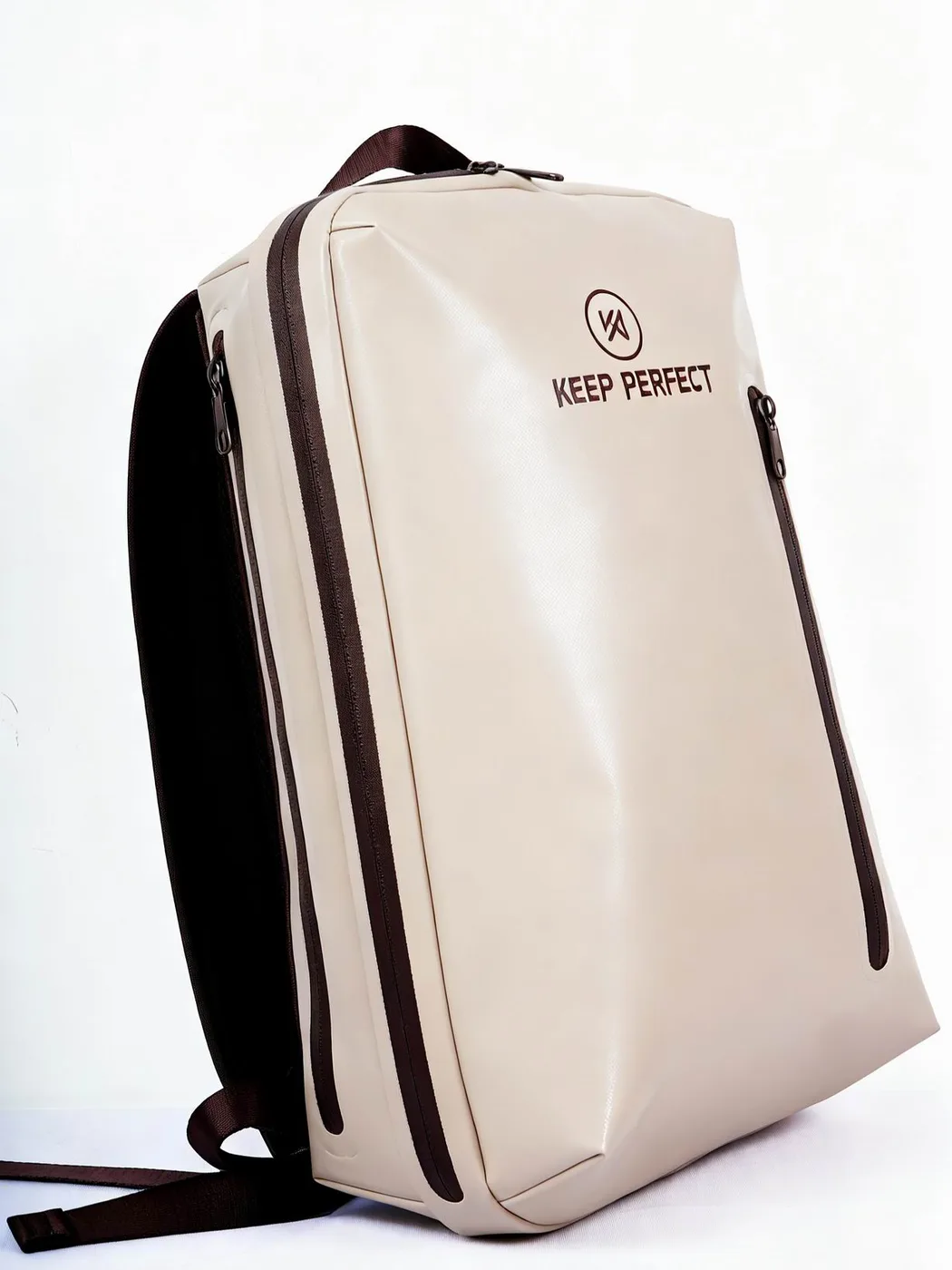
Pick the cabin bag against the strictest carrier you fly, not the most generous. A 40 L travel backpack usually measures close to 55 x 35 x 25 cm, which is over the 20 cm depth of a European low-cost gauge and will be caught. A 30 L to 35 L pack with a compressed profile passes nearly everywhere and still holds five days of clothing when the clothing is rolled rather than folded.
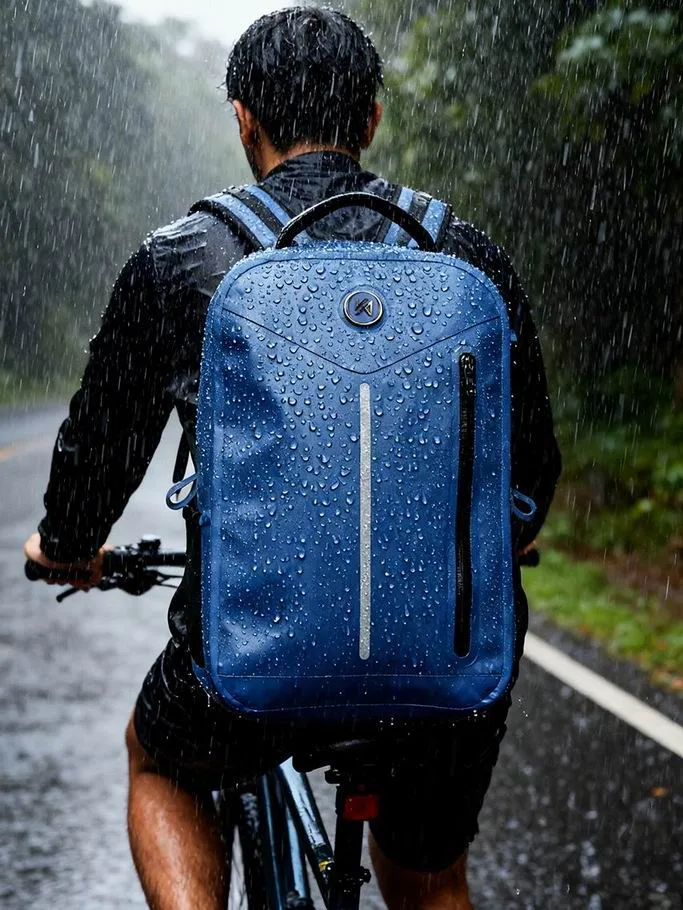
A waterproof backpack with welded seams is worth the weight in a rainy-season or island destination, where you will walk 800 m from a pier in a squall. In a city destination it is over-specified, and a conventional cabin bag plus dry bags inside is lighter and easier to live out of. Our TPU waterproof backpack line sits at the wet-climate end of that decision.
A five-bag system for a one-bag trip
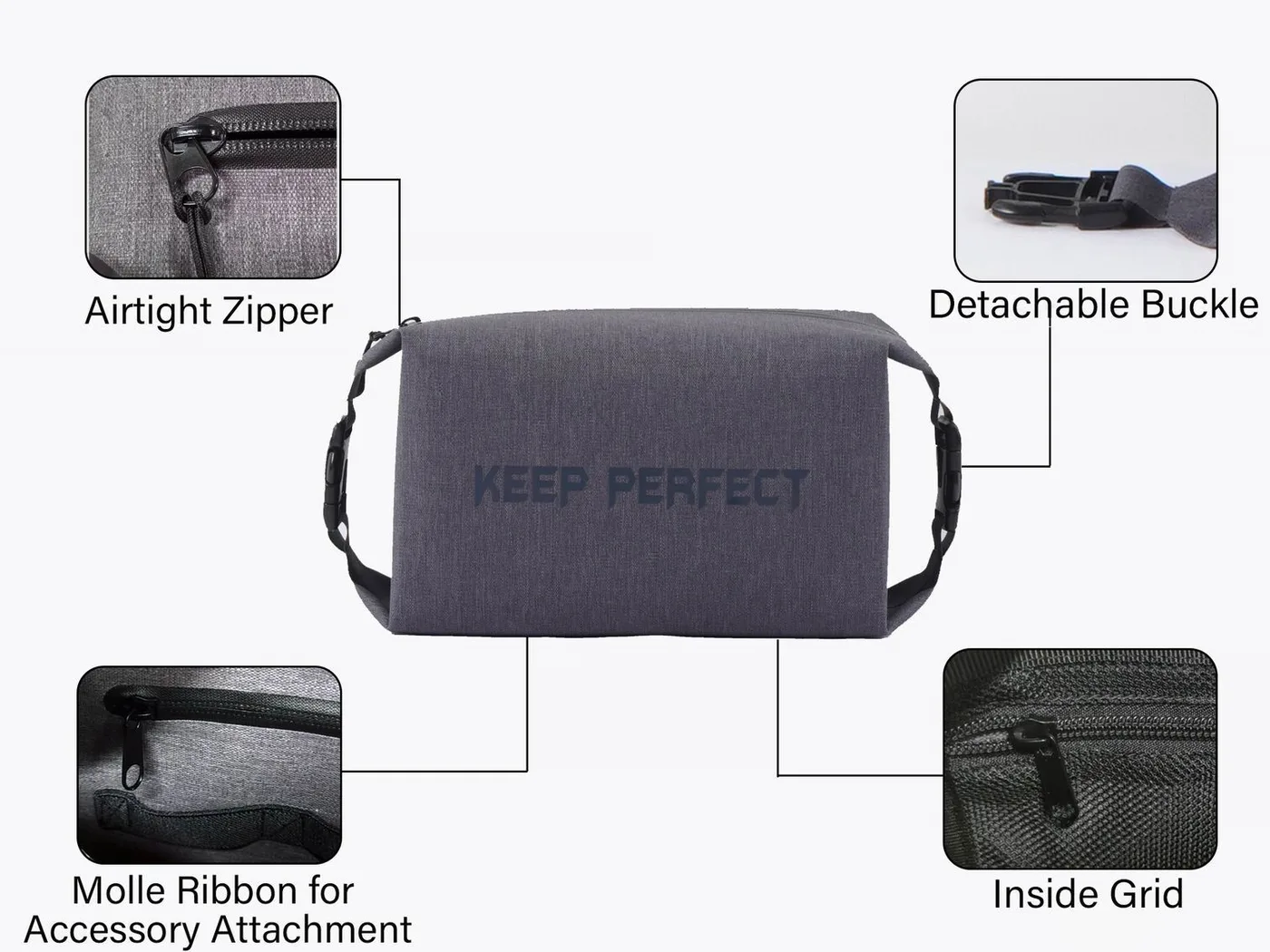
Assign one job per bag and keep that assignment for the whole trip. The clothing bag, usually 20L, holds everything you will wear and is opened once a day. The wet-kit bag, usually 10L, holds anything damp and is opened at every stop. The electronics bag, usually 5L, holds the cables and power bank and is opened at the checkpoint. The document pouch, 2L, never leaves the personal item. The liquids pouch, 1L, lives at the top of the bag.
The discipline matters because a trip is a sequence of small packing events, not one big one. If wet and dry items share a bag at any point, the whole system degrades; if cables migrate into three bags, you will spend ten minutes at the gate untangling them. Colour coding the bags is the cheapest way to make the system stick, since you can see at a glance which bag belongs where.
| Bag | Size | Contents | Where it sits | Opened |
|---|---|---|---|---|
| Clothing | 20 L | Rolled shirts, trousers, base layers | Bottom of the cabin bag | Once a day |
| Wet kit | 10 L | Swimwear, damp towel, laundry | Outer pocket or lid | Every stop |
| Electronics | 5 L | Chargers, power bank, earbuds | Top, tray-ready | At the checkpoint |
| Documents | 2 L | Passport, cards, medication | Personal item, on your body | At the desk |
| Liquids | 1 L | 100 ml bottles in a resealable bag | Top lid, separate | At the checkpoint |
Sizing each dry bag by the item, not by the litre
Volume numbers are meaningless until they are tied to objects. A rolled merino sweater occupies about 1.4 L, a pair of trousers rolled tight about 2.0 L, a pair of trainers about 3.5 L, and a damp beach towel about 1.8 L and rising. Working from that kind of list is how you discover that a five-day clothing load fits 16 usable litres, which is a 20L bag rolled three times.
Shoes are the single biggest packing problem on a carry-on trip, because a pair of trainers eats a third of a 10L bag and carries grit. Put them in the wet-kit bag heel-to-toe, soles facing the bag wall, and fill the gap around them with socks. That converts an awkward 3.5 L void into a packed 4.5 L block and keeps dirt off clean clothing.
Wet kit, laundry and the swimwear problem
The wet-kit bag is the one item that genuinely has to be waterproof rather than water-resistant, because it is the bag that carries water. A sealed roll-top holds damp fabric for six to eight hours in a hot cabin bag without soaking anything else, and because it holds water in as well as out, you can rinse a swimsuit in the bag itself at a beach shower before packing it.
There is a hygiene reason for strict separation beyond comfort. Damp synthetic fabric held against skin for hours is how fungal and bacterial skin problems start on holiday, so keep worn kit away from anything that touches your face or feet. The CDC publishes straightforward guidance on skin and wound care in warm, wet conditions, and it is worth a read before a long tropical trip.
Liquids, gels and the security tray
Keep the liquids pouch accessible and keep it boring. Containers of 100 ml or less, one transparent resealable bag of about a litre, and nothing that needs explaining at a checkpoint. Solid alternatives remove the whole problem: shampoo bars, toothpaste tablets, solid sunscreen and a stick deodorant do not count against the liquids allowance and cannot leak into your clothing bag.
If you do carry liquids, double-bag them. Put the resealable bag inside a small dry bag so that a cap failure at altitude, where cabin pressure changes by roughly 20 kPa, does not empty a bottle over a rolled shirt. Pressure is the reason half-used tubes burp in flight: squeeze the air out of every container before you close it, then close it tightly.
Laptops, cables and documents at the checkpoint
Most checkpoints want laptops and large electronics out of the bag and in a tray, which is an argument for a dedicated sleeve rather than a buried device. A padded sleeve inside the main compartment lets you slide the laptop out in one motion and back in without unpacking. Cables and power banks belong together in one small dry bag that goes into the same tray, so the tray holds three things instead of nine.
Documents are the exception to every rule: they travel on your body, in a personal item, in a small roll-top that is also waterproof. A passport that has been through a tropical downpour is a real problem, and a 2L bag costs 60 g. Keep a second copy of the important pages in the clothing bag so that a lost pouch is an inconvenience rather than a crisis.
Rolling versus folding: compression without a valve
Rolling clothing saves more space than any cube trick, and it suits a dry bag because the bag itself is soft. Roll trousers and shirts into tubes of roughly 2 L each, place the heaviest rolls at the bottom of the bag, then fill gaps with socks and underwear. Fold only structured items, such as a collared shirt or a blazer, and lay them flat on top once the rolls are in.
Then use the roll-top as a compressor. Fill the bag to about 85% of its nominal volume, press the air down with a forearm, fold three times and clip. Expect to lose 15% to 20% of nominal volume to the closure, so a 20L bag gives roughly 16 usable litres. Do not use a valve on a travel bag; a valve is a second seal to fail and you are compressing clothing, not a sleeping bag.
Climate and destination: tropical, temperate and winter
Destination changes the waterproof volume you need far more than trip length does. A tropical island trip involves daily swims, boat transfers and afternoon squalls, so the wet-kit bag runs full and the clothing bag runs nearly empty. A temperate city trip involves rain but no immersion, so one 5L wet bag is enough and the rest of the capacity goes to layers.
Winter travel flips the problem: bulk instead of water. A packable down jacket occupies 3 to 5 L uncompressed and a pair of boots 4 to 6 L, so a five-day winter carry-on needs a 30 L to 40 L cabin bag and a clothing bag at the top of the size range. Slush adds a new failure mode, since melting snow on a shoulder strap wicks into a bag, which is why a welded outer shell earns its keep in a cold, wet city.
| Destination | Total packed volume | Waterproof volume | Extra items | Bag emphasis |
|---|---|---|---|---|
| Tropical island, 5 days | 28-32 L | 10-14 L | Reef-safe sunscreen, dry towel | Large wet kit, small clothing |
| Temperate city, 5 days | 30-34 L | 5-8 L | Packable rain shell | Clothing bag, one wet bag |
| Winter city, 5 days | 36-40 L | 5-8 L | Down jacket, boots, gloves | Clothing volume dominates |
| Multi-city rail, 10 days | 32-36 L | 8-12 L | Laundry sheets, spare cables | Two mid bags, laundry plan |
| Beach plus trekking, 7 days | 34-38 L | 12-16 L | Trail shoes, quick-dry towel | Two wet bags, shoe isolation |
Re-packing in a hotel room in under ten minutes
- Empty the wet-kit bag first and hang anything damp over the bath or a rail.
- Refill the clothing bag from the bottom: heaviest rolls first, gaps filled with socks.
- Press the air out, roll three times, clip, then stand the bag upright in the cabin bag.
- Return cables and the power bank to the electronics bag and zip it before it migrates.
- Check the documents pouch against the bedside table before you leave the room.
The routine works because it is always the same order, and because the wet-kit bag is handled first while you still have time to dry things. Ten minutes a day is what keeps a one-bag trip from turning into a damp, tangled mess by day four. If you are moving cities every night, do the wet-kit step on arrival rather than in the morning, so damp fabric gets eight hours of airflow rather than eight hours sealed in a bag.
A carry-on checklist you can run the night before
- Weigh the packed cabin bag on bathroom scales; leave 500 g of margin under the stated limit.
- Confirm the liquids pouch holds only 100 ml containers inside one resealable bag.
- Put the laptop in a sleeve that comes out in one motion for the tray.
- Check that passport, cards and medication are in the 2L pouch in your personal item.
- Verify every dry bag is rolled three times and clipped before the cabin bag closes.
- Keep one spare 5L bag empty and flat for the return leg and duty-free overflow.
- Squeeze air from every half-used tube so cabin pressure does not push it out.
That checklist is also the starting point for a longer trip: the multi-city packing guide extends the same five-bag system across ten nights, and the cabin size and weight notes cover how to work around a strict gauge. If the trip is tropical, read the rainy-season plan before you choose bag sizes.
Two details are worth checking before you fly. Confirm the exact dimensions and weight for your specific carrier rather than assuming a regional average, and read the security screening notes for dry bags so the checkpoint is uneventful. For electronics, the laptop protection guide explains why a sleeve plus a 5L roll-top beats burying a device in clothing, and the documents guide covers the waterproof pouch question in more depth.
The barrier that makes all of this work is the same one that keeps rain out of a bag on a paddle: a coated or laminated shell with welded seams. Test methods published by ASTM for coated fabrics are what let a spec sheet quantify that barrier rather than describe it, and they are the reason a 10L wet-kit bag can hold damp kit for eight hours without marking anything else. Our production team has built waterproof bags since 2014 in an SGS-verified 4,950 m2 facility, with sampling in 6 to 10 working days and bulk in 35 to 50 days; we document every programme from sampling to bulk, and the full product line shows the sizes referenced throughout this guide.
Frequently asked questions
Q1. What size dry bags do I need for carry-on-only travel?
Five bags covering about 34 litres of usable volume: a 20L for clothing, a 10L for wet kit and laundry, a 5L for electronics, a 2L for documents and a 1L flat pouch for liquids. That set weighs roughly 480 g empty.
Q2. Are dry bags allowed in carry-on luggage?
Yes. Dry bags are not restricted items, and they make screening easier because cables and electronics end up in one container. Liquids still have to follow the 100 ml rule in a separate resealable bag.
Q3. How much weight do dry bags add to a cabin bag?
A full five-bag TPU set adds about 480 g on a 0.3 mm film, comparable to four packing cubes. Use a heavier 0.5 mm film only for the wet-kit bag and you save 80 to 120 g overall.
Q4. Can I put wet swimwear in a dry bag on a flight?
Yes, and you should. A sealed roll-top holds damp fabric for six to eight hours inside a cabin bag without wetting anything else, and it holds water in as well as out so you can rinse kit inside it first.
Q5. Do I need a waterproof backpack for carry-on travel?
Only in a rainy-season or island destination where you will walk from a pier or through squalls. In a city destination a conventional cabin bag with dry bags inside is lighter and easier to live out of.
Q6. How much usable volume does a roll-top actually give?
Expect to lose 15% to 20% of nominal volume when the top is rolled three times, so a 20L bag gives roughly 16 usable litres and a 10L gives about 8. Pack to 85% of nominal volume before you roll.
Q7. What is the best cabin bag size for a 7 kg limit?
A 30 L to 35 L bag with a compressed profile, measuring near 55 x 35 x 20 cm, passes nearly every gauge and holds five days of rolled clothing. A 40 L pack is often 25 cm deep and gets caught by the strictest carriers.
Q8. Should I use a dry bag with a purge valve for travel?
No. A valve is a second seal to fail and you are compressing clothing rather than a sleeping bag. Press the air out with a forearm before folding and close the bag normally.
Q9. How do I stop shampoo leaking at altitude?
Squeeze the air out of every container before closing it, then put the resealable liquids bag inside a small dry bag as a second barrier. Cabin pressure changes by roughly 20 kPa, which is enough to push a half-full tube out.
Q10. Can I use solid toiletries instead of liquids?
Yes, and it removes the whole problem. Shampoo bars, toothpaste tablets, stick deodorant and solid sunscreen do not count against the liquids allowance and cannot leak into your clothing bag.
Q11. Where should shoes go in a carry-on system?
In the wet-kit bag, heel-to-toe with soles against the bag wall and socks filling the gaps. A pair of trainers occupies about 3.5 L of void, which packs down to a 4.5 L block when filled around.
Q12. How do I keep documents dry on a tropical trip?
Keep passport, cards and medication in a 2L roll-top that stays in your personal item on your body. A passport that has been through a tropical downpour is a real problem and the bag weighs 60 g.
Q13. Is rolling clothing better than folding in a dry bag?
Rolling saves more space and suits the soft shape of a dry bag. Roll trousers and shirts into tubes of about 2 L, put heavy rolls at the bottom, then fold only structured items and lay them flat on top.
Q14. How often should I air out a wet-kit bag on holiday?
Every second day at a beach destination. Rinse with fresh water and dry open for two hours; salt plus trapped moisture produces odour within 48 hours.
Q15. What size dry bag holds a pair of shoes?
A 10L bag takes a pair of trainers plus socks and underwear packed around them. Anything smaller leaves the shoe as an awkward void that wastes the surrounding space.
Q16. Can a dry bag work as my day bag at the destination?
Yes. A 5L or 10L roll-top doubles as the day bag once the cabin bag is left at the hotel, which is the strongest argument for choosing one colourway that you are happy to carry in public.
People also ask
How do you pack for carry-on only?
Work to 30 to 40 litres and the strictest carrier gauge you fly, roll clothing rather than folding it, and split the load into five sealed organisers with one job each. Weigh the packed bag before you leave and keep 500 g of margin.
Are dry bags worth it for travel?
Yes when you need separation rather than organisation: damp swimwear, a leaking bottle, or trail shoes. A five-bag set weighs about 480 g and protects clean clothing in a way packing cubes cannot.
What size dry bag for a week of travel?
About 34 litres of usable volume: a 20L for clothing, a 10L for wet kit and shoes, a 5L for electronics, a 2L for documents and a 1L for liquids.
Can you take dry bags through airport security?
Yes. They are not restricted, and they help because cables and power banks end up in a single container. Liquids still need 100 ml containers in one resealable bag, presented separately.
How do you pack wet clothes in a carry-on?
Put them in a sealed roll-top wet-kit bag, rinse the bag with fresh water every second day and dry it open for two hours. Keep damp kit away from anything that touches your face or feet.
What is the 100 ml rule for carry-on liquids?
Each container must hold 100 ml or less, all containers fit in one resealable bag of about a litre, and the bag is presented separately at the checkpoint. Solid toiletries avoid the rule entirely.
Need this in production volume?
QUANZHOU JUNYUAN BAGS has produced waterproof bags since 2014 in an SGS-verified 4,950 m2 facility in Fujian, China. Minimum order 500 pieces, sampling in 6–10 working days, bulk in 35–50 days, FOB Xiamen — write to service@junyuanbags.com with your spec and target market.