Home / Blog / Capacity & Sizing
What Fits in a 20L Dry Bag
A 20L dry bag fits one adult day kit: a rain shell, fleece, compact towel, lunch, first-aid pouch, phone, wallet, and small camera, with about 3 litres left for three secure closure folds. That load occupies roughly 16 to 17 litres and weighs 3.5 to 5.5 kg, depending mainly on water and camera gear. It is enough for a full paddle, beach day, wet commute, or minimalist overnight when bulky sleep equipment travels elsewhere. The practical limit is not the printed 20-litre figure but the volume remaining below the rolled sealing zone.
This guide stays focused on the 20L format and uses measured object volumes rather than vague claims. It explains which clothing combinations fit, how much food can be carried without crushing it, how to isolate electronics, and why bag shape changes the result. Every load plan preserves closure headroom and keeps dense items close to the base. Use the tables as starting points, then run a rehearsal with the exact jacket, bottle, camera, and footwear you intend to carry because apparently similar items can differ by several litres.
- The usable volume inside a 20L roll-top
- A complete 20L day-trip load
- Clothing combinations that stay within 20L
- Food and drink loads without crushed lunches
- Camera, phone, and battery protection in one bag
- Packing a 20L bag for kayaking
- A beach-day packing plan for 20L
- Hiking and cycling loads for a 20L shell
- Using 20L for travel and a short overnight
- The packing sequence that preserves the seal
- Managing weight, balance, and carrying comfort
- Waterproof construction details worth checking
- A final 20L fit check before departure
The usable volume inside a 20L roll-top
A nominal 20 litres describes the open body, not the space available after sealing. Three complete rolls usually consume 8 to 12 cm of vertical fabric, leaving about 16.5 to 18 litres for gear. A stiff mouth reinforcement and a wide buckle may take slightly more space than a soft closure. Plan around 17 litres if the bag may meet heavy spray or brief immersion. Filling right to the marked 20-litre line prevents clean folds, puts outward pressure on the buckle, and creates a capillary route at each wrinkled edge.
Shape also affects what fits in a 20L dry bag. A cylindrical body accepts rolled clothing efficiently but wastes space around a rectangular food box. A broad oval base takes a camera insert or shoes more readily, while a narrow tube slides into a kayak hatch. Measure the bag at its working closure height, not at the fully open rim. The capacity measurement guide explains the water-fill method, but a household packing rehearsal remains the better test for irregular personal equipment.
| Planning level | Gear volume | Closure allowance | Typical result |
|---|---|---|---|
| Comfortable | 14.0-15.5 L | 4.5-6.0 L | Easy three rolls; quick access |
| Efficient | 15.5-17.0 L | 3.0-4.5 L | Three flat rolls; normal target |
| Tight | 17.0-18.0 L | 2.0-3.0 L | Careful compression required |
| Overfilled | 18.0-20.0 L | 0-2.0 L | Closure may channel water |

A complete 20L day-trip load
A balanced day load starts with one warm layer, one weather layer, one meal, safety essentials, and a small valuables pouch. A medium fleece rolled loosely takes about 3.2 litres; a lightweight shell takes 1.5 litres; a microfibre towel takes 1.2 litres; lunch and snacks use 2.8 litres; first aid and toiletries use 1.3 litres. A phone pouch, power bank, keys, and compact camera add around 3.4 litres. The total is 13.4 litres before a bottle or spare socks, so the closure still works without forcing the fabric.
Keep the packing order tied to access. Put the dry towel and spare fleece at the bottom because they are shore items. Place lunch in the middle where soft clothing protects it. The shell, first-aid pouch, and phone belong at the top. This arrangement lets you reach weather or emergency gear while exposing only the upper third of the contents. If rain starts, the opening can be unrolled, the shell removed, and the seal rebuilt in under 40 seconds without placing every item on wet ground.
Clothing combinations that stay within 20L
Clothing volume changes more with fabric loft than garment size. A compressible synthetic jacket can occupy 2.5 litres, while a heavy cotton hoodie of the same labelled size can consume 5 litres and hold water if exposed. For a warm-weather outing, pack a long-sleeve base layer, thin trousers, underwear, socks, shell, and towel; together they use about 9 to 11 litres. That leaves room for safety gear and food. Roll each garment separately so empty spaces can be filled rather than creating one rigid clothing bundle.
For cool conditions, choose one insulation piece instead of stacking several bulky layers inside the bag. A fleece plus a compact insulated vest commonly uses 6 litres, leaving approximately 10 litres below the closure for a towel, gloves, hat, and essentials. Keep wet footwear outside unless it has been cleaned and bagged separately; a pair of trail shoes can consume 6 to 8 litres by itself. The roll-top capacity explanation shows why compressing soft gear must never eliminate sealing height.
Food and drink loads without crushed lunches
Food fits comfortably when packaging is chosen for the cylindrical space. A 1.1-litre rectangular lunch box, two 500 ml drink bottles, fruit, and three snack bars occupy about 4.5 litres once gaps are counted. Put the rigid box horizontally above the clothing base and slide bottles along the side. Soft fruit belongs in a small lidded tub, not loose under a camera. If the bag will lie in direct sun, use an insulated sleeve and consume perishable food early rather than treating waterproof fabric as a cooler.
Water is usually the heaviest part of the load: two full 750 ml bottles add 1.5 kg before any equipment. Balance them on opposite sides and keep both caps above any pointed metal item. A bag holding lunch for two people can still close securely, but the combined mass may reach 6 kg. Check the carry strap attachment before walking far, and follow current food temperature advice from the CDC when transporting meat, dairy, or prepared rice in warm conditions.
| Food item | Packed volume | Mass | Position in bag |
|---|---|---|---|
| Lunch box | 1.1 L | 650-900 g | Centre, above clothing |
| Two drink bottles | 1.7 L including gaps | 1.5 kg | Opposite side walls |
| Fruit tub | 0.7 L | 350-500 g | Beside lunch box |
| Snack bundle | 0.5 L | 200-350 g | Upper third |
| Insulated sleeve | 0.8 L | 120-220 g | Around perishables |
Camera, phone, and battery protection in one bag
A mirrorless camera with a short lens, two batteries, a phone, and a 10,000 mAh power bank needs about 4 to 5 litres when properly protected. Use a padded insert with rounded corners and keep the lens mounted to reduce loose hard parts. The insert goes in the centre, surrounded by clothing, never directly against the welded base. Put memory cards and batteries in a second sealed pouch. This double barrier also keeps condensation from a cold device away from warm, damp air when the main bag is opened.
Do not inflate the bag until it is drum tight around electronics. A small air cushion helps absorb impact, but excessive pressure loads the seams whenever the bag is sat on or squeezed into a hatch. Expel enough air for the body to flex, close with three even rolls, and tether the buckle. A 20L dry bag protects equipment from water only when its closure and seams match the exposure; it does not replace a hard case where a camera may be dropped onto rock or crushed under other luggage.
Packing a 20L bag for kayaking
For a kayak day, a practical load is a fleece, shell, compact towel, lunch, first-aid pouch, phone, keys, and repair tape. It occupies 13 to 15 litres and usually weighs 3.5 to 4.5 kg. Put the 20L bag in a day hatch or tether it immediately behind the seat; a fully loaded bag on the front deck can catch wind and interfere with self-rescue. The day-kayaking packing guide covers boat trim, while this plan keeps the single 20L body accessible.
Before launch, close the bag, compress it with both forearms, and listen at the corners for escaping air. Confirm that the three rolls are parallel rather than twisted. If the bag must pass through a narrow hatch, pack it inside the hull instead of forcing an already sealed cylinder through the opening. A roll-top bag built for immersion should be considered alongside the test definitions maintained by the IEC; labels such as water resistant do not describe a controlled depth or duration.
A beach-day packing plan for 20L
At the beach, 20 litres takes one large microfibre towel, swimwear, a lightweight cover-up, sunscreen, hat, book, phone pouch, and two snacks. Keep sunscreen upright in a separate zip pouch because oil can spread across fabric and make the closure slippery. Shake sand from every item before repacking. A few grains across the mouth create tiny channels under the folds, so wipe both mating surfaces with a damp cloth before the final closure after swimming.
Wet swimwear changes the job of the bag on the return journey. Isolate it in a washable inner pouch so moisture does not soak the dry towel or electronics. Press air from the inner pouch but do not twist it against the dry bag wall. The beach organisation guide provides a zone system for clean, wet, and sandy objects. A shoulder strap is useful for the walk, yet a 5 kg load still needs a broad pad and secure welded anchor points.
Hiking and cycling loads for a 20L shell
Inside a hiking pack, the 20L bag works as a waterproof core rather than as the entire carrying system. It holds an insulated layer, sleep clothing, map pouch, electronics, first aid, and emergency food while the water bottle and frequently used rain shell remain outside. That protected core often weighs 2.5 to 4 kg. Compress only the soft clothing; a tightly packed power bank against the wall can create a pressure point every time the outer pack contacts a branch or rock.
On a bicycle rack, keep the dense load low and limit movement with two straps that cross the bag rather than its buckle. A 20L cylinder carrying clothes and food may weigh 5 kg, and repeated vibration magnifies every hard edge. Wrap a cooking cup or tool roll in a fleece, orient buckle ears away from spokes, and check tension after the first 5 km. For a broader wet-weather arrangement, use the bikepacking dry bag setup without turning the roll-top closure into a load-bearing tie point.
| Use case | Recommended contents volume | Loaded mass | Main restraint |
|---|---|---|---|
| Hiking pack liner core | 13-16 L | 2.5-4.0 kg | Outer pack compression |
| Rear bicycle rack | 12-15 L | 3.5-5.0 kg | Two crossing straps |
| Kayak day hatch | 13-15 L | 3.5-4.5 kg | Short internal tether |
| Beach shoulder carry | 14-16 L | 3.0-5.0 kg | Padded shoulder strap |
| Wet commute | 11-14 L | 3.0-4.8 kg | Harness or tote handles |
Using 20L for travel and a short overnight
For travel, the bag can hold one change of clothes, light sleepwear, toiletries, sandals, charger, and documents, provided the footwear is slim and the wash kit stays under 1 litre. Pack documents in a flat inner sleeve near the upper back panel where they will not curl around bottles. Toiletries go at the base in a leak-resistant pouch. A compact overnight load reaches 15 to 17 litres, so bulky jeans, a second pair of shoes, and a full-size towel must stay out.
A minimalist outdoor overnight is possible only when shelter and sleeping insulation are carried separately. The 20L body can take a 6-litre sleeping quilt, 3-litre clothing set, 2-litre food bundle, small stove, first aid, and headlamp, but this leaves very little access space. Rehearse the pack at home and mark the safe fill line with removable tape. Review the two-day 20L packing plan before relying on aggressive compression in cold or wet weather.
The packing sequence that preserves the seal
Start with the bag standing upright and inspect the base for grit. Place rounded soft items low, set dense objects in the middle, and fill narrow side gaps with socks or a folded cloth. Keep anything needed quickly within the upper 5 litres. Once loaded, flatten the mouth from the centre outward, expel excess air with a forearm, and align both edges. Roll the reinforced strip over itself three full times, keeping each fold at the same width, then close the buckle without pulling the sides into a deep arc.
Reopen and repack if a hard item protrudes or the third roll lands on the contents. Forcing a closure around a bottle cap saves seconds but concentrates stress at one point and may let water wick along a crease. The wide opening shown across the roll-top dry bag range makes layering easier, yet the technique is the same for every body shape. Finished packs should yield slightly under hand pressure rather than feeling rigid, and the buckle should lie above the load rather than against it.
Managing weight, balance, and carrying comfort
Volume does not set a safe carrying mass. Twenty litres of clothing may weigh only 3 kg, while the same space filled with bottled drinks can exceed 18 kg and overload straps or make the bag awkward to control. For ordinary shoulder carry, keep the total near 4 to 6 kg. Put bottles and camera equipment close to the body-facing side, balance left and right, and prevent movement with soft fillers. A top-heavy cylinder swings with every step and makes the roll zone work as an unintended hinge.
Inspect strap anchors under a moderate trial load before leaving home. Lift the packed bag 10 cm above a soft floor for 30 seconds, set it down, then look for whitening, distorted webbing, or edge lift around welded patches. Never lift it by one buckle half. If the route includes an 800 m walk, choose a backpack-style harness or place the sealed bag inside a framed pack. Comfort comes from load transfer across both shoulders, not from making a narrow strap tighter.
Waterproof construction details worth checking
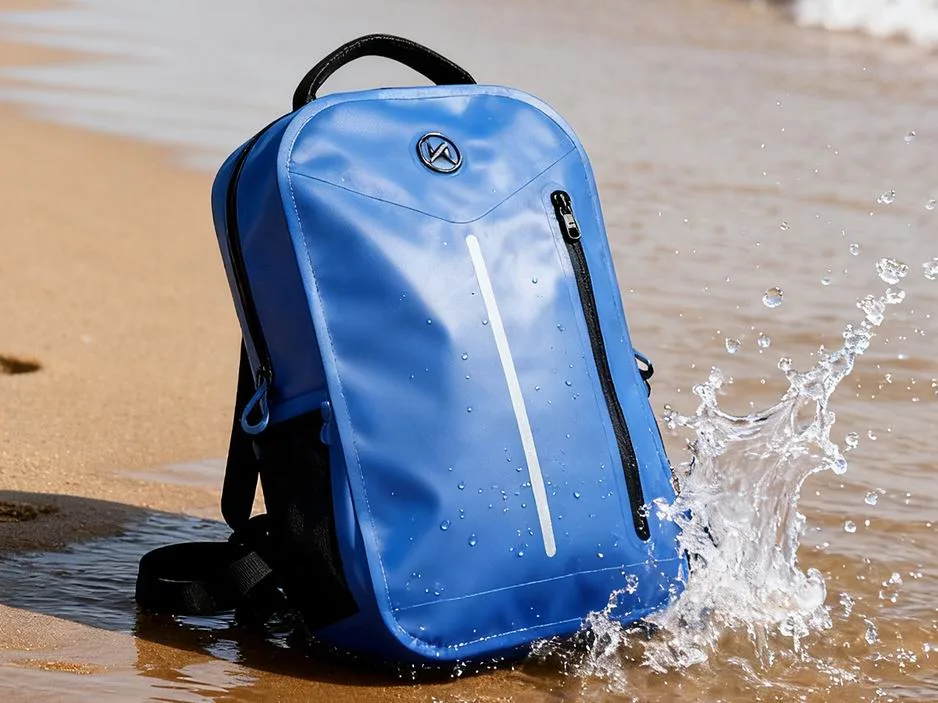
A useful 20L bag needs more than enough space. Look for continuous welded seams, a straight reinforced mouth, smooth internal corners, and attachment patches that do not pierce the waterproof body. A 420D or 500D face fabric with a flexible TPU layer suits mixed travel and paddling because it resists routine abrasion without becoming difficult to roll. Hold the empty bag toward a bright lamp: pinholes, uneven weld edges, and sharp internal hardware become easier to see before valuable equipment goes inside.
Ask how the design was pressure checked and what failure threshold was used. At production scale, clear drawings should state working volume, closure allowance, film system, weld width, and test method. Our work with an SGS-verified 4,950 m2 production facility uses 7 lines and 149 machines, with sampling commonly taking 6 to 10 working days. Practical development principles are outlined including the need to confirm real packing volume before a 500-piece production run.
Do not place unguarded knives, fuel bottles, fishing hooks, wet footwear, or leaking toiletries beside clothing and electronics. Sharp objects can abrade the coating from inside, where damage is difficult to notice. Fuel vapour can affect plastics and contaminate food. Wet shoes carry grit that migrates into the closure. If one of these items must travel in the bag, cap or sheath it, place it in a rigid secondary container, and position it so no edge presses on a seam under compression.
A dry bag is also not a flotation device, drinking-water vessel, or safe container for an unprotected laptop. Trapped air may make it float temporarily, but contents and closure leakage determine its behaviour. Electronics need padding and their own moisture barrier. Food needs temperature control. Treat the 20L shell as one layer in a protection system rather than as a solution to impact, hygiene, or life-safety risks. This distinction prevents the most expensive failures while keeping the pack simple.
A final 20L fit check before departure
Pack the exact load at least one day before use and leave it closed for 30 minutes. Confirm that three rolls remain visible, squeeze gently around every seam, and weigh the finished bag. Open it again to check whether a bottle cap, shoe edge, or camera insert has left a pressure mark. Then repack in access order and attach the intended strap or tether. This rehearsal exposes unrealistic volume estimates while there is still time to remove an item or choose a slimmer container.
The pass condition is straightforward: the contents occupy no more than about 17 litres, the bag flexes under pressure, the top rolls evenly three times, and the carried mass suits the attachment system. A well-planned 20L load covers a remarkable range of single-day needs without becoming a shapeless sack. Preserve that usefulness by rinsing grit from the closure, drying the body open in shade, and storing it loosely rolled so the same measured capacity is available on the next trip.
| Final check | Target | Reason | Action if missed |
|---|---|---|---|
| Working gear volume | 17 L or less | Leaves sealing height | Remove or compress one soft item |
| Closure folds | 3 complete rolls | Creates an even barrier | Lower the fill line |
| Shoulder-carry mass | 4-6 kg | Controls swing and anchor load | Move drinks or dense gear |
| Air squeeze | 30 seconds, no hiss | Screens seams and closure | Inspect and test before use |
| Storage condition | Dry, shaded, loosely rolled | Limits crease and UV damage | Clean and air before storage |
Frequently asked questions
Q1. What fits in a 20L dry bag?
A 20L dry bag fits a fleece, rain shell, compact towel, lunch, first-aid pouch, phone, wallet, and small camera. Keep actual gear near 16 to 17 litres so the mouth can be rolled three times.
Q2. How much usable space does a 20L roll-top provide?
Expect about 16.5 to 18 litres after allowing for three closure rolls. The exact figure depends on mouth reinforcement, body shape, and how evenly the load sits below the sealing zone.
Q3. Can a 20L dry bag hold clothes for a day?
Yes. A base layer, light trousers, underwear, socks, fleece, rain shell, and compact towel generally occupy 9 to 11 litres, leaving space for food, first aid, and valuables.
Q4. Is 20L enough for a kayaking day trip?
Yes for most day paddles. It holds spare warmth, rain protection, food, a towel, safety essentials, and a small camera, typically at a loaded mass of 3.5 to 4.5 kg.
Q5. Can camera gear go in a 20L dry bag?
Yes, but use a padded insert and a second sealed pouch for batteries and cards. Keep the insert in the centre with soft clothing above and below to reduce impact and pressure points.
Q6. How many closure rolls should a full 20L bag have?
Use three complete, flat rolls. If the third roll presses against the contents or becomes twisted, the bag is overfilled and should be repacked below a lower fill line.
Q7. How heavy should a packed 20L dry bag be?
For comfortable shoulder carry, aim for 4 to 6 kg. The fabric may hold more, but water and dense hardware can create an awkward load that strains anchors and swings while walking.
Q8. Can a sleeping bag fit in a 20L dry bag?
A compact quilt or highly compressible sleeping bag may fit in about 6 to 10 litres. Bulky synthetic sleep systems can occupy nearly the entire bag, leaving no room for a secure closure or other gear.
Q9. Will a 20L dry bag fit a pair of shoes?
Most low trail shoes fit but use 6 to 8 litres including gaps. Clean the soles, place the pair in an inner pouch, and keep the edges away from the waterproof wall.
Q10. Can I use a 20L dry bag as a carry-on organiser?
Yes. It can organise one clothing change, light sleepwear, toiletries, sandals, a charger, and documents. Leave enough air space to close it without turning the contents into a rigid cylinder.
Q11. Should water bottles go inside the bag?
They can, provided the caps are secure and the mass is balanced. Two 750 ml bottles add 1.5 kg, so position them on opposite sides and keep them away from electronics.
Q12. Does compressing clothing create more usable room?
Moderate compression helps, but it does not change the sealing allowance. Stop when the loaded body still flexes and the top can complete three rolls without landing on the contents.
Q13. Can wet swimwear share the bag with dry clothing?
Only inside a separate washable pouch. Otherwise moisture spreads to dry fabric and may create odour during the journey home, even though outside water never enters.
Q14. Where should heavy objects sit in a 20L bag?
Place dense objects low and near the body-facing side, then surround them with soft items. This reduces swing, protects the waterproof wall, and keeps the upper section available for quick-access gear.
Q15. How do I know whether my 20L bag is overfilled?
It is overfilled if you cannot make three flat rolls, the buckle pulls the mouth into a deep curve, or a hard object sits directly under the final fold.
Q16. How should a 20L dry bag be stored?
Rinse dirt from the closure, dry the bag open in shade, and store it loosely rolled with the buckle unclipped. Avoid a hard crease under heavy equipment or prolonged direct sun.
People also ask
What can you pack in a 20L dry bag for kayaking?
Pack a fleece, shell, compact towel, lunch, first aid, phone, keys, and repair tape. Keep the total around 13 to 15 litres so three reliable closure rolls remain.
How many clothes fit in a 20L dry bag?
A practical set is one base layer, light trousers, underwear, socks, fleece, shell, and compact towel. Fabric thickness matters more than the garment count, so bulky cotton reduces space quickly.
Is a 20L dry bag large enough for overnight travel?
It works for a minimalist overnight with compact clothing, toiletries, sandals, and electronics. Outdoor sleep equipment usually needs to travel separately unless it compresses to a very small volume.
Can a 20L dry bag hold a camera and clothes?
Yes. Allow 4 to 5 litres for a padded mirrorless camera kit and roughly 9 litres for compact clothing, keeping the camera centred between soft layers.
Does a 20L dry bag really hold 20 litres when closed?
Not as practical gear space. Three closure rolls generally reduce working capacity to about 16.5 to 18 litres, depending on bag geometry and the stiffness of the mouth.
How do you organise a 20L dry bag?
Place low-priority soft gear at the base, dense protected items in the middle, and first aid or rainwear at the top. Fill side gaps, preserve the roll zone, and balance left-to-right mass.
Need this in production volume?
QUANZHOU JUNYUAN BAGS has produced waterproof bags since 2014 in an SGS-verified 4,950 m2 facility in Fujian, China. Minimum order 500 pieces, sampling in 6–10 working days, bulk in 35–50 days, FOB Xiamen — write to service@junyuanbags.com with your spec and target market.