Are Dry Bags Airtight Enough for Electronics?
No, a roll-top dry bag is a water barrier rather than an air barrier. The same fold that stops a wave will vent air once internal pressure rises past a few kilopascals, and a bag packed in 28 °C air at 80% relative humidity carries enough vapour to deposit measurable condensation on the inside of the film when it cools to 12 °C overnight. Electronics are far more often damaged by that moisture, or by salt-laden humid air reaching a connector, than by liquid water getting through the fabric.
That does not make a dry bag the wrong tool. It makes it the wrong tool used alone. What follows separates the three routes by which a device gets wet, gives the numbers for each, and sets out the protection stack that works in practice: a small inner pouch, a desiccant, a water barrier on the outside, and a closure technique matched to the trip. Testing procedures are included so you can verify the setup at home in an evening.
- Waterproof and airtight are two different tests
- How a roll-top closure behaves under air pressure
- Condensation: the actual failure mode
- Salt air and corrosion at the contacts
- Immersion ratings do not measure air sealing
- Phone, camera and laptop: three risk profiles
- The two-seal rule for electronics
- Desiccants, silica and dry cabinets
- Battery safety inside a sealed bag
- Flying, altitude and pressure equalisation
- Testing your setup before a trip
- When a hard case beats a dry bag
- A packing routine that keeps electronics dry
Waterproof and airtight are two different tests
A waterproof rating describes resistance to liquid water under a defined test. An airtight claim would describe resistance to gas flow across a pressure difference, and almost no soft bag is tested or rated for it. The physical reason is straightforward: a roll-top closure seals by pressing two film faces together, and that contact holds against a water film while remaining permeable to air once a pressure gradient builds. A bag can therefore pass a 30-minute immersion test and still hiss audibly when you squeeze it.
The distinction matters because electronics fail on moisture in any phase. Liquid water from a splash is one route. Water vapour that condenses onto a cold circuit board is a second. Salt-laden air that reaches a connector and never dries is a third. A bag that blocks the first can leave the other two completely untouched, which is why the useful question is not whether the bag is waterproof but which of the three routes you are actually defending against.
How a roll-top closure behaves under air pressure
Squeeze a closed dry bag and it hisses; that is the closure venting. The fold behaves as a relief path once internal pressure exceeds a small threshold, which is why a bag carried up a mountain or into an aircraft hold does not burst. It also means the bag cannot hold a vacuum or maintain a dry internal atmosphere the way a gasketed case with a clamp latch can, and it is the single most important fact for anyone packing a camera or a laptop.
The consequence is continuous exchange. Air, and the moisture in it, moves through the closure every time the bag is squeezed, warmed, cooled or taken higher. Over a day on the water that exchange can move several litres of humid air in and out. If the device inside is colder than the incoming air, the vapour condenses on it, which is the mechanism behind nearly every report of a phone that was in a dry bag and still ended up wet.
Condensation: the actual failure mode
Work the numbers. Air at 28 °C and 80% relative humidity holds about 21 g of water per cubic metre; the same air at 12 °C can hold only about 10 g. Seal 10 litres of the warm air and cool it overnight and roughly 0.1 ml of water comes out of suspension in a single air change. That sounds trivial, but the closure exchanges air continuously across a day of temperature swings, so the cumulative figure reaches 2 to 5 ml, which is easily enough to fog a lens element or bridge a charging connector.
The fix is not a better bag; it is less trapped air and something to absorb the moisture. Put electronics in a 2L pouch rather than loose inside a 20L, because the available vapour scales with the sealed volume, and add a 10 g silica sachet that will take up 2 to 3 g of water before it needs recharging. Dry the device before it goes in as well: a phone sealed with a damp screen brings its own moisture along for the trip.
| Packed at | Cooled to | Relative humidity | Water released per 10 L | What it looks like | Risk to a device |
|---|---|---|---|---|---|
| 28 °C | 20 °C | 80% | 0.06 ml | Fine mist on the film | Low |
| 28 °C | 12 °C | 80% | 0.11 ml | Visible droplets on the film | Moderate over a day |
| 30 °C | 8 °C | 90% | 0.19 ml | Droplets that run | High without a desiccant |
| 24 °C | 4 °C | 85% | 0.13 ml | Fogging on cold glass | High for camera lenses |
| 32 °C | 18 °C | 95% | 0.16 ml | Film and contents both damp | High for laptops |
Salt air and corrosion at the contacts
Salt does not need to arrive as liquid. In coastal air, chloride particles settle on exposed metal, and a connector exposed to salt-laden humidity begins to corrode at relative humidity above about 60%, well below the point where you would ever see liquid water. A charging port, a headphone socket or an unsealed camera contact is the usual casualty, and the resulting green deposit is frequently misdiagnosed as water ingress.
Mitigation is a barrier plus a rinse rather than a better bag. Keep devices in a secondary pouch so salt air has to cross two closures, rinse the outer bag with fresh water at the end of every day, and dry connectors with a lint-free cloth before charging. Where a device has been exposed, a fresh-water rinse of the connector followed by thorough drying works; rice does not remove chloride and can leave dust of its own.
Immersion ratings do not measure air sealing
IPX7 means the article survived 30 minutes at one metre without harmful ingress of liquid. It says nothing about gas tightness, and the standard that defines the grades, IEC 60529 published by the IEC, covers water tests only. A bag can pass IPX7 and still exchange air freely at the closure, so any claim of airtightness is a separate claim requiring its own test, normally a pressure decay or a vacuum hold.
If you genuinely need air tightness, look for a valve and a gasket rather than a roll-top. Bags fitted with a purge valve are designed to be inflated and to hold air long enough for a compression check, and some will hold a low pressure for several minutes. Hard cases with a silicone gasket and clamp latches hold far longer. Either way, ask which test was run and at what pressure, exactly as you would ask for the immersion standard.
| Claim | What was tested | What it does not cover | Useful for electronics? |
|---|---|---|---|
| IPX4 | Splash from any direction | Immersion, vapour, air flow | Rain only |
| IPX6 | Powerful water jets | Immersion, vapour, air flow | Deck spray, not submersion |
| IPX7 | 30 minutes at 1 m | Vapour, air flow, salt deposits | Wet exit, not humidity |
| IPX8 | Depth agreed in the test | Vapour, air flow, salt deposits | Repeated submersion |
| Pressure decay hold | Air loss over time at set pressure | Liquid ingress | Yes, this is the air test |
| Water vapour transmission | Grams per square metre per day | Liquid ingress | Yes, for long humid trips |
Phone, camera and laptop: three risk profiles
A modern phone rated IP68 is already better sealed than any dry bag, so the bag's job is buoyancy, abrasion and loss prevention rather than water protection. A camera is the opposite case: a weather-sealed body tolerates splash, but a lens element fogs the moment warm humid air meets cold glass, and moisture at the sensor grows fungus over months. A laptop has no ingress rating at all and its keyboard deck funnels liquid straight to the board.
So the protection has to differ. Phone: a small pouch, a lanyard and a silica sachet. Camera: a padded insert inside a roll-top, a lens cloth, and a desiccant changed every second day on a humid trip. Laptop: a padded sleeve inside a dry bag, never a dry bag alone, because a few millilitres of condensate landing on a keyboard deck wicks in seconds. The laptop guide covers the sleeve detail.
| Device | Main failure mode | Protection that works | What to avoid | Check interval |
|---|---|---|---|---|
| Phone, IP68 rated | Loss, abrasion, salt at the port | 2L pouch, lanyard, silica | Loose in a large bag | Every outing |
| Mirrorless camera | Lens fogging, sensor fungus | Padded insert, 10 g silica, cloth | Cold glass in warm humid air | Twice daily in humidity |
| Laptop or tablet | Liquid on the keyboard deck | Padded sleeve inside a roll-top | Bag alone, no sleeve | Every packing |
| Power bank | Heat, terminal shorting | Terminal cover, out of sun | Charging inside a closed bag | Weekly |
| Drone and controller | Salt corrosion on connectors | Two-seal pouch, fresh-water rinse | Storing wet after a beach flight | After every flight |
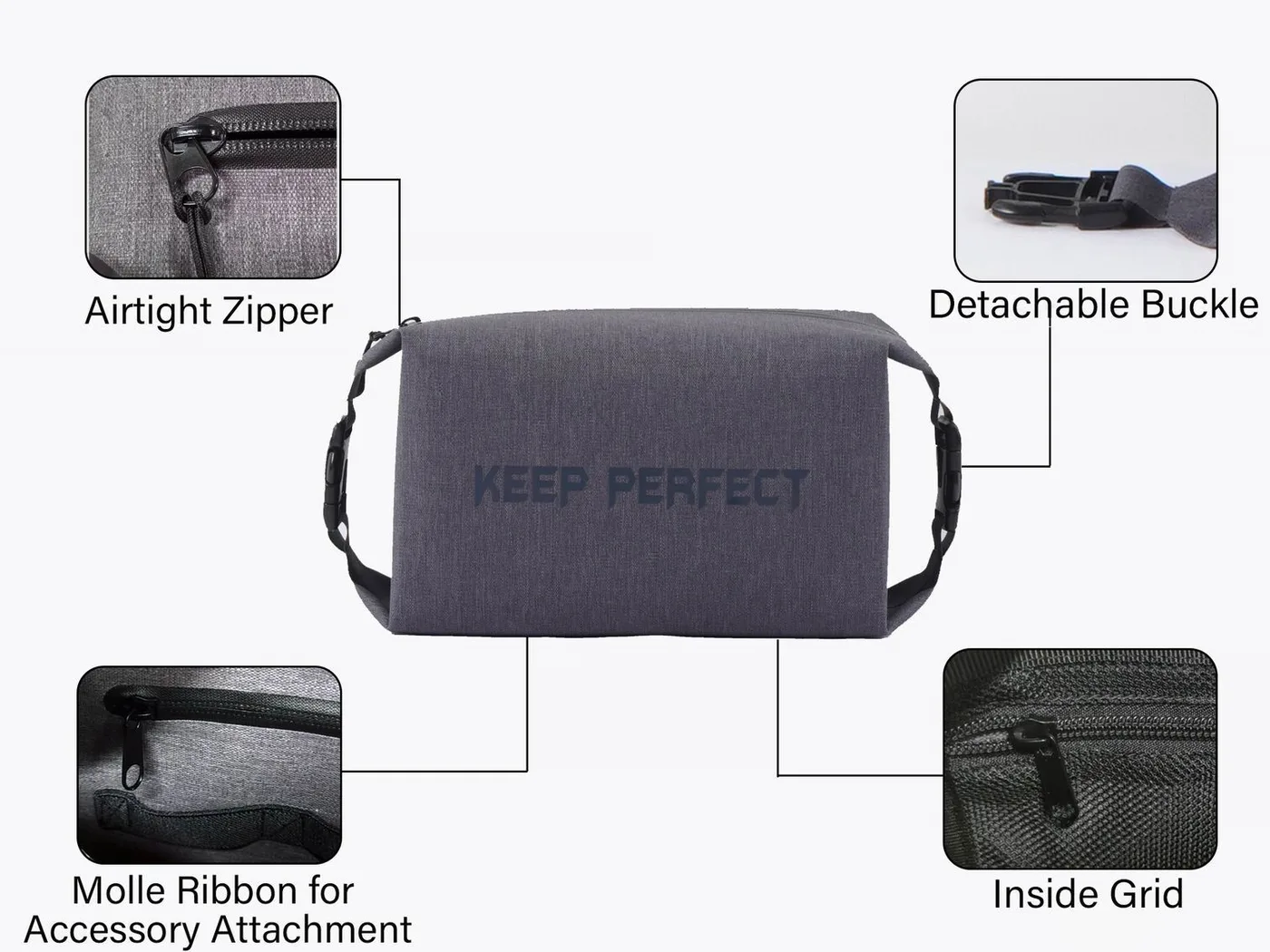
The two-seal rule for electronics
Two independent seals separated by an air gap is the standard approach, and it works because each one has to fail separately. A phone in a 2L roll-top placed inside a 20L roll-top stays dry even if the outer closure is imperfectly rolled, and the inner pouch keeps the trapped air volume small enough that condensation is limited to a fraction of a millilitre. Put the silica sachet in the inner pouch, where it does the most good.
The rule extends to technique. Roll the inner pouch three times after pressing the air out, clip it, then do the same to the outer bag. Two bags rolled properly comfortably beat one bag rolled four times. Where weight and bulk allow, a small rigid case inside a roll-top is better still: the case supplies the air seal and the bag supplies the water barrier, the abrasion resistance and the floatation.
| Layer | What it stops | Added weight | Typical cost | Notes |
|---|---|---|---|---|
| Inner 2L roll-top pouch | Most vapour, limits air volume | 45-70 g | 6-12 USD | Holds the silica sachet |
| 10 g silica sachet | Condensation inside the pouch | 12 g | 1-3 USD | Recharge every 48-72 hours |
| Padded sleeve or insert | Impact and abrasion | 120-260 g | 15-40 USD | Essential for laptops |
| Outer 20L roll-top | Liquid water, spray, brief immersion | 380-520 g | 18-45 USD | Provides floatation too |
| Rigid case instead of a pouch | Air exchange, crush load | 600-1,400 g | 45-160 USD | Best for cameras and diving |
Desiccants, silica and dry cabinets
Silica gel is cheap insurance, but only if it is sized and recharged. A working rule is 10 g of silica for every 5 litres of sealed volume on a humid trip, recharged every 48 to 72 hours with 20 minutes in a 120 °C oven or a short low-power microwave cycle. Indicator beads that change colour remove the guesswork entirely; plain white gel gives no signal when it is saturated and quietly stops working.
At home, storage matters more than the bag. A device left in a closed dry bag in a damp garage is worse off than one stored open in a dry room, because the bag locks in whatever humidity was present when it was sealed. Use a dry cabinet or a sealed box with a rechargeable desiccant held at 40 to 50% relative humidity, and store the dry bag open with the mouth propped rather than rolled.
Battery safety inside a sealed bag
Lithium cells and sealed bags are a poor combination in two specific situations. The first is a damaged or swollen cell, which should never be sealed or carried in any bag at all. The second is heat: a cell charging or discharging inside a welded bag in direct sun can reach 55 to 60 °C, which accelerates degradation and, for a damaged cell, is the range where thermal runaway becomes a genuine risk.
The rules are simple. Never charge anything inside a closed dry bag. Keep power banks out of direct sun and off the bottom of a dark hull on a hot day. Carry spare cells with their terminals covered so they cannot short against keys, coins or a tripod plate. On aircraft, cells travel in the cabin and never in a sealed bag in the hold, where pressure and temperature both move.
Flying, altitude and pressure equalisation
Cabin pressure at cruise is typically held near the equivalent of 2,400 m, so a bag sealed at sea level carries roughly 20 kPa of additional internal pressure in flight. A roll-top vents, so nothing bursts, but the venting pushes humid cabin air in and out and can work the fold loose. A gasketed hard case holds that pressure and should be opened carefully after landing, using its pressure-release valve first.
The safe habit is to close soft bags loosely before flying and re-close them on arrival, and to point any gasketed case away from your face when opening it after a descent. For a device that has to stay dry in a hold, a welded bag plus a desiccant is still a reasonable answer, because the water barrier does not depend on the air seal and the bag will vent rather than fail.
Testing your setup before a trip
Two quick tests cover most of the risk. The first is the squeeze test: close the bag, squeeze firmly and listen. A continuous hiss from the closure is normal venting, while a hiss from a weld corner is a defect worth returning. The second is the cold test: put a dry tissue inside, seal the bag, leave it in a refrigerator for two hours, then check both the tissue and the inside of the film for moisture.
A third test is worth running once a season for anyone carrying a camera. Seal the bag with a fresh 10 g silica sachet and a humidity indicator card inside, leave it overnight, and read the card in the morning. If it has moved above 40%, the bag is exchanging more air than you assumed, and a smaller inner pouch is the fix rather than a bigger desiccant.
When a hard case beats a dry bag
Choose a hard case when the device is expensive enough that even 4 ml of condensation is unacceptable, when you are diving or working underwater, or when the trip involves repeated immersion rather than occasional splash. A gasketed case with clamp latches holds an air seal that no roll-top can match, and it carries the crush load that would push water through any soft closure at depth.
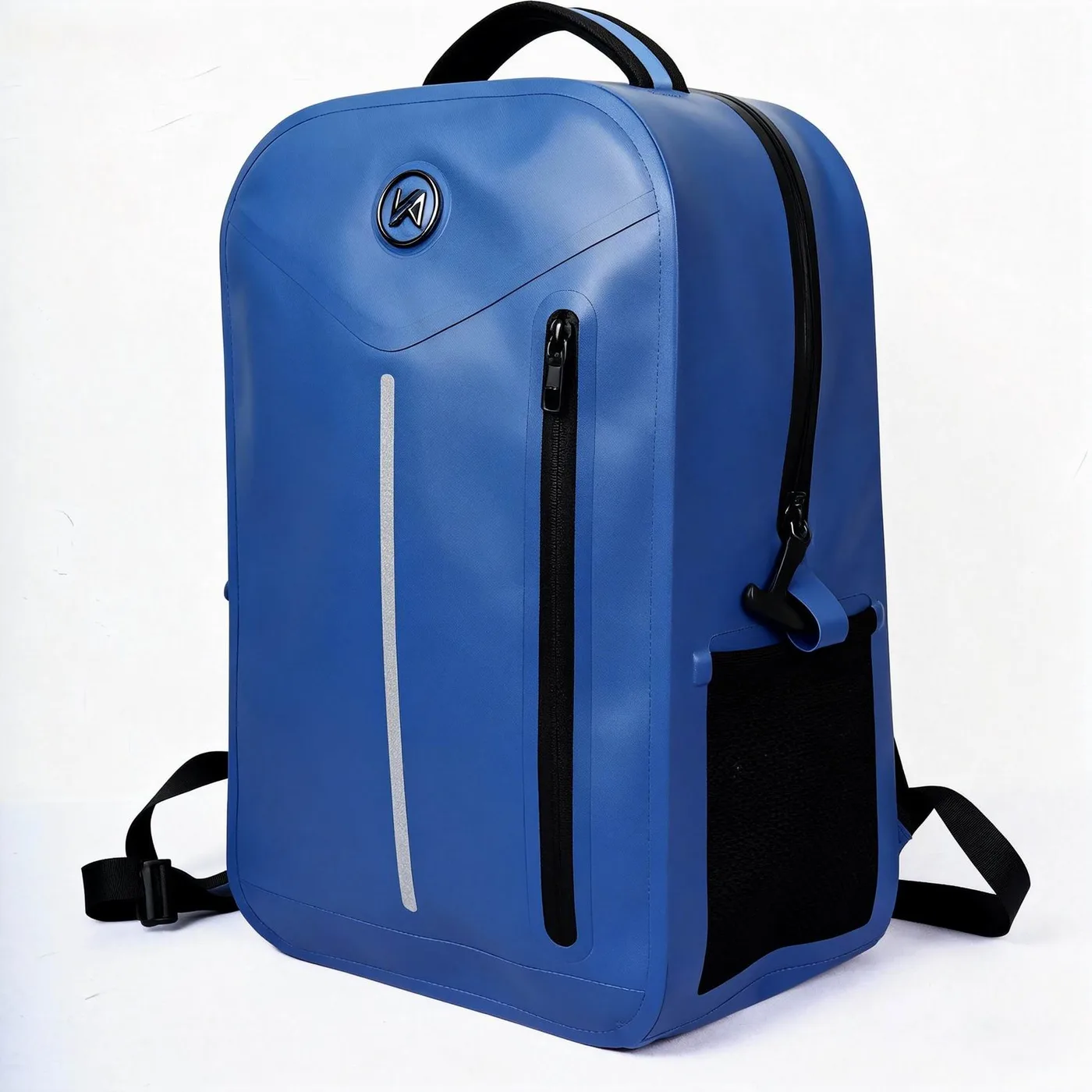
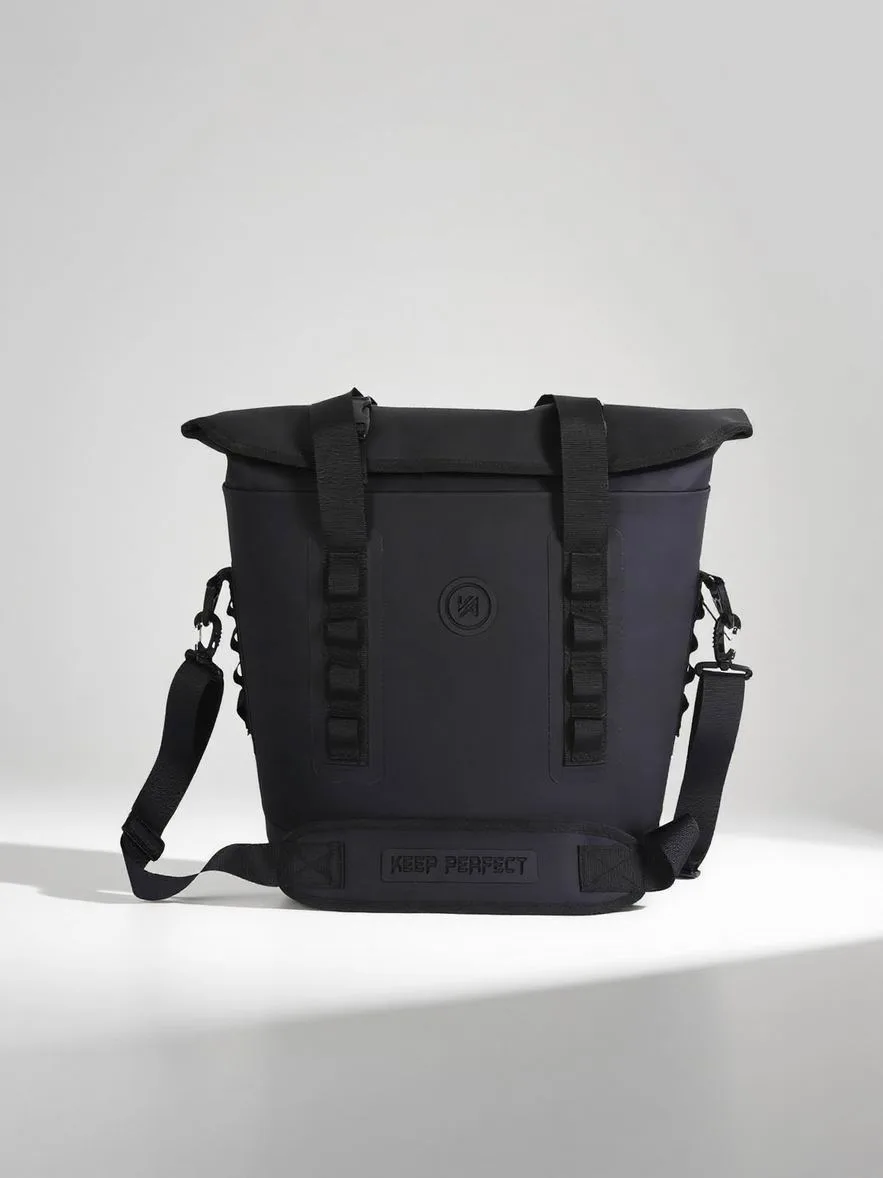
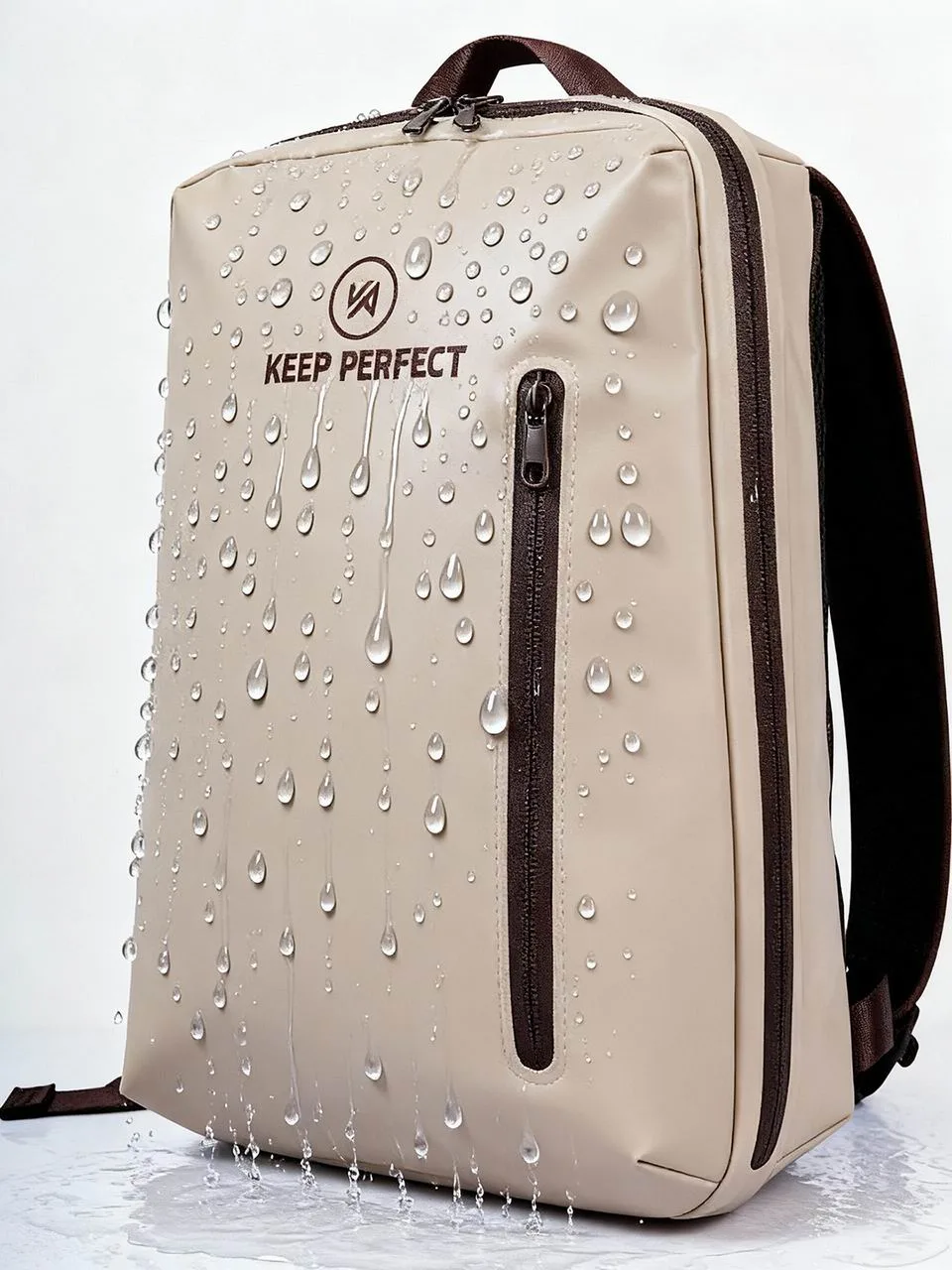
Choose a dry bag when weight, packability and floatation matter more, which covers most paddling, sailing and travel use. A 20L roll-top weighs 380 to 520 g against 1.4 to 2.2 kg for an equivalent case, floats when sealed with some air inside, and squashes into a hull or a pannier. The best answer for most people is both: a small case for the camera inside a roll-top for the water. Shore carry is the other place a soft bag wins, and our TPU waterproof backpack range uses the same welded construction with a harness instead of a single top closure.
A packing routine that keeps electronics dry
The routine is short enough to run every time and it addresses all three routes: liquid water, vapour and salt. Do it in the same order and it takes about two minutes, which is less time than it takes to dry out a phone. The point of the order is that the device is dry and sealed before it ever meets the outside of the bag.
- Dry the device completely, including ports and lens mounts, with a lint-free cloth.
- Place it in a 2L roll-top pouch with a fresh 10 g silica sachet and an indicator card.
- Press the air out of the pouch, close with three rolls, and clip the buckle.
- Put the sealed pouch inside a padded sleeve or a camera insert.
- Place the sleeve in the outer roll-top, press out air, three rolls, moderate buckle tension.
- Keep the bag out of direct sun and off hot decks; never charge inside a closed bag.
- Rinse the outer bag with fresh water daily on coastal trips and dry the closure before rolling.
- Open everything at camp, check the indicator card, and recharge the sachet every 48 to 72 hours.
Where electronics are the reason for the trip rather than an accessory to it, a rigid case with a gasket is the honest answer and a dry bag becomes the outer layer. Where they are incidental, the pouch-and-desiccant routine above is sufficient for paddling, sailing and travel in ordinary weather. Our own line has been produced since 2014 in an SGS-verified 4,950 m2 facility with 137 staff and 7 production lines, sampling in 6 to 10 working days and bulk in 35 to 50 days, FOB Xiamen.Water vapour transmission through films is measured by methods published by the ASTM. Further detail sits in the camera guide, the condensation guide and the IPX ratings guide.
Frequently asked questions
Q1. Are dry bags airtight enough for electronics?
Not by themselves. A roll-top blocks liquid water but vents air above a few kilopascals, so humid air continuously enters and condenses. Use a small inner pouch with a 10 g silica sachet inside the dry bag for real protection.
Q2. Why did my phone get wet inside a dry bag?
Almost always condensation rather than a leak. Air sealed at 28 °C and 80% humidity releases water when it cools, and the closure exchanges air all day, so 2 to 5 ml can accumulate. Reduce the trapped volume and add a desiccant.
Q3. Does IPX7 mean a bag is airtight?
No. IPX7 only covers 30 minutes of immersion at one metre under IEC 60529. It says nothing about gas tightness. An airtight claim needs a separate pressure decay or vacuum hold test, which very few soft bags are run against.
Q4. How much silica gel do I need in a dry bag?
About 10 g per 5 litres of sealed volume on a humid trip, placed in the inner pouch rather than the outer bag. Recharge it every 48 to 72 hours in a 120 °C oven for 20 minutes, and use indicator beads.
Q5. Is a dry bag enough for a camera?
For splash and spray, yes, with a padded insert and a desiccant. For repeated immersion, diving or a lens that must not fog, use a gasketed hard case. Many photographers use a small case inside a roll-top.
Q6. Can I put a laptop in a dry bag?
Only inside a padded sleeve, never loose. A laptop has no ingress rating and the keyboard deck funnels liquid to the board, so a few millilitres of condensate wicking in is enough to cause serious damage.
Q7. Do dry bags keep salt air out?
Partly. Salt particles in humid air pass the closure and settle on connectors, and corrosion begins above roughly 60% relative humidity. Keep devices in a second pouch and rinse the outer bag with fresh water daily.
Q8. Will a dry bag protect electronics in the rain?
Yes, comfortably. Rain is a liquid-water event and IPX4 or better covers it. The harder problem on a wet trip is humidity inside the bag, which rain protection does not address at all.
Q9. How do I stop condensation inside a dry bag?
Shrink the trapped air volume and remove the moisture. Use a 2L pouch instead of a 20L, press the air out before rolling, add a 10 g silica sachet, and make sure the device is completely dry before it goes in.
Q10. Can I charge a phone inside a sealed dry bag?
No. Charging generates heat, and a cell in a sealed dark bag in sun can reach 55 to 60 °C. Charge in open air, then seal. Keep power banks out of direct sun and never carry a swollen or damaged cell.
Q11. Do dry bags need to be airtight to float?
No. Floatation comes from trapped air, and the closure holds enough of it for a bag to float even though it slowly vents. A tightly packed bag with the air pressed out may float low or sink slowly.
Q12. What is the best way to carry electronics on a boat?
A 2L roll-top pouch with silica, inside a padded sleeve, inside a 20L roll-top lashed to a fixed point. That gives two independent seals, impact protection, and floatation if the whole thing goes overboard.
Q13. How do I test whether my setup actually works?
Seal a dry tissue inside and refrigerate the bag for two hours; then check the tissue and the film for moisture. For a fuller check, add a humidity indicator card and read it in the morning: above 40% means too much air exchange.
Q14. Are waterproof phone pouches better than a dry bag?
For the phone itself, yes, because the pouch is small and the trapped air volume is tiny. A pouch still needs a dry bag over it for abrasion, floatation and loss prevention, so the two work together rather than competing.
Q15. Does altitude damage electronics in a sealed bag?
Not directly, but pressure change does move humid air through the closure. Close bags loosely before a flight and re-close them on arrival, and use the pressure-release valve on any gasketed case after landing.
Q16. How often should I replace silica gel in a dry bag?
Recharge rather than replace: every 48 to 72 hours of humid use, or immediately once indicator beads change colour. In storage, check monthly and keep the dry bag open so it is not sealing in humidity.
People also ask
Are dry bags airtight?
No. A roll-top closure blocks liquid water but vents air once internal pressure rises past a few kilopascals. That is why a sealed bag still exchanges humid air with the outside all day.
How do you keep electronics dry in a dry bag?
Use two seals: a small inner pouch with a 10 g silica sachet inside a larger roll-top. Press the air out before rolling, dry the device first, and keep the bag out of direct sun.
Why is there water inside my dry bag?
Condensation, not a leak. Warm humid air cools and releases moisture, and the closure exchanges air continuously. Reduce the trapped volume, add a desiccant, and dry contents before packing.
Can condensation damage a camera in a dry bag?
Yes. Fogging on a cold lens element is the common symptom, and sustained humidity at the sensor can grow fungus over months. Use a padded insert, a desiccant and a lens cloth.
Is a dry bag better than a hard case for electronics?
For weight, packability and floatation, yes. For air sealing and crush resistance, no. A 20L roll-top is 380 to 520 g against 1.4 to 2.2 kg for a case, so many people use a case inside the bag.
Do I need silica gel in a dry bag?
Yes if you carry electronics in humid conditions. Allow about 10 g per 5 litres of sealed volume, place it in the inner pouch, and recharge every 48 to 72 hours or when the indicator changes.
Need this in production volume?
QUANZHOU JUNYUAN BAGS has produced waterproof bags since 2014 in an SGS-verified 4,950 m2 facility in Fujian, China. Minimum order 500 pieces, sampling in 6–10 working days, bulk in 35–50 days, FOB Xiamen — write to service@junyuanbags.com with your spec and target market.