Protecting Gear During Bass Fishing
A tournament day on a bass boat runs eight to ten hours and exposes your kit to four separate hazards: bow spray at 40 to 60 km/h running speed, livewell overflow, rain squalls and a deck surface that reaches 45 to 55 °C in midsummer sun. Two bags cover it: a 20 to 30 litre welded roll-top for clothing and electronics, and a 2 to 5 litre bag for licence, wallet and phone. Together they weigh 3 to 5 kg loaded.
Waterproof protection on a bass boat is less about immersion than about repetition. Your gear is splashed several hundred times a day, wiped down with a fuel- or sunscreen-contaminated cloth, and baked between showers, which is a harder duty cycle than a single dunking. This guide sets out what to carry, which bag format survives a deck, how to protect electronics and tackle separately, where to stow bags on a 5.5 to 6.5 metre boat, and the rinse routine that decides whether the kit lasts three seasons or ten.
- What actually gets wet on a bass boat
- Capacity planning for a tournament day
- Roll-top, duffel or backpack on a deck
- Electronics: sonar units, phones and spare batteries
- Tackle, reels and line: corrosion is the real enemy
- Licences, wallet and documents in a small bag
- Livewell splash and the deck environment
- Weather: squalls, wind and the afternoon thunderstorm
- Sun, heat and what the deck does to fabric
- Where to stow bags on a bass boat
- Cold mornings, dew and condensation
- The post-trip rinse and dry routine
- Season checklist for bass anglers
What actually gets wet on a bass boat
Bass boats are wet by design. The deck is low and forward-biased, the bow rides high at speed and drops into the chop, and the running attitude throws spray from the hull shoulder back over the front casting deck. At 55 km/h in a 15 km/h wind, the bow deck receives a fine mist on nearly every mile travelled, and anything stored forward gets a thin film of water within twenty minutes.
The second source is the livewell. A 60 to 110 litre well is filled, aerated, drained and refilled through the day, and the overflow and the splash from a 3 kg fish hitting the surface put water on the deck behind the console repeatedly. Add the wash from landing a fish, a wet landing net stowed across the deck, and the rain that arrives in most summer afternoons, and you have a wet environment that never fully dries until you trailer the boat.
The third source is you. Hands come off the water, off a fish, and off a wet rod grip, and then onto a bag closure. On a good day an angler touches a bag twenty or thirty times, which is twenty or thirty chances to leave the closure unrolled or to introduce grit into the fold. Most wet gear on a bass boat comes from a closure that was never properly shut rather than from water defeating a seam.

Capacity planning for a tournament day
Plan volume against the longest day you fish, not the average one. A summer tournament day needs a rain shell, a warm layer for the 6 am run, food and water for ten hours, a first-aid pouch, sunscreen, and the electronics you cannot leave in the console. That list packs to 14 to 18 litres and weighs 3 to 4.5 kg, which is a 20 litre bag with a little headroom or a 30 litre bag with room to spare.
A winter or early-spring day doubles the clothing volume. A insulated jacket, gloves and a beanie add 4 to 6 litres and 900 to 1,400 g, so the same kit moves from a 20 litre to a 30 litre bag. If you fish both, own both: forcing a winter load into a 20 litre bag is the most common reason a closure fails, because the fabric is stretched at the fold.
| Item | Packed volume | Weight | Wet risk | Bag |
|---|---|---|---|---|
| Rain shell and warm layer | 4.0-6.0 L | 700-1,200 g | High | 20-30 L roll-top |
| Electronics pouch, phone and sonar card | 1.2-2.0 L | 800-1,400 g | Very high | 5 L inner bag |
| Food and 2 L of water | 3.0-4.0 L | 2.2-2.8 kg | Low | 20-30 L roll-top |
| First-aid and sunscreen pouch | 1.0-1.5 L | 400-600 g | Medium | 20-30 L roll-top |
| Licence, wallet, keys | 0.4-0.8 L | 200-350 g | Very high | 2-5 L roll-top |
| Spare line, tools, pliers | 1.5-2.5 L | 900-1,500 g | Medium | Separate wet bag |
Roll-top, duffel or backpack on a deck
Format is an access decision on a boat, because nothing is being carried far. A roll-top dry bag is the default: it is quick to open one-handed, it squeezes into a rod locker or a storage compartment, and it has no metal hardware near the closure to scratch a deck or snag a line. A dry duffel opens along its length, which is better for a full change of clothing but needs two hands and a flat surface.
A waterproof backpack earns its place on the walk from the truck to the ramp rather than on the water. Worn on a casting deck it changes your balance when you set the hook, and the harness picks up hooks and line. Use a backpack to transport the kit and a roll-top or duffel for the actual fishing day, or choose one of the convertible models in the TPU waterproof backpack range if you want a single bag for both jobs.
| Format | Best on a boat for | Access speed | Weakness on a deck |
|---|---|---|---|
| Roll-top dry bag | Clothing, food, electronics | 5-10 seconds | Needs headroom to roll |
| Dry duffel | Full clothing change | 10-20 seconds | Needs two hands, flat space |
| Waterproof backpack | Ramp to boat transport | 15-25 seconds | Harness snags line and hooks |
| Bucket bag | Tools, pliers, line | 2-5 seconds | Open top, spray gets in |
| Small 2-5 L roll-top | Licence, wallet, phone | 3-6 seconds | Easy to misplace |
Electronics: sonar units, phones and spare batteries
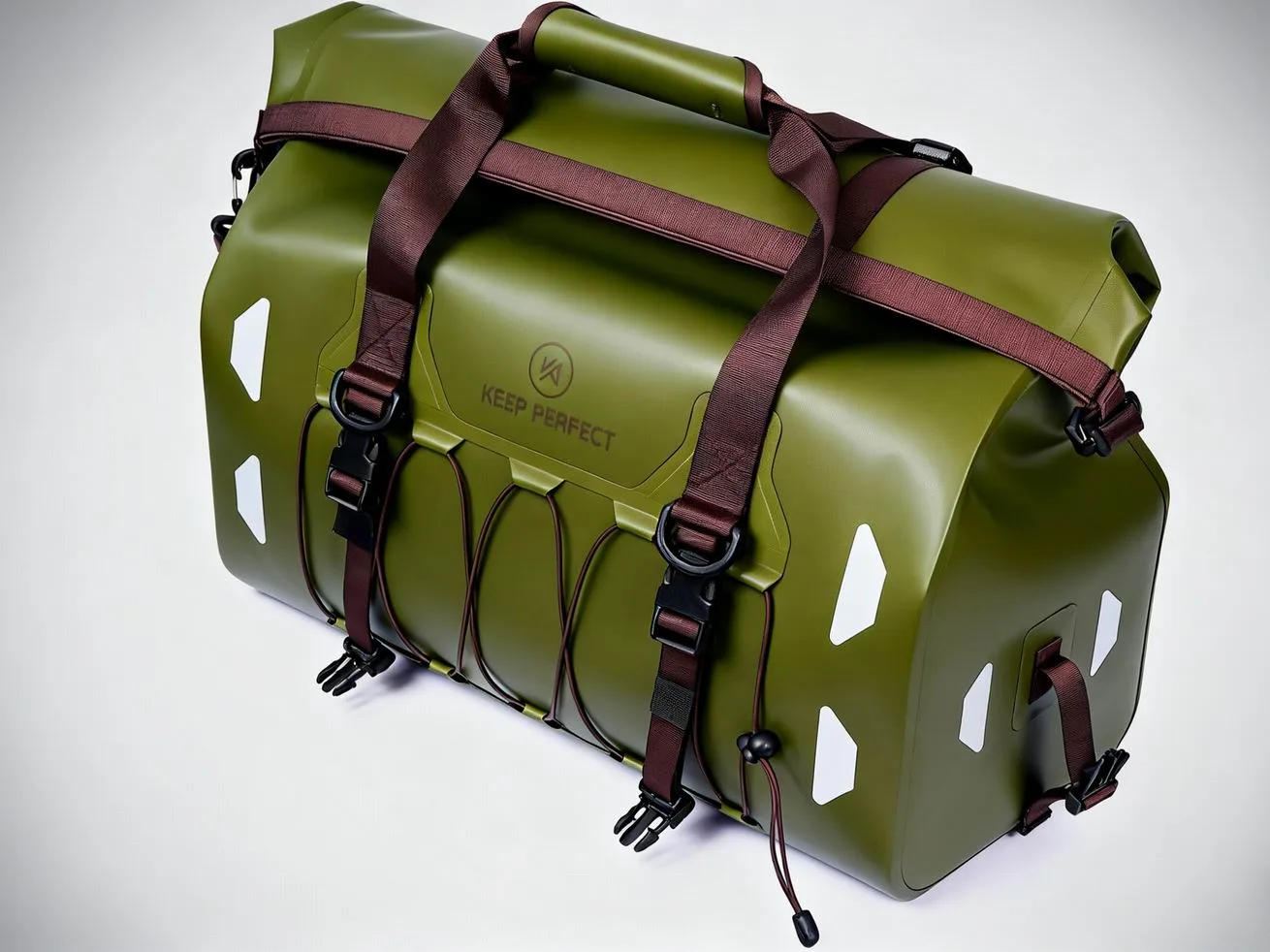
Electronics are the highest-value items in the boat and the easiest to protect. A phone, a sonar card, a camera and a pair of spare batteries weigh under 1.5 kg and fit in a 5 litre bag, and that bag should live inside the larger bag so the contents have two independent seals. Double-bagging costs 150 g and removes the single largest failure risk in the whole kit.
Heat is the second threat, and it is underestimated. A sealed black bag on a deck at 32 °C ambient can reach 55 to 60 °C internally, which is above the storage limit of most lithium cells and enough to trigger a thermal shutdown on a phone. Keep the electronics bag in a shaded compartment or under a casting deck, never on the open deck, and use a light-coloured bag for that specific load.
| Item | Main risk | Protection | Where to stow |
|---|---|---|---|
| Phone | Spray and heat | 2 L roll-top, light colour | Console or shaded compartment |
| Sonar card and chart chip | Loss and water | Hard case in a 5 L bag | Inside the main bag |
| Camera body and lens | Spray, heat, impact | Padded insert in a 10 L bag | Under the casting deck |
| Spare lithium batteries | Heat above 60 °C | Insulated pouch, shaded | Cooler bag, not the deck |
| VHF or handheld radio | Spray, dropping | Lanyard plus 2 L bag | Clipped inside the console |
Tackle, reels and line: corrosion is the real enemy
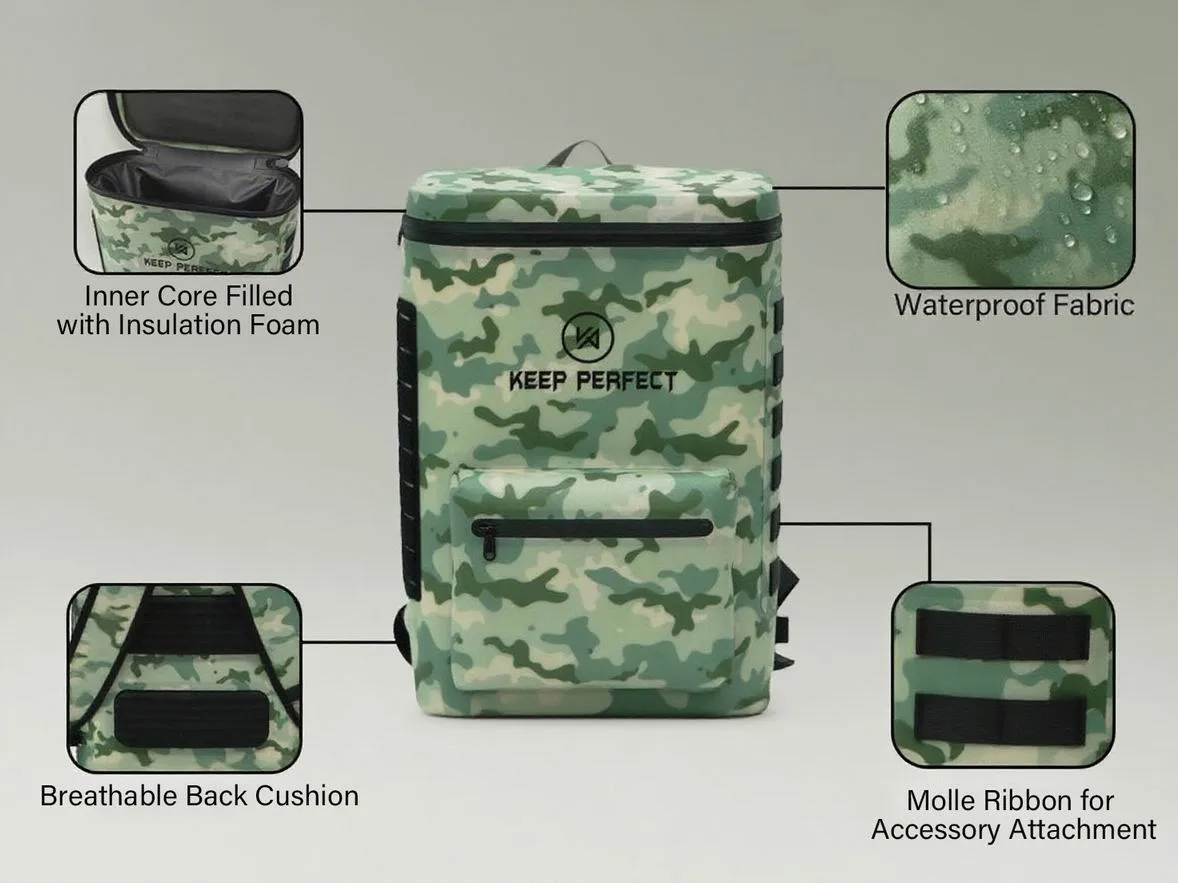
Tackle does not need to be dry so much as it needs to be rinsed. A reel left with a film of lake water and fish slime on it will show corrosion on the spool lip and the handle knobs within a week, and the damage starts where water sits rather than where it runs. Keep reels in an open mesh or a ventilated wet bag rather than sealed in a dry bag, because sealing damp tackle accelerates corrosion rather than preventing it.
Soft plastics and line are the opposite case. Line absorbs water and loses breaking strain when it is stored wet for weeks, and soft plastics leach plasticiser into anything they touch, including the film of a dry bag. Store line and plastics in their own compartment, and never in the same bag as electronics: a spilled bag of worms has ruined more gear than a wave ever has.
Licences, wallet and documents in a small bag
The smallest bag in the boat does the most important job. A fishing licence, a boat registration, a wallet, a truck key and a phone are worth far more than the rest of the kit combined, and they are the items most likely to be left on a wet deck. A 2 to 5 litre roll-top kept in a console compartment solves both problems at once: it is small enough to stay put and waterproof enough to survive the day.
Make it a habit rather than a decision. The licence goes back into the small bag the moment it has been shown, the key goes back the moment the truck is locked, and the bag is closed before the engine starts. Anglers who lose documents on the water almost never lose them to a capsize; they lose them because something was set down on a deck and then a rod was picked up.
Livewell splash and the deck environment
The livewell is the wettest single feature on a bass boat, and the water it throws is not clean. It carries fish slime, lake sediment and sometimes a trace of the water treatment product anglers add to keep fish alive, all of which leave residue on a bag. A bag stored within 500 mm of the well will need rinsing after every trip and will smell within a season if it is not.
Fuel and sunscreen are the other two contaminants worth planning for. Petrol vapour and two-stroke oil soften some coatings over years, and sunscreen contains oils and UV filters that stain fabric and can migrate into a film. The practical defence is position: keep bags at least a metre from the fuel fill and the livewell, and wipe the outside of the bag with fresh water at the end of the day rather than with a deck rag.
Weather: squalls, wind and the afternoon thunderstorm
Summer bass fishing is an early-morning sport partly because of the afternoon pattern. On most warm-water lakes the wind builds from mid-morning, peaks in the early afternoon at 20 to 35 km/h, and can reach 50 km/h in a squall line. That shift changes both the spray load on the front deck and the size of the run back to the ramp, which is why the bag plan should assume a wet, windy return rather than a calm one.
Lightning is the reason to watch the sky rather than the fish. A cell that is 10 km away can be over the boat in under fifteen minutes, and a 6 metre aluminium hull on open water is the worst place to be in it. Check the forecast before launching and again at midday, and use the guidance and warnings published by NOAA for US waters. Our deep sea fishing setup notes cover the same planning for bigger water.
Sun, heat and what the deck does to fabric
Ultraviolet exposure on open water is severe because it arrives twice: directly from the sun and reflected off the surface. A bag on a deck receives the equivalent of several hours of peak sun a day, and over a season of forty days that is enough to fade an unstabilised film noticeably and to chalk a PVC coating. Choose a UV-stabilised face fabric and a mid or dark colourway if the bag will live on the deck rather than in a locker.
Heat also matters to the person, not just the kit. Reflection off the water raises the effective load, and an eight-hour day with little shade is a genuine dehydration and sunburn risk even at 26 °C air temperature. Carry water in the bag, and check the exposure and hydration guidance published by the CDC before a long summer day. A dry bag protects gear; it does not protect the angler.
Where to stow bags on a bass boat
Position decides how much water a bag sees. The front casting deck is the wettest and the most exposed to sun; the rod locker is dry but long and narrow; the compartment under the casting deck is usually the best compromise of shade, dryness and access. Behind the console is drier still but further from where you stand when the rain starts.
Whatever you choose, tie it down. A loose bag on a deck becomes a projectile at 60 km/h and a tripping hazard when a fish is on. A welded D-ring and a 20 to 25 mm strap to a fixed cleat or a seat base takes ten seconds and removes the problem. Stow the small licence bag in the console rather than on the deck, where it cannot be knocked overboard at all.
| Stowage position | Spray exposure | Sun exposure | Recommended bag | Notes |
|---|---|---|---|---|
| Front casting deck | Very high | Very high | None by choice | Only for bags you use hourly |
| Under the casting deck | Low | Low | 20-30 L roll-top | Best all-round position |
| Rod locker | Very low | Very low | Long, low-profile bags | Check length before buying |
| Behind the console | Low | Medium | 20 L roll-top | Drier, slower to reach |
| Console compartment | None | None | 2-5 L licence bag | Documents and phone |
Cold mornings, dew and condensation
Early spring and autumn trips start with dew on everything. A boat left on the lake overnight collects a film of condensation on every surface, and a bag placed on a wet deck at 5 am will be wet on the outside before the engine starts. Wipe the deck or lift the bag onto a seat, and expect the first hour of the day to be the dampest part of it.
Condensation inside a sealed bag is the confusing one. Warm clothing packed in the afternoon and sealed overnight can produce enough moisture on the inside of the film to dampen a paper licence by morning, with no leak anywhere. Pack dry, avoid sealing warm items, and if you find unexplained moisture, dry the bag fully and run a 30 minute paper test before blaming the seam. Our condensation notes explain the mechanism.
The post-trip rinse and dry routine
- Empty every bag completely at the ramp, not at home the next weekend.
- Rinse with fresh water at ambient temperature, including the closure and the buckle.
- Wipe the fold line with a soft cloth to remove grit and dried fish slime.
- Wash any sunscreen or fuel residue with a mild soap solution and rinse again.
- Dry in shade with the mouth open, then store loosely rolled with the buckle unclipped.
- Check the welds and the D-ring patches monthly during the season.
Salt is not the issue on freshwater, but organic residue is. Fish slime and lake sediment left in the fold line harden into a gritty film that damages the closure and smells within weeks, and it is invisible until it has already done the damage. Two minutes at the ramp with a hose is worth more than any amount of cleaning a month later, and the same routine applies after any trip where a bag touched a livewell or a net.
Check hardware while you rinse. Work each buckle through its travel under water, look for white corrosion bloom on any metal part, and feel the welded D-ring patches for lifting at the edge. A buckle that has stiffened is a buckle that will slip under load; replacing a buckle costs a few dollars and takes five minutes, and it is the most common repair on a boat bag.
Season checklist for bass anglers
- Two bags minimum: a 20-30 L roll-top for kit and a 2-5 L bag for documents.
- Double-bag electronics in a light-coloured inner bag and keep it out of the sun.
- Store tackle separately in a ventilated wet bag; never seal damp reels.
- Tie every bag to a fixed point with a 20-25 mm strap before running at speed.
- Stow under the casting deck or in the console, away from the livewell and the fuel fill.
- Choose a UV-stabilised fabric and a mid or dark colourway for deck bags.
- Rinse at the ramp, dry in shade, and store loosely rolled with the buckle open.
- Inspect welds and D-ring patches monthly, and test the closure with paper twice a season.
- Keep a 5 L bag packed with the tournament essentials so a change of plan costs nothing.
Anglers who fish several waters a month should also think about colour coding rather than labelling. One colour per category, electronics in one, clothing in another, documents in a third, lets you find the right bag in a dark compartment with wet hands, which is when you actually need it. Our roll-top dry bag line runs the same closure across 2L to 90L, so a colour system scales from a licence pouch to a full tournament kit.
Two related guides are worth reading before you commit to a setup. The fly fishing packing list covers the wading version of the same problem, where immersion rather than spray is the risk, and the kayak day guide sets out the capacity maths for a kayak angler. For bag sizing, the 20 litre packing list is the closest match to a tournament load.
If you are kitting out a club, a guide operation or a retail range, the same list becomes a specification. Film thickness, weld width, hardware rating, colour coding and the closure geometry are five lines that decide whether a bag survives a season of daily use on a deck. Compare candidates in the full product range before you specify.
Frequently asked questions
Q1. What size dry bag do I need for a day of bass fishing?
A 20 to 30 litre welded roll-top for clothing, food and electronics, plus a 2 to 5 litre bag for licence, wallet and phone. A summer tournament load packs to 14 to 18 litres and weighs 3 to 4.5 kg.
Q2. Will a dry bag protect my phone on a bass boat?
Yes, if it is in a small roll-top inside the main bag so it has two independent seals. Keep the inner bag light-coloured and shaded: a dark sealed bag on a deck can reach 55 to 60 °C internally.
Q3. Should I store tackle in a dry bag?
No. Damp reels and line sealed in a dry bag corrode faster, because the water has nowhere to go. Use a ventilated wet bag for tackle and keep line and soft plastics away from electronics.
Q4. Where is the driest place to stow a bag on a bass boat?
Under the casting deck or in a console compartment. The front casting deck is the wettest and most sun-exposed position, and a rod locker is dry but long and narrow, so check the bag length first.
Q5. How much spray does a bass boat actually throw?
Enough to film the bow deck within twenty minutes at 55 km/h in a 15 km/h wind. Add livewell overflow, landing-net wash and afternoon rain, and the deck rarely dries until the boat is trailered.
Q6. Do I need a tether for bags on a boat?
Yes. A loose bag becomes a projectile at 60 km/h and a tripping hazard when a fish is on. Use a welded D-ring and a 20 to 25 mm strap to a fixed cleat or a seat base.
Q7. What fabric holds up best to sun on a deck?
A UV-stabilised TPU laminate in a mid or dark colourway. Water reflects UV back onto the bag, so a season of forty days on open water will fade an unstabilised film and chalk a PVC coating.
Q8. How do I keep my fishing licence dry?
Keep it in a 2 to 5 litre roll-top in the console compartment, not on the deck. Licences are lost far more often by being set down and forgotten than by a wave coming aboard.
Q9. Why does my bag smell after a season?
Fish slime and lake sediment dry into a gritty film in the fold line and on the outside of the bag. Rinse at the ramp with fresh water, wipe the closure, and dry in shade with the mouth open.
Q10. Can I put a wet landing net in a dry bag?
No. There is no drain inside a roll-top, so a wet net keeps the whole load damp. Use an open bucket bag or a mesh stowage for anything wet, and keep it away from electronics.
Q11. What causes condensation inside a sealed bag?
Warm items packed and sealed, then cooled overnight, release moisture onto the inside of the film. Pack dry, avoid sealing warm clothing, and run a 30 minute paper test before assuming the seam has failed.
Q12. How often should I check a fishing dry bag?
Rinse after every trip, inspect welds and D-ring patches monthly during the season, and run a paper towel closure test twice a year or after any repair.
Q13. Is a backpack or a roll-top better on a boat?
A roll-top for the fishing day and a backpack for the walk from the truck. A harness on a casting deck catches line and hooks and changes your balance when you set the hook.
Q14. What happens if fuel or sunscreen gets on the bag?
Both leave residue that can migrate into the film: fuel vapour softens coatings over years and sunscreen oils stain and transfer. Wipe the bag with fresh water at the ramp, never with a deck rag.
Q15. How much does a full tournament dry bag load weigh?
Three to 4.5 kg in summer, rising to 5 to 6.5 kg with cold-weather clothing in spring and autumn. Keep the heavy bag low and central and the small documents bag in the console.
Q16. Do I need different bags for winter bass fishing?
A larger one. Insulated jacket, gloves and beanie add 4 to 6 litres and 900 to 1,400 g, so a summer 20 litre load becomes a 30 litre load. Forcing it into the smaller bag is the usual cause of a failed closure.
People also ask
How do you keep gear dry while fishing?
Use a 20 to 30 litre welded roll-top for clothing and food, a 2 to 5 litre bag for licence and phone, and a ventilated wet bag for tackle. Stow everything shaded, tied down and away from the livewell.
What size dry bag fits a day of fishing?
Twenty to thirty litres for a summer day and thirty to forty for cold weather, plus a small 2 to 5 litre bag for documents. A typical load packs to 14 to 18 litres and weighs 3 to 4.5 kg.
Are dry bags worth it for bass fishing?
Yes, because the exposure is constant rather than occasional. Spray, livewell splash, rain and a deck that reaches 45 to 55 °C will damage unprotected kit over a single season of forty days.
How do you protect electronics on a fishing boat?
Double-bag them in a light-coloured 5 litre roll-top inside the main bag, keep them shaded, and never leave lithium batteries on an open deck where a sealed bag can exceed 60 °C.
Where should you store a dry bag on a boat?
Under the casting deck or in a console compartment. Those positions are shaded, dry and out of the spray line, unlike the front casting deck, which is the wettest place on the boat.
Can you put wet tackle in a dry bag?
You should not. Sealing damp reels and line accelerates corrosion because there is no airflow and no drain. Use a ventilated wet bag and keep tackle away from electronics and soft plastics.
Need this in production volume?
QUANZHOU JUNYUAN BAGS has produced waterproof bags since 2014 in an SGS-verified 4,950 m2 facility in Fujian, China. Minimum order 500 pieces, sampling in 6–10 working days, bulk in 35–50 days, FOB Xiamen — write to service@junyuanbags.com with your spec and target market.