Home / Blog / Design & Branding
Branded Dry Bags for Resorts
Order one 10L to 20L dry bag per room plus a 20% buffer for loss, specify 0.4 to 0.5 mm TPU with welded seams rather than a coated fabric, and budget USD 9 to 18 per unit at a 500-piece minimum: that is the specification that survives two seasons of chlorine, sunscreen and 34 °C sun. Resorts running loaner fleets lose 12% to 25% of bags a year to guest takeaway and another 8% to 15% to stiffening and staining, so the reorder calendar matters as much as the bag spec itself.
This guide walks a resort programme from zone to purchase order: which format belongs on a pool deck versus a dive boat, how the marking method changes both unit price and service life, which colourways stay presentable after a season of chlorinated water, what the hygiene protocol needs to say, and how to turn occupancy data into an annual reorder. Every number here is an operating figure you can put into a budget line rather than a mood-board idea.
- Why a resort hands out a dry bag instead of a tote
- Mapping bag formats to resort zones
- How many bags a resort actually needs
- Marking methods that survive chlorine and sunscreen
- Colourways that stay presentable on a pool deck
- Fabric, film and seam spec for a two-season life
- Hardware that survives guest handling
- Failure modes after one season on the water
- Hygiene, chlorine and what guests put in the bag
- Compliance paperwork for resort purchasing
- What a resort programme costs per unit and per season
- Sampling, approval and the production calendar
- A spec brief you can send to a production partner
Why a resort hands out a dry bag instead of a tote
A branded dry bag is one of the very few amenity items that outlives the stay. A paper welcome folder is recycled before the second night, and a cotton tote gets used for one beach walk and then lives in a cupboard. A 10L roll-top goes home and becomes the bag for the gym, the paddleboard and the children's swimming lessons, which means the logo is seen in public for years after check-out.
The commercial arithmetic is what convinces a finance director. A 10L TPU roll-top at USD 10 to 14 landed, issued as a loaner across roughly 250 guest stays over two seasons, costs between USD 0.04 and USD 0.06 per stay. A printed welcome card costs about USD 0.60 per stay, is read once and discarded, and generates no repeat impression. Resorts that also stock the bag in the lobby shop often recover the programme outright: a USD 12 bag retails at USD 28 to 35, and a 9% attach rate on 12,000 stays is a five-figure line.
Mapping bag formats to resort zones
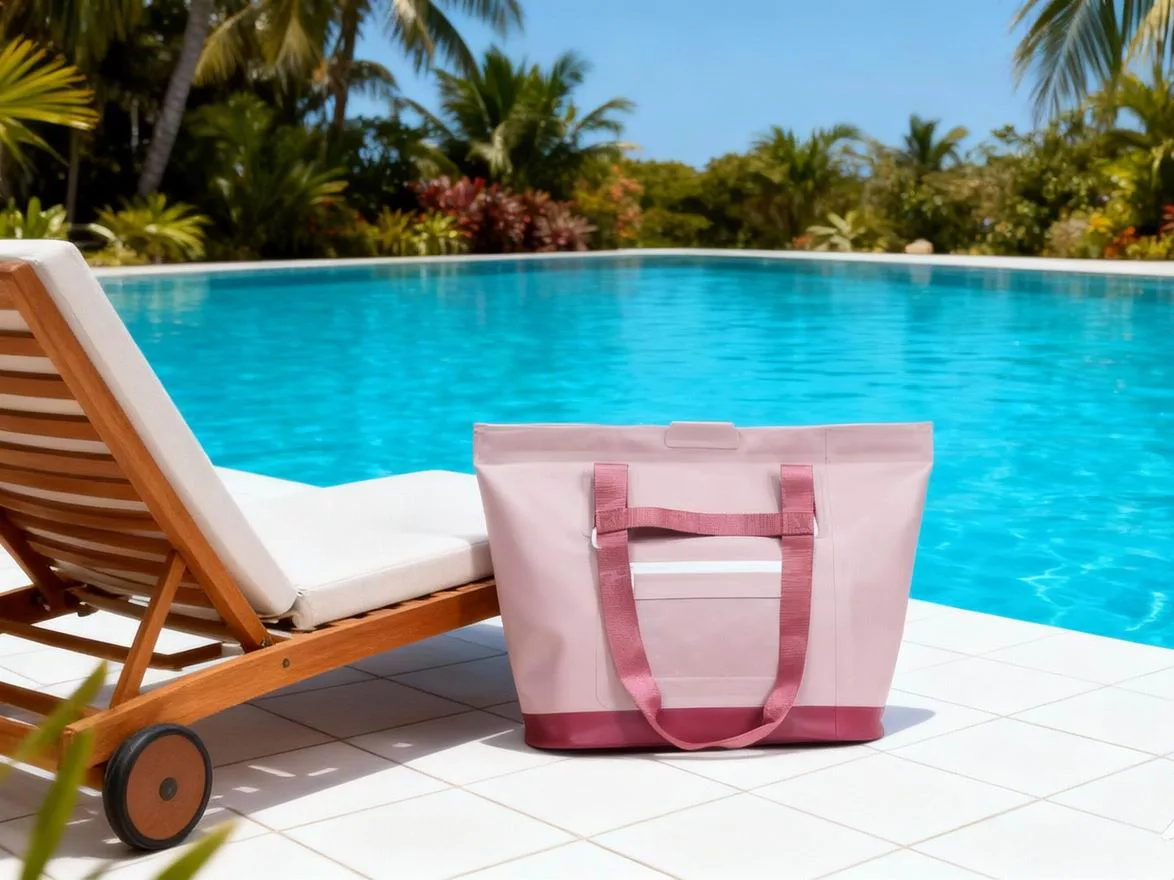
Start from the zone rather than from a catalogue, because each part of a property produces a different load. A pool deck bag lives within 20 m of a lounger and carries a phone, sunscreen, a room key card and a paperback, which is 3 to 6 litres. A beach club bag has to swallow two towels, a one-litre bottle and a mask and snorkel, which is 10 to 20 litres. An excursion bag gets thrown into a wet tender and holds a soaked rash vest on the way home, which is 20 to 30 litres plus a reinforced bottom panel.
Issuing one size everywhere is the classic error. A 20L bag on a lounger table is too bulky to sit beside a drink, and it invites guests to pack a wet towel into a bag that then travels back to the room. A 5L bag on a dive boat is too small for fins, so guests bring their own kit and the branded bag never leaves the room. Two formats, a 5L grab bag and a 20L duffel, cover nine out of ten resort programmes and keep the artwork, photography and inventory manageable.
| Zone | Format | Capacity | Cycles per year | Target service life |
|---|---|---|---|---|
| Pool deck | Roll-top grab bag | 5-8 L | 200-300 | 2 seasons |
| Beach club | Roll-top with shoulder strap | 10-15 L | 150-250 | 2-3 seasons |
| Excursion and dive boat | Dry duffel, welded base | 20-30 L | 80-150 | 3 seasons |
| Kids' club | Small roll-top | 2-5 L | 300-400 | 1-2 seasons |
| Spa and gym | Waterproof tote | 12-18 L | 200-300 | 2 seasons |
How many bags a resort actually needs
There are two models and they behave completely differently. A giveaway leaves with the guest, so consumption equals issued stays: a 200-room property at 72% occupancy with an average 4-night stay sees about 13,000 stays a year, which is 13,000 bags, and that is why giveaways get restricted to suites, loyalty tiers or excursion purchasers. A loaner fleet is sized for peak concurrent demand instead, which runs at 18% to 25% of rooms in a beach property, so the same 200-room resort keeps 40 to 50 bags in circulation.
Loss decides the reorder, and it should be budgeted rather than fought. A bag that goes home in a suitcase is still a bag being used in public, so treat 12% to 25% annual loss as marketing spend and add an 8% to 15% replacement rate for bags that come back too stiff, too stained or with a slipping buckle to reissue. Write the annual order as fleet multiplied by loss rate, plus fleet multiplied by replacement rate, and place it 120 days before the season opens.
| Rooms | Occupancy | Opening loaner fleet | Annual loss (bags) | Annual reorder |
|---|---|---|---|---|
| 80 rooms | 65% | 16-20 bags | 4-6 | 5-8 |
| 150 rooms | 70% | 28-38 bags | 7-11 | 9-14 |
| 200 rooms | 72% | 40-50 bags | 10-16 | 13-21 |
| 400 rooms | 75% | 75-100 bags | 18-30 | 24-39 |
| 600 rooms | 78% | 110-150 bags | 26-44 | 35-58 |
Marking methods that survive chlorine and sunscreen
Five routes exist for putting a resort mark on a TPU-laminated shell, and they are not interchangeable. Screen print lays a catalysed ink directly on the face and bonds chemically to the film. Heat transfer presses a vinyl or polyurethane film on with adhesive. Digital print lays a full-colour image on a prepared panel. A welded silicone or TPU patch is a separate moulded part fused to the body. A woven or printed label is the cheapest mark and the smallest.
Chlorine is what separates them. Screen print with a properly catalysed ink survives 40 to 60 pool-season cycles because the bond is chemical rather than mechanical. Heat transfer starts to lift at the edge after 20 to 30 cycles once warm chlorinated water softens the adhesive, which looks worse than no logo at all. A welded patch has no adhesive in the water path and routinely runs past 60 cycles, which is why premium-tier bags and retail units use it despite the higher unit cost.
| Marking method | Minimum | Cycles before visible wear | Added unit cost (USD) | Best use |
|---|---|---|---|---|
| Screen print, 2 spot colours | 500 pcs | 40-60 | 0.35-0.70 | Flat logo, single artwork |
| Heat transfer film | 300 pcs | 20-30 | 0.55-0.95 | Names, villa numbers, short runs |
| Digital print on panel | 100 pcs | 25-40 | 0.80-1.40 | Full-colour artwork and photos |
| Welded silicone or TPU patch | 500 pcs | 60-100 | 0.90-1.60 | Premium tier and retail |
| Woven or printed label | 500 pcs | 40-70 | 0.15-0.35 | Care label plus small mark |
Colourways that stay presentable on a pool deck
Pool programmes punish light shades harder than any other environment a bag will ever see. Chlorine at 1 to 3 ppm combined with 34 °C direct sun and a wet surface is an aggressive combination, and the standard test for it is chlorinated-water fastness under the ISO 105-E03 method, graded 1 to 5 against a grey scale. Anything below grade 4 will look chalky and tired by the middle of a season, and bright coral and turquoise are the usual offenders.
Sunscreen is the second staining source and it is the one guests notice because it transfers onto hands and clothing. Oxybenzone and avobenzone formulations leave a yellow film on pale grey and mint surfaces that no amount of rinsing removes. A two-colourway programme is the practical answer: a navy, charcoal or olive body carrying roughly 70% of units, plus one accent used only for the logo and webbing. Reserve pale shades for the spa channel, where bags live indoors and are wiped down daily.
Fabric, film and seam spec for a two-season life
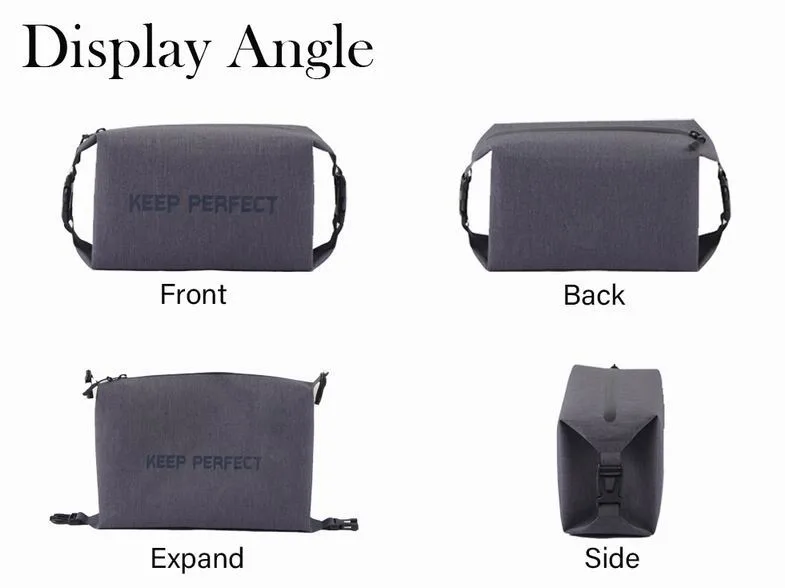
Two seasons of daily pool use is roughly 250 handling cycles plus 1,500 hours of UV, and that is a film specification question rather than a fabric one. A 0.4 mm TPU film laminated to a 420D or 500D woven face is the working standard: it folds without whitening, welds cleanly, and stays supple after a winter in a storeroom. A 0.3 mm film is fine for a 5L pool bag that never leaves a lounger; a 0.5 mm film is the correct choice for excursion bags dragged across a beach.
Seams decide the failures. Radio-frequency welded seams with a 20 mm weld width and radiused corners outlast any stitched-and-taped construction in chlorinated water, because there is no needle hole and no adhesive in the water path. Specify the weld width in the brief, ask for a corner sample, and confirm that the base panel on any duffel over 20L is double-layered. The same construction runs through our roll-top dry bag range, so a resort programme can share tooling across formats.
Hardware that survives guest handling
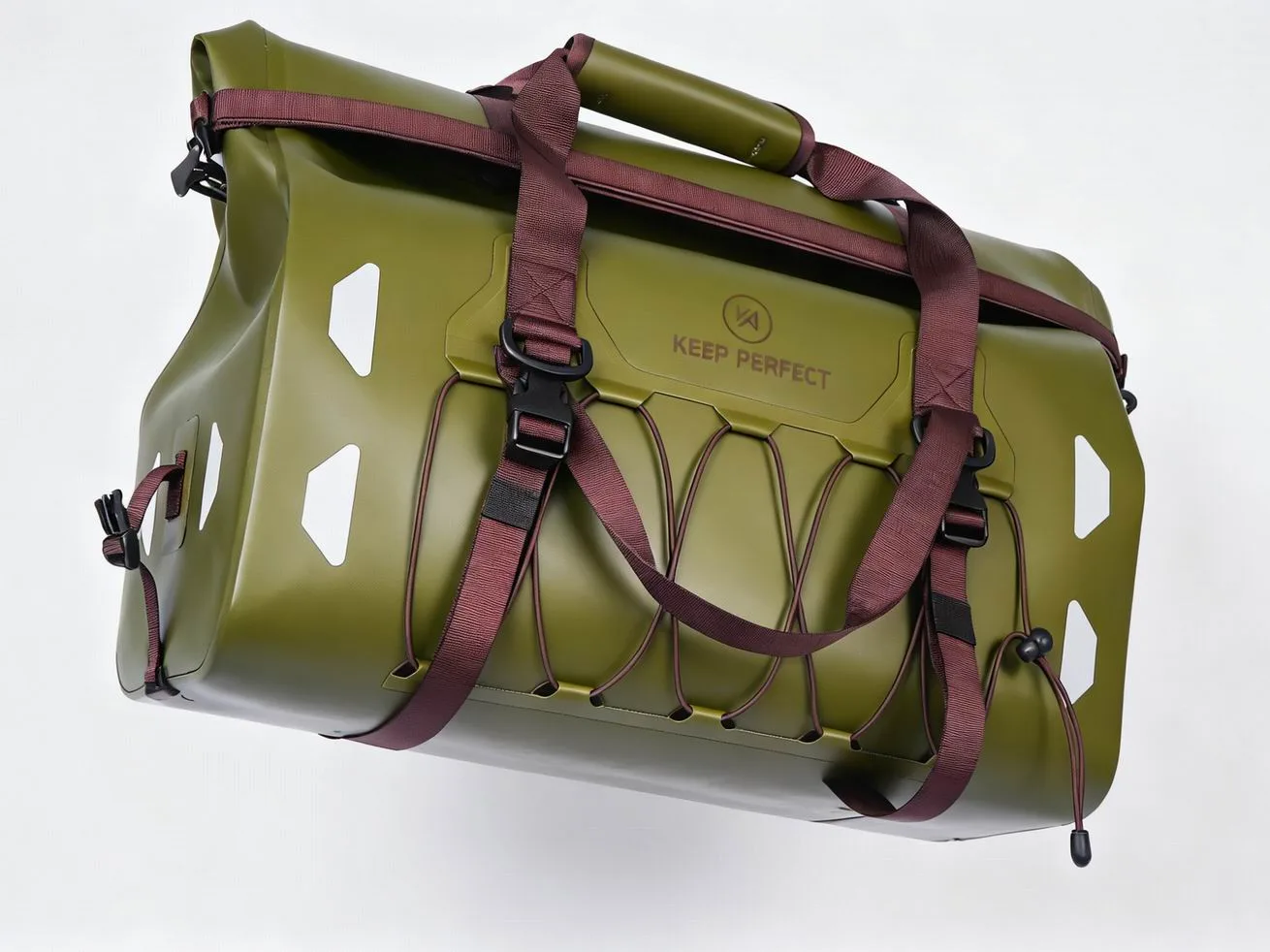
Guests are harder on hardware than owners are. A bag that belongs to nobody gets dragged by one strap, over-filled, and left buckled in the sun. Moulded POM side-release buckles handle that abuse and hold tension after salt exposure; a coated steel cam lever looks premium and then rusts at the rivet within a season on a beach property. Welded D-rings on a TPU body take a 40 mm webbing strap without deforming, where a sewn loop on a low-grade bag tears at 60 to 80 kg of shock load.
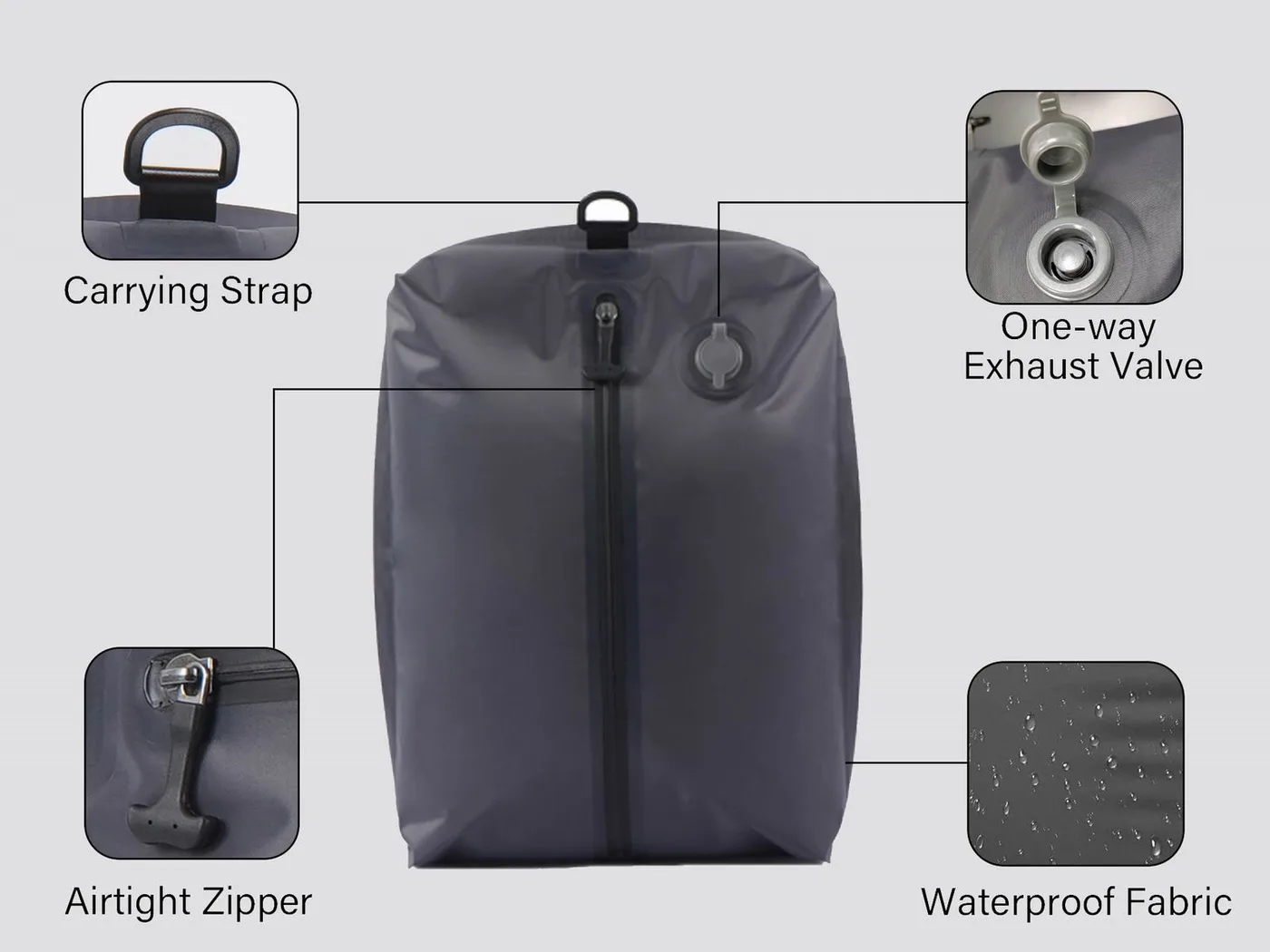
Closure type is a usability decision for a resort, not just a waterproofing one. A roll-top is the strongest closure but roughly one guest in six closes it badly on the first attempt, and a badly rolled bag is the single largest source of wet contents complaints. A waterproof zip on a tote or a small grab bag removes the instruction problem for pool use, where immersion is unlikely. Keep roll-tops for excursion and dive boats, where a bag genuinely goes under, and read the hardware load rating notes before specifying a strap.
Failure modes after one season on the water
Every resort fleet develops the same six problems, and all six are predictable from the spec. Knowing the months-to-appearance figure lets a purchasing team move a line item before guests start commenting, and it also tells you which complaints are a spec failure and which are a housekeeping failure. Stiffening and edge lift are spec problems; mildew and sunscreen haze are protocol problems, and no amount of spending on film thickness will fix the second group.
| Failure | Where it appears | Months to appear | Prevention |
|---|---|---|---|
| Film stiffening | Fold line and mouth | 9-14 | 0.5 mm TPU, shaded storage |
| Logo edge lift | Heat transfer mark | 4-7 | Screen print or welded patch |
| Buckle slip under load | Cam lever and strap | 6-12 | POM hardware, weekly rinse |
| Corner seam peel | Base panel corner | 12-24 | 20 mm weld, radiused corners |
| Mildew inside the bag | Interior face | 1-3 | Dry open 6 h before reissue |
| Sunscreen haze | Light colourways | 2-5 | Dark body, daily wipe-down |
Hygiene, chlorine and what guests put in the bag
A loaner bag is a shared object and it needs a written protocol. The CDC healthy-swimming guidance is the reference most resort operators already cite for pool water quality, and the same logic applies to anything that goes from a pool deck back into circulation: rinse, sanitise, dry completely, then store. A bag returned damp and reissued the same afternoon is how a fleet develops a smell that no cleaning product removes from a welded interior.
The workable protocol takes about four minutes per bag. Empty it, rinse the interior with fresh water, wipe all interior faces with a 200 ppm chlorine solution or a quaternary ammonium wipe, rinse again, then hang it open mouth-down on a rack for at least six hours in moving air. Never store a bag closed, never dry it in direct sun because UV dose accumulates per hour faster on a wet film, and never put it back into circulation while the fold line is still cool and damp to the touch.
Compliance paperwork for resort purchasing
Resort groups buy through procurement, and procurement asks for documents before it asks for samples. The three that come up on every bag programme are REACH compliance for the European market, a phthalate-free declaration for any PVC-containing component, and a Prop 65 statement for California and for any US group with a national distribution clause. Ask for the test report by standard number and date rather than a letter of assurance, and re-test when the film or ink source changes.
Children's club bags carry an extra layer of review because they are treated as articles intended for children, with tighter limits on phthalates and heavy metals in coatings and prints. Plan that testing into the sampling window rather than discovering it after the bulk run ships. The ASTM consumer-product safety standards are the reference most US buyers recognise, and our own phthalate-free TPU notes and REACH walkthrough cover what the reports should contain.
What a resort programme costs per unit and per season
Landed unit cost breaks into six pieces: film and fabric, hardware, cutting and welding labour, marking, packaging, and freight. Fabric and hardware together are usually 45% to 55% of the total, marking is 3% to 9%, and freight on a sea shipment from Xiamen is typically 4% to 8% depending on the season. Packaging deserves more attention than it gets: a bag shipped flat in a polybag arrives creased at the fold line, and those creases become the first place the film fatigues.
Cost per stay is the number that matters, not cost per bag. A USD 22 excursion duffel used across 120 guest stays costs USD 0.18 per stay, which is cheaper per impression than a welcome amenity card and infinitely more visible. Retail changes the maths entirely: a bag that costs USD 14 landed and sells at USD 30 returns a gross margin that can fund the whole loaner fleet for the season.
| Programme tier | Specification | Landed unit cost (USD) | Cycles | Cost per stay (USD) |
|---|---|---|---|---|
| Pool giveaway, 5L | 0.3 mm TPU, screen logo | 6-9 | 1 stay | 6.00-9.00 |
| Pool loaner, 10L | 0.4 mm TPU, welded patch | 9-14 | 200-300 | 0.04-0.07 |
| Beach club loaner, 20L | 0.5 mm TPU, duffel | 16-24 | 150-250 | 0.08-0.16 |
| Excursion, 30L | 0.5 mm TPU, harness straps | 22-32 | 80-150 | 0.20-0.40 |
| Retail upsell, 10L | 0.5 mm TPU, digital print | 12-18 | Retail 28-35 | Margin 12-20 |
Sampling, approval and the production calendar
Sampling runs 6 to 10 working days for a standard roll-top or duffel once artwork and colour references are locked, and the approval loop is where programmes slip. Approve three things in writing before bulk starts: a physical colour reference signed under a named light source, a production sample rather than a photo, and a test report for the waterproof claim. A sample approved from a screen image is the most common cause of a reorder that does not match the original shipment.
Bulk runs 35 to 50 days from FOB Xiamen, and sea freight to Europe or the US adds another 25 to 35 days, so a resort opening in December needs the order placed by mid-August. Inspection at AQL 2.5 is the standard gate before shipment, and it is worth attending in person for a first order because the defects that matter on a waterproof bag, weld consistency and closure geometry, are visual rather than statistical.
A spec brief you can send to a production partner
- Name the zone and the format: pool grab bag, beach duffel or excursion bag, with capacity in litres.
- State the film and face fabric: 0.4 mm or 0.5 mm TPU laminated to 420D or 500D, no coated PVC.
- Give the seam spec: radio-frequency welded, 20 mm weld width, radiused corners, double-layer base above 20L.
- Choose the marking method and give vector artwork: screen print for flat marks, welded patch for premium.
- Fix colour with a physical reference and a named light source; set ISO 105-E03 grade 4 for chlorine.
- Specify hardware: moulded POM buckles, welded D-rings, and straps rated above 80 kg shock load.
- Set the quantity per colourway and the annual reorder, remembering the 500-piece minimum per artwork.
- Confirm the inspection level, AQL 2.5, and the test report you expect with the shipment.
A brief in that shape removes most of the sampling round trips that delay a resort programme. Artwork and packaging deserve their own line: our label and hang tag notes cover what a resort needs on the tag, the packaging guide covers presentation for retail shelves, and the placement guide explains why the fold line is the wrong place for a mark. Compare the final grid against the full product line before committing, and consider the eco line if the group publishes a sustainability report.
Frequently asked questions
Q1. What dry bag should a resort buy for pool use?
A 5L to 8L roll-top with 0.4 mm TPU film, welded seams and a moulded POM buckle, marked with screen print or a welded patch. It holds a phone, sunscreen and a key card without taking over a lounger, and it lasts about two seasons of daily pool handling.
Q2. How many branded dry bags does a 200-room resort need?
A loaner fleet of 40 to 50 bags covers peak demand at 72% occupancy, and the annual reorder is 13 to 21 bags once loss and replacement are counted. A giveaway model instead consumes one bag per issued stay, roughly 13,000 a year.
Q3. Which logo method lasts longest on a resort dry bag?
A welded silicone or TPU patch, which routinely passes 60 to 100 pool cycles because there is no adhesive in the water path. Screen print with catalysed ink is the value choice at 40 to 60 cycles; heat transfer film starts lifting at 20 to 30.
Q4. Is TPU or coated fabric better for a pool programme?
TPU. It folds without whitening, welds into a continuous seam, and stays flexible after a season of chlorine and sun. Coated fabrics rely on a surface layer that stiffens and eventually cracks at the fold line, typically after nine to fourteen months.
Q5. What colour should a resort dry bag be?
A dark body in navy, charcoal or olive carrying about 70% of units, with the accent colour limited to the logo and webbing. Light shades fade under chlorine and show sunscreen haze within two to five months on a pool deck.
Q6. How do you clean a loaner dry bag between guests?
Rinse with fresh water, wipe the interior with a 200 ppm chlorine solution or a quaternary wipe, rinse again, then hang it open and mouth-down for at least six hours in moving air. Never reissue a bag while the fold line is still damp.
Q7. Do resort dry bags need to be phthalate-free?
Yes for any programme sold into the EU or into US groups with a national distribution clause, and emphatically yes for kids' club bags. Ask for a phthalate-free declaration with a test report number and date, not a letter of assurance.
Q8. What is the minimum order for a resort branded bag?
Plan on 500 pieces per artwork and colourway as the programme minimum. Heat transfer and digital print can start lower, at 100 to 300 pieces, which is useful when each villa or zone needs its own name.
Q9. Should a resort use roll-top or zip closures?
Roll-top for excursion and dive boats, where the bag genuinely goes under water, and a waterproof zip on pool totes and grab bags, where guests will not read a folding instruction. Roughly one guest in six closes a roll-top badly the first time.
Q10. How long does a resort dry bag last?
Two seasons for a pool loaner at 0.4 mm film, two to three for a beach club bag at 0.5 mm, and three or more for an excursion duffel that is rinsed and shaded. UV dose and wet storage are the two factors that shorten all of those figures.
Q11. Can a resort sell the same bag in its shop?
Yes, and it usually improves the economics. A bag that lands at USD 12 to 18 retails at USD 28 to 35, and a 9% attach rate across 12,000 stays can fund the loaner fleet for a season. Use a welded patch or digital print on retail units.
Q12. How much does a resort dry bag cost per guest stay?
A USD 10 to 14 pool loaner used across about 250 stays costs USD 0.04 to USD 0.06 per stay. An excursion duffel at USD 22 to 32 across 120 stays costs USD 0.18 to USD 0.27, still cheaper per impression than a printed welcome card.
Q13. Why do resort bags stiffen after one season?
Residual chlorine and UV exposure cross-link the surface of the film, and storing a wet bag closed accelerates it. Specify 0.5 mm film, rinse after every return, and store open and shaded; expect stiffening at the fold line after nine to fourteen months otherwise.
Q14. Do kids' club bags need different testing?
Yes. Articles intended for children face tighter limits on phthalates and heavy metals in coatings and prints, and many resorts require a separate report per colourway. Build that testing into the sampling window rather than after bulk ships.
Q15. How far ahead should a resort place a dry bag order?
Place the order about 120 days before the season opens. Sampling takes 6 to 10 working days, bulk runs 35 to 50 days from FOB Xiamen, and sea freight adds 25 to 35 days, so a December opening needs the order finalised by mid-August.
Q16. Should resort bags be packed flat or stuffed for shipping?
Ship them loosely rolled or lightly stuffed with paper. A bag folded flat and compressed for a six-week voyage arrives with hard creases at the fold line, and those creases are the first place the film fatigues in service.
People also ask
How do you brand a dry bag for a hotel or resort?
Choose the format from the zone, specify 0.4 to 0.5 mm TPU with welded seams, then pick a marking method that survives chlorine: screen print for value, a welded patch for premium. Approve a physical colour reference and a production sample before bulk.
Are branded dry bags worth it for resorts?
Yes on cost per impression. A USD 10 to 14 loaner used across 250 stays costs under USD 0.06 per stay, keeps the logo in public for years, and can be resold in the lobby shop at a 12 to 20 unit margin.
What size dry bag is best for a pool?
Five to eight litres. That holds a phone, sunscreen, a key card and a paperback without dominating a lounger table, and it is small enough to dry completely overnight before reissue.
Why do resort dry bags smell after a season?
Because they were stored closed while damp. A welded interior has no cavity and no drain, so residual water plus chlorine plus sunscreen produces a smell that survives any cleaning. Dry every bag open for six hours before it goes back into circulation.
Can you put a resort logo on a TPU dry bag?
Yes, and the film accepts a chemical bond. Screen print with catalysed ink or a welded TPU patch both work; heat transfer film is the weakest option because the adhesive softens in warm chlorinated water and lifts at the edge.
How do resorts stop guests taking loaner dry bags?
Most do not, and most should not: a bag taken home is still being used in public. Budget 12% to 25% annual loss as marketing cost and reorder to that figure rather than investing in deposit schemes that annoy guests.
Need this in production volume?
QUANZHOU JUNYUAN BAGS has produced waterproof bags since 2014 in an SGS-verified 4,950 m2 facility in Fujian, China. Minimum order 500 pieces, sampling in 6–10 working days, bulk in 35–50 days, FOB Xiamen — write to service@junyuanbags.com with your spec and target market.