Home / Blog / Design & Branding
Dry Bag Packaging Ideas
Three pack formats cover almost every dry bag programme: a recycled polyethylene polybag with a printed header card for entry sizes, a printed kraft carton for premium and gift lines, and a simple belly band around a folded roll-top for open-shelf retail. Choose on freight arithmetic rather than looks, because a polybag costs roughly 0.30 to 0.45 USD per unit and adds almost no carton volume, while a rigid carton around a rolled 20L bag can add 4 to 6 litres per unit and lift landed freight per piece by 18 to 26 per cent on a 40ft high-cube container.
Below you will find the format comparison, the carton cube maths that actually decides landed cost, moisture behaviour across a 35 to 50 day sea transit, the label fields that clear border clearance in the EU and the US, and the wording an environmental claim needs before a retailer will accept it. Where a number matters it is given: grams per square metre for card stock, edge crush ratings for corrugated board, desiccant loading per carton, and the booking pattern that fits a container.
- What a dry bag pack has to survive before it looks good
- Polybag, header card or printed carton: format compared
- Carton cube, carton count and the freight arithmetic
- Moisture, condensation and the shipment that arrives musty
- Hang tags, header cards and paper bands that hold up
- Label fields that clear clearance and a retail audit
- Making size obvious across a 5L to 90L range
- Clear panels, printed windows and what visibility costs
- Recyclability wording that survives a review
- Cutting single-use plastic without pushing returns up
- Master cartons, pallets and container patterns
- The first ten seconds of unboxing
- Turning the ideas into a briefing sheet
What a dry bag pack has to survive before it looks good
The pack is a shipping container first and a shopper touchpoint second. A bag leaving Xiamen on a 35 to 50 day sea leg sits in a steel box where internal temperatures reach 55 to 65 °C and humidity swings from 40 per cent to above 90 per cent overnight. Bags folded damp, or sealed with trapped humidity, arrive with a surface bloom that looks like mould. So the pack has three jobs, in order: keep abrasive contact off the film face, hold geometry under stacking load, and let residual moisture escape.
Stacking is the failure buyers discover last. A 40ft high-cube allows roughly 68 cubic metres and cartons stack close to 2.4 m, so the bottom layer carries the whole stack for weeks while the vessel rolls. Light roll-tops are fine in a single-wall carton rated 32 ECT; heavy duffels and any carton above 15 kg need 44 ECT or double wall. Have the compression test run at high humidity, since board loses 30 to 50 per cent of stacking strength above 90 per cent relative humidity.
Abrasion is the third job and the one that shows up as a retail defect. Inside a part-filled master carton a bag rubs against a board edge thousands of times. On a matte face fabric with a 0.5 mm film, that rubbing leaves glossy scuff tracks that survive unpacking and read as damage to a shopper. One sheet of 17 gsm tissue interleaf, or moving polybag thickness from 30 micron to 50 micron, removes nearly the whole risk for a few cents a unit. We settle these questions on the product line side before any artwork starts.
Polybag, header card or printed carton: format compared
Every format has a cost floor and a freight consequence, and they pull in opposite directions. The polybag is cheapest per unit and best for cube, but carries almost no print area until you add a header card, which needs a punch and enough card weight to survive hanging. The printed carton carries all the storytelling and protects during courier delivery, and pays for both in board cost and volume. The belly band sits between them, with the bag itself as the hero.
Size class usually settles the choice before branding does. Small roll-tops from 2L to 10L are cheap to polybag and their volume is already low, so adding a carton buys little. From 20L upward the bag is a substantial object that behaves better in board, particularly if the value of the item is high enough to absorb extra freight. Gift sets and anything sold at a resort desk almost always need a carton, because the buyer expects something to hand over rather than something to carry out loose.
| Pack format | Unit cost USD | Added volume per unit | Best bag sizes | Recyclability |
|---|---|---|---|---|
| PE polybag 50 micron | 0.18-0.30 | 0.2-0.4 L | 2L to 10L | Store drop-off film |
| Polybag + header card | 0.30-0.45 | 0.3-0.5 L | 5L to 20L | Card kerbside, film separate |
| Paper belly band | 0.12-0.22 | 0.1-0.2 L | 5L to 30L | Kerbside paper |
| Printed kraft carton | 0.55-1.10 | 2.0-6.0 L | 20L to 90L | Kerbside paper |
| Rigid gift carton | 1.20-2.60 | 6.0-11.0 L | Gift sets only | Kerbside paper, board insert |
Carton cube, carton count and the freight arithmetic
Start with the folded bag, not the advertised litre capacity. A 20L roll-top folded flat measures about 32 x 22 x 9 cm, which is 6.3 litres of packed volume, and a 60 x 40 x 35 cm master carton holds twelve of them at 0.084 cubic metres gross. Divide usable container volume by that figure for the headline count, then subtract 4 to 6 per cent for stowage loss to get what a freight desk will actually book. The same arithmetic applied to a 5L bag often triples the unit count.
| Bag size | Folded dimensions cm | Units per master carton | Carton cube m3 | Units per 40ft high-cube |
|---|---|---|---|---|
| 5L roll-top | 20 x 14 x 5 | 30 | 0.055 | 11,700 |
| 10L roll-top | 26 x 17 x 6 | 20 | 0.061 | 10,600 |
| 20L roll-top | 32 x 22 x 9 | 12 | 0.084 | 7,700 |
| 40L duffel | 45 x 28 x 12 | 6 | 0.078 | 8,300 |
| 90L expedition | 62 x 40 x 16 | 3 | 0.099 | 6,500 |
Compression changes the result again. A vacuum-packed duffel drops as much as a third of its cube, but the film creases in compression and those creases can become permanent sets after a warm voyage, so the saving is real and the risk is real. Packing technique interacts with the same numbers: a bag shipped stuffed and loosely closed arrives looking like a bag, while one shipped flat and empty looks deflated on a shelf. Decide which of those two you are selling before you optimise the cube, and check the trade-offs against a real load in our two-day 20L packing walkthrough.

Moisture, condensation and the shipment that arrives musty
Waterproof bags leave the welding line dry, but they leave it warm, and radio-frequency welding raises the temperature of the film around the seam. If bags are folded and polybagged within minutes of welding, that warmth carries a film of humidity into a sealed pouch where it has nowhere to go. Four weeks later the pouch looks fine and the bag has a faint haze that a shopper will read as contamination. A two-hour cooling and airing stage before packing costs nothing in schedule terms and removes most of the risk.
Desiccant is the second half of the answer, and the loading figure matters. For a sealed liner of about 0.08 cubic metres on a 45 day voyage at high humidity, a single 12-unit sachet of clay or silica per carton is the practical minimum, with 16 units for anything shipped through a monsoon season. Inexpensive clay absorbs less by weight than silica but fails more gracefully, so it suits long, damp legs. Put the sachet high in the carton rather than at the bottom, because moisture rises as the container heats through the day.
Ventilation is the third defensive line and it conflicts with water protection. Two 25 mm holes punched in opposing ends of a master carton let air move without admitting much spray, and they are enough to stop the worst of the condensate. Do not rely on them alone for a shipment crossing the equator. Fabric choice also plays a part: a polyether-based film resists hydrolysis far better than a polyester-based one, which is worth specifying if your distribution route includes genuinely humid ports.
Hang tags, header cards and paper bands that hold up
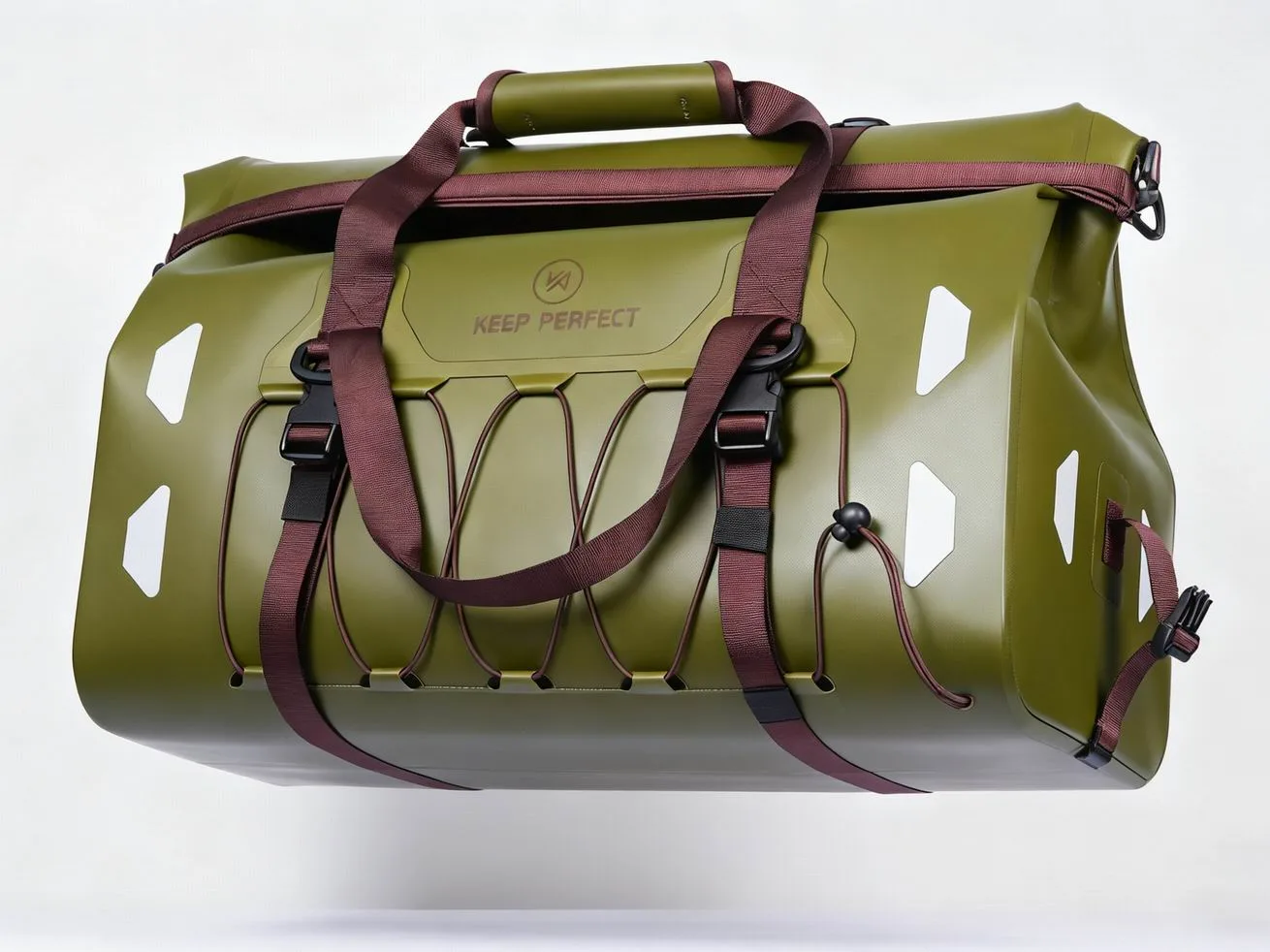
Card weight is the first decision and the cheapest place to lose credibility. A hang tag below 250 gsm curls in a humid store; 300 to 350 gsm uncoated board reads as a considered product and still accepts a clean die-cut. Header cards that carry the full weight of a 10L bag need more: 400 gsm or a laminated 350 gsm. Recycled content above 60 per cent is achievable in this weight range, and the slight colour variation of recycled board reads as a feature in outdoor retail rather than a defect.
Attachment is where most programmes fail the sustainability review they set themselves. A plastic fixing needle is cheap and fast to apply, and it is exactly the piece several European retailers now ask you to remove. A paper twist tie, a cotton string or a simple knotted loop all work, and each adds a few seconds of packing labour. Standardise on one attachment across the range so packers are not choosing between three methods on a busy line, and specify the loop length so bags hang at the same height along a rail.
The information hierarchy on a tag should be settled in the same week as the artwork. Front face carries the brand mark and the capacity; nothing else. Back face carries material composition, care icons, the recycled content figure, the batch code and a scannable code pointing at a care page rather than a home page. Keep the type above 7 pt for the legal lines, because a retailer audit that cannot read the composition figure will treat it as missing. More detail on this layout sits in our hang tag and label guide.
Label fields that clear clearance and a retail audit
Most border and retailer problems are not about aesthetics, they are about a missing field. Country of origin must be legible, permanent and easy to find; fibre or material composition must be stated in the same language as the destination market; a batch code must let you trace a returned unit back to a production week. In the United States these sit under origin marking rules administered by border officers; in the European Union composition statements fall under textile labelling rules. Get the wording reviewed in the destination market before the plate is engraved.
Barcode decisions are equally practical. Assign one GTIN per size and colour rather than one per style, or your warehouse will pick the wrong variant all season. The symbol needs a full quiet zone and should sit on a flat panel, never across a fold where a scanner may miss it, and the carton should carry its own separate number so inbound scanning does not depend on opening boxes. Reserve a second clearance label area on the back face for later changes; adding one after artwork is approved means a new plate.
| Label field | Where it sits | Typical wording | Who checks it |
|---|---|---|---|
| Country of origin | Bag label or permanent print | Made in China | Border clearance |
| Material composition | Tag or sewn-in label | Body: TPU-laminated 500D polyester | Market surveillance |
| Recycled content | Tag, back face | Contains 62 per cent recycled content | Retailer claim review |
| Batch / lot code | Carton plus hidden tag | WK26-2026-B | Internal traceability |
| GTIN barcode | Flat panel on pack | GTIN-13 symbol, 25 mm wide | Retail scanning |
Two further fields are worth building in from the start. A scannable code that resolves to a documentation page lets you update composition or claim wording without reprinting the pack, which matters when rules change mid-season. And a visible capacity figure repeated on both faces saves returns from buyers who expected a different size; put it outside any lifestyle photograph so it survives a crop. Where the programme crosses into retail-ready presentation, the same fields need to be legible from a metre away.
Making size obvious across a 5L to 90L range
Shoppers cannot compare litres, so a range of nine sizes looks like nine identical objects unless the pack intervenes. The most reliable method is a fixed position for the capacity number — the same corner, the same type size, every SKU — combined with a physical reference underneath it. Real examples convert better than abstractions: holds twelve 330 ml cans, fits a 15-inch laptop with its sleeve, takes one sleeping bag and a compression sack. Those phrases let a buyer check their own list against the pack.
Colour coding is the second lever. Assign one trim colour per capacity family and keep it constant regardless of the body colourway, so a 10L always carries the same accent even if one season it is olive and the next it is camo. Coded webbing, buckle housings or a dyed weld line all work; printed code areas fade. If you also want trim consistency across the wider range, our notes on building a colour range cover the dye-lot tolerances that make this workable in production.
Finally, decide what the photograph is doing. If the pack shows a lifestyle shot, the capacity number must sit outside it, because the image will be cropped differently on a marketplace listing. If the pack shows the product alone, shoot every size at the same scale so the physical difference is visible; a hero shot taken with a wide lens makes a 5L and a 20L look identical. Our roll-top range runs from 5L to 90L and this is the one area where ranges consistently lose their own logic.

Clear panels, printed windows and what visibility costs
A window lets a shopper confirm the colourway without opening the pack, and on a range where colour is the main purchase driver that is worth real money. The cost is not only the window: it adds a second material to the pack, complicates disposal advice, and introduces a scuff surface that arrives damaged more often than board does. Budget a few cents more and specify a phthalate-free film rather than commodity PVC, which yellows under the 500 lux lighting typical of a store after about three months on display.
There are three practical ways to get the benefit without the panel. The cheapest is a clear polybag printed with only a band of artwork, so the whole bag is visible and the print cost stays low. The second is a die-cut shape covered from behind with a thin film, which gives a shaped reveal at a smaller material cost. The third is simply a better photograph on the panel, which is often the right answer where the face fabric has a texture that does not read through film anyway.
Recyclability wording that survives a review
Environmental claims are read by people who know what the wording means, and vague language is what draws attention. Self-declared claims sit within the framework set out by ISO, which expects the claim to be specific, verifiable, and unlikely to mislead. In practice that means naming the material, naming the stream, and qualifying geography: a mono-material polyethylene film bag that is recyclable through store drop-off where facilities exist, rather than the words eco or green used on their own.
The second discipline is the number. A pack that states its recycled share has to defend that share with documentation, and the simplest defensible route is a single verified figure printed once, consistent across pack and product page. Programs that reference the EPA plastics streams guidance tend to get this right, because the agency language forces the distinction between what is technically recyclable and what is collected where the shopper actually lives.
Cutting single-use plastic without pushing returns up
The plastic reduction that is easy to approve at a desk can be expensive in a warehouse. If removing an inner polybag raises damage-related returns from 0.4 to 1.2 per cent on a 12 USD bag, the saving of four cents a unit is gone several times over once you add shipping both ways and disposal. Run the calculation with your own return figures before removing a layer. Most ranges land on a middle position: paper where the box does the protecting, film only on the sizes that genuinely scuff.
Ranked by payback, the changes that usually survive are paper bands instead of full printed bags, higher recycled content in the film you keep rather than elimination, and eliminating the second plastic component such as a fixing needle before touching the pack itself. Lower on the list are moulded pulp trays, which protect well but add volume and are hard to source in consistent quality at moderate quantities. Measure every candidate against three numbers: unit cost, added cube, and change in damage rate.
One option deserves a mention because it uses waste rather than adding material: a drawstring pouch made from cutting off-cuts, sized to suit one capacity and printed with a single colour. It is a genuine second life for film that would otherwise be scrap, it reads as considered rather than promotional, and it can carry the same fabric guidance we set out in the eco-friendly materials notes. It does cost labour, so it suits gift and premium lines rather than an entry-level polybag.
Master cartons, pallets and container patterns
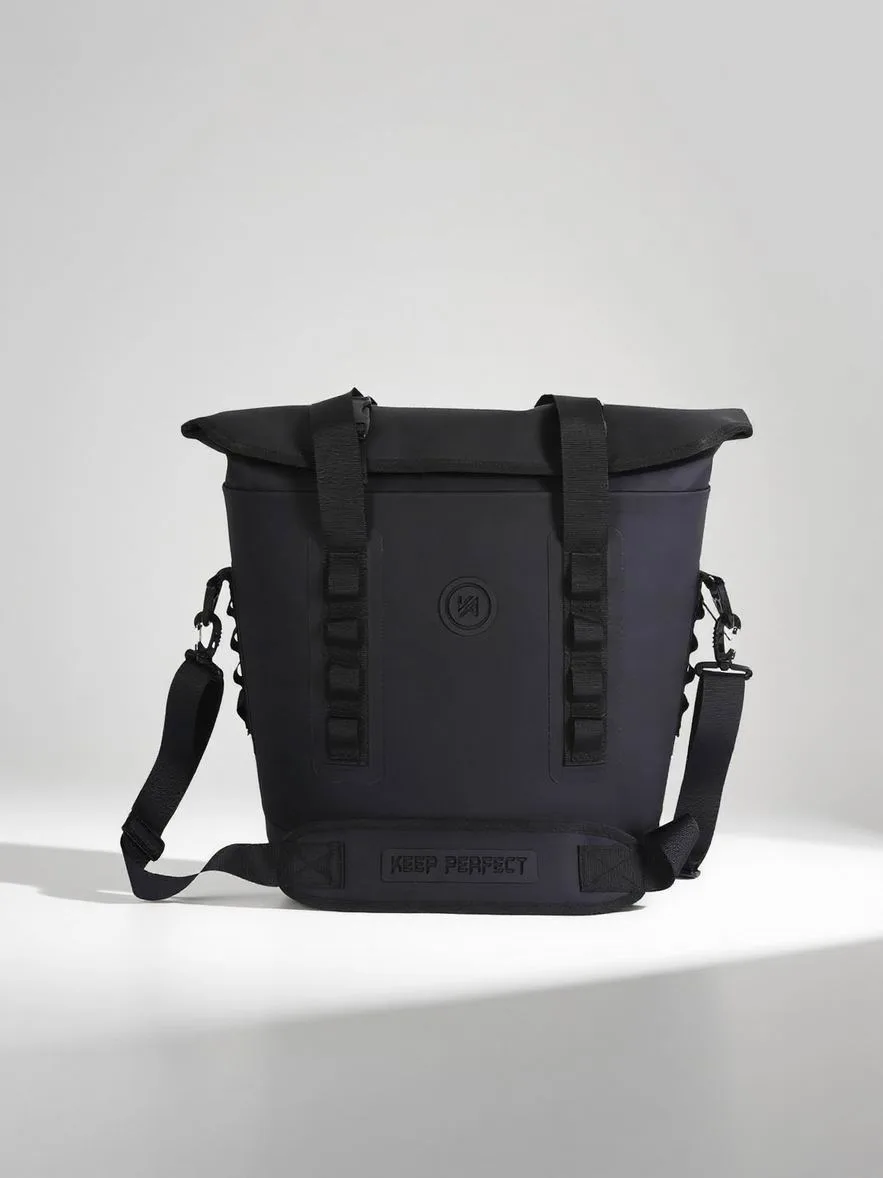
Carton patterns decide damage more than board grade does. A column-stacked pattern carries load through the carton corners, which is where corrugated board is strongest, and it is the right choice for tall mixes. An interlocked pattern distributes load better but leaves corners unsupported and tends to tilt. Whichever you use, keep the stack below 1.6 m where a human handles it, and specify a top sheet plus two layers of stretch wrap so the top course does not shift on the road.
Weight limits matter as much as dimensions. Cartons above about 15 kg get pushed, dropped and torn open rather than lifted, which converts strength into damage very quickly; splitting a heavy 90L carton of four into two cartons of two often costs less than the returns it prevents. Standard 1200 x 1000 mm export pallets should carry a documented heat-treatment mark, because a pallet without it can hold a whole consignment at the destination port.
| Pallet mm | Cartons per layer | Layers | Cartons per pallet | Pallets per 40ft high-cube |
|---|---|---|---|---|
| 1200 x 1000, column | 8 | 5 | 40 | 17 |
| 1200 x 1000, interlocked | 7 | 5 | 35 | 18 |
| 1200 x 800, Euro, column | 6 | 5 | 30 | 22 |
| 1100 x 1100, column | 6 | 6 | 36 | 18 |
The first ten seconds of unboxing
Presentation inside the pack is the cheapest brand work available. A bag shipped flat and empty looks deflated; the same bag shipped loosely rolled with acid-free tissue inside holds its shape and photographs as though it were in use. Avoid shipping a roll-top closed with all three folds, because a bag stored rolled for six weeks arrives with set creases at the fold line that will not relax. Two loose folds plus tissue is enough to fill the silhouette without creasing permanently.
Odour is the second thing to get right, and it is perceived as a quality signal far more powerfully than shoppers admit. TPU laminates carry little inherent smell, while some PVC formulations and solvent-based prints off-gas noticeably in a sealed pack, particularly after a warm voyage. Specify low-emission prints and give every batch a smelling check before it is bagged; a buyer who opens a carton and meets a solvent note will ask questions about the rest of the line.
A small instruction card does more than most people expect. Six lines are enough: roll three times, do not machine wash, rinse in fresh water after salt use, dry in shade, patch with the correct film rather than adhesive tape, and where to find care detail online. Keep it to one card rather than a folded booklet, print in markets' languages on one sheet, and check the closure explanation against our roll-top sealing notes so the advice matches the product.
Turning the ideas into a briefing sheet
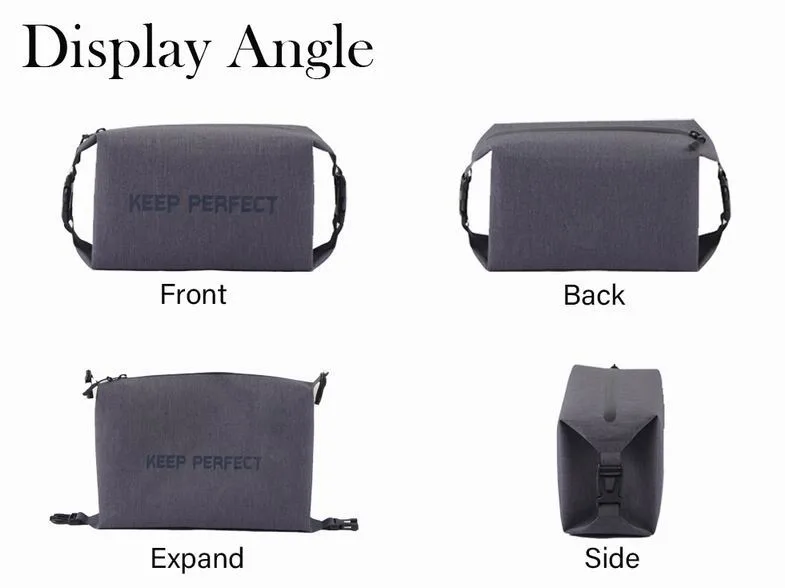
A pack specification that can be quoted needs eight lines and nothing else: sizes covered, format per size, board grade and internal carton dimensions, print method and colour count, label fields with their codes, desiccant policy, pallet pattern, and documentation held for each environmental claim. Everything else is artwork. Sending that sheet in one language avoids the two-week drift that comes from answering eight separate questions by email.
Timings are then predictable. Sampling takes 6 to 10 working days for a standard construction, bulk runs 35 to 50 days depending on season, terms are T/T 30/70 with inspection at AQL 2.5 and shipment FOB Xiamen. Minimum order is 500 pieces per design, which sets whether a printed carton or a polybag is the sensible route for each SKU. We have produced waterproof bags since 2014 in an SGS-verified 4,950 m2 facility with 137 staff and 7 production lines, and the packaging conversation is always easier when it starts before the artwork does.
One closing caution: do not let the pack outgrow the product. A beautiful carton around a bag that leaks will fail in reviews, and no amount of sustainable board recovers the position afterwards. Budget the pack second and the seal first, verify the waterproof claims with real testing rather than adjectives, and read our list of things to skip before you spend anything on print.
Frequently asked questions
Q1. What is the cheapest practical packaging for a dry bag?
A recycled polyethylene polybag with a printed header card, at roughly 0.30 to 0.45 USD per unit. It suits 5L to 20L bags, adds almost no carton cube, and gives enough print area for the capacity figure, composition line and a barcode.
Q2. How many units fit a 40ft high-cube container?
It depends on the folded dimensions, not the litre capacity. Twelve folded 20L bags in a 0.084 cubic metre carton give about 7,700 units; thirty folded 5L bags in a 0.055 carton give around 11,700. Always deduct 4 to 6 per cent for stowage loss.
Q3. Should dry bags be polybagged individually?
Yes for sizes that rub against board edges or ship in part-filled cartons. A 50 micron bag plus a 17 gsm tissue sheet prevents the glossy scuff tracks a buyer reads as damage. Largest sizes often ship better in a paper band than in film.
Q4. What card weight should a hang tag use?
300 to 350 gsm uncoated board for a hang tag, rising to 400 gsm or a laminated board for any card that carries the weight of a full bag. Recycled content above 60 per cent is achievable at these weights without losing print quality.
Q5. How do I stop bags arriving with a musty smell?
Air them for two hours after welding before packing, add a 12 to 16 unit desiccant sachet per carton placed high in the box, and punch two 25 mm ventilation holes in opposing carton ends. Specify a polyether-based film where the route crosses humid ports.
Q6. Do I need a barcode on every size and colour?
Yes. Assign one GTIN per size and colour variant, keep the symbol on a flat panel with a full quiet zone, and give the master carton its own separate number so inbound scanning works without opening boxes.
Q7. Can I claim recyclable on a polyethylene bag?
You can claim it where the claim is specific and qualified: name the material and the collection stream, and note that it depends on local facilities. Unqualified green or eco wording is what draws challenge under self-declared claim rules.
Q8. What should the label say about composition?
State the material construction plainly, for example a body of TPU-laminated 500D polyester, and keep the type above 7 pt. In the European Union composition statements fall under textile labelling rules; in the United States check origin marking expectations before engraving plates.
Q9. Is a printed carton worth the extra freight?
Usually for bags from 20L upward, for gift lines, and for anything sold across a counter. A carton can add 4 to 6 litres of packed volume per unit, so below 10L it rarely pays back the 18 to 26 per cent increase in landed freight per piece.
Q10. How do I make nine sizes look different on a shelf?
Fix the capacity number in the same position on every pack, add a real-world reference such as twelve 330 ml cans, and code each capacity family with one trim colour that stays constant regardless of the body colourway.
Q11. What board strength does a master carton need?
32 ECT single wall for light roll-top cartons under 15 kg, rising to 44 ECT or double wall for heavier duffels. Have the compression figure verified at high humidity, since corrugated board loses 30 to 50 per cent of stacking strength as humidity climbs.
Q12. Do I really need desiccant in every carton?
For a sealed liner on a long sea voyage, yes. Around 12 units of clay or silica per standard carton is the practical minimum, and 16 units through a monsoon season. Place the sachet high in the carton because moisture rises as the container heats.
Q13. What replaces a plastic fixing needle on a tag?
A cotton string, a paper twist tie or a simple knotted loop all work and all satisfy retailers asking for plastic to be removed. Standardise on one attachment across the range so packers are not switching method between sizes.
Q14. How much does removing plastic raise my return rate?
It varies by surface and route, but going from 0.4 to 1.2 per cent damage-related returns on a 12 USD bag costs several times the four cents saved per unit once return shipping is included. Test before you remove a protective layer.
Q15. What should the instruction card inside the bag say?
Six lines: roll three times, do not machine wash, rinse in fresh water after salt use, dry in shade, patch with matching film rather than adhesive tape, and where to find full care detail online. One card, not a folded booklet.
Q16. Does the bag ship rolled or flat?
Loosely rolled with tissue inside. Shipping a roll-top closed with three folds leaves permanent set creases after six weeks in a warm container, while shipping it flat makes it look deflated on the shelf.
People also ask
How do you package a dry bag for retail?
Fold the bag, insert tissue to hold the silhouette, close the pack with two loose folds rather than three, add a capacity panel and a hang tag with composition and batch code, and box twelve units into a 32 ECT carton with one desiccant sachet.
What packaging protects waterproof bags best in shipping?
A 50 micron polybag inside a correctly graded carton, with interleaf between the film and board, two ventilation holes, and a desiccant placed high in the box. Most damage comes from carton compression and edge abrasion, not from water.
How much does dry bag packaging cost?
Roughly 0.18 to 0.30 USD for a plain polybag, 0.30 to 0.45 with a header card, about 0.12 to 0.22 for a paper belly band and 0.55 to 1.10 for a printed kraft carton before print tooling.
What size should a dry bag hang tag be?
Around 55 x 90 mm for most roll-top sizes and up to 70 x 120 mm when the back face has to carry composition, care icons, recycled content, batch code and a scannable code in more than one language.
Can dry bag packaging be plastic-free?
Mostly. Paper bands, kraft cartons and paper-based attachment replace the majority of film, but the last layer over the fabric is what prevents scuff damage, so test return rates before removing it entirely.
How is dry bag capacity shown on packaging?
Print the litre figure in a fixed position on every SKU and pair it with a physical reference such as twelve 330 ml cans or one 15-inch laptop in its sleeve, then reinforce it with a trim colour assigned per capacity family.
Need this in production volume?
QUANZHOU JUNYUAN BAGS has produced waterproof bags since 2014 in an SGS-verified 4,950 m2 facility in Fujian, China. Minimum order 500 pieces, sampling in 6–10 working days, bulk in 35–50 days, FOB Xiamen — write to service@junyuanbags.com with your spec and target market.