Dry Bag for Snorkeling: Packing and Sizing Guide
A shore snorkel needs about 10 litres of sealed space per person split into two bags: a 5L float bag that stays with you in the water and a 10L bag left in the shade on the beach for clothing, towel and documents. A boat or liveaboard trip needs 15 to 20 litres per person, because everything has to survive spray on the run out and there is nowhere dry to leave anything. In both cases the bag takes repeated immersion in 28 °C salt water, so a welded roll-top rated IPX7 is the baseline, not an upgrade.
This guide covers the capacity maths by trip type, the two-bag split that keeps valuables with you, closure technique with wet salty hands, buoyancy and tethering without damaging the reef, and a rinse routine that decides whether the bag lasts three seasons or ten. Every size recommendation is tied to a real load: a 1.4 kg towel, a 900 g camera housing, a 300 g set of fins, or a phone and a room key.
- How much waterproof space a snorkel session needs
- Boat, shore or liveaboard: three different problems
- The two-bag system: float bag and dry bag
- What fits in 5L, 10L and 20L on a snorkel day
- Buoyancy: keeping the bag with you in the water
- Closure technique for wet, salty hands
- Reef, sand and sun: what wears a snorkel bag out
- Valuables: keys, cards, phone and the shore problem
- Camera and phone housing: volume and padding
- Film and face build for tropical snorkelling
- Towing and tethering without scratching the reef
- The post-snorkel rinse and dry routine
- Sizing checklist before a snorkel trip
How much waterproof space a snorkel session needs
Work from the list of things that must stay dry, not from the bag you already own. On a two-hour shore snorkel that list is short: room key, cards, phone, a dry shirt for the walk back, a small towel and sunscreen. Packed as it would actually be packed, that comes to 6 to 8 litres and 1.1 to 1.6 kg. Add a camera housing and the figure reaches 12 litres and 2.5 kg.
The trap is buying one large bag for everything. A 30L bag sounds generous, becomes a 4 kg lump on a rocky shore, and is awkward to carry across a reef flat at low tide. Two bags in the 5L to 12L range give redundancy as well as convenience: if one seal ever fails, half your kit is still dry, and the small one can be towed in the water while the large one stays on the beach.
The third variable is the walk. A 900 m walk from a car park to a bay in 30 °C heat changes what people are willing to carry, and it is the reason a 20L waterproof backpack with a real harness beats a 20L bag with webbing straps on shore trips. If you launch from a boat 20 m from your gear, the harness is dead weight.
Boat, shore or liveaboard: three different problems
Shore snorkelling is a storage problem: the bag sits on sand or rock while you are in the water, so theft, sand and sun are the risks, and immersion is optional. Boat snorkelling is a spray problem: everything not sealed is wet within an hour of the first run, and the bag is handled constantly in a small space. Liveaboard snorkelling is a throughput problem: kit is wet, rinsed, dried and re-packed every day for a week, and nothing ever fully dries.
Those three risks produce three different kit lists. On shore you need shade and a small bag that goes with you. On a boat you need everything sealed and one group bag lashed in the shade. On a liveaboard you need a wet bag that drains, a dry bag that stays closed, and a drying routine that works in 80% humidity.
| Trip type | Hours in water | Sealed volume per person | Bag split | Main risk |
|---|---|---|---|---|
| Shore snorkel | 2 h | 8-10 L | 1 x 5L float + 1 x 10L | Theft, sand, sun |
| Shore with camera | 3 h | 12-15 L | 1 x 5L + 1 x 10L + 2L pouch | Cameras and salt spray |
| Day boat trip | 3-4 h | 15-20 L | 1 x 20L | Spray on the run out |
| Liveaboard week | 4-6 h daily | 20-25 L | 1 x 20L + 1 x 10L wet | Nothing drying between sessions |
| Island-hopping day | 2-3 h | 12-18 L | 1 x 10L + 1 x 5L | Repeated wet-dry cycles |
The two-bag system: float bag and dry bag
Split the kit by what happens if it is lost. The float bag holds what must be with you in the water: room key, cards, phone, a small towel, water. It is a 5L roll-top with enough trapped air to float, tethered to you. The shore bag holds what can be left: clothing, documents, shoes, the big towel. If the shore bag is stolen or soaked, the trip continues.
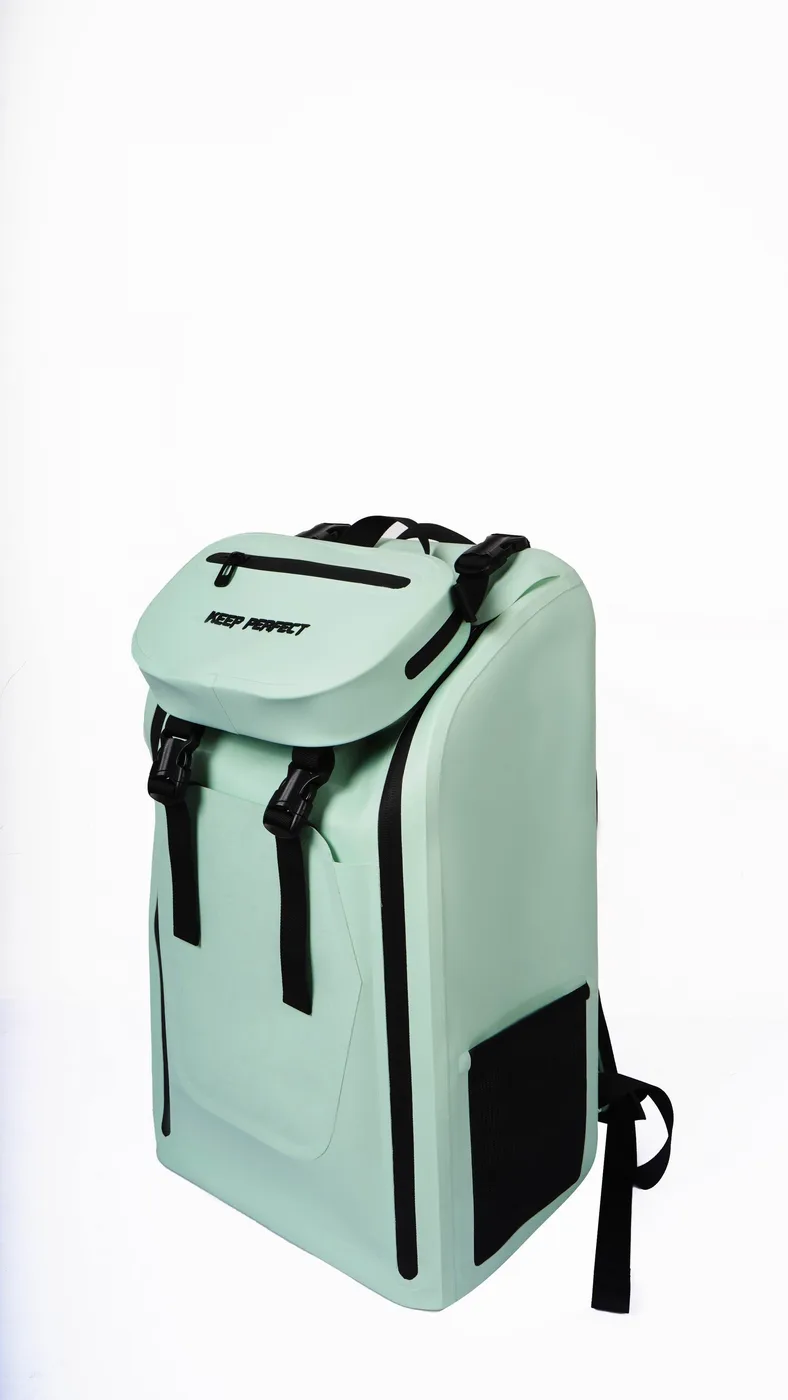
The float bag should be bright. A mint, pink or orange bag is visible from the surface and from the beach, and it is the difference between finding your kit after a drift snorkel and losing it. Dark bags are easier to live with aesthetically and are the wrong choice for anything that goes in the water with you.
What fits in 5L, 10L and 20L on a snorkel day
Volume tables only help when they list real objects packed as they are really packed. The figures below assume a tropical snorkel day: a damp towel rolled rather than folded, a rash vest, a mask and snorkel in a mesh bag, and a camera housing with a lanyard. Leave about 15% headroom, because a bag that is stuffed to the mouth cannot be rolled three times.
| Item | Packed volume | Weight | 5L | 10L | 20L |
|---|---|---|---|---|---|
| Phone, cards, room key | 0.4 L | 220 g | Yes | Yes | Yes |
| Rash vest, dry | 1.2 L | 180 g | Yes | Yes | Yes |
| Beach towel, rolled | 2.4 L | 700 g | Tight | Yes | Yes |
| Mask and snorkel | 3.0 L | 600 g | No | Yes | Yes |
| Compact camera housing | 2.2 L | 900 g | No | Tight | Yes |
| Dry shirt and shorts | 2.6 L | 480 g | No | Yes | Yes |
| Sunscreen and water | 1.4 L | 900 g | Tight | Yes | Yes |
| Full snorkel day list | 11.8 L | 4.0 kg | No | No | Yes |
Notice that the 5L bag is consumed by two soft items. It is a float bag, not a storage bag. The 10L is the workhorse for a shore session with a camera, and the 20L is right when two people share one bag or when fins travel as well. If you are buying your first two bags, take a 5L and a 10L rather than two 10s.
Buoyancy: keeping the bag with you in the water
A sealed roll-top with trapped air floats easily. A 5L bag with 3 litres of air inside provides about 3 kg of buoyant force, which comfortably supports a phone, a key and a small towel, and leaves enough freeboard to be visible above the surface. Press all the air out and the same bag floats low or sinks slowly, depending on what is inside.
Buoyancy has a cost. A floating bag tows heavily and pulls on whatever it is tethered to, and a bag with a lot of air is more likely to have its closure pushed open when it is squeezed against a hull. The practical answer is partial: fill the bag, close it, then squeeze out air until it sits with about a third of its volume above the water when it is in the water.
Our floating dry bags are built for this job, with welded lash tabs that take a short leash and colourways chosen for visibility at the surface. For a shore bag that never enters the water, buoyancy is a nuisance rather than a feature, and a plain roll-top packs flatter.
Closure technique for wet, salty hands
Snorkelling is unusual in that the closure is operated by someone whose hands are wet, salty and often sandy, standing in moving water. Three folds is the standard because it creates three contact lines that water has to cross laterally. Two folds hold a splash; three folds hold a swim; four folds shorten usable volume and put a hard crease in the film.
The technique that works: rinse the fold line with fresh water from a bottle first, press the air out with the bag on a knee rather than in the air, make the first fold flat and wide, then two more, and clip the buckle before letting go. Doing the first fold on a knee matters, because folding in mid-air lets the film twist, and a twisted fold is a capillary path.
Then check it. Squeeze the closed bag and listen for a hiss, and look at the fold: it should be a flat band, not a rolled tube. A rolled tube means the film was twisted or the bag was overfilled, and it will leak slowly for the whole session. The check takes four seconds and prevents the most common snorkel failure there is.
Reef, sand and sun: what wears a snorkel bag out
Reef contact is the specific hazard here. Coral is harder than any bag film and it is sharp; a bag dragged across a reef flat at low tide will be punctured, and no thickness on the market changes that. Carry the bag across reef flats rather than towing it, or tow it in deeper water where it floats clear.
Sand is the second agent and it is insidious, because it gets into the fold line and holds it open. Rinse the fold before every closure and shake the bag out at the end of the day, mouth-down, for a full minute. Sun is the third, and a bag left on bright sand at midday ages more in an hour than in a week of ordinary use.
Together they explain why a snorkel bag has a shorter life than the same bag used for kayaking. Expect six to nine years from a welded TPU bag rinsed every session and kept in shade, and two to three years from the same bag left salty on a beach. The maintenance detail is set out in our saltwater rinse guide and the lifespan numbers in our saltwater service life guide.
Valuables: keys, cards, phone and the shore problem
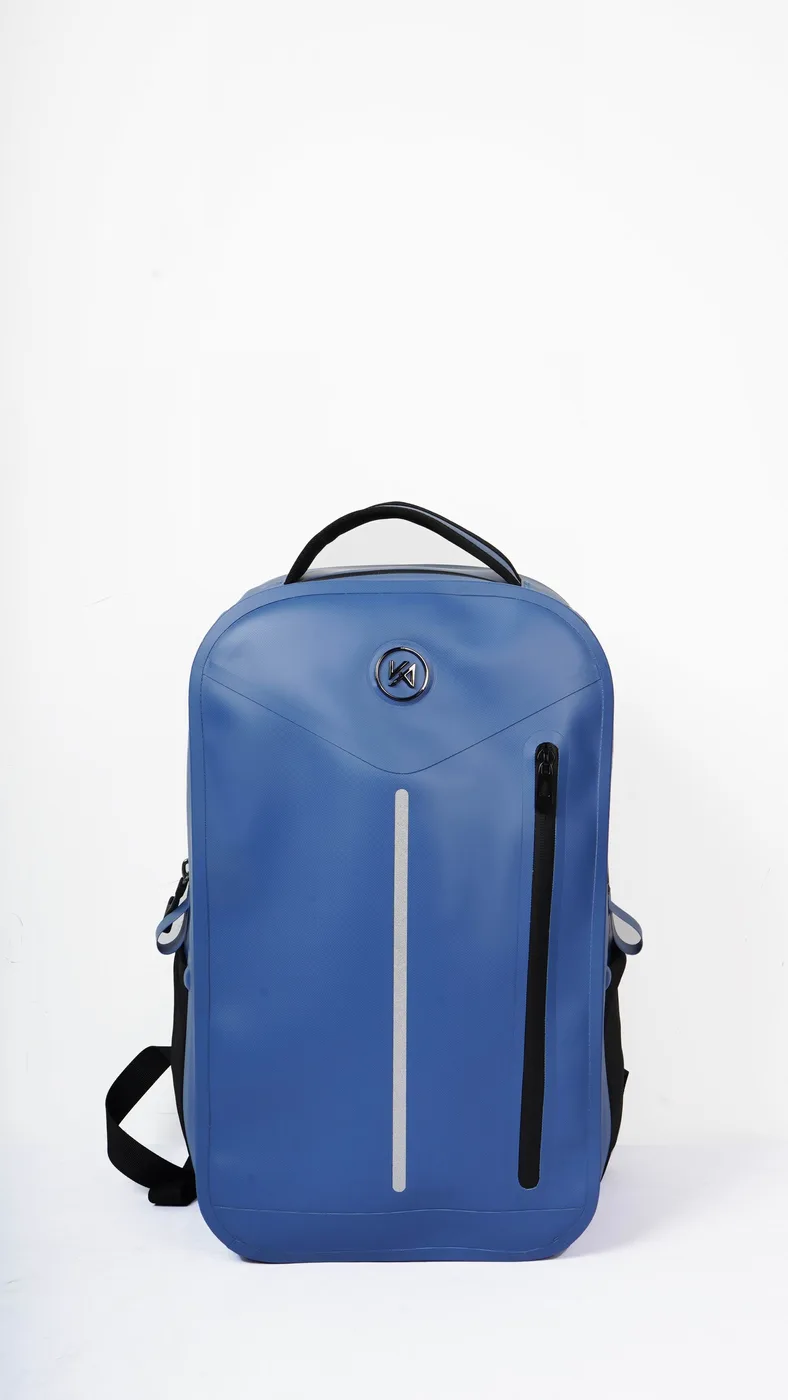
Leaving valuables on a beach is the risk most people underestimate, and the answer is not a bigger bag. Take the irreplaceable items into the water in a 2L pouch inside the 5L float bag, which gives two independent seals and a bag that floats if it is dropped. Leave the replaceable items in the shore bag, out of sight, under a towel.
A phone in a sealed bag still has two enemies. Heat: a black bag on sand at midday passes 55 °C inside, which is enough to trigger a thermal shutdown on most phones. Water pressure at depth: a bag rated IPX7 is tested at one metre for 30 minutes, and a snorkeller diving to 4 m is outside that envelope. Keep the phone at the surface, in a bright bag, in shade when you are out of the water.
For cash and cards, a small roll-top beats a zip pouch, because a roll-top has no slider to jam with salt and no teeth to abrade. Keep a card and a small amount of cash in a 2L bag inside the float bag, and the rest locked in the room or the boat, which is the only measure that actually works.
Camera and phone housing: volume and padding
Camera kit changes the sizing maths more than anything else. A compact camera in a housing with a lanyard and a spare battery packs to about 2.2 litres and 900 g, and it needs padding that a roll-top bag does not provide. Put the housing inside a padded sleeve, then the sleeve inside a 10L roll-top, and the bag will still close with three folds.
The padding matters because a dry bag protects against water, not against impact. A housing knocked against a rock inside a bag is a flooded housing, and a flooded housing is a ruined camera. A 12 mm closed-cell sleeve adds about 300 g and takes 0.6 litres of volume, which is a cheap price for the only protection that works.
| Kit | Volume with padding | Weight | Minimum bag | Notes |
|---|---|---|---|---|
| Phone in a pouch | 0.6 L | 250 g | 2 L | Two seals: pouch plus bag |
| Compact camera, housed | 2.8 L | 1.2 kg | 10 L | Sleeve inside the bag |
| Action camera and grip | 1.8 L | 600 g | 5 L | Fits with a towel |
| Mirrorless body and lens | 4.5 L | 1.8 kg | 20 L | Dedicated padded bag |
| Spare batteries and cards | 0.5 L | 180 g | Any | Keep in the float bag |
Film and face build for tropical snorkelling
Two builds dominate and the choice matters in the tropics. A 0.45 mm TPU laminate on a 420D face is light, folds soft, keeps its flexibility when warm, and welds cleanly, which suits a bag that is folded and squeezed several times a day. A PVC laminate is cheaper and welds well but carries plasticiser that migrates faster at 30 °C, so it stiffens and smells sooner in exactly the climates where snorkelling happens.
Film thickness matters less for puncture than people assume, and more for crease fatigue. Coral will puncture any film you can carry; what thickness buys is resistance to the repeated folding that a snorkel bag gets, three times a session, several sessions a week. A 0.45 mm film has roughly twice the flex life of a 0.3 mm film at the same fold radius.
Colour is a functional choice here too. Light colourways stay 10 to 15 °C cooler inside than black, which matters for both the contents and the film. Our roll-top range runs the same closure geometry from 2L to 90L, so a family or a club can standardise on one system and simply pick sizes.
Towing and tethering without scratching the reef
Tether the float bag with a short leash, 300 to 500 mm, clipped to a belt loop or a mask strap, never to an ankle. A short leash keeps the bag behind you and out of your fin stroke; a long one wraps limbs and catches on coral. Use a screw-gate carabiner, because a snap-gate clip can open when it is levered against a rock.
Towing drag is real. A 5L bag adds roughly 1.5 to 2 kg of drag at swimming speed, which is noticeable over an hour and tiring over three. If you are covering distance, leave the bag at a fixed point and swim a loop back to it, or take only the 2L pouch with the key and card and leave the towel on the beach.
Never drag a bag across coral to retrieve it. If it snags on the reef, swim to it, lift it clear and carry it to deeper water before towing again. The reef takes decades to grow and a bag takes a season to replace, and the arithmetic of that trade is not close.
The post-snorkel rinse and dry routine
- Shake the bag out mouth-down for a full minute to remove sand and water.
- Rinse the closure line first, working the buckle through its travel while wet.
- Sluice the exterior top-down, then the interior, with fresh water at ambient temperature.
- Dry in shade with the mouth open; never dry a salty bag on hot sand in full sun.
- Store rolled loosely with the buckle unclipped, in a cool dark place.
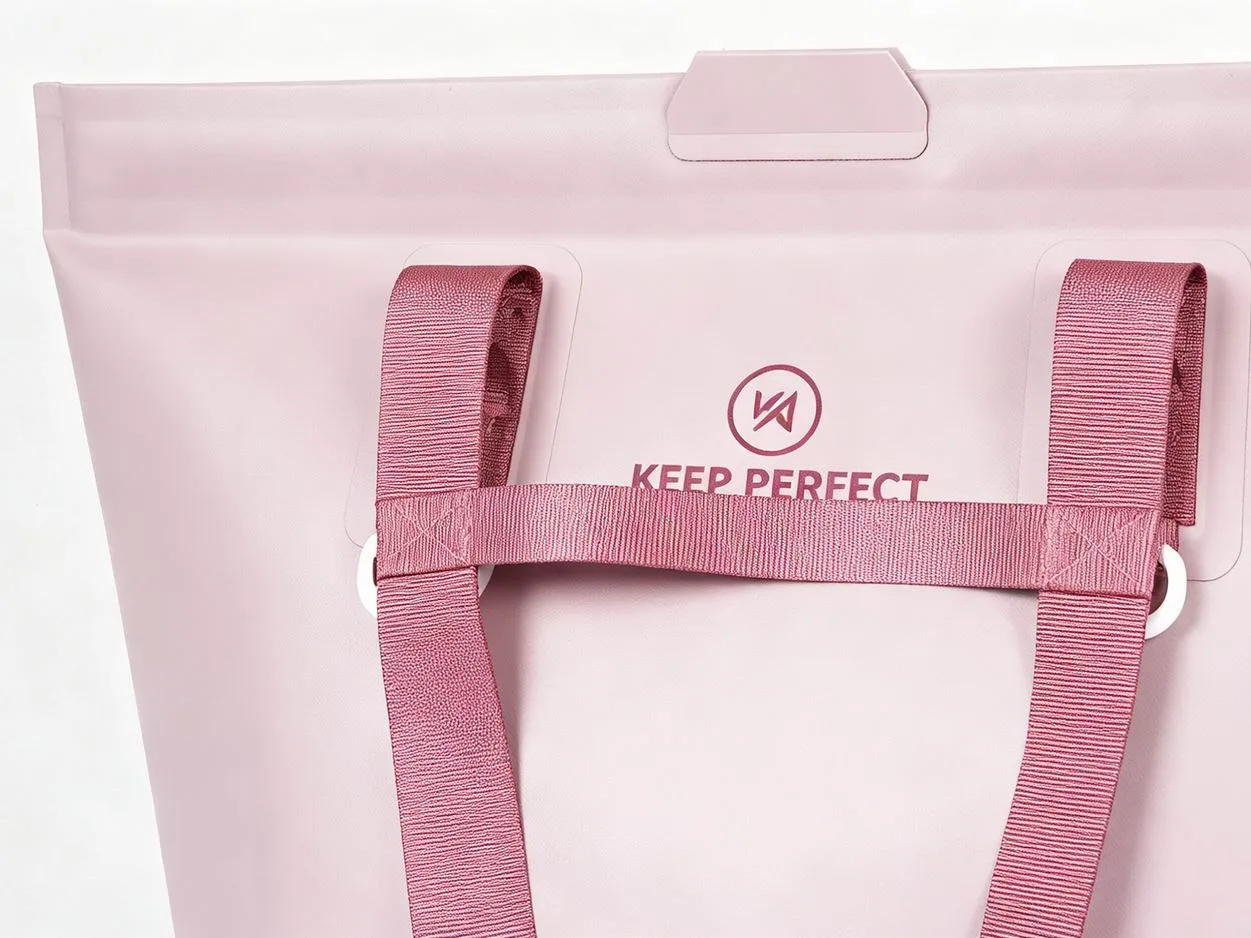
Salt left to crystallise at the fold is the single biggest killer of a snorkel bag, and it is entirely preventable. Ten minutes at the end of the day, in the order above, is worth years of service life. A pressure washer is not a shortcut: it drives water past the fold line and can split a seam that has never leaked.
On a liveaboard, drying is the hard part. In 80% humidity nothing dries overnight on deck, so the routine changes: rinse in fresh water, shake out, hang mouth-down in the most ventilated shaded spot available, and accept that the bag will be damp at dawn. Rotate two bags so each gets a dry day, and the week works.
Sizing checklist before a snorkel trip
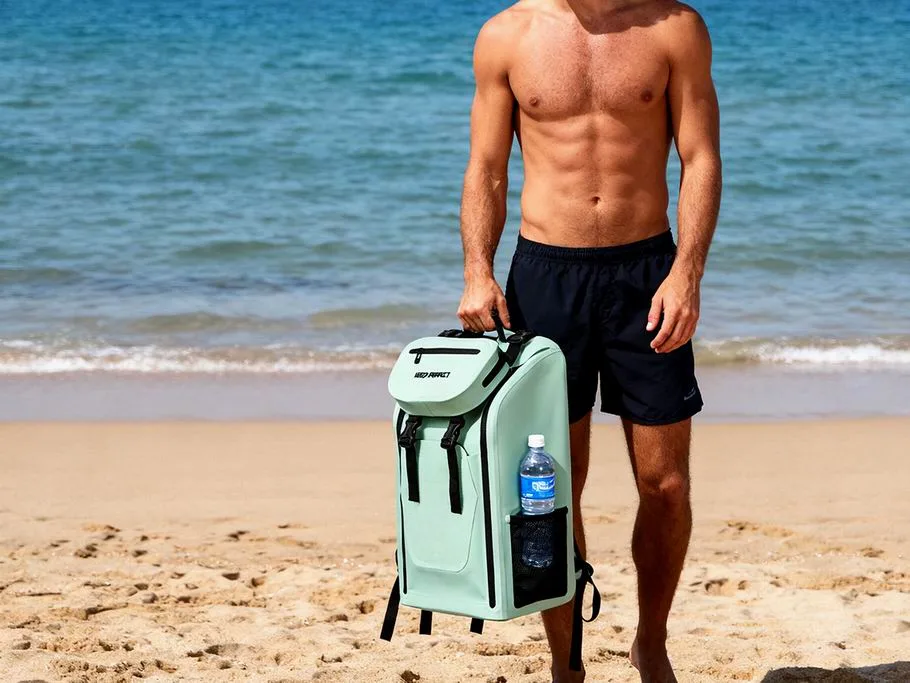
- Decide the trip type first: shore, boat or liveaboard, because each changes the volume by 5 litres.
- Buy two bags: a bright 5L float bag and a 10L or 20L shore bag.
- Check the rating: IPX7 with welded seams, and ask which standard the test used.
- Choose light colourways: 10 to 15 °C cooler inside than black.
- Pick 0.45 mm TPU over PVC for tropical use, because plasticiser loss accelerates in heat.
- Add a padded sleeve if a camera housing is going in; a dry bag does not absorb impact.
- Take a short leash and a screw-gate carabiner for towing, never a long cord.
- Rinse the fold line before every closure and squeeze-test the bag at the start of each season.
- Compare the format against our scuba sizing guide, plan the beach logistics with our beach day setup, and use the capacity guide when you are choosing across a whole size ladder.
Two further checks finish the plan before you travel. Reef and water conditions, including any advisory after heavy rain, are published by NOAA for US waters, and the swimming-health guidance from the CDC is worth reading before a trip involving children or open cuts. A dry bag solves the wet-kit problem; it does not solve a water-quality one.
If you are specifying bags for a dive centre, a resort or a rental fleet rather than a family, the same numbers become the brief: a 5L bright float bag, a 10L day bag, a 20L boat bag, welded TPU at 0.45 mm, acetal hardware with a published cycle rating, and a rinse station at the door. Our waterproof bag programme has run since 2014 in an SGS-verified 4,950 m2 facility with 137 staff and 7 production lines, with a 500-piece minimum and sampling in 6 to 10 working days; we document the full process from sampling to bulk, and the current builds are listed under our product line.
One last sizing rule that saves money: buy the size for the trip you take most often, not the trip you take once. A family that snorkels from the beach four times a year and takes one liveaboard week should buy for the beach and rent or borrow for the week. The 5L and 10L combination covers roughly 90% of snorkel days, and the same two bags handle swimming, paddleboarding and any other shallow-water day you care to name.
Frequently asked questions
Q1. What size dry bag do I need for snorkelling?
About 10 litres per person for a shore session: a 5L float bag for keys, cards and a phone, plus a 10L bag on the beach for clothing and a towel. A boat or liveaboard trip needs 15 to 20 litres.
Q2. Should my snorkel dry bag float?
Yes, if it goes in the water with you. A 5L bag with 3 litres of trapped air gives roughly 3 kg of buoyant force, which supports a phone, a key and a small towel and stays visible at the surface.
Q3. How many times should I roll a snorkel dry bag?
Three folds. Two hold a splash, three hold a swim, and four shorten usable volume and crease the film. Make the first fold flat on a knee so the film cannot twist.
Q4. Will a dry bag keep my phone dry while snorkelling?
Yes at the surface, in a bag rated IPX7 with a properly rolled closure. Put the phone in a 2L pouch inside the 5L float bag for two independent seals, and keep it out of the sun, where a black bag passes 55 °C.
Q5. Is IPX7 enough for snorkelling?
For surface swimming, yes: IPX7 covers immersion at one metre for 30 minutes. It does not cover freediving to 4 m, so keep valuables at the surface rather than diving with them.
Q6. How do I keep sand out of the closure?
Rinse the fold line with fresh water before every roll and run a thumb along it to check for grit. One grain in the fold is enough to wick water in over a session.
Q7. Can I tow a dry bag while snorkelling?
Yes, with a short 300 to 500 mm leash clipped to a belt loop or mask strap and a screw-gate carabiner. A long cord wraps limbs and catches on coral, and the bag adds 1.5 to 2 kg of drag.
Q8. Should I take my valuables into the water?
Take the irreplaceable ones, yes: room key, one card and a phone in a sealed pouch inside the float bag. Leave the replaceable items in a shore bag, out of sight and under a towel.
Q9. What is the best colour for a snorkel dry bag?
A bright one. Mint, orange or pink is visible from the surface and from the beach, and runs 10 to 15 °C cooler inside than black, which protects both the film and the contents.
Q10. Is TPU or PVC better for tropical snorkelling?
TPU. It keeps its flexibility at 30 °C and has no plasticiser to lose, giving six to nine years with a rinse after every session. PVC stiffens faster in heat and usually manages two to four years.
Q11. Can a dry bag protect a camera housing?
Against water, yes; against impact, no. Put the housing in a 12 mm padded sleeve and then in a 10L roll-top, which adds 0.6 litres and 300 g and is the only protection against a knock on rock.
Q12. How much does a full snorkel day kit weigh?
About 4 kg packed into 12 litres: towel, rash vest, mask and snorkel, dry clothing, sunscreen and water. Split across two bags, that is 1.4 kg towed and 2.6 kg left on the beach.
Q13. Do I need a dry bag on a snorkel boat trip?
Yes, and more than on shore. Anything not sealed is wet within an hour of the run out, so plan 15 to 20 litres per person and one shared bag lashed in the shade for group kit.
Q14. How do I stop a salty bag going stiff?
Rinse within a few hours of every session, dry in shade with the mouth open, and store rolled loosely with the buckle unclipped. Never dry a salty bag on hot sand in full sun.
Q15. Can I use a dry bag as a rinse bucket?
A bucket-format roll-top works well, because the welded shell holds water and the mouth stands open. Use it for fresh-water rinsing only, and keep it separate from the bag holding dry kit.
Q16. What is the smallest useful dry bag for snorkelling?
A 2L roll-top. It holds a phone, a room key and a card, gives a second seal inside the float bag, and is light enough that it adds almost no drag when towed.
People also ask
How do you pack a dry bag for snorkelling?
Split the kit by what happens if it is lost: keys, cards and phone in a bright 5L float bag that goes with you, and clothing, towel and documents in a 10L bag left in the shade. Roll three times after rinsing the fold.
Do you need a dry bag for snorkelling?
Yes for anything that must stay dry. A shore session leaves your kit unattended on a beach, and a boat trip wets anything unsealed within an hour, so a sealed bag is the only practical protection.
Can a dry bag float with you while snorkelling?
Yes. A 5L bag with about 3 litres of air gives roughly 3 kg of buoyant force, which is plenty for a phone and a key. Tether it with a short leash, never rely on it for personal flotation.
Are 5L dry bags useful for snorkelling?
A 5L bag is the ideal float bag: key, card, phone, sunscreen and a small towel. It is too small for fins or a camera housing, which need 10L and 20L respectively.
How do you keep a phone dry while snorkelling?
Put it in a 2L roll-top pouch, then inside a bright 5L float bag with the closure rolled three times. Keep it at the surface and in shade, because heat and depth are bigger risks than a leaking seal.
What should you not put in a dry bag for snorkelling?
Wet kit. A soaked towel or a dripping mask keeps the whole load damp, because a roll-top has no drain and no separate compartment. Carry a second bag, or a bucket-format bag, for wet items.
Need this in production volume?
QUANZHOU JUNYUAN BAGS has produced waterproof bags since 2014 in an SGS-verified 4,950 m2 facility in Fujian, China. Minimum order 500 pieces, sampling in 6–10 working days, bulk in 35–50 days, FOB Xiamen — write to service@junyuanbags.com with your spec and target market.