Home / Blog / Design & Branding
Retail-Ready Dry Bag Presentation
A dry bag is retail-ready when it reaches the sales floor already folded to a footprint under 300 x 200 mm, tagged with a barcode that scans first time, and readable as part of one colour family from three metres. Those three conditions decide whether a shopper touches the closure, and touching the closure is what sells a waterproof product: stores that let people open the roll-top convert roughly twice as well as stores that seal the bag inside a printed polybag. A 20L bag shipped folded flat with its hang tag already positioned costs about eight seconds of shelf labour; the same bag shipped loose costs eight to twelve minutes per carton.
This guide sets out the packed dimensions per capacity, the three presentation states a roll-top can ship in, hang tag and barcode geometry that survives handling, colour blocking for a five-SKU facing, carton pack-out maths, and the pre-shipment checks that stop a launch arriving with unscannable tags. Every figure here comes from shelf work: facing widths of 200 to 600 mm, peg loads of 0.25 to 1.9 kg, and the thirty seconds an average shopper spends in front of a waterproof bag display.
- What retail-ready means for a waterproof bag
- Packed dimensions and shelf footprint by capacity
- Three presentation states: stuffed, folded and rolled
- Hang tags, barcodes and the scan test
- Colour blocking and the three-metre read
- Hang sell or shelf tray: choosing the format
- Photography that matches the shelf unit
- Packaging that opens without a knife
- Carton pack-out and planogram maths
- Labelling, fibre content and compliance marks
- The sixty-second buyer meeting review
- Presentation mistakes that drive returns
- Pre-shipment checklist and programme timings
What retail-ready means for a waterproof bag
Retail-ready describes a unit that goes from the master carton to the sales floor with no repacking, no tagging and no ironing out of creases. For a soft, compressible product that is harder than it sounds, because the bag is also sold on a performance claim the shopper wants to verify with their own hands. A bag that arrives folded flat inside a shipper, roll-top mouth facing outward, hang tag already in place, is retail-ready. A bag that arrives loose with the tag rattling around the bottom of the carton is not, and the difference is paid for in staff time at the worst possible moment.
Three tests define readiness, and they are worth writing into a specification. At three metres the range must read as one colour family, so the facing looks like a deliberate collection rather than a rummage bin. At one metre the shopper must be able to roll and unroll the closure without unwrapping anything or asking for help. At thirty centimetres the barcode must scan on the first pass, at an angle, without anyone flattening the tag. Fail any one of the three and the range loses sales quietly, because nobody reports a bag that was simply hard to read.
Packed dimensions and shelf footprint by capacity
Planogram slots are allocated in millimetres, not litres, so the first retail-ready decision is the packed footprint of each size. Outdoor and marine retailers typically give a waterproof bag range 200 mm per facing for the small sizes and 400 to 600 mm for anything above 30L. If your 20L ships at 300 mm of facing width it will be given one facing; if it ships at 260 mm it can be doubled up in a 600 mm slot, which doubles the visual weight of the size that sells in the highest volume.
Footprint also drives the hook load. A folded 5L weighs around 250 g and can hang from a light peg, while a folded 60L approaches 1.9 kg and needs a shelf tray or a reinforced hook bar rated above 2.5 kg. Work these numbers out before the artwork is drawn, because a hang tag hole that is fine at 250 g will tear out at 1.4 kg within a season of shoppers lifting bags off the peg one-handed.
| Capacity | Packed state | Footprint (mm) | Facing width (mm) | Peg load (kg) |
|---|---|---|---|---|
| 5 L | Folded flat, tag on top | 170 x 120 | 200 | 0.25 |
| 10 L | Folded flat, tag on top | 210 x 150 | 250 | 0.45 |
| 20 L | Rolled loose, banded | 260 x 180 | 300 | 0.75 |
| 30 L | Shelf tray, folded once | 320 x 220 | 400 | 1.10 |
| 40 L | Shelf tray, folded once | 360 x 240 | 450 | 1.40 |
| 60 L | Shelf tray, loose | 420 x 300 | 600 | 1.90 |

Three presentation states: stuffed, folded and rolled
There are only three ways a soft bag can sit on a shelf. Stuffed means filled with tissue or a moulded insert so the bag holds its three-dimensional shape; it photographs beautifully and looks expensive, but it adds 15 to 40 g of material per unit, a stuffing operation at the packing bench, and a disposal problem for the retailer. Rolled means shipped in the closed position, which demonstrates the product but risks setting a crease into the film.
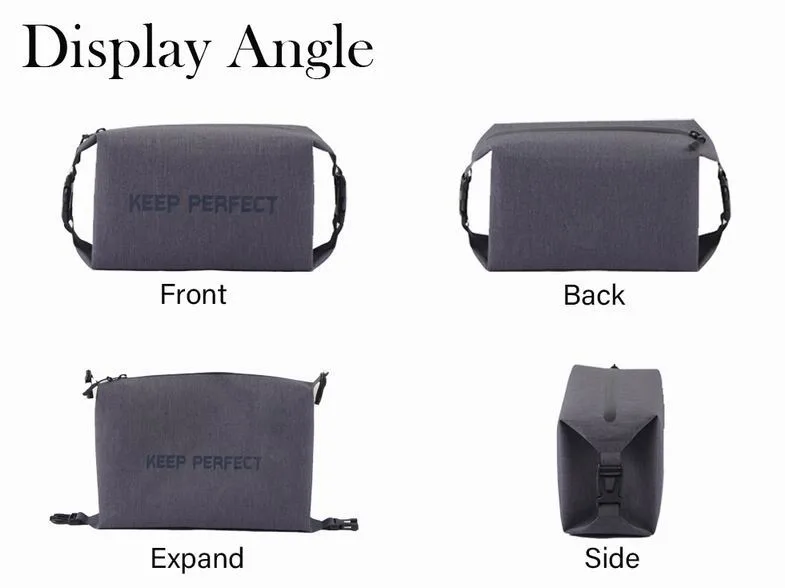
Folded flat is the default for a reason. It ships compactly, it shows the face fabric and the weld line at a glance, and it lets one shopper pick the bag up and test the closure in a single motion. The compromise most programmes land on is folded flat with one soft roll at the top, held by a paper band, so the mouth is visible without a hard crease being pressed into the film for the eight to fourteen weeks a unit may spend in transit and storage.
Hang tags, barcodes and the scan test
The hang tag is the most frequently underestimated part of a retail-ready programme. It has to carry a scannable symbol, a capacity badge readable from 1.5 m, care icons, material content, a compliance mark and the brand mark, all inside a shape that does not cover the closure. Two-sided tags of 90 x 55 mm are the practical maximum before the tag starts swinging into the neighbouring facing; below 70 x 45 mm there is no room for a compliant quiet zone.
Barcode quality is measured, not guessed. The symbol specification for retail scanning is maintained by the ISO, and print quality is graded against a defined symbol standard, which is why a tag printed on a coated card at 300 dpi scans reliably while the same artwork printed on uncoated kraft frequently does not. Ask for a scan grade report on the first production run rather than trusting a proof that was printed on different stock.
| Tag element | Position | Minimum size | Pass condition |
|---|---|---|---|
| EAN-13 barcode | Lower third, flat face | X-dimension 0.33 mm | Scans at 30 degrees, one pass |
| Quiet zone | Around the symbol | 2.5 mm each side | No print or fold inside the margin |
| Capacity badge | Upper third | 12 mm cap height | Readable from 1.5 m |
| Care and material icons | Reverse face | 8 mm each | Legible without magnification |
| Compliance mark | Reverse, near the fold | 6 mm | Present and not clipped by the hole |
Colour blocking and the three-metre read
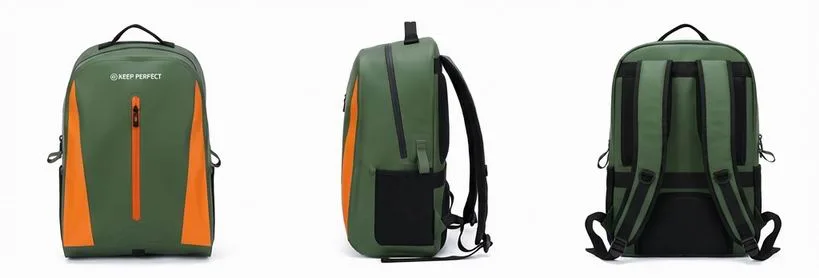
Colour is the only thing a shopper perceives at three metres, and a waterproof bag range that is fifty per cent black reads as a wall rather than a range. The usual allocation is a 40/25/15 split: an anchor colour that carries the core sizes, a volume colour that signals the outdoor category, and an accent that pulls the eye. Camo and olive do the outdoor work; mint, blue and pink do the gift and summer work; a limited orange and green drop adds urgency without disturbing the anchor.
Blocking order matters as much as allocation. Run the anchor at the left of the facing and repeat it at the right so the eye returns to the core range, with the accent in the middle of the run. On a five-SKU facing this means black, olive, mint, olive, black. Retailers re-block shelves by eye, so a range that only looks right when it is laid out in the order it shipped will not survive its second week on the floor.
| Role | Share of facing | Typical colourway | Job on the shelf |
|---|---|---|---|
| Anchor | 40% | Black | Signals the core range |
| Volume | 25% | Olive or camo | Signals the outdoor category |
| Accent | 15% | Mint or blue | Draws the eye from 3 m |
| Seasonal | 12% | Pink or rose | Gift and summer demand |
| Limited drop | 8% | Orange and green | Urgency and scarcity |
Hang sell or shelf tray: choosing the format
Bags up to 20L are usually hang-sold, and bags of 30L and above usually go into a shelf tray. The dividing line is not capacity but peg load and the shape of the packed unit: a folded 20L at 0.75 kg hangs cleanly from a standard euro slot, while a 40L at 1.4 kg swings, twists the hook and eventually tears the tag. If you want a large size on a hook, specify a reinforced header card with a welded euro slot rather than a punched hole.
Trays solve the large-size problem and introduce a new one: the bag has to be lifted out to be inspected, so the tray copy has to do the selling. A tray front with a single cut-away that exposes the closure lets a shopper squeeze the roll-top without unpacking the display, and that single design detail is worth more than any amount of printed copy. Detailed tag and label geometry is covered in our hang tag guide.

Photography that matches the shelf unit
Online and shelf imagery diverge more often than brands realise, and the mismatch is expensive. If the product page shows a stuffed bag standing upright and the shopper receives a folded flat unit, the first review mentions it. Shoot the bag exactly as it ships, then shoot a second set with the bag stuffed for the lifestyle frames, and make the hero image the shipping state. Consistency beats aspiration for a product people buy to solve a wet-gear problem.
Six frames is the working minimum for a waterproof range: hero at 45 degrees with the closure visible, detail of the weld line, detail of the buckle and D-ring, a scale frame with a 1-litre bottle or a phone inside the mouth, a closure demonstration sequence, and one in-context frame on water. The scale frame does the heavy lifting, because capacity is the single most common source of returns in this category and a familiar object in shot resolves it. Our photography setup guide covers the lighting geometry.
Packaging that opens without a knife
Shelf-ready packaging earns its cost when the shipper becomes the tray: the lid tears off along a perforation, the base stays on the shelf, and no one handles the bag twice. That design saves the eight to twelve minutes per carton mentioned at the top of this guide, and it also removes the knife that cuts film, which is how a surprising number of brand-new bags arrive at a returns desk with a slit in the side panel.
Single-material packaging is now a requirement rather than a preference in several markets. A kraft shipper with a paper tape tear strip and a paper band around the bag avoids mixed-material waste entirely, and it can be printed with the same artwork as the hang tag so the range reads consistently from pallet to shelf. See our plastic-free packaging notes for the material options that still survive a humid container.
Carton pack-out and planogram maths
Pack-out is where presentation meets freight. Inner packs of six work well for 5L and 10L because a store can drop one inner pack straight into a facing; inner packs of two are right for 40L and 60L, where the carton would otherwise exceed the 15 kg manual handling limit most retailers impose. Master cartons should be sized so that one carton fills a whole number of facings, otherwise the last four units of every carton become back-of-store clutter that never reaches the shelf.
Transit performance matters as much as the numbers on paper. Distribution testing of shipping units is standardised by ASTM, and a carton that passes a drop and vibration sequence arrives with flat folds and intact tags, while an untested carton arrives with corner crush that telegraphs through the folded bag. Test the packed unit, not the empty carton: a soft bag changes how load is carried in a way a rigid product does not.
| Capacity | Inner pack | Master carton (mm) | Units per carton | Facings filled |
|---|---|---|---|---|
| 5 L | 6 | 420 x 320 x 260 | 72 | 12 |
| 10 L | 6 | 480 x 360 x 300 | 60 | 10 |
| 20 L | 4 | 560 x 420 x 340 | 40 | 8 |
| 30 L | 4 | 600 x 460 x 380 | 32 | 6 |
| 40 L | 2 | 640 x 480 x 420 | 24 | 5 |
| 60 L | 2 | 700 x 520 x 460 | 16 | 4 |
Labelling, fibre content and compliance marks
A dry bag sold in the EU and the US has to declare fibre content by percentage, country of origin, and the care instructions that go with the material. Because most waterproof bags are a laminate, the declaration is usually given as the face fabric and the film separately, for example 100 per cent polyester face with a thermoplastic polyurethane laminate. Getting this wrong is the most common cause of a range being pulled at the border rather than at the shelf.
Chemical compliance marks sit on the same label, and they differ by market. REACH documentation covers substances of very high concern for the European market and California Prop 65 warnings apply in the US; both are checked at the buyer meeting, not at the port of entry. Our Prop 65 notes and the REACH compliance guide set out what has to appear, and where, before artwork is locked.
The sixty-second buyer meeting review
A retail buyer decides on a waterproof range in about a minute, and the decision is made on three things in order: does the facing look like a range, can I open the closure one-handed, and does the tag answer capacity and material without me turning it over. Everything else, including price, comes after those three. A sample pack that is folded flat, colour-blocked and tagged will beat a technically superior bag arriving loose in a polybag in almost every review.
Bring the pack-out numbers to that meeting as well. A buyer allocating 1.2 m of shelf wants to know that one master carton of 20L bags fills eight facings and turns in eight weeks at the expected rate, because shelf space is allocated per metre per week. Presenting the range with its full product line specification and a pack-out table in the same document shortens the review by weeks.
Presentation mistakes that drive returns
Most returns in this category are not quality failures, they are expectation failures caused by presentation. A bag photographed stuffed looks 30 per cent larger than the folded unit on the shelf; a capacity badge that reads 20 L on a bag that measures 16 L of usable volume; a care label that says wipe clean when the shopper expects to rinse it in salt water. Each one produces a return that costs more than the margin on the unit.
- Hero image showing a stuffed bag while the shelf unit ships folded flat.
- Capacity badge quoting the unrolled volume rather than the usable rolled volume.
- Barcode printed on the same face as the brand mark, so the quiet zone is compromised.
- Hang tag hole punched rather than reinforced, tearing out at peg loads above 1 kg.
- Care icons that omit rinsing, which is the single most important instruction for a saltwater bag.
- Colour names on the tag that do not match the colour on the shelf, breaking reorder accuracy.
Fixing these costs almost nothing at the artwork stage and a great deal afterwards. A one-line change to the capacity badge, from nominal to usable volume, is the cheapest return-rate reduction available to a waterproof bag programme, and it is the change that buyers notice first because it is the one they get asked about by their own floor staff.
Pre-shipment checklist and programme timings
- Confirm the packed footprint of every size against the allocated facing width.
- Scan ten tags from the first production run at 30 degrees and record the grade.
- Block the colour run in shelf order and photograph it at three metres before sign-off.
- Weigh each folded size and confirm the peg load against the hook rating.
- Check that one master carton fills a whole number of facings for every capacity.
- Verify fibre content, origin, care icons and market-specific compliance marks on the finished tag.
Once the presentation specification is fixed, it becomes a line item in the production brief alongside film thickness, weld geometry and hardware finish. Our own lines have built waterproof bags since 2014 in an SGS-verified 4,950 m2 facility running seven production lines and 149 machines, with a monthly output of 200,000 pieces, a 500-piece minimum per colourway, sampling in 6 to 10 working days and bulk in 35 to 50 days from FOB Xiamen at AQL 2.5 inspection. The presentation requirements above are easiest to hit when they are written into that brief rather than added to it.
Two checks deserve a place on every purchase order because they catch the failures that only show up on the shelf. The first is a scan test on ten tags pulled at random from the packed cartons, not from the printer. The second is a three-metre photograph of the blocked range taken under the retailer’s own shelf lighting, which is usually 4000 K and flatter than a studio. Both take under an hour and both prevent the kind of launch that quietly underperforms for a full season.
Presentation work is also where the range holds together as a programme. When every capacity shares a tag position, a closure geometry and a colour logic, a retailer can reorder a single size without the facing falling apart, and a shopper who bought a 10L two years ago recognises the 20L immediately. That recognition is worth more than any individual design flourish; it is also why the roll-top dry bag range is specified as a family rather than as a list of sizes, and why our colour matching guide treats the range, not the unit, as the object being designed.
Frequently asked questions
Q1. What does retail-ready mean for a dry bag?
It means the bag arrives folded, tagged and ready to shelf with no repacking: footprint under 300 x 200 mm for a 20L, barcode scanning first time, and closure reachable without unwrapping. A loose bag in a polybag costs 8-12 minutes of staff time per carton to fix.
Q2. What packed footprint should a 20L dry bag ship at?
Around 260 x 180 mm folded or loosely rolled and banded, which fits a 300 mm facing. Shipping it at 300 mm or wider forces a single facing and halves the visual weight of the size that usually sells in the highest volume.
Q3. Why do hang tag barcodes fail to scan?
Most failures come from a compromised quiet zone, printing on uncoated stock, or a tag that curves over the bag. Keep 2.5 mm of clear margin around the symbol, print on coated card at 300 dpi, and place the symbol on a flat face.
Q4. Should a dry bag ship stuffed, folded or rolled?
Folded flat is the default because it ships compactly and lets a shopper test the closure in one motion. Stuffed looks best in photography but adds waste; tightly rolled risks a crease that survives 48 hours after unpacking.
Q5. How much weight can a peg hook take for a dry bag?
Standard hooks handle 1.5 to 2.5 kg. A folded 20L at 0.75 kg is safe on a hook; a 40L at 1.4 kg should go into a shelf tray or use a reinforced header card with a welded euro slot rather than a punched hole.
Q6. How many facings does one master carton fill?
Pack out to whole facings: 72 units of 5L fills twelve 200 mm facings, 40 units of 20L fills eight 300 mm facings, and 16 units of 60L fills four 600 mm facings. Partial cartons become back-of-store clutter.
Q7. What size should a dry bag hang tag be?
Two-sided 90 x 55 mm is the practical maximum before the tag swings into the neighbouring facing; below 70 x 45 mm there is no room for a compliant quiet zone. Capacity badges want a 12 mm cap height to read at 1.5 m.
Q8. Do dry bags need a barcode on the bag or on the tag?
On the tag, in the lower third on a flat face, with the brand mark and capacity badge above it. Printing the symbol on the same face as the brand mark usually breaks the quiet zone and is the most common scan failure.
Q9. How should a five-SKU dry bag range be colour blocked?
Allocate roughly 40 per cent anchor, 25 per cent volume, 15 per cent accent, 12 per cent seasonal and 8 per cent limited drop. Lay it out anchor-volume-accent-volume-anchor so the eye returns to the core range from either end.
Q10. What causes the most dry bag returns in retail?
Expectation gaps set by presentation: a hero image showing a stuffed bag while the shelf unit ships flat, and a capacity badge quoting unrolled rather than usable volume. Both are fixed at the artwork stage for almost no cost.
Q11. Should large dry bags be hang-sold or tray-packed?
Trays for 30L and above. A folded 40L weighs about 1.4 kg, swings on a hook and tears the tag. Give the tray a cut-away that exposes the closure so a shopper can squeeze the roll-top without unpacking the display.
Q12. What compliance marks does a dry bag label need?
Fibre content by percentage, country of origin, care icons, and market-specific marks: REACH documentation for the EU and Prop 65 warnings for California. Laminates are usually declared as the face fabric and the film separately.
Q13. How do you test that retail packaging survives transit?
Test the packed unit, not the empty carton, against the drop and vibration sequences published by ASTM. A soft bag carries load differently to a rigid product, and corner crush telegraphs straight through a folded bag.
Q14. How many product images does a dry bag listing need?
Six: hero at 45 degrees with the closure visible, weld detail, buckle and D-ring detail, a scale frame with a familiar object, a closure demonstration, and one in-context shot on water. The scale frame cuts capacity-related returns most.
Q15. Can a dry bag range ship in plastic-free packaging?
Yes. A kraft shipper with a paper tape tear strip and a paper band around the bag avoids mixed-material waste and can carry the same artwork as the hang tag. It still needs to survive a humid container without softening.
Q16. What is the minimum order for a retail dry bag programme?
Most production partners set a 500-piece minimum per colourway, with sampling in 6 to 10 working days and bulk in 35 to 50 days. Write the presentation requirements into the brief at sampling stage rather than adding them later.
People also ask
How do you make a dry bag retail-ready?
Fold it flat to a footprint that matches the allocated facing, put a scannable barcode on a two-sided tag, expose the closure so a shopper can test it one-handed, and pack the carton so it fills whole facings. Then scan ten tags from the first run.
What size hang tag do you need for a dry bag?
Two-sided 90 x 55 mm is the practical maximum. That leaves room for an EAN-13 symbol with a 2.5 mm quiet zone, a 12 mm capacity badge, care icons and a compliance mark without the tag swinging into the next facing.
Why does shelf presentation matter for waterproof bags?
Waterproofing is bought on trust, and trust comes from touching the closure. A bag sealed inside a polybag converts about half as well as one a shopper can open, so the presentation decision is a conversion decision.
How many units fit in a dry bag master carton?
It depends on capacity: 72 units of 5L, 60 of 10L, 40 of 20L, 32 of 30L, 24 of 40L and 16 of 60L. Cartons are sized so one carton fills a whole number of facings and stays under a 15 kg handling limit.
Should dry bag photography show the bag stuffed?
Not in the hero frame. Shoot the hero as the bag ships, usually folded flat, and keep the stuffed frames for lifestyle shots. A stuffed hero makes the bag look about 30 per cent larger than the unit on the shelf.
What is shelf-ready packaging for soft bags?
A shipper whose lid tears off along a perforation so the base becomes the display tray. It removes a repacking step and removes the knife that slits film, which is how brand-new bags reach a returns desk already damaged.
Need this in production volume?
QUANZHOU JUNYUAN BAGS has produced waterproof bags since 2014 in an SGS-verified 4,950 m2 facility in Fujian, China. Minimum order 500 pieces, sampling in 6–10 working days, bulk in 35–50 days, FOB Xiamen — write to service@junyuanbags.com with your spec and target market.