Home / Blog / Travel & Packing
Tropical Rainy-Season Travel
Rainy-season travel in the tropics is not a heavy-rain problem, it is a humidity problem. A monsoon downpour delivers 20 to 50 mm of rain in an hour, but the thing that ruins a bag is the 85 to 95% relative humidity that sits at 28 to 32 °C for weeks afterwards, because a damp cotton shirt sealed inside a welded dry bag will show mould in 48 hours. The working system is two layers: a welded outer rated IPX6 that takes the downpour, and roll-top inner bags rated IPX7 for electronics, documents and anything you cannot dry the same day.
This guide covers the whole trip. It gives the exposure table that maps tropical rain onto a waterproof rating, the volumes and weights for a seven to fourteen day itinerary, the silica load that actually keeps a sealed bag dry, realistic drying times when nothing dries overnight, and the routine that stops mildew taking hold in week two. Every figure is a planning number you can check at home before you fly.
- Why tropical rain is different from temperate rain
- Mapping tropical exposure onto a waterproof rating
- The two-layer system: outer shell and inner roll-top
- Choosing the outer: backpack, duffel or tote
- Volumes for a seven to fourteen day wet-season trip
- Electronics, documents and the condensation trap
- Fabric and seams at 30 °C and 90% humidity
- Drying things when nothing dries overnight
- Mould, mildew and keeping a sealed bag healthy
- Rain cover, dry bag or pack liner: which layer does what
- Airports, security and check-in in the wet season
- A daily routine that keeps everything dry
- Wet-season packing checklist
Why tropical rain is different from temperate rain
Temperate rain is an event: it falls, you shelter, it stops, things dry. Tropical rainy-season rain is a state of the atmosphere. A typical afternoon cell in Southeast Asia or the Caribbean drops 20 to 50 mm in an hour and is followed by four hours of saturated air at 30 °C, which means evaporation is slow and condensation is constant. A bag that got wet at 09:00 is still wet at 18:00, and a bag stored wet overnight starts to smell.
The second difference is the intensity of the water hitting you. Monsoon rain falls in large drops at high terminal velocity and is frequently driven sideways by 40 km/h gusts, which is closer to a pressure washer than to drizzle. That is why a shower-resistant pack with a taped zip and a DWR finish passes in Manchester and fails in Kuala Lumpur: the finish wets out, and then the water is simply pushed through the stitch line.
The third difference is what happens to the things inside. At 30 °C and 90% relative humidity, mould spores germinate on a damp organic surface within 24 to 48 hours. Leather, cotton, paper documents and camera straps are all organic. A dry bag is the correct tool for keeping rain out, but it is also a sealed humid chamber, so it has to be managed rather than just closed.
Mapping tropical exposure onto a waterproof rating
Ingress protection grades are defined in IEC 60529, and the useful part of the standard is the test method rather than the marketing adjective. IPX4 is splashing from any direction, IPX5 and IPX6 are jet tests at increasing pressure, and IPX7 is 30 minutes of immersion at one metre. A monsoon street crossing is a jet event with a short immersion risk if you step into a flooded kerb, so the outer should be IPX6 and the electronics bag IPX7.
Two practical notes follow from that. First, IPX7 is an immersion test on a static bag, not on a bag being carried and flexed, so treat it as insurance rather than a licence to go swimming with your passport. Second, a rating without a named standard is not a rating at all. If a listing says waterproof and cannot tell you which grade or which test, assume IPX4 and pack accordingly. The NOAA climate records are also worth checking before you book, because a wet-season itinerary shifted by three weeks can halve your rainfall exposure.
| Exposure | What hits the bag | Rating needed | Seam requirement | Typical failure |
|---|---|---|---|---|
| Walking in steady rain | Continuous contact, 10 mm/h | IPX4 | Coated or welded | Finish wets out |
| Monsoon cell, 40 mm/h | Large drops, wind driven | IPX6 | Welded | Water pushed through stitching |
| Tuk-tuk or open boat | Directed spray at speed | IPX6 | Welded, 0.5 mm film | Strap attachment leaks |
| Wading a flooded street | Immersion to 30 cm, 2 min | IPX7 | Welded, continuous | Closure rolled over grit |
| Full submersion in a capsize | 1 m for 30 min | IPX7 | Welded, 0.5 mm film | Under-filled or over-rolled |
The two-layer system: outer shell and inner roll-top
One bag cannot do both jobs. The outer has to be carried, opened repeatedly, put down on wet ground and exposed to jet-level rain, which means welded seams, a harness you can wear for three hours in 30 °C heat and a fabric that does not stick to your back. The inner bags have to be sealed and left alone, which is exactly what a roll-top does well and a zip does not.
Split the load by drying time, not by category. Everything that can be dried in a day goes in the outer: clothes you wore, a wet rain shell, a swimsuit in a separate small bag. Everything that cannot be dried quickly goes in a roll-top with silica: passport, spare cards, a laptop or tablet, spare medication, and one complete change of clothes that stays dry as insurance. If your bag falls in a river, the insurance layer is what makes the incident funny rather than expensive.
The insurance layer deserves a specific size. For a two-week trip, one 10L roll-top holding a dry outfit, a copy of the passport page and a power bank is worth more than any other single item you pack. Keep it at the bottom of the outer bag where it is not opened daily, and open it only when you need it.
Choosing the outer: backpack, duffel or tote
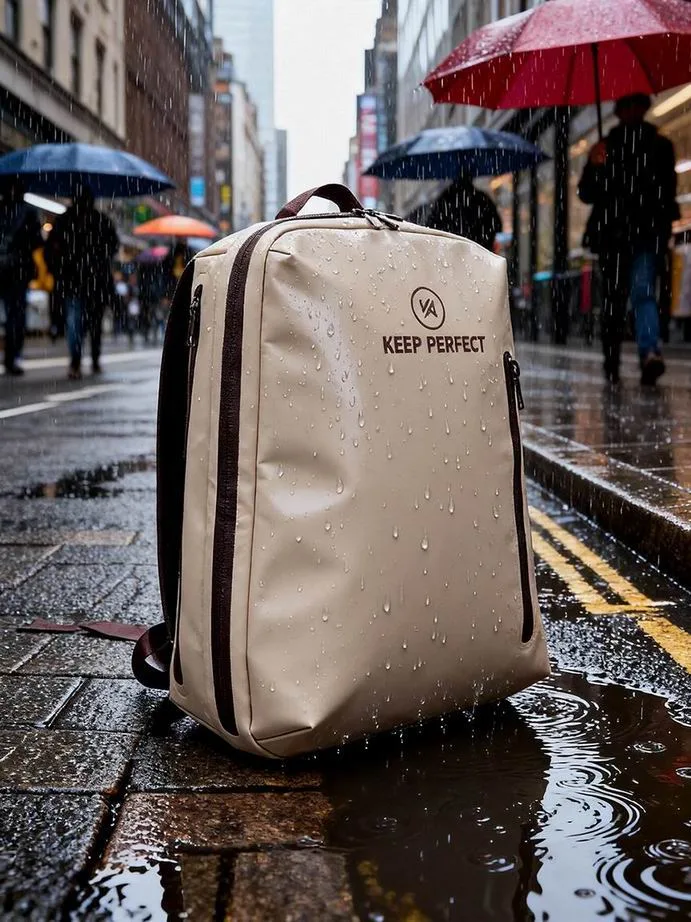
Format is decided by how you move. If your itinerary involves 6 km of walking a day on wet pavements, a waterproof backpack with a welded harness is the only comfortable option, and it should have a ventilated back panel because a solid welded panel against a shirt at 30 °C is miserable within twenty minutes. If you are moving by taxi and boat between resorts, a dry duffel with detachable straps is easier to load and easier to clean.
A waterproof tote is the underrated third option for city-based trips. It holds a laptop in a padded sleeve, fits under an airline seat, and can be wiped down rather than dried. It is the right choice when your day is airport, hotel, meeting, restaurant, because it reads as a work bag rather than a trekking pack, and it does not advertise that you are carrying a laptop and a camera.
| Format | Best itinerary | Comfortable load | Wet-weather strength | Weak point |
|---|---|---|---|---|
| Waterproof backpack | 6 km or more on foot daily | 7 kg | Hands free, balanced | Back panel sweat at 30 °C |
| Dry duffel | Taxi and boat hops | 12 kg | Wide mouth, easy to clean | One shoulder only when full |
| Roll-top dry bag | Boat decks and rafts | 9 kg | Fastest closure | No organisation inside |
| Waterproof tote | City and business trips | 4 kg | Laptop sleeve, wipes clean | Hand carry only |
| Dry backpack plus liner | Mixed trek and city | 10 kg | Redundant if the shell leaks | Two systems to manage |
Volumes for a seven to fourteen day wet-season trip
Wet-season packing runs larger than dry-season packing for one reason: you carry a wet layer and a dry layer. A wet rain shell is 1.8 litres and 600 g when saturated, and it cannot go in with anything else. Budget 15% extra volume over your normal list and accept that the bag will be heavier at the end of a day than at the start.
Weight matters more than volume in the tropics because you carry it in heat. A 12 kg pack on a 30 °C afternoon is a different proposition from the same pack at 12 °C, and the limiting factor is usually your back rather than the airline allowance. Keep the main bag under 10 kg and put the rest in a small second bag you can leave at the hotel.
| Trip length | Main bag | Roll-top inner set | Packed weight | Silica load |
|---|---|---|---|---|
| Weekend city break | 25 L | 1 x 5 L | 5.5-6.5 kg | 20 g |
| 7 days, one base | 35 L | 1 x 10 L + 1 x 5 L | 7.5-9.0 kg | 40 g |
| 10 days, moving every 2 days | 40 L | 1 x 10 L + 2 x 5 L | 9.0-10.5 kg | 60 g |
| 14 days, islands and boats | 50 L | 1 x 20 L + 2 x 5 L | 10.5-12.5 kg | 80 g |
| 14 days with camera kit | 60 L | 1 x 20 L + 1 x 10 L + 1 x 5 L | 13.0-15.0 kg | 100 g |
Electronics, documents and the condensation trap
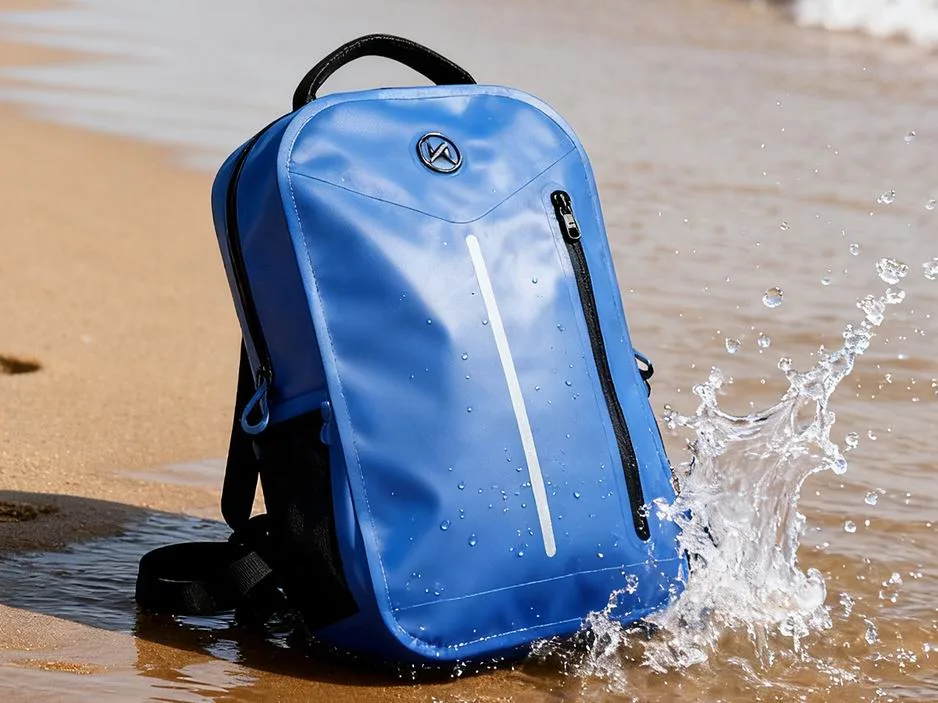
The failure mode for electronics in the tropics is not rain ingress, it is condensation. A phone or camera moved from a 22 °C air-conditioned room into 30 °C air at 90% humidity will condense water on and inside a cold lens within minutes, and if you then seal it in a dry bag, that water has nowhere to go. Let devices acclimatise for 15 to 20 minutes outside the bag before sealing them, and put a 10 g silica sachet in with each one.
Paper has the opposite problem: it absorbs ambient moisture steadily and does not need a temperature shock to suffer. Passports become wavy, boarding passes go limp and vaccination cards smudge. Keep documents in a rigid sleeve inside a 2L or 5L roll-top with silica, and check the sachet every four days; indicating silica turns from orange to dark green when saturated and can be regenerated in a microwave or a dry pan in about five minutes.
Silica quantity is easy to get wrong because the usual recommendation is a mass, not a volume. Working rule: 10 g of silica for every 10 litres of sealed space, doubled if you open the bag every day in humid air. A 10L bag opened twice a day on a beach needs 20 g, and a 20L bag holding a camera kit needs 40 g split across two sachets so one can be regenerated while the other works.
Fabric and seams at 30 °C and 90% humidity
Heat changes material behaviour in ways that matter for a welded bag. PVC softens noticeably above 35 °C and can crease permanently if it is stored folded in a hot room, while TPU holds its shape far better and has no plasticiser to sweat out onto the contents. That is the practical reason to choose TPU for a tropical trip: the bag lives in a hot, humid environment for weeks, not hours.
Welded seams are the other half of the decision. A radio-frequency weld fuses the two films into one continuous piece, so there is no thread channel for water to travel along, and the joint does not degrade when the bag is left wet. A stitched seam with seam tape relies on an adhesive that is being asked to hold at 30 °C and 90% humidity for weeks; that is precisely the condition under which tape starts to lift at the ends. Our TPU waterproof backpack line is built entirely on welded construction for this reason.
Colour has a thermal effect too. A black bag in direct tropical sun reaches 60 °C on its surface, which is enough to soften contents and to make the first touch unpleasant. A lighter colourway sits 10 to 15 °C cooler in the same sun, which is a small but real comfort gain on a long transfer.
Drying things when nothing dries overnight
Plan for the possibility that nothing dries. In a monsoon climate with 90% humidity and no air conditioning, a cotton shirt hung in a bathroom will still be damp after 12 hours, and a pair of trainers will still be damp after 36. The variables you can control are airflow, temperature and surface area, in that order. A 20 W clip fan aimed at a hung shirt does more in two hours than twelve hours of still air.
Air conditioning is the strongest drying tool you have. A room at 22 °C and 50% humidity pulls moisture out of fabric far faster than outdoor air at 30 °C and 90%, even though the outdoor air feels warmer. Hang things in the airflow path of the unit, not on the balcony, and close the bathroom door so the moisture does not spread through the room. Never use a hairdryer on a welded bag: hot air at 60 °C and above can deform a TPU film at the fold.
| Item | Still air at 90% RH | With a fan | In air conditioning | Notes |
|---|---|---|---|---|
| Cotton t-shirt | 12-18 h | 4-6 h | 2-3 h | Wring in a towel first |
| Technical shirt | 4-6 h | 1.5-2 h | 45-60 min | Synthetic dries fastest |
| Trainers | 36-48 h | 14-18 h | 8-10 h | Stuff with paper, change twice |
| Rain shell | 1-2 h | 30-45 min | 20 min | Hang inside out |
| Dry bag interior | 6-8 h | 2-3 h | 1-1.5 h | Mouth open, upside down |
Mould, mildew and keeping a sealed bag healthy
Mould on a bag is a fabric and health problem rolled into one. It appears as black or green spotting along the fold line and inside corners, and once the spores have rooted into a textile face, no amount of wiping removes the stain. The prevention is boring and effective: never seal anything damp, dry the bag with the mouth open at the end of each day, and keep a sachet of silica inside it when it is closed.
If mildew does appear, treat it early and treat it outside. A diluted white vinegar solution at one part vinegar to three parts water, applied for ten minutes and rinsed, clears surface growth on TPU without attacking the film. Avoid chlorine bleach on a waterproof shell: it oxidises the surface, weakens the weld line over time and leaves a residue that can irritate skin. The CDC publishes guidance on damp indoor environments and mould exposure that is worth reading before you clean anything in a small hotel room.
Floodwater is a separate risk from rain and deserves a firmer rule. Standing water in a tropical street carries whatever the drainage system carries, so if your bag has been submerged in it, wash the outside with soap and clean water before you open it, and assume anything porous inside is contaminated. That is the scenario in which a welded bag earns its cost: you can hose the outside without soaking the contents.
Rain cover, dry bag or pack liner: which layer does what
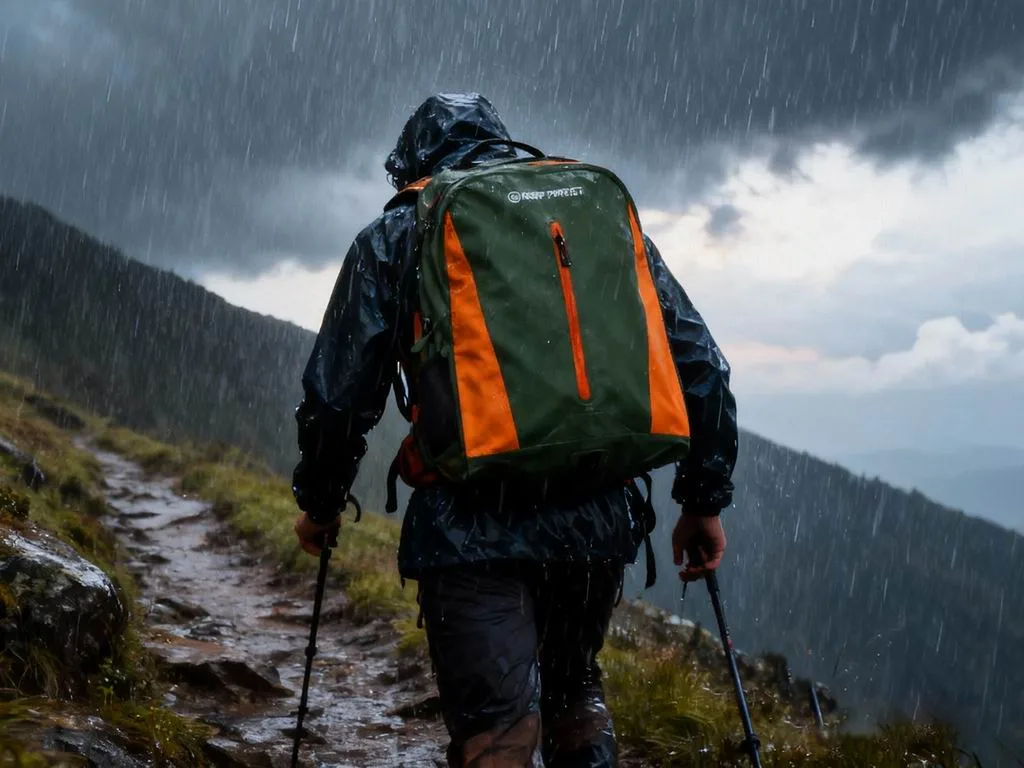
A rain cover is a cheap, light shield that works well for vertical rain and badly for driven rain, because water runs down your back and into the gap between the cover and the pack. It also does nothing if you set the bag down in a puddle. Treat a cover as a first layer on a pack you already own, not as a waterproofing strategy for a wet-season trip.
A pack liner is the cheapest real protection and the most underrated. A 40L welded liner inside a normal rucksack keeps the contents dry through a monsoon cell for about a sixth of the price of a waterproof pack, at the cost of slow access. A dedicated dry bag outer is the third route and the best one when the bag itself is going to get submerged or lashed to a boat. Choose by access frequency: liner for once-a-day, dry bag for never, waterproof pack for constantly.
Whatever you choose, redundancy is cheap. A liner inside a waterproof pack costs 300 g and turns a catastrophic leak into a minor inconvenience. On a two-week trip with a laptop and a passport, 300 g is a good trade.
Airports, security and check-in in the wet season
Airports are the driest part of a wet-season trip and the place where waterproof bags cause the most confusion. A fully welded bag with no external pockets looks unusual on a scanner, and a roll-top with a stiffened mouth can trigger a manual check. Keep electronics in the inner roll-top rather than loose in the shell so they can be lifted out in one movement, and leave the outer bag unclipped so screeners can open it quickly.
Two further practicalities. First, a wet bag checked in will be weighed wet: a soaked 40L pack can carry an extra 800 g of water, so shake it out and wipe it down before the counter. Second, if you are connecting through a cold airport into a tropical one, let the sealed inner bag come up to temperature before you open it, or you will condense a film of water onto everything inside. Full detail on screening is in our airport security guide.
A daily routine that keeps everything dry
- Morning: open every roll-top, check the silica indicator, and reseal what you are not using.
- Before leaving: put the day layer in the outer shell, keep the insurance roll-top at the bottom, unopened.
- On the road: set the bag down on its base, never on its side, and never in standing water.
- Midday: if the shell is soaked, wipe it before opening it, so run-off cannot drip into the mouth.
- Afternoon: let electronics acclimatise for 15 to 20 minutes before sealing them in a dry bag.
- Evening: empty everything, hang the shell mouth-down, dry interiors with a fan or air conditioning.
- Weekly: regenerate the silica sachets, inspect the fold line, and re-test one bag with an air squeeze.
The two steps that matter most are the evening dry and the weekly re-test. A bag that is dried every night will not grow mould even in a monsoon, and a 30-second air test catches a closure that has started to weep before it ruins a camera. Both take under five minutes and both are more effective than any waterproofing spray you can buy at the destination.
One item deserves a permanent place in the routine: a small microfibre towel kept in the outer pocket. Wiping the mouth of a dry bag before you roll it removes the grit and salt that cause most seal failures, and wiping your hands first makes every subsequent closure faster.
Wet-season packing checklist
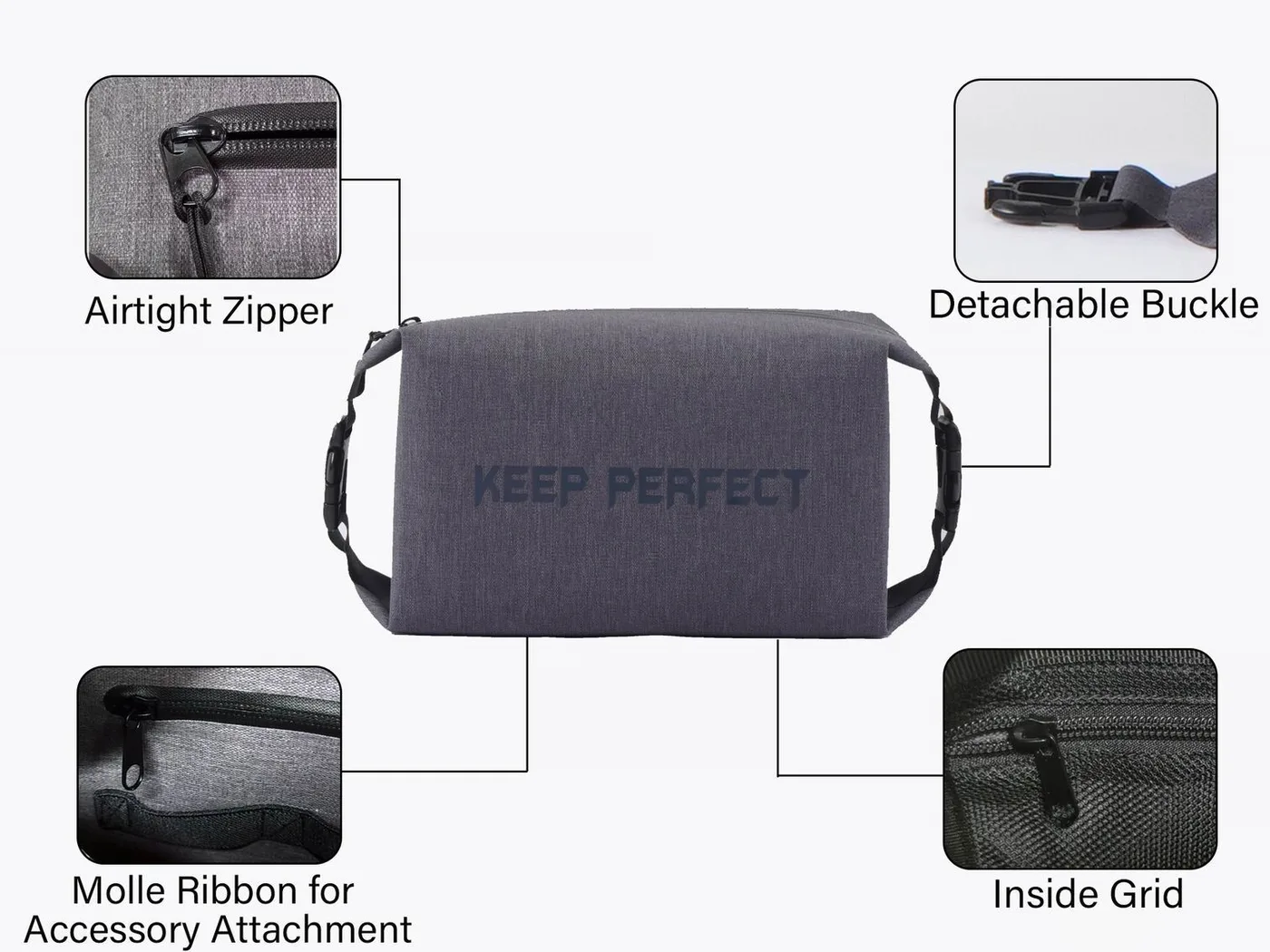
- One welded outer rated IPX6 with a ventilated harness or wipe-clean shell.
- One 10L roll-top rated IPX7 holding a dry outfit, passport copy and power bank.
- One 5L roll-top for electronics, with 10 g of silica per 10 litres of sealed space.
- One 2L or 5L roll-top reserved for wet items, kept separate from everything dry.
- Indicating silica sachets, at least two per bag so one can be regenerated while the other works.
- A 20 W clip fan or a plan to use the air-conditioning airflow every evening.
- A microfibre towel for wiping bag mouths and hands before closing.
- A diluted vinegar solution in a small bottle for early mildew treatment.
Print that list and check it against what you own before you buy anything new. Most travellers already have a waterproof outer and simply need the inner roll-tops and the silica, which is the cheapest possible upgrade to a wet-season kit. Where a bag has to be replaced, buy the welded seam rather than the printed rating; the seam is what fails.
Our own range has been produced since 2014 in an SGS-verified 4,950 m2 facility in Fujian, with sampling in 6 to 10 working days and bulk in 35 to 50 days for anyone specifying a fleet of bags for a lodge, a dive operation or a tour company. Individual travellers can start from the full product line, and the production programme explains how the welded construction is made.
Two last checks before you close the bag. Documents deserve their own small roll-top with silica and a rigid sleeve; the reasoning is set out in our document protection guide. And the wet-items bag is not optional: swimwear and a wet rain shell belong in a separate 5L roll-top, never with dry clothing, and our wet kit storage notes cover why a sealed bag makes that separation essential.
Frequently asked questions
Q1. What waterproof rating do I need for tropical rainy season?
IPX6 for the outer bag and IPX7 for the inner roll-tops holding electronics and documents. A monsoon cell at 40 mm/h driven by 40 km/h gusts is a jet test, and wading a flooded kerb is a short immersion.
Q2. Why does everything go mouldy in the tropics?
At 30 °C and 90% relative humidity, mould spores germinate on a damp organic surface within 24 to 48 hours. A sealed dry bag holds that moisture in, so dry the bag nightly and add indicating silica sachets.
Q3. How much silica gel do I need in a dry bag?
Ten grams for every 10 litres of sealed space, doubled if you open the bag daily in humid air. A 10L bag opened twice a day on a beach needs 20 g, split across two sachets so one can be regenerated.
Q4. Is a rain cover enough for a monsoon downpour?
No. A cover sheds vertical rain but lets driven water run down your back between the cover and the pack, and it does nothing when you set the bag in a puddle. Use a welded liner or a welded outer instead.
Q5. Should I choose TPU or PVC for a tropical trip?
TPU. PVC softens above 35 °C and can crease permanently if stored folded in a hot room, while TPU holds shape, has no plasticiser to sweat onto contents, and welds into a continuous seam that survives being left wet.
Q6. How long does it take to dry clothes at 90% humidity?
A cotton t-shirt needs 12 to 18 hours in still air, 4 to 6 hours with a fan, and 2 to 3 hours in air conditioning at 22 °C and 50% humidity. Trainers take 36 to 48 hours in still air.
Q7. Can I use a hairdryer to dry the inside of a dry bag?
No. Hot air above 60 °C can deform a TPU film at the fold line. Use a clip fan at ambient temperature, or hang the bag mouth open in the airflow path of an air-conditioning unit.
Q8. Will my phone survive being sealed in a dry bag in the tropics?
Yes if you let it acclimatise first. Moving a cold phone from a 22 °C room into 30 °C air at 90% humidity condenses water on and inside it, so wait 15 to 20 minutes before sealing, and add a 10 g sachet.
Q9. What size dry bag should I take for two weeks?
A 50L main bag with a 20L and two 5L roll-tops for islands and boats, or 40L with a 10L and two 5L if you move every two days. Budget 15% extra volume over a dry-season list for the wet layer.
Q10. How do I clean mildew off a waterproof bag?
Diluted white vinegar at one part vinegar to three parts water, applied for ten minutes and rinsed, clears surface growth on TPU. Avoid chlorine bleach, which oxidises the surface and weakens the weld line.
Q11. Are dry bags allowed through airport security?
Yes, but a fully welded bag with no external pockets can trigger a manual check. Keep electronics in the inner roll-top so they lift out in one movement and leave the outer bag unclipped for screening.
Q12. Is a waterproof backpack or a dry duffel better for islands?
A dry duffel for boat hops, because the wide mouth loads fast and the shell wipes clean. A waterproof backpack wins when you walk more than 6 km a day, and a ventilated back panel matters at 30 °C.
Q13. Should I worry about floodwater on my bag?
Yes. Standing tropical street water carries drainage contamination, so wash the outside with soap and clean water before opening the bag, and treat anything porous inside as contaminated.
Q14. Does bag colour matter in the tropics?
A black bag in direct tropical sun reaches about 60 °C on its surface, while a lighter colourway sits 10 to 15 °C cooler. That is a real comfort gain and it protects heat-sensitive contents.
Q15. Do I need a separate bag for wet kit?
Yes. A wet rain shell is 1.8 litres and 600 g saturated and will wick through everything else. Keep a dedicated 2L to 5L roll-top for swimwear and wet layers, separate from dry clothing.
Q16. How often should I re-test my dry bags on a trip?
Weekly. Close the bag, squeeze it and listen for a hiss, then submerge it for 30 seconds if you have a bath or a calm pool. A 30-second check catches a closure that has started to weep.
People also ask
How do you keep things dry in the tropics?
Use two layers: a welded outer rated IPX6 for the downpour and roll-top inner bags rated IPX7 for electronics and documents. Dry everything each evening in air conditioning or a fan, and add 10 g of silica per 10 litres of sealed space.
Why does gear go mouldy in humid countries?
Because at 30 °C and 90% relative humidity spores germinate within 24 to 48 hours, and a sealed dry bag traps that moisture. Never seal anything damp, dry the bag with the mouth open nightly, and keep indicating silica inside.
What does IPX7 mean for travel?
It means the bag survived 30 minutes of immersion at one metre under IEC 60529. Treat it as insurance rather than a licence to swim with your passport, because the test is static and does not cover a bag being carried and flexed.
Is a rain cover enough in a monsoon?
No. Covers shed vertical rain but let wind-driven water run between cover and pack, and they fail in standing water. A welded pack liner at a sixth of the price of a waterproof pack gives real protection if you only need once-a-day access.
How do you dry clothes when the humidity is 90%?
Use air conditioning rather than outdoor air: a room at 22 °C and 50% humidity dries a technical shirt in 45 to 60 minutes versus 4 to 6 hours outdoors. Add airflow with a 20 W clip fan and wring items in a towel first.
Should electronics go in a dry bag in the tropics?
Yes, but let them acclimatise for 15 to 20 minutes after leaving air conditioning, or condensation will form inside a cold lens or body. Seal them with a 10 g silica sachet and reopen the bag only when needed.
Need this in production volume?
QUANZHOU JUNYUAN BAGS has produced waterproof bags since 2014 in an SGS-verified 4,950 m2 facility in Fujian, China. Minimum order 500 pieces, sampling in 6–10 working days, bulk in 35–50 days, FOB Xiamen — write to service@junyuanbags.com with your spec and target market.