Home / Blog / Travel & Packing
Cabin Bag Size and Weight Tips
Most full-service airlines accept a 55 x 40 x 20 cm cabin bag at 7 kg, but low-cost carriers often allow only a 40 x 20 x 25 cm personal item or a 55 x 40 x 20 cm bag at 10 kg for a fee, so plan for the strictest limit on your route. A dry bag helps because soft walls compress by 2 to 4 cm once air is pressed out, and a 20L roll-top packed to about 85% usually stays under 3 kg. The practical rule: keep the empty bag below 900 g, target 6.5 kg packed rather than the full 7 kg, and verify the personal-item dimension before boarding rather than at the gate.
Weight is only half the problem. Liquids over 100 ml stay in the hold, security may require electronics out, and an overstuffed bag can exceed the sizer after you buy water airside. This guide covers real allowance bands, the volumetric maths behind soft-shell compression, packing order for a two-day carry-on-only trip, and a weighing routine at the airport. It also explains where waterproof roll-top bags help and where a rigid trolley case still wins, with tables you can use to plan before the taxi arrives.
- Know which allowance band applies to your ticket
- Read the volume maths behind a soft cabin bag
- Weigh everything before you leave home
- Choose a bag shape that fits the sizer
- Pack in layers so security does not undo your work
- Liquids, electronics and the rules that change at the lane
- Two-day and five-day packing plans that stay under 7 kg
- When a dry bag beats a trolley case
- Weighing and adjusting at the airport
- Protecting documents and small valuables in the cabin
- Multi-leg and mixed-carrier itineraries
- Care and repacking during the trip
- A pre-flight checklist that prevents the usual fees
Know which allowance band applies to your ticket
Allowance is set by the operating carrier, not by the airport. One ticket can include a 7 kg limit on the first leg and a 10 kg limit on the second, and the stricter figure governs what you pack for the whole journey. Budget airlines frequently sell a small personal item free and charge for anything larger, while regional aircraft often enforce a valet bag rule because overhead bins cannot take a standard trolley. Check the dimension, the weight and whether wheels are counted in the depth measurement.
Gate enforcement has become routine because cabin space is sold. Staff measure the bag in a metal sizer, and wheels, handles and external pockets all count. A soft bag that compresses passes where a hard shell of identical nominal size does not. This is the single strongest argument for a soft-sided waterproof bag on routes with tight allowances: you can lose a few centimetres by expelling air, which no rigid case can offer.
| Allowance band | Typical dimension | Weight limit | Where it appears | Packing consequence |
|---|---|---|---|---|
| Small personal item | 40 x 20 x 25 cm | Not always stated | Basic economy and low-cost fares | One outfit, electronics, documents |
| Standard cabin bag | 55 x 40 x 20 cm | 7-10 kg | Short-haul European and Asian routes | Two days of clothing if packed tightly |
| Generous cabin allowance | 56 x 45 x 25 cm | 10-12 kg | Long-haul and full-service carriers | Three to four days with layering |
| Valet or gate-check rule | Under-seat size only | 5-8 kg | Small regional aircraft | Trolley collected at the aircraft door |
| Cabin plus priority | 55 x 40 x 23 cm | 12-18 kg | Paid boarding upgrades | Space for a jacket and bulky shoes |
Read the volume maths behind a soft cabin bag
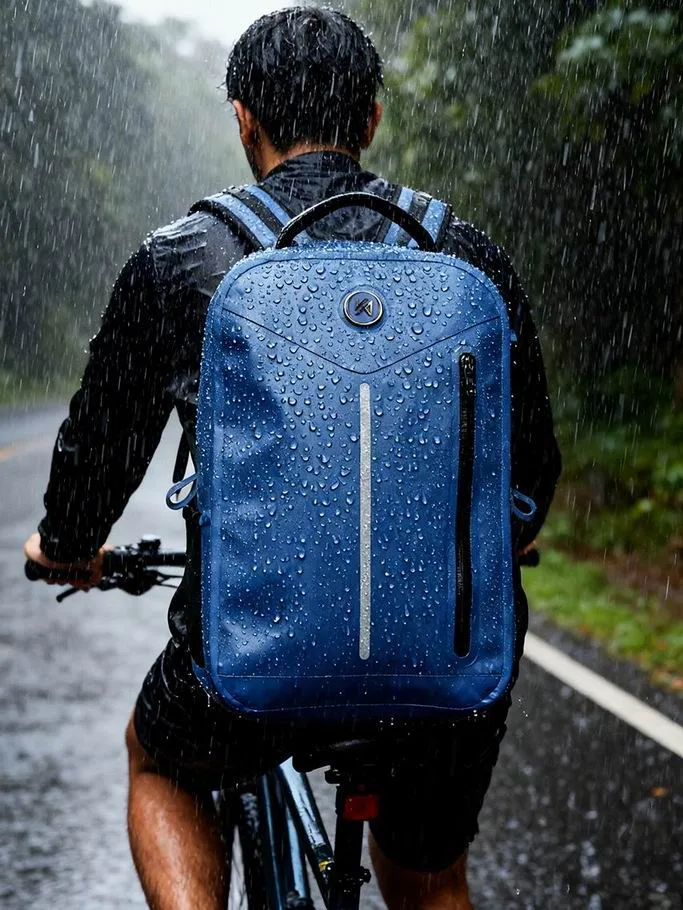
Cabin allowances are linear, yet packing is volumetric. A 55 x 40 x 20 cm envelope is 44 litres of external space, but a soft bag uses roughly 70% to 80% of that envelope because corners remain empty and fabric curves. A 30L dry bag is therefore a comfortable cabin size: it fills less than the sizer, weighs under 1.1 kg empty, and leaves room for a flattened jacket. Nominally larger bags often fail because they cannot be compressed evenly.
Compression works, but only if the load is soft. A sleeping bag, fleece and T-shirts compress; a camera body, wash kit and hard-shell headphones do not. Place compressible items against the panel that touches the sizer wall and keep rigid items in the centre. With a roll-top, press the air out before the first fold and use a purge valve if fitted. Expect to lose 12% to 20% of nominal volume to the closure itself.
Weigh everything before you leave home
Home scales drift, especially on carpet, so weigh on a hard floor and confirm with a luggage scale rated to 40 kg. Build a two-line budget: 850 to 1,100 g for the empty bag, then add clothing, wash kit, electronics and documents. Most travellers underestimate electronics by 400 to 700 g because chargers, power banks and cables are counted loosely. A 13-inch laptop in a sleeve plus charger is typically 1.6 to 2.0 kg before any clothing is added.
Leave a 500 g margin. Airport scales are rarely calibrated identically, and duty-free purchases or a coat removed for security quickly change the reading. If the limit is 7 kg, pack to 6.5 kg. Should the bag be overweight at the gate, move the densest items into a jacket pocket rather than the lightest; a power bank and a hard drive weigh far more per litre than a fleece, and pockets are often tolerated more than a bulging bag profile.
| Item | Typical weight | Packed volume | Cabin friendly | Note |
|---|---|---|---|---|
| 13-inch laptop and sleeve | 1.6-2.0 kg | 2.5 L | Yes | May need separate screening |
| Charger, cable, power bank | 450-750 g | 0.9 L | Yes | Power bank stays in the cabin |
| Two days of clothing | 1.1-1.6 kg | 6-9 L | Yes | Roll, do not fold flat |
| Wash kit under 100 ml | 350-600 g | 1.2 L | Yes | One clear resealable bag |
| Trail shoes, packed tight | 700-1.0 kg | 5 L | Yes | Stuff with socks to save space |
| Full 1L water bottle | 1.05 kg | 1.2 L | After security | Buy airside instead of carrying |
Choose a bag shape that fits the sizer
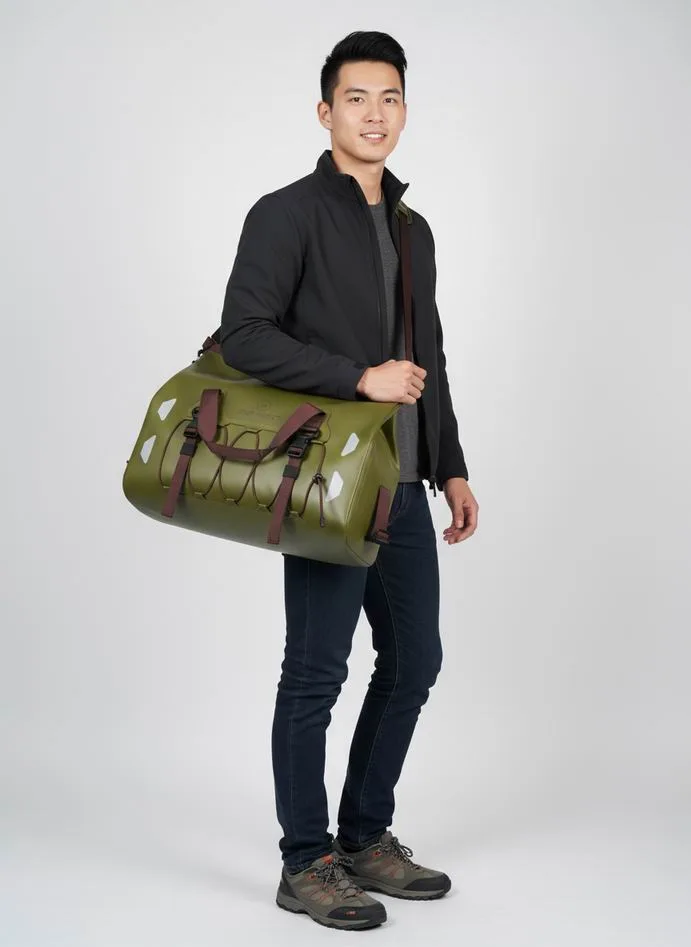
Shape matters as much as litres. A tall, narrow bag slides into a 20 cm depth slot easily, while a wide duffel may bulge sideways even when the nominal volume is identical. For a 55 x 40 x 20 cm limit, a bag around 50 x 32 x 18 cm when packed gives comfortable clearance. A dry duffel with a rectangular base packs clothing efficiently but needs both dimensions checked; a backpack shape distributes weight better for long terminal walks.
Straps and handles are part of the measured object. Detachable shoulder straps should be removed before the sizer, external water bottles should be clipped inside, and loose compression cords should be tucked away. With roll-top bags, the rolled mouth adds 4 to 6 cm of height unless three tight folds are used. Practise the closure at home: a bag 3 cm too tall at the gate is the most avoidable fee in air travel.
Pack in layers so security does not undo your work
Assume you will open the bag at the checkpoint. Put the laptop sleeve against the back panel with nothing on top of it, keep liquids in one clear resealable bag near the top opening, and place cables in a single organiser pouch. Electronics-in-bag screening is spreading, but many lanes still ask for laptops out, and repacking a tightly rolled bag on a bench costs minutes and composure. Our laptop protection guide covers sleeve sizing in more detail.
Sequence the rest of the load by access frequency. Documents and medicine in an outer or top pocket, clothing in the middle, and bulky footwear at the bottom against the base. With a top-loading roll-top this means packing in reverse: shoes first, clothing next, essentials last. If you use a liner pouch, colour-code it so the wash kit is identifiable without unpacking everything onto a public bench.
Liquids, electronics and the rules that change at the lane
Cabin liquid rules are far more consistent than baggage allowances: containers are normally limited to 100 ml and grouped in a single resealable bag, with larger volumes moved to checked luggage. Buy drinks after security rather than carrying them through. Duty-free liquids in sealed tamper-evident bags are handled differently, but only if the seal and receipt remain intact, so keep them accessible rather than buried under clothing.
Electronics deserve the same planning. Lithium batteries and power banks belong in the cabin, not the hold, and loose batteries should be protected against short circuits. Guidance on batteries and dangerous goods published by the US EPA and the transport authorities of your departure country should be checked before flying with anything unusual. For screening mechanics and what can stay inside a bag, our airport security guide explains the common lane variations.
Two-day and five-day packing plans that stay under 7 kg
For two days, one 20L to 25L cabin bag is enough if clothing is rolled and repeated. Pack two tops, one pair of trousers, underwear for two days, a compact wash kit under 100 ml, one pair of shoes worn rather than carried, and a thin jacket. Rolled clothing occupies about 25% less space than flat folding and creases less in a soft bag. This load lands near 4.5 to 5.5 kg including a laptop.
Five days requires discipline rather than a bigger bag. Plan three tops, two bottoms, one mid-layer, five sets of underwear and socks, and a sink-laundry routine with a small soap sheet. Add a compact rain shell instead of a heavy coat, because waterproof outerwear doubles as a pillow on a delayed night. The full approach is set out in our carry-on-only travel guide, which shows how a 30L soft bag covers a week with one laundry stop.
| Trip length | Bag volume | Target packed weight | Clothing plan | Laundry needed |
|---|---|---|---|---|
| Overnight | 15-20 L | 3.5-4.5 kg | One change, wash kit | No |
| Two days | 20-25 L | 4.5-5.8 kg | Two tops, one bottom | No |
| Four days | 30-35 L | 6.0-6.8 kg | Three tops, two bottoms | Optional sink wash |
| One week | 35-40 L | 6.5-7.0 kg | Four tops, two bottoms, mid-layer | Yes, one full wash |
| Two weeks | 40 L plus personal item | 7.0 kg plus 3 kg | Repeated capsule wardrobe | Yes, two washes |
When a dry bag beats a trolley case
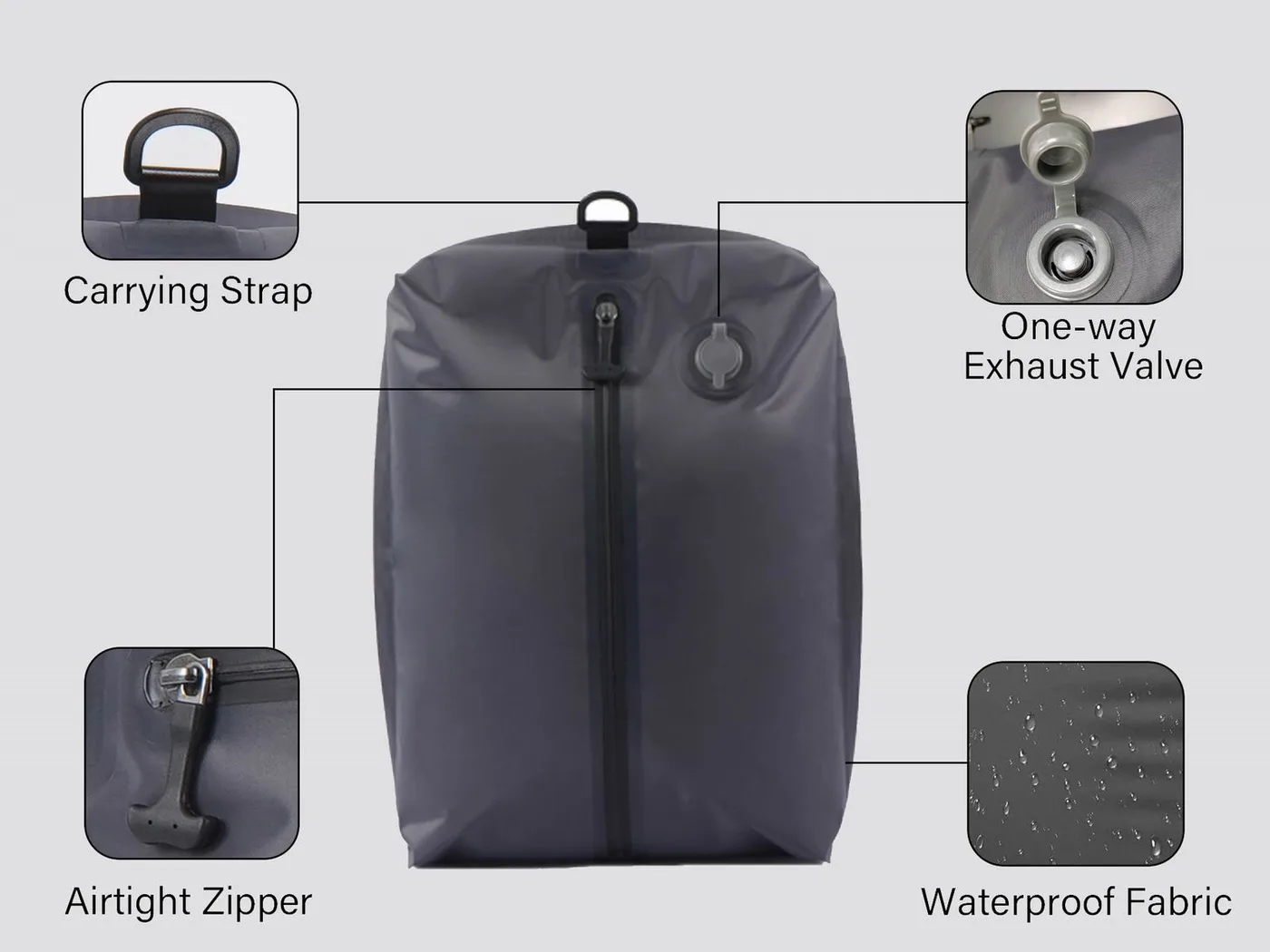
Soft waterproof bags win on three points: they compress into a sizer, they weigh less empty, and they tolerate wet ground, boat decks and rain without a cover. A 30L TPU roll-top backpack at 900 to 1,100 g replaces a 2.8 to 3.4 kg trolley and removes 2 kg of allowance penalty before you pack anything. They also ride better on cobblestones, gravel paths and small boat transfers where wheels are a liability.
Trolleys still win for long terminal walks with heavy loads and for travellers who cannot carry weight on one shoulder for 20 minutes. A hybrid solution works well: a soft cabin bag for clothing and a small personal item holding electronics and documents, so the heaviest objects stay with you at all times. Compare formats in the backpack versus duffel comparison before committing to one shape for a multi-leg trip.
Weighing and adjusting at the airport
Weigh at home, then weigh again at the bag drop if a scale is available, because humidity and last-minute additions change the figure. If the reading exceeds the limit by less than 1 kg, redistribute rather than discard: move a power bank, a hard drive and a wash kit into a coat pocket, wear the heaviest shoes, and carry the jacket. Most carriers count the bag, not the person, and pockets are rarely measured.
If the bag is still heavy, decide calmly between paying, checking and repacking. Gate fees are often higher than booked baggage rates, so a paid cabin upgrade bought online before travel is usually cheaper. Where a bag must be checked at the gate, remove power banks, medication, documents and electronics first. A waterproof bag protects contents during a delayed carrousel wait, but it is not a lock; use a cable tie through the buckle as a tamper indicator.
Protecting documents and small valuables in the cabin
Documents should never sit at the bottom of a rolled bag. Use a flat sleeve or a 2L pouch at the top of the load, and keep passports, boarding passes and medication in an outer pocket for the whole journey. A clear window pouch helps you identify contents without opening every bag at a checkpoint. Our documents and passport protection guide explains which sleeve sizes fit folded A4 papers without creasing them.
Waterproofing has a specific role here: it protects against rain on a tarmac walk, a wet boat tender and a spilled bottle airside, not against immersion. Treat the bag as weather protection for paper and electronics, and keep genuine valuables on your person. If your route includes a small boat, a beach transfer or an open-sided transport, a welded roll-top dry bag is worth more than any rain cover.
Multi-leg and mixed-carrier itineraries
Plan the packing to the strictest leg, not the average. A journey that begins with a 7 kg allowance and continues on a carrier allowing 10 kg still needs a 7 kg pack if the first gate enforces the lower figure. Write the three numbers for every flight, dimension, weight and personal-item allowance, on one card. Codeshare flights are a common trap: the marketing airline sells the seat, but the operating carrier sets and enforces the baggage rule.
Connections add another factor: time. A bag that must be opened at two security checks should be packed so repacking takes under two minutes. Keep the laptop sleeve uninterrupted, the liquid bag at the top and the clothing block undisturbed. For longer multi-city routes, the packing system in our multi-city travel packing guide reduces the number of times a fully loaded bag has to be rebuilt in public.

Care and repacking during the trip
Soft bags need a small routine to stay fresh over several days. Empty the bag every second night, shake out sand or crumbs, and dry the interior with a cloth if anything leaks. Keep a folded 5L pouch for wet swimwear or a rain shell so damp items never sit against documents or electronics. On coastal trips, rinse salt off the fabric with fresh water and dry in shade, because salt crystals stiffen closures and abrade welded seams.
Repacking speed comes from consistency, not from clever folding. Keep the same three zones every time: base for footwear and bulky items, middle for clothing, top for documents and the wash kit. At the end of the trip, dry the bag fully open before storing it loosely rolled. Teams organising travel kits for staff or clients can review formats in the product range; the production know-how behind lightweight welded travel pieces is documented including the planning sequence from the sample-to-bulk timeline if the bags form part of a wider travel programme.
A pre-flight checklist that prevents the usual fees
Run five checks the evening before departure: dimensions against the strictest sizer, packed weight with a 500 g margin, liquids under 100 ml in one clear bag, power banks and batteries in the cabin, and documents in an outer pocket. Confirm whether wheels count toward depth and whether a personal item is included in the fare. Ten minutes at home prevents a fee that can exceed the cost of a small cabin bag itself.
Finish with an access test. Lift the loaded bag overhead, carry it 200 m and open it to remove the laptop without unpacking clothing. If any step is slow, adjust the load order rather than accepting the discomfort. Cabin bag rules are unlikely to relax; methods published by the ISO and aviation authorities will keep evolving, but a soft, light, well-ordered bag remains the most reliable way to travel without checking anything.
Frequently asked questions
Q1. What cabin bag size is allowed on most airlines?
Plan for 55 x 40 x 20 cm at 7 kg on many full-service carriers, while low-cost airlines may allow only a 40 x 20 x 25 cm personal item. Always take the strictest dimension and weight on your itinerary as the packing target.
Q2. How heavy can a carry-on bag be?
Limits usually range from 7 kg to 12 kg depending on the carrier and fare. Pack to 6.5 kg when the limit is 7 kg so airport scale differences and duty-free purchases do not push you over.
Q3. Do wheels and handles count in cabin bag dimensions?
Yes. Sizers measure the whole object, including wheels, handles and external pockets. Detach shoulder straps, clip bottles inside and tuck loose cords before you approach the gate.
Q4. Is a 30L bag carry-on compliant?
A 30L soft bag usually fits a standard cabin envelope if it is around 50 x 32 x 18 cm when packed. Check the shape rather than the litres, because wide duffels bulge sideways even at modest volume.
Q5. Can I carry liquids over 100 ml in the cabin?
No, containers above 100 ml should go in checked luggage. Keep travel-size containers in one clear resealable bag near the top of your bag, and buy drinks after security.
Q6. Are power banks allowed in cabin bags?
Yes, spare lithium batteries and power banks belong in the cabin and are prohibited in the hold. Protect terminals against short circuits and keep them accessible for inspection.
Q7. What is a personal item allowance?
A personal item is usually a small bag around 40 x 20 x 25 cm placed under the seat, often included free on low-cost fares. Electronics, documents and medication belong there so essentials stay with you.
Q8. How do I reduce cabin bag weight quickly at the gate?
Move the densest items into coat pockets: power bank, hard drive, chargers and wash kit. Wear the heaviest shoes and carry the jacket, since carriers measure the bag rather than the person.
Q9. Does a roll-top closure reduce usable space?
Three tight folds typically remove 12% to 20% of nominal volume. Buy one size up when the load is close to the stated capacity, and press air out before the first fold.
Q10. Is a dry bag better than a trolley case for carry-on?
A soft waterproof bag compresses into a sizer, weighs 1.5 to 2.5 kg less empty and handles wet ground well. A trolley is still easier for heavy loads across long terminal walks.
Q11. How many days can I pack in a 7 kg cabin bag?
About four days with three tops, two bottoms and a sink wash, or a full week with a capsule wardrobe and one laundry stop. Rolling clothing saves roughly 25% of space versus flat folding.
Q12. Should documents go inside the main bag?
No. Keep passports, boarding passes and medication in an outer or top pouch for the entire journey, so screening and boarding do not require unpacking the whole bag.
Q13. Do budget airlines measure every cabin bag?
Not every bag, but enforcement is common enough to plan for it. Assume yours will be measured, keep straps tidy and choose a soft bag that can lose a few centimetres under pressure.
Q14. What happens if my cabin bag is overweight?
You may pay a gate fee, check the bag or repack. Gate charges are often higher than pre-booked baggage rates, so buy any upgrade online before travel and remove batteries before a bag is checked.
Q15. Can I take a waterproof bag through airport security?
Yes. Empty it as usual, keep liquids in one clear bag and follow laptop screening instructions. Waterproof fabric is not a problem for scanners, though very dense packed items may be inspected.
Q16. How do I keep a cabin bag organised on a multi-leg trip?
Use three fixed zones: footwear at the base, clothing in the middle and documents or wash kit at the top. This makes repacking after two security checks take under two minutes.
People also ask
What size is a cabin bag allowed to be?
Most airlines accept 55 x 40 x 20 cm, although low-cost carriers may allow only a 40 x 20 x 25 cm personal item. Use the strictest dimension on your route and remember that wheels, handles and pockets are included.
How do you avoid overweight cabin bag fees?
Weigh at home, pack to 6.5 kg against a 7 kg limit and keep a 500 g margin. If the bag is still heavy at the gate, move dense items into pockets and wear the heaviest shoes.
Is a 40L bag too big for carry-on?
A 40L bag often exceeds a standard cabin sizer unless it is very soft and underpacked. For most routes, 30L to 35L is the practical upper limit, with a small personal item for electronics.
Can you take a dry bag as hand luggage?
Yes, provided it fits the sizer and weight limit. Soft construction helps compression, but keep liquids under 100 ml and make the laptop sleeve accessible for screening.
How much does an empty cabin bag weigh?
A soft 20L to 30L dry bag weighs 700 g to 1.1 kg, while a wheeled trolley case is often 2.8 to 3.4 kg. Choosing a lighter empty bag adds 2 kg of usable allowance.
Do cabin bag rules change between connecting flights?
They do, because the operating carrier sets the allowance. Plan for the strictest leg and write dimension, weight and personal-item size for every flight on one card.
Need this in production volume?
QUANZHOU JUNYUAN BAGS has produced waterproof bags since 2014 in an SGS-verified 4,950 m2 facility in Fujian, China. Minimum order 500 pieces, sampling in 6–10 working days, bulk in 35–50 days, FOB Xiamen — write to service@junyuanbags.com with your spec and target market.