Home / Blog / Design & Branding
Dry Bag Gift Sets That Get Used
The most useful dry bag gift sets pair one 10L or 20L main bag with a 2L to 5L organiser, keep the total carried weight below 1.2 kg before contents, and solve one recognisable job. A 20L roll-top plus a 2L valuables pouch works for a beach day; a 10L bag, compact towel and bottle carrier works for a paddle club. Two coordinated pieces are usually used more often than five unrelated accessories because the recipient can understand the system without reading a long instruction card.
A successful set is not defined by how much fits in the box. It is defined by whether the recipient reaches for it six months later. That requires sensible volume, restrained colour choices, safe hardware, clear packing logic and presentation that does not create more waste than value. This guide turns those decisions into measurable rules for retail teams, resorts, clubs and event planners, including capacity tables, budget allocations, inspection points and ways to make branding visible without weakening a welded waterproof shell.
- Start every dry bag gift set with one real use case
- Choose a volume combination people can understand
- Build around two pieces, not a box of filler
- Match colour to context, visibility and care
- Place branding where flexing will not destroy it
- Specify materials for skin contact and repeated use
- Make packaging protective without making it wasteful
- Set a budget by use value rather than item count
- Prototype the experience before approving volume
- Inspect the details recipients notice first
- Write instructions people will actually read
- Plan fulfilment so sets arrive ready to give
- Use a final retention checklist before launch
Start every dry bag gift set with one real use case
Begin with a named trip rather than a demographic label. A Saturday paddle tells you the bag needs a 10L clothing compartment, a small pouch for keys and a strap that works over a buoyancy vest. A hotel pool afternoon suggests a 20L bucket shape, a separate 3L wet-swimwear pouch and a soft carry handle. Labels such as premium traveller or outdoor enthusiast sound appealing but do not establish volume, closure, weight or access. A recipient keeps a set when every component earns its place during a familiar routine.
Write a one-sentence job statement before selecting products: this set carries one person clothes, phone, sandals and wet swimsuit for four hours. Pack those items and measure them instead of relying on nominal litres. A rolled closure commonly consumes 12% to 20% of the stated volume, while a thick towel can occupy 7 litres alone. The job statement also prevents filler items from entering the bundle. If an accessory does not protect, organise or carry something in that sentence, leave it out.
| Gift occasion | Main bag | Companion item | Empty set weight | Practical load |
|---|---|---|---|---|
| Beach or pool day | 20L roll-top | 3L wet pouch | 650-850 g | Towel, sandals, phone, swimsuit |
| Kayak club welcome | 10L roll-top | 2L valuables pouch | 420-620 g | Layer, snack, keys, first aid |
| Resort room gift | 15L bucket bag | Bottle carrier | 500-720 g | Towel, book, water, sunscreen |
| Commuter reward | 20L backpack | Cable organiser | 850-1,100 g | Laptop sleeve, shell, lunch |
| Family lake weekend | 30L main bag | Two 5L colour-coded bags | 1.0-1.4 kg | Clothes, snacks, devices, towels |
Choose a volume combination people can understand
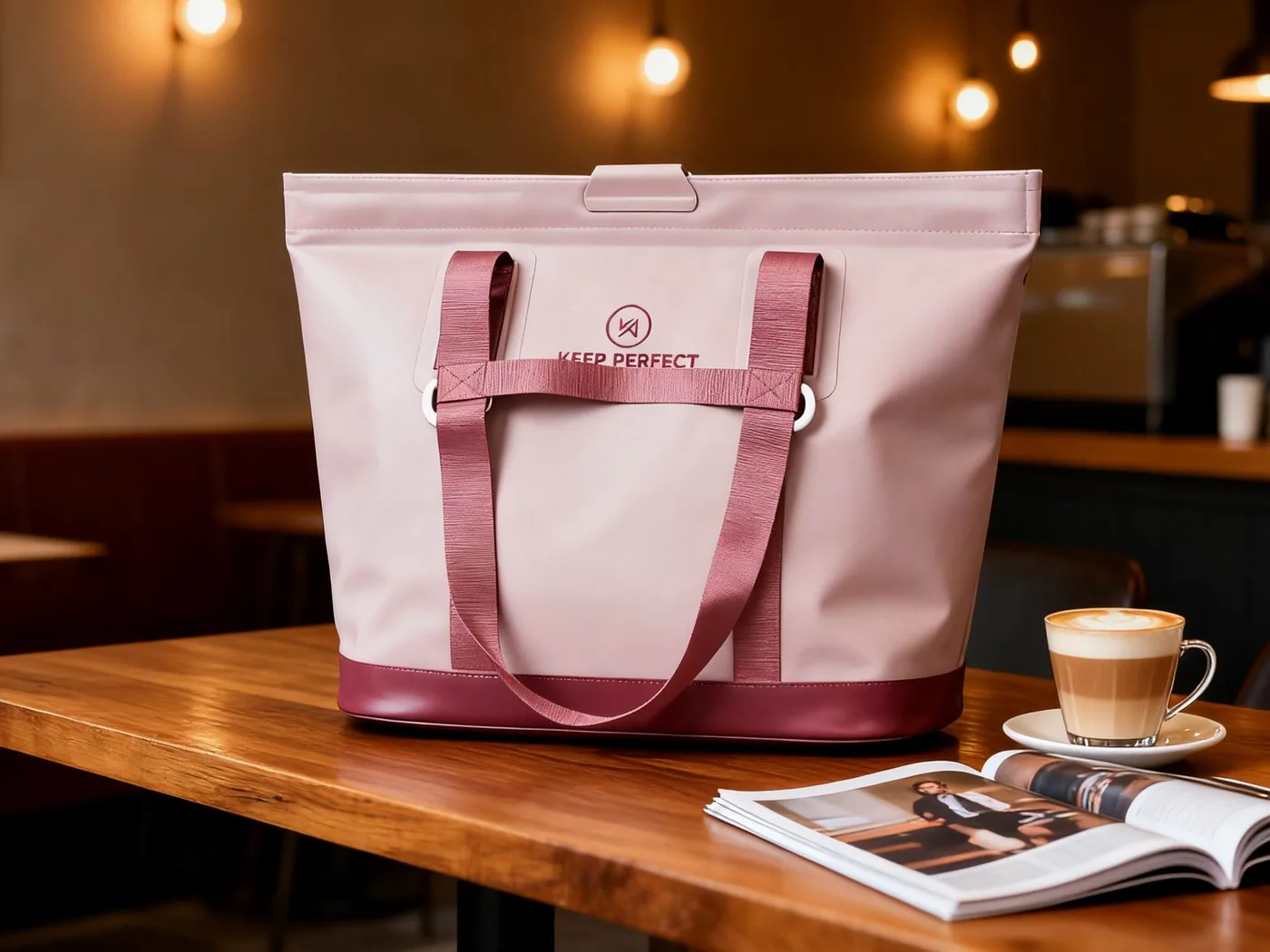
The clearest bundles use a large-plus-small hierarchy. A 20L bag handles soft clothing and towels, while a 2L pouch isolates a phone, keys and medicine. Two bags of nearly equal size force the recipient to remember an arbitrary distinction, so one usually sits unused. Capacity labels should remain visible after packing, preferably near the base or side panel, because users often own several similar bags. Colour can reinforce the system: dark main bag, bright essentials pouch and one repeated accent on both buckles.
Avoid turning a gift set into an expedition kit unless the audience truly needs one. A 40L bag may look generous in a display but is awkward for a short walk and becomes heavy when filled. For general gifting, 10L to 20L is the useful centre. The capacity guide explains the full scale, while a set intended for electronics can use the measured examples in our laptop and documents sizing guide. Oversizing is not added value when it discourages use.
Build around two pieces, not a box of filler
Two core pieces create a complete system without decision fatigue. The main bag should handle the visible load; the small piece should solve the most expensive or inconvenient risk, such as wet swimwear beside dry clothes or keys beside a sandy towel. A third item can work if it connects the two, for example a detachable shoulder strap or a repair patch envelope. Generic bottles, low-grade clips and novelty gadgets make the box look full but often become waste before the first trip.
A useful test is the 30-second unpack. Place the closed set in front of someone who has not seen it, then ask what each component is for. If the explanation takes longer than half a minute, the hierarchy is unclear. Printed labels such as DRY, WET and ESSENTIALS can help, but layout should do most of the work. A small bag nested inside the large one, attached by a removable paper band, communicates the intended relationship while keeping all waterproof closures visible for inspection.
| Component count | User clarity | Packaging volume | Likely retention | Best application |
|---|---|---|---|---|
| 1 piece | Very high | 100% | High if the size is right | Simple event gift |
| 2 pieces | High | 108-120% | Highest overall | Retail, resort, club |
| 3 pieces | Medium-high | 120-135% | High with a shared purpose | Travel or family set |
| 4 pieces | Medium | 135-155% | Mixed | Specialist activity only |
| 5 or more pieces | Low | 155-210% | Low for filler items | Avoid for broad audiences |
Match colour to context, visibility and care
Colour is functional before it is decorative. Bright pink, mint or blue helps a small pouch stand out inside a dark vehicle, boat hatch or hotel room. Olive and black hide scuffs and suit workwear, but they are harder to find at dusk. For family sets, use one base colour and assign accent colours to individual small bags. This looks coherent while preventing phone pouches and snack bags from being swapped. Review the broader approach in the dry bag colour range guide before approving a palette.
Judge colours on the actual coated textile, not a monitor. Gloss level, face yarn and film colour can shift the visual result under daylight. Request samples in 6500 K lighting and compare them after a 24-hour water exposure, because wet surfaces appear darker. Where exact repeatability matters, record a physical reference and an instrumental tolerance. The ISO catalogue is the right starting point for recognised colour measurement and textile test standards rather than relying on informal visual descriptions.
Place branding where flexing will not destroy it
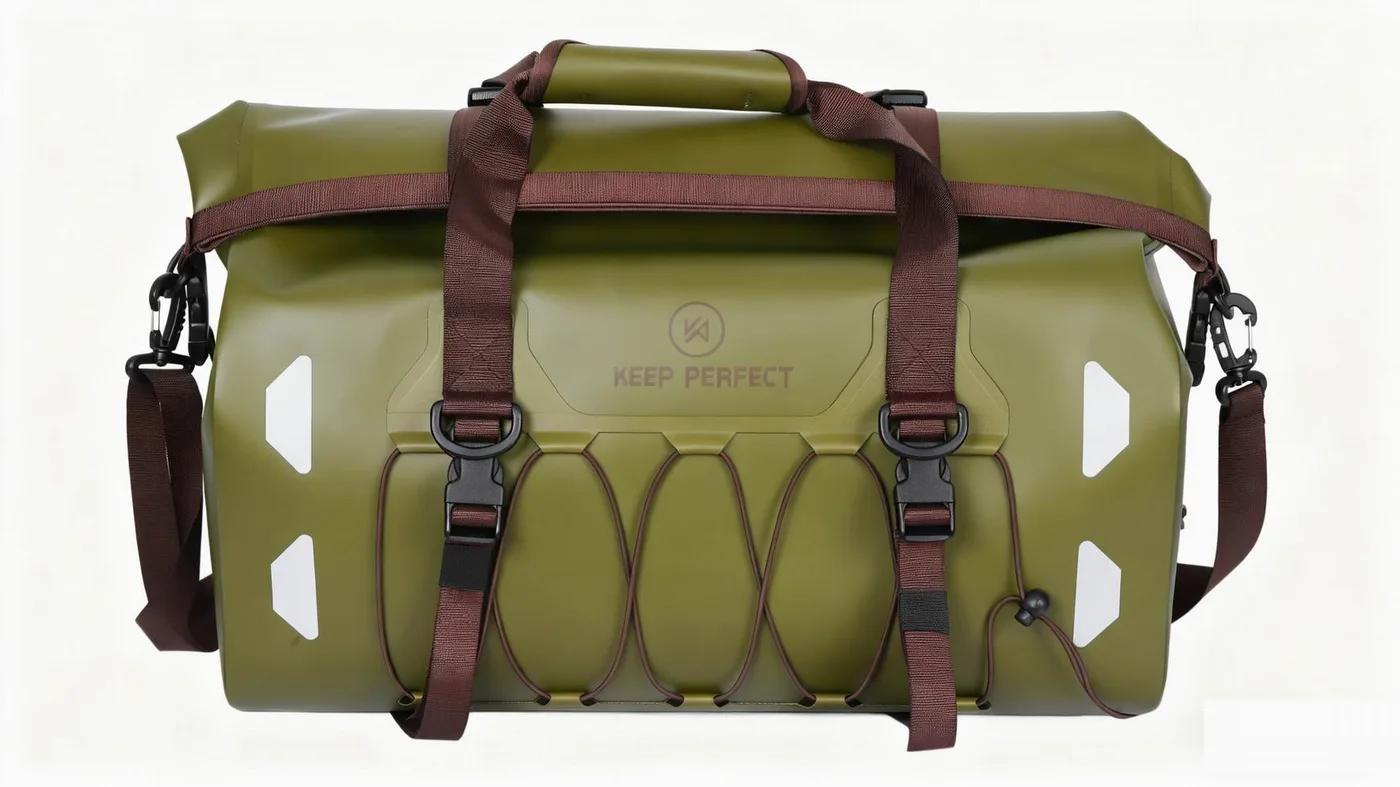
A logo belongs on a broad, low-strain panel. Keep it at least 25 mm from a welded seam, 35 mm below the first closure fold and clear of D-ring reinforcements. Artwork crossing a crease can crack after a few hundred roll cycles, especially with a thick ink deposit. A 70 mm to 110 mm mark is usually readable on a 10L or 20L bag without becoming the only visual element. The logo placement guide shows how panel geometry changes the safe print area.
Think about how the set appears in use rather than only face-up in a presentation box. A bag carried by its top buckle rotates, and a backpack may hide the front panel against the wearer. One primary mark plus a smaller repeated accent on the pouch gives better recognition than printing every surface. Screen printing suits simple, durable blocks of one to three colours; digital transfer supports gradients but needs a verified adhesion test on the selected TPU surface. Branding should survive the same wet routine as the bag.
Specify materials for skin contact and repeated use
Gift items move through many hands and may carry food, children clothing or wet swimwear, so material disclosure matters. A TPU-laminated 420D or 500D shell offers a strong balance of flexibility, wipe-clean care and abrasion life. Webbing should feel smooth at the edge, buckles should close without sharp flash, and printed surfaces should not remain tacky after 24 hours at 40 degrees Celsius. Ask for traceable material declarations tied to the actual colour and print system, not a generic sheet for a different construction.
Chemical claims need evidence and careful wording. The US EPA publishes practical information on chemicals and safer material choices, while test scope should be agreed for the destination market and intended contact. Do not turn a gift card into a list of vague green claims. State what is known, such as a PVC-free shell material or a measured recycled content, and retain the supporting report. Honest, narrow claims build more confidence than broad language that cannot be checked.
| Area | Baseline specification | Check method | Reject when |
|---|---|---|---|
| Main shell | 420D-500D TPU laminate | Abrasion and flex sample | Delamination or whitening |
| Webbing | 25-40 mm, soft edge | Hand rub for 60 seconds | Fraying or sharp edge |
| Buckle | Matched acetal set | 500 open-close cycles | Crack, slip or poor latch |
| Ink matched to TPU surface | Cross-hatch adhesion check | Visible lift above 5% | |
| Inner pouch | 0.3-0.5 mm waterproof layer | 30-minute air or immersion check | Bubbles or moisture |
Make packaging protective without making it wasteful
The bag itself is already a durable container, so packaging should protect presentation rather than duplicate it. Fold the main bag around the smaller piece, hold the shape with a recycled paper band and place the care card under the buckle. This approach cuts box volume, keeps the roll-top visible and avoids foam inserts. If a rigid box is necessary for premium retail, size it to the folded bag with no more than 15 mm clearance on each side so products do not arrive creased or loose.
Plan the end of the packaging before choosing its finish. Mixed laminates, magnetic closures and plastic windows complicate recovery even when each layer looks refined. Local collection rules differ, so disposal wording should reflect the sales region rather than a generic symbol. For more presentation structures, see our dry bag packaging ideas and the material choices in plastic-free packaging. A good unboxing moment lasts seconds, while unnecessary material remains in the waste stream much longer.

Set a budget by use value rather than item count
Allocate most of the budget to the shell, seams and carry system. As a planning rule, 55% to 65% of product value should sit in the main bag, 20% to 30% in the companion item and no more than 15% in presentation. Moving money from a better buckle to a thicker box reverses the priorities the recipient experiences after day one. If the budget is fixed, remove a low-use accessory before reducing film thickness or seam inspection.
Cost comparisons need the same specification. A 20L single-strap bag and a 20L backpack are not equivalent: the harness adds webbing, welding reinforcement, hardware and assembly time. Colour count, print coverage and separate pouch testing also affect the programme. Build a line-item sheet that names material weight, size, hardware, print area, packaging and inspection level. The process guidance can help teams frame those production decisions without reducing the discussion to a price per piece.
Prototype the experience before approving volume
A visual mock-up cannot reveal whether a set works. Make at least three functional samples and run three different trials: pack the intended load, carry it for 30 minutes and repeat the wet open-close routine ten times. One sample should go to someone outside the project team with no explanation. Record where that person puts the small pouch, whether the strap twists and which care instruction is missed. These observations often change the set more usefully than another round of artwork revisions.
Sampling should also verify fit inside the final presentation format. Leave the bag packed for 72 hours, then inspect print transfer, fold memory and buckle marks. A typical spec-built programme can allow 6 to 10 working days for a sample once artwork and materials are approved. Use that window for corrections rather than treating the first unit as a miniature production run. Changing a 30 mm strap position at sample stage is inexpensive; discovering shoulder discomfort after 2,000 sets have shipped is not.
Inspect the details recipients notice first
Recipients judge quality through touch and alignment before they test waterproofing. Check whether the roll-top edges meet, the buckle halves align without twisting and strap ends are cut cleanly. On a set, compare both pieces side by side: mismatched black hardware or noticeably different gloss makes the bundle look assembled from leftovers. Inspect print position with a simple panel template and measure colour against the signed sample. These checks are fast, visible and directly connected to perceived value.
Waterproof performance still needs a defined check. An air-pressure or shallow immersion screen can reveal pinholes, but the method, sample rate and acceptance rule must be written down. For a 500-piece run, AQL 2.5 may be used for general workmanship while critical leakage defects are handled more strictly. The ASTM International standards catalogue helps teams identify repeatable textile, coating and packaging methods. A branded set should not depend on a vague promise that someone looked at it.
Write instructions people will actually read
Keep the care card to one side of a small sheet. Use diagrams for three closure actions: align the mouth, roll three times and clip. Add four short rules: do not overfill, keep sharp objects covered, rinse salt and dry open in shade. The card should also state that a dry bag is not a flotation device. Put detailed background online through a short address or code, but never make the recipient scan something merely to learn how to close the product safely.
Name the pieces according to their jobs. A 20L day bag and a 2L essentials pouch are more helpful than invented collection names. If the set is distributed internationally, test translations with native readers and keep numerical units visible. Use icons only when their meaning is unambiguous; a water droplet can suggest splash resistance, immersion or drinking water. Plain words supported by one clear diagram reduce misuse and make the gift feel considered rather than promotional.
Plan fulfilment so sets arrive ready to give
Set assembly introduces failure points that a single bag does not have. Create a packing list with one image, product code, colour and quantity for every component. Weigh one correct set and establish a tolerance, often plus or minus 40 g for a two-bag textile bundle, so a missing pouch can be found without opening every carton. Outer cartons should identify set colour and count on two sides. If names or event dates vary, isolate that final labelling step from the main bag inspection.
Schedule matters when a gift is tied to a fixed event. Work backwards from the in-hand date through transport, packing, production and sampling, while holding contingency before the event rather than after it. A normal bulk window may be 35 to 50 days after approval, but material availability and print complexity can move it. FOB Xiamen terms, payment stages such as T/T 30/70 and carton dimensions belong in the written order brief. The gift succeeds only if the correct set reaches the correct recipient on time.
Use a final retention checklist before launch
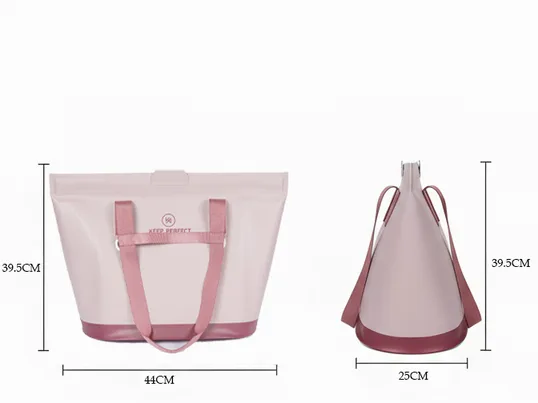
Score the proposed set on six questions: does it solve one named trip, can a new user understand it in 30 seconds, is the main volume appropriate, does every accessory have a job, can all claims be supported and can the packaging be recovered locally? Any no is a reason to revise. Do not let a deadline turn a weak accessory into permanent inventory. A smaller, coherent bundle carries the message more effectively because it remains in use instead of being divided and forgotten.
The final check should happen with the set loaded, carried and wet, not arranged under studio lights. Confirm three clean rolls, comfortable grip, readable instructions and enough spare volume for real packing. Compare the concept with other dry bag personalisation ideas and the available bag formats, then lock the specification. A gift earns long-term visibility when it works on the tenth trip exactly as well as it did during the presentation.
Frequently asked questions
Q1. What makes dry bag gift sets genuinely useful?
Useful sets solve one clear routine with two coordinated pieces, usually a 10L to 20L main bag plus a 2L to 5L organiser. Sizes, closure and accessories should match what the recipient actually carries rather than simply fill a presentation box.
Q2. What is the best main bag size for a gift set?
A 20L roll-top is the safest general choice for beach, pool and short travel use. A 10L bag suits paddling or compact event kits, while 30L is better for a family or weekend set carrying several clothing items.
Q3. How many items should the set contain?
Two core pieces usually create the clearest and most retained bundle. A third item is worthwhile only when it connects the system, such as a detachable strap, repair envelope or care accessory with a defined job.
Q4. Should both bags share the same colour?
They can share a base colour, but a contrasting essentials pouch is easier to locate. Repeating one buckle or print accent across both pieces keeps the set coherent without making the items difficult to distinguish.
Q5. Can a logo be printed near the roll-top?
Keep artwork at least 35 mm below the first fold and away from welded seams. Printing on the active crease raises cracking risk, while a broad lower panel improves adhesion and stays visible once the bag is closed.
Q6. Is TPU suitable for a gift bundle?
TPU-laminated fabric is flexible, wipe-clean and well suited to welded waterproof products. Specify the textile weight, film system, colour and intended tests so the claim relates to the real bag rather than to a generic sample.
Q7. How should a gift set be packaged?
Fold the main bag around the smaller item and secure it with a recyclable paper band where possible. This keeps the closure visible, reduces shipping volume and avoids foam or mixed-material inserts that add little practical value.
Q8. What instructions belong inside the set?
Show how to align the opening, roll it three times and close the buckle. Add concise guidance on loading, sharp objects, salt rinsing, shaded drying and the warning that the bag is not a flotation device.
Q9. How do you test a set before ordering more?
Pack the intended contents, carry the loaded system for 30 minutes and complete ten wet open-close cycles. Leave a packed sample for 72 hours to reveal fold marks, print transfer or hardware pressure points.
Q10. Are extra accessories good value?
Only when each one solves a specific problem. A wet pouch, electronics organiser or detachable strap can add value, while generic clips and novelty objects usually raise packaging volume without improving the routine.
Q11. How much of the budget should go to packaging?
Keep presentation near 15% or less of product value and direct 55% to 65% toward the main bag. If money is tight, remove filler before reducing seam quality, film thickness or hardware grade.
Q12. Can gift sets include children sizes?
Yes, but scale the whole system: a 5L to 10L main bag, softer webbing and simple one-hand buckles. Avoid long cords and small detachable parts, and keep printed warnings legible after repeated wet use.
Q13. How do you keep two colours consistent across a set?
Approve a signed physical reference for each colour and require instrumental comparison within an agreed tolerance. Match gloss level and fabric batch as well, because surface finish changes appearance even when the base shade is identical.
Q14. What is a realistic sampling window?
Plan for 6 to 10 working days once artwork and materials are approved, then allow further time for corrections and transport. Rushing the sample stage usually transfers avoidable design risk into the bulk run.
Q15. Should gift sets be tested for waterproof performance?
Yes. Use a documented air-pressure or shallow immersion screen with a defined sample rate and acceptance rule. General workmanship can follow AQL 2.5, while leakage defects should be treated as critical.
Q16. How do you keep a set from becoming unused clutter?
Choose one clear activity, size the main bag to that load, and give every other piece a defined job. Then test the packed set with a new user and remove anything that does not get used during the trial.
People also ask
What should a dry bag gift set include?
A practical set includes one main bag sized to a real activity and one small organiser for valuables or wet items. Two coordinated pieces are normally clearer and more used than a larger box of assorted accessories.
How do you choose gift set bag sizes?
Match the main bag to the largest regular load, usually 20L for beach or travel and 10L for paddling, then add a 2L to 5L pouch. Measure packed items rather than trusting nominal capacity.
Are branded dry bags good gifts?
They are good gifts when the branding is restrained and the product works: a readable mark on a low-strain panel, durable hardware and clear closure instructions. Marketing value follows real use, not print size.
How can packaging be reduced for a gift set?
Fold the main bag around the smaller item and use a recyclable paper band, avoiding foam and mixed laminates. Keep the closure visible so the recipient can inspect the product without unpacking everything.
Do gift sets need safety warnings?
Yes. Include the roll-and-clip sequence, sharp-object and overfill guidance, and a clear statement that the bag is not a flotation device. Short diagrams with plain wording are more reliable than icons alone.
What makes people keep using a promotional bag?
Correct size for a familiar routine, comfortable carry, hardware that survives wet use and care instructions that are easy to follow. Accessories without a defined purpose are quickly separated and discarded.
Need this in production volume?
QUANZHOU JUNYUAN BAGS has produced waterproof bags since 2014 in an SGS-verified 4,950 m2 facility in Fujian, China. Minimum order 500 pieces, sampling in 6–10 working days, bulk in 35–50 days, FOB Xiamen — write to service@junyuanbags.com with your spec and target market.