Roll-Top Dry Bags for Trail Running: Why They Win
A trail runner needs 2 to 4 litres of waterproof space for a one-hour training run, 5 to 8 litres for a long run, and 9 to 12 litres when a race kit list forces a full waterproof jacket, trousers and gloves into the pack. The roll-top closure wins that volume range because a 5L roll-top weighs 105 to 130 g against 190 to 240 g for a comparable waterproof zip bag, and because a roll-top has no teeth to jam with grit after a muddy descent.
This guide explains where the weight and reliability advantages come from, how much bounce a soft bag actually produces at 180 steps per minute, which size matches which run, and the one-handed closing technique that works when your hands are wet and you are moving. Every figure is tied to a real kit: a 240 g waterproof jacket, a 1.5 kg pack, a 22 km training loop, a 90-minute threshold effort.
- What a roll-top closure does better than a zip on the trail
- Grams per litre: the weight a runner will actually tolerate
- Sizing from a forty-minute loop to an ultra
- Bounce: what a soft bag does at 180 steps a minute
- Where the bag rides: vest, belt or a small pack
- Rain, creek crossings and the rating that matters
- Mandatory kit and what race rules actually demand
- Sweat and salt: what happens inside the bag
- Closing one-handed while you are still moving
- Hydration: why water stays out of the dry bag
- Care after a muddy run
- Where a roll-top loses to a zip
- Choosing a roll-top for running: the checklist
What a roll-top closure does better than a zip on the trail
A roll-top closure has three properties that matter to someone running on uneven ground: it has no moving parts to jam, it can be sealed with one hand, and it compresses as the load shrinks. A waterproof zip needs two hands and a straight pull, it accumulates grit in the teeth, and it holds its full volume whether the bag is half empty or full, which means a half-packed zip bag slops around inside a running vest.
The roll-top also degrades gracefully. A fold that has been rolled a thousand times still seals, because the sealing force comes from the fabric pressing on itself rather than from a mechanical interlock. A zip that has lost a tooth, or picked up a grain of sand in the slider, stops sealing entirely with no warning. On a long race where the bag is opened twenty times, that difference is worth more than any marketing feature.
There is a cost, and it is honest to state it: a roll-top is slower to open than a zip by roughly three to five seconds, and it cannot be opened one-handed while the bag is on your back. For a runner who needs a gel every twenty minutes, that is a real argument for keeping food in vest pockets and reserving the roll-top for the kit you touch twice in a race.
Grams per litre: the weight a runner will actually tolerate
Running is the activity where weight is felt most acutely, because the load is lifted and lowered roughly 180 times a minute. A rule of thumb used by ultra runners is that 100 g in the pack costs about 1% of perceived effort over a long climb, which is why the empty weight of the waterproof system is scrutinised more here than in any other sport.
| Bag | Stated volume | Empty weight | Grams per litre | Closure type |
|---|---|---|---|---|
| 2L roll-top | 2 L | 75 g | 38 g/L | Two folds, clip |
| 5L roll-top | 5 L | 110 g | 22 g/L | Three folds, clip |
| 10L roll-top | 10 L | 185 g | 19 g/L | Three folds, clip |
| 5L waterproof zip | 5 L | 205 g | 41 g/L | Coated zip |
| 10L waterproof zip | 10 L | 310 g | 31 g/L | Coated zip |
The grams-per-litre column is the one to read. It falls sharply between 2L and 10L because the closure and the weld perimeter are a fixed cost that gets amortised over more volume, which means a single 10L roll-top is lighter than a 5L plus a 2L carrying the same kit. That is the opposite of the paddling advice, where splitting is smarter, and the reason is redundancy: a runner cannot afford two failure points but can tolerate losing 2 litres of spares.
Sizing from a forty-minute loop to an ultra
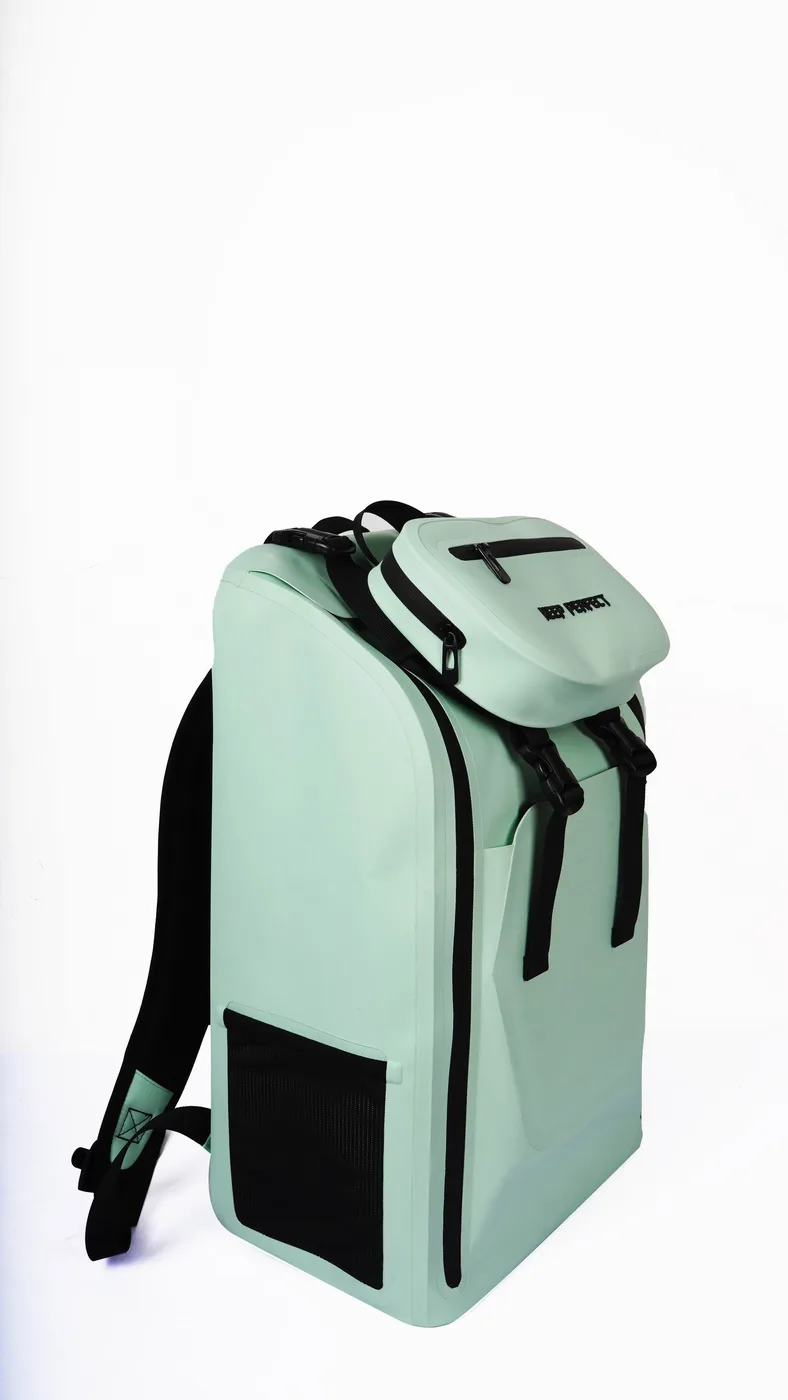
Match size to the kit list rather than to the distance. A forty-minute loop in dry weather needs nothing more than a key and a phone, which a 2L bag handles with room to spare. The moment a race director mandates a waterproof jacket with taped seams, full-length trousers, gloves, a hat and a survival blanket, the volume requirement jumps to 8 litres regardless of whether the race is 30 km or 100 km.
| Run type | Hours out | Waterproof volume | Packed weight | Bag choice |
|---|---|---|---|---|
| Short training loop | 0.7-1.5 h | 2-4 L | 0.4-0.8 kg | 1 x 2L or 1 x 5L |
| Long training run | 2-4 h | 5-8 L | 1.0-1.6 kg | 1 x 5L + 1 x 2L |
| Mountain race, day kit | 5-9 h | 8-12 L | 1.8-2.6 kg | 1 x 10L |
| Ultra with full kit list | 10-24 h | 9-14 L | 2.2-3.2 kg | 1 x 10L + 1 x 2L |
| Fastpacking overnight | 2 days | 20-30 L | 4.5-6.5 kg | 1 x 20L + 1 x 5L |
One caveat applies across the whole table: a roll-top loses usable volume when it is rolled. A 10L bag rolled three times gives up roughly 1.5 to 2 litres, so a kit list that measures 8 litres compressed needs a 10L bag, not an 8L one. The exact figure depends on film stiffness, and it is broken down size by size in our capacity loss guide.

Bounce: what a soft bag does at 180 steps a minute
Bounce is the failure mode runners notice first and measure least. A soft bag with 1.5 kg inside it, worn in a vest with no compression, moves through a vertical arc of roughly 4 to 6 cm per stride at a 180 cadence. Over a 30 km race that is about 20,000 cycles of the load pulling on the shoulder seams and the trapezius, which is enough to produce real soreness by the final climb.
Three things control it. Fill the bag to at least 80% so there is no air space for the contents to shift; press the air out before the final fold so the bag is a firm block rather than a pillow; and compress it against the back with the vest straps rather than letting it float. A roll-top helps with all three, because the closure lets you expel air and then lock the shape in.
Where the bag rides: vest, belt or a small pack
Three carrying positions work on the trail and each suits a different volume. A running vest takes a 2L or 5L bag in the rear compartment, where it sits closest to the shoulder blades and bounces least. A waist belt takes a 2L bag and is the best option for a short loop, because the load moves with the pelvis rather than against the shoulders. A small 10L pack with a roll-top body is the answer for an ultra kit list.
Whichever you choose, the rule is the same: the bag goes high and central. A 2L bag bouncing in a hip pocket at 180 steps a minute will chafe a line into the iliac crest within an hour, and the same bag in the rear vest compartment is invisible. If your vest has no rear compartment, a 2L roll-top clipped to the shoulder strap webbing works, as long as it is clipped at two points so it cannot swing.
Rain, creek crossings and the rating that matters
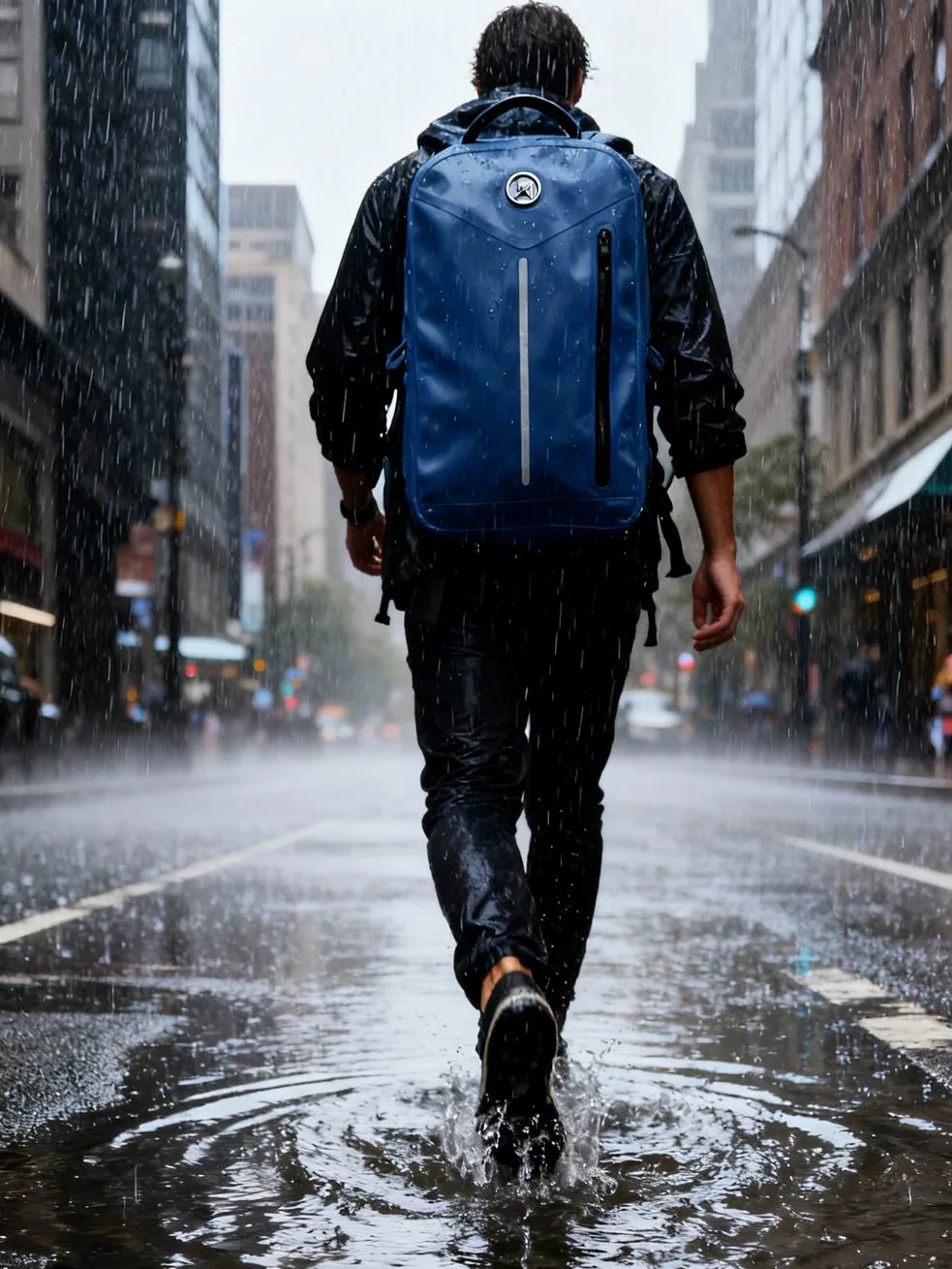
Trail running sits at an unusual point on the waterproof scale. Sustained rain at 12 km/h while you are moving is a genuine water-jet exposure, and a shallow creek crossing is a brief immersion, but neither is sustained submersion. What actually kills kit on a run is not a single event but four hours of wet fabric pressing against the bag, which is a wicking problem rather than a pressure problem.
| Exposure on a run | What reaches the bag | Rating that covers it | Construction that survives |
|---|---|---|---|
| Light drizzle | Surface moisture | IPX4 | Welded or coated |
| Steady rain at 12 km/h | Driven water | IPX6 | Welded |
| Shallow creek crossing | Splash, brief submersion | IPX7 | Welded, continuous |
| Four hours of wet fabric | Wicking through seams | No rating covers wicking | Welded, not stitched |
| Mud and grit in the closure | Abrasion on the fold | No rating applies | Wipe before rolling |
The fourth row is the one runners miss. Ingress ratings measure water under pressure, not water drawn along a thread, so a stitched and seam-taped bag can pass an IPX6 test and still deliver a damp jacket after a long wet run. Welded construction removes the thread entirely, and the test vocabulary behind these grades is published by the IEC rather than defined by whoever writes the product page.
Mandatory kit and what race rules actually demand
Race kit lists are written by people thinking about hypothermia on an exposed ridge at night, and they are not negotiable. The standard mountain list is a waterproof jacket with taped seams and a hood, full-length waterproof trousers, a hat, gloves, a survival blanket, a whistle, a headlamp and a charged phone. That list packs to 6 to 8 litres compressed and weighs 1.2 to 1.8 kg.
| Mandatory item | Packed volume | Weight | Must stay dry | Notes |
|---|---|---|---|---|
| Waterproof jacket, taped seams | 2.4 L | 240 g | No, it gets worn | Keep it accessible, not buried |
| Waterproof trousers | 1.8 L | 210 g | Yes | Rolls smaller than it looks |
| Hat and gloves | 0.8 L | 140 g | Yes | Wet gloves are worse than none |
| Survival blanket | 0.3 L | 60 g | Yes | Keep the foil unopened |
| Headlamp and spare cells | 0.5 L | 180 g | Yes | Lithium cells below freezing |
| Phone and power bank | 0.4 L | 260 g | Yes | Double-bag in a 2L roll-top |
| Whistle and first-aid | 0.2 L | 90 g | No | On the person, not in the bag |
Sort by the fourth column and a pattern appears: the jacket you will wear does not need to be inside the dry bag, and everything you will need in the dark does. That is why a 10L roll-top plus a small 2L inner pouch is the ultra standard, with the 2L carrying the phone, power bank and spare cells as a second independent seal.
Sweat and salt: what happens inside the bag
A runner produces 0.8 to 1.5 litres of sweat an hour in warm conditions, and a pack worn against a wet back is a salt delivery system. Salt crystals find the fold line of a dry bag, and a single crystal in a fold creates a capillary path that wicks moisture in over an hour. Rinse the fold with water from a bottle at the halfway point of any run longer than two hours.
Salt also attacks hardware before it attacks film. A side-squeeze buckle that has been soaked in sweat for a season will develop a white deposit in the tongue and eventually slip under load. Work the buckle through its travel while rinsing it, and expect to replace a buckle every two to three seasons of heavy use; they are a two-pound part and they are the most commonly replaced item on a running bag.
Closing one-handed while you are still moving
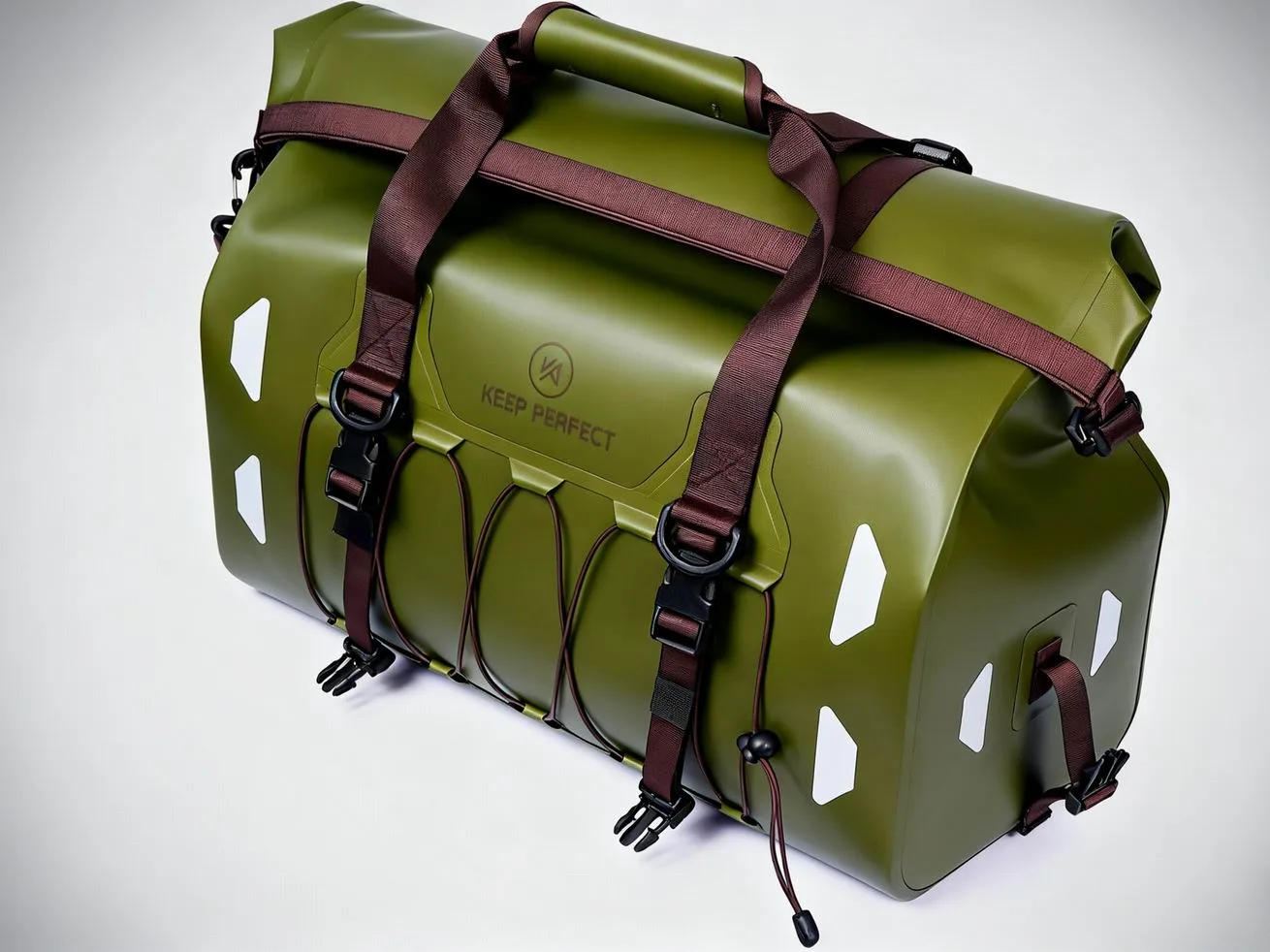
The technique is a fold, a squeeze and a clip, done in that order without stopping. Fold the mouth once towards you, squeeze the bag gently from the bottom to push air out through the still-open fold, fold twice more along the same direction, then clip the buckle with the bag held against your thigh. Practise it standing up; it takes about four seconds once learned and it is the difference between a sealed bag and a wet jacket.
Direction matters more than most people think. Always fold away from the direction the water is coming from, which on a run means folding towards your back if rain is hitting your chest, and towards your chest on a descent where spray comes up from behind. A fold facing into the flow funnels water towards the seal; the same fold turned away sheds it.
Hydration: why water stays out of the dry bag
Soft flasks, a reservoir and a filter all belong outside the dry bag. Water is the heaviest thing a runner carries at 1 kg per litre, and it is also the thing you reach for most often, so putting it inside a roll-top means opening the closure every twenty minutes. Put hydration in the vest front pockets and reserve the roll-top for the kit you touch twice.
The exception is a spare litre for a long dry section, carried as a sealed bottle or a collapsible flask inside the bag. Cap it, wipe the outside, and give it its own corner away from electronics. If a bottle leaks inside a sealed dry bag the water has nowhere to go, and it will wick into everything in the bag within minutes; the same principle is covered in our wet storage guide.
Care after a muddy run
- Empty the bag completely and shake out loose grit and mud before it dries.
- Rinse the fold line with fresh water, working a thumb along the full width of the fold.
- Wash the body with lukewarm water and a mild soap; never a solvent or a scouring pad.
- Work each buckle through its full travel while it is wet to flush out salt.
- Dry in shade with the mouth open, then store loosely rolled with the buckle unclipped.
- Inspect the weld corners monthly: fatigue shows there first, not in the middle of a panel.
Grit is the specific enemy on the trail, more than mud or water. A grain of sand trapped in the fold is enough to break the seal, and the same grain dragged across a weld corner abrades the film. Rinsing the fold takes fifteen seconds and prevents most of the seal failures runners report. Full washing steps, including what to avoid on printed panels, are in our roll-top cleaning guide.
Where a roll-top loses to a zip
Honesty about the trade-off makes the recommendation credible. A zip bag wins on access speed, on keeping a flat shape inside a pack, and on situations where you need to reach in with one hand while wearing the pack. If your event involves twenty checkpoints and a kit inspection at each, a zip opening saves real time.
A zip also wins when the bag must hold a rigid shape, such as a camera insert or a phone mount. A roll-top is a soft structure by design; it conforms to its contents rather than protecting them from compression. If you are carrying something crushable, put it in a rigid case and then in the roll-top, rather than expecting the bag to hold its shape. The comparison is set out in full in our roll-top versus zip breakdown.
Choosing a roll-top for running: the checklist
- Weigh the empty bag: aim for under 25 g per litre in the 5L to 10L range.
- Buy one size up from your measured kit volume to allow for the roll.
- Take welded seams, not stitched and taped, if you run long wet days.
- Check the buckle releases with cold, wet, muddy hands at the shop.
- Choose a 2L inner pouch for phone, power bank and spare cells.
- Pack to at least 80% and purge the air before the final fold.
- Rinse the fold after every run longer than two hours.
Those seven checks also work as a club or event brief. Race organisers who hand out a waterproof bag as part of an entry pack tend to specify a 5L or 10L roll-top for exactly the reasons above: no zip to jam, low grams per litre, and a closure that survives being opened and closed by a tired runner in the rain.
For event programmes and retail ranges bought in volume, the same list becomes a specification: volume, film thickness, seam type, hardware grade, colourway and the test data behind the waterproof claim. Compare those figures against the product line before you commit to a size.
Heat and hydration are the risks no bag manages. Sweat rates of 0.8 to 1.5 litres an hour are normal in summer trail running, and the CDC publishes the dehydration and heat-illness signs every runner should be able to spot in a race partner. Material testing language, including abrasion and tear methods used on coated fabrics, is standardised by ASTM. For wet-weather training in town rather than on the trail, see the monsoon commuting guide, and for longer days on foot the thru-hiking comparison.
Frequently asked questions
Q1. What size dry bag do I need for trail running?
Two to four litres for a one-hour training run, five to eight litres for a long run, and nine to twelve litres when a race kit list forces waterproof jacket, trousers and gloves into the pack.
Q2. Why is a roll-top better than a zip for running?
A 5L roll-top weighs 110 g against about 205 g for a waterproof zip bag of the same size, has no teeth to jam with grit, and compresses as the load shrinks so a half-packed bag does not slop around in a vest.
Q3. How much does a roll-top dry bag weigh?
About 75 g for a 2L, 110 g for a 5L and 185 g for a 10L in 0.4 to 0.5 mm TPU. Grams per litre fall as size rises, from 38 g/L at 2L to 19 g/L at 10L.
Q4. Will a dry bag bounce inside my running vest?
Less than a slack bag if you pack it to at least 80%, purge the air before the last fold and compress it with the vest straps. A soft 1.5 kg load with no compression moves through a 4 to 6 cm arc per stride.
Q5. What waterproof rating do I need for trail running?
IPX6 covers steady rain at running speed; IPX7 covers a shallow creek crossing or a slip. Neither rating covers wicking, so welded seams matter more than the number on a four-hour wet run.
Q6. Do I need to purge the air from the bag?
Yes. Pressing the air out of a 5L bag before the final fold removes 1 to 1.5 litres and turns a sloppy load into a firm block that barely moves. A bag packed full but not purged bounces about twice as much.
Q7. How much volume does rolling the top cost me?
Roughly 1.5 to 2 litres on a 10L bag rolled three times. Size up: a kit list that measures 8 litres compressed needs a 10L bag, not an 8L one.
Q8. Should my phone go in the dry bag?
In a 2L roll-top inside the main bag, yes, because that gives two independent seals. On the body is better in the cold, since phones lose runtime below freezing and shut down near minus 20 °C.
Q9. Can I put my water bottle in the dry bag?
Keep hydration in the vest front pockets so you are not opening the closure every twenty minutes. The exception is a spare sealed bottle for a long dry section, capped, wiped and kept away from electronics.
Q10. How do I stop grit jamming the closure?
Rinse the fold line with fresh water and run a thumb along its full width. A single grain of sand in a fold creates a capillary path that wicks moisture into the bag within an hour.
Q11. Is a roll-top slower to open than a zip?
Yes, by roughly three to five seconds, and it cannot be opened one-handed while worn. Keep gels and water in vest pockets and reserve the roll-top for kit you touch twice in a race.
Q12. What do race kit lists actually require?
Typically a taped-seam waterproof jacket with hood, full-length waterproof trousers, hat, gloves, survival blanket, whistle, headlamp and charged phone. That packs to 6 to 8 litres compressed and 1.2 to 1.8 kg.
Q13. How long does a buckle last with sweaty use?
Two to three seasons of heavy running before salt deposit in the tongue makes it slip. Rinse and work the buckle through its travel after every long run; it is the most commonly replaced part on a running bag.
Q14. Can I machine wash a trail running dry bag?
No. Machine washing abrades the film and twists welded seams. Rinse by hand with lukewarm water and a mild soap, wipe the fold and dry in shade with the mouth open.
Q15. Where should the bag sit in a vest?
In the rear compartment, high and central, closest to the shoulder blades. A 2L bag in a hip pocket at 180 steps a minute will chafe a line into the iliac crest within an hour.
Q16. Is a 10L bag too big for trail running?
Only for short training runs. For an ultra with a full mandatory kit list, 8 to 12 litres is realistic, and a single 10L is lighter than a 5L plus a 2L carrying the same kit.
People also ask
Why do trail runners use roll-top bags?
Because the closure has no moving parts to jam with grit, weighs roughly half as much as a waterproof zip of the same size, and compresses as the load shrinks so the bag becomes a firm block rather than a slopping pillow inside a vest.
How do you keep a running kit dry in the rain?
Use a welded-seam roll-top rather than a stitched and taped bag, fold the closure away from the direction of the rain, and keep the item you will wear, the jacket, outside the bag so the closure is opened less often.
What size dry bag fits a mandatory race kit?
Eight to twelve litres. The standard mountain list of jacket, trousers, hat, gloves, blanket, headlamp and phone packs to 6 to 8 litres compressed, and the roll consumes another 1.5 to 2 litres.
Are dry bags too heavy for running?
Not in the roll-top format. A 5L weighs about 110 g, which is roughly 22 grams per litre and well inside what an ultra runner will carry. A comparable waterproof zip bag weighs about 205 g.
How do you stop a dry bag bouncing when you run?
Fill it to at least 80%, press the air out before the final fold, and compress it against the back with the vest straps. Carry it high and central rather than low or on a hip pocket.
Can you run with a dry bag on your back?
Yes, with a small roll-top backpack of 10L or under that has a proper sternum strap and a hip stabiliser. Above 10L the load starts to move independently of the torso and the bounce becomes unmanageable at pace.
Need this in production volume?
QUANZHOU JUNYUAN BAGS has produced waterproof bags since 2014 in an SGS-verified 4,950 m2 facility in Fujian, China. Minimum order 500 pieces, sampling in 6–10 working days, bulk in 35–50 days, FOB Xiamen — write to service@junyuanbags.com with your spec and target market.