Choosing a Dry Bag for Drone Missions
A drone field kit is heavier and more water-sensitive than it looks: a folding quadcopter with three batteries, a controller, a tablet, spare props and an RTK base station comes to 6.5 to 11 kg and 22 to 34 litres, and roughly two thirds of that must not get wet. The workable answer for wet sites is a 30 to 40 L dry bag or dry duffel with a padded insert, not a hard case, because a soft welded bag absorbs the knock in a boat, weighs 1.1 kg against 4.2 kg for a comparable case, and still passes IPX7.
This comparison covers the format decision, size by airframe, padding inside a soft bag, lithium-polymer battery handling in wet conditions, and the condensation problem that sends more cameras and gimbals back for service than rain ever does. There are figures for payload weight and volume, a format comparison table with real masses, and a pre-mission checklist written for coastal survey, inspection and film work where the launch site is usually the wettest place on the job.
- What drone work asks of a bag that hiking does not
- Kit audit: what actually goes in the bag
- Hard case, dry bag or dry backpack: the format decision
- Sizing by airframe
- Padding and organisation inside a soft bag
- Lithium-polymer batteries: water, heat and the sealing question
- Condensation: the failure nobody blames on the bag
- Spray, salt and launching from a boat
- Dust and rotor wash at the landing site
- Waterproof ratings that matter for drone kit
- Colour, visibility and identification
- Field routine: pack, fly, recover, dry
- Pre-mission checklist
What drone work asks of a bag that hiking does not
A hiking pack carries soft compressible things and gets rained on. A drone bag carries rigid objects with precise geometry, sharp carbon propellers, a gimbal that is destroyed by a 5 mm knock and eight lithium-polymer cells that are the most energetic item in the kit. Water is only one of three threats; impact and organisation are the other two, and a bag that solves only the first is a half solution.
Access pattern matters just as much. On a survey day you will open the bag at every launch point, take out the aircraft, fly, land, and put it back wet, maybe six times. That is a completely different duty cycle from a kayak bag that is sealed once in the morning and opened once at the end, and it rules out any closure that is slow to operate or needs both hands and a dry surface.
The third difference is that drone kit arrives at the bag wet. Aircraft come back with rotor wash spray on the arms, condensation on the lens and sometimes mud on the landing gear from a wet field. A sealed bag that swallows a damp aircraft every evening is a mildew incubator within two weeks, which is why the drying routine at the end of this guide matters as much as the bag choice.
Kit audit: what actually goes in the bag
Write the list before choosing a size, because drone kit is deceptively dense. Three batteries weigh more than the aircraft, an RTK base station is bigger than people expect, and the field tablet plus its sun hood takes a litre and a half. Most operators under-estimate their real volume by about 25 per cent on the first attempt, which is exactly how you end up with a bag that cannot complete three folds.
Rank every item by water sensitivity, because that ranking decides what needs a liner. Batteries, the aircraft and the controller are category one and must never get wet. Props, tools, cables and the landing pad are category three and can be wet without consequence. Everything in category one goes inside a liner, and everything in category three goes in an outside pocket or a separate wet holdall.
| Item | Weight | Volume | Water sensitivity | Protection |
|---|---|---|---|---|
| Aircraft, folding quad | 900-1,400 g | 2.5-4.0 L | Critical | Padded insert, liner |
| Controller with sticks | 680-1,100 g | 2.0-3.0 L | Critical | Padded insert |
| Three flight batteries | 900-1,300 g | 1.5-2.5 L | Critical | Separate pouch, vented |
| Field tablet and sun hood | 700-950 g | 1.4-2.0 L | Critical | Sleeve, silica sachet |
| RTK base station and tripod | 1.8-3.2 kg | 5.0-8.0 L | High | Dry duffel compartment |
| Spare props and tools | 350-600 g | 1.0-1.5 L | Low | Loose in the bag |
| Cables, cards, filters | 250-450 g | 0.8-1.2 L | High | Small pouch with silica |
| Field laptop or station | 1.4-2.4 kg | 3.0-5.0 L | Critical | Padded sleeve, liner |
Hard case, dry bag or dry backpack: the format decision
Hard cases are the default for good reasons and the wrong answer in three specific situations. They win on impact: a moulded shell with pick-and-pluck foam will survive a drop that would destroy a gimbal in a soft bag. They lose on weight, bulk and boat handling, because a case for a folding quad weighs about 4.2 kg empty against 1.1 kg for a comparable dry bag, and a rigid box on a rocking deck is a shin injury waiting to happen.
The hybrid that most field operators converge on is a soft waterproof bag with a padded insert, plus a hard case only for checked travel. The insert does the impact job, the welded shell does the water job, and the whole thing compresses when it is half empty, which a case never does. It is also quieter to carry through a village at 6 a.m., which sounds trivial until you have done it twice.
| Format | Empty weight | Impact protection | Water protection | Best for |
|---|---|---|---|---|
| Moulded hard case | 3.5-4.8 kg | Excellent | IP67 gasket | Checked travel, vehicle base |
| Waterproof backpack | 1.2-1.8 kg | Fair with insert | IPX7 welded | Walk-in sites, long carries |
| Roll-top dry bag | 0.6-1.1 kg | Poor without insert | IPX7 welded | Boat work, liner duty |
| Dry duffel | 1.0-1.5 kg | Fair with insert | IPX7 welded | Base station and bulk kit |
| Dry tote with sleeve | 0.7-1.0 kg | Fair | IPX6 splash | Tablet, laptop, documents |
| Hard case plus dry liner | 4.0-5.2 kg | Excellent | Redundant | Saltwater boat operations |
Sizing by airframe
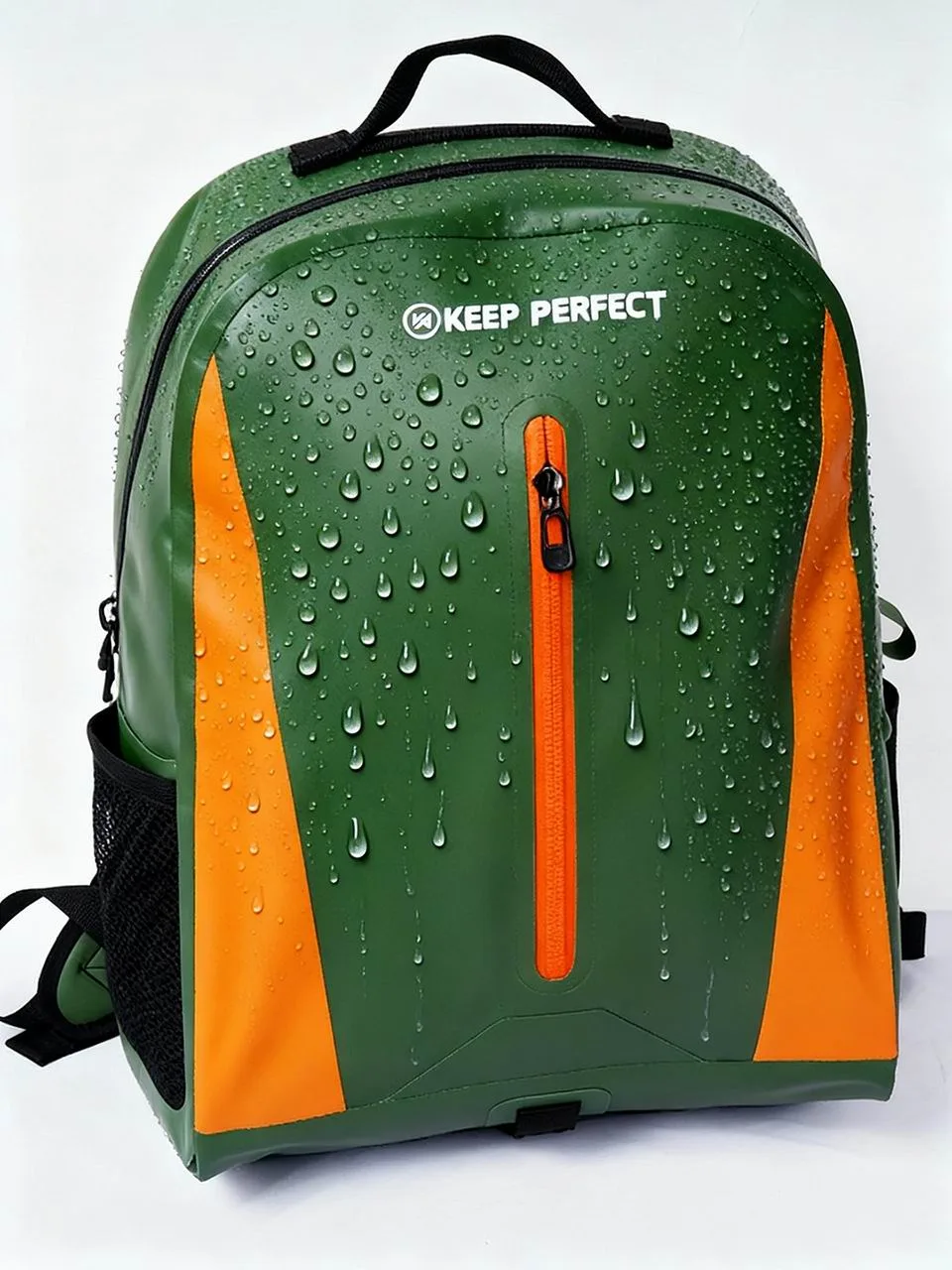
Match the bag to the aircraft rather than to the volume you think you need. A sub-250 g mini drone with its controller and two batteries is a 12 to 15 litre problem and fits a small roll-top with room for a tablet. A folding enterprise quad with an RTK base, a tablet, a laptop and four batteries is a 30 to 40 litre problem and needs a duffel with compartments.
Fixed-wing survey platforms break the pattern entirely: a 1.8 m wingspan airframe needs a 60 to 90 litre bag and will not fit in anything designed for a quad. Operators running those usually end up with two bags, one for the airframe and one for the ground station, which is the correct answer and also a safer one, because it keeps the heaviest item separate from the most sensitive one.
| Airframe class | Aircraft mass | Total kit volume | Recommended bag | Notes |
|---|---|---|---|---|
| Sub-250 g mini | 249 g | 12-15 L | 15 L roll-top | One insert, tablet sleeve |
| Folding consumer quad | 600-950 g | 20-26 L | 25 L dry backpack | Three batteries, props |
| Enterprise quad with RTK | 1.0-1.6 kg | 32-42 L | 40 L dry duffel | Base station in its own bay |
| Inspector with zoom payload | 1.2-2.0 kg | 30-38 L | 35 L backpack plus tote | Payload in a hard insert |
| Cine lift, heavy | 3.5-6.0 kg | 55-70 L | 70 L duffel plus case | Two-person lift, wheels |
| Fixed-wing survey | 2.5-5.0 kg | 60-90 L | 90 L duffel | Airframe and ground station split |
Padding and organisation inside a soft bag
A dry bag has no structure of its own, which is its strength and its weakness. The fix is an insert: a closed-cell foam box or a set of padded dividers that holds the aircraft in a fixed position and takes the load off the gimbal. Without one, a 1.4 kg aircraft slides to the bottom of a 40 L bag and every step on a rocky path is transmitted through the airframe.
Build the insert around the gimbal, not around the body. The gimbal is the part that fails, it is the part that costs the most to replace, and it is the part that must be supported clear of any contact surface. Cut the foam so the aircraft rests on its arms and belly with the gimbal hanging in a void, and label the void so nobody packs a battery into it.
Lithium-polymer batteries: water, heat and the sealing question
Batteries are the reason drone bag advice differs from camera bag advice. A lithium-polymer pack that has been submerged, punctured or crushed is a hazard rather than cargo, and the worst thing you can do is seal it inside a waterproof bag where it cannot be seen and where any gas it vents is contained. A suspect pack goes into an open, fire-resistant container, outdoors, away from the rest of the kit.
Healthy batteries travel dry and separate. Keep them in a vented pouch rather than a sealed one, keep terminals covered, and never pack a battery and a metal tool loose in the same compartment, because a spanner bridging two terminals in a moving bag is a well-documented way to lose a vehicle. Water is the lesser risk here; short circuit is the greater one.
Temperature is the third factor and it interacts with the bag. A sealed bag in the back of a vehicle in 35 °C sun reaches 60 °C internally, and lithium-polymer cells should not be stored or charged at that temperature. Carry batteries in the cab, in shade, and never charge them inside a closed bag or a hot vehicle.
Condensation: the failure nobody blames on the bag
More gimbals and sensors are damaged by condensation than by rain. The mechanism is simple: an aircraft flown in 12 °C air is colder than the dew point inside a vehicle at 24 °C and 70 per cent humidity, so the moment you seal it into a bag in that vehicle, water condenses on the cold lens, the cold sensor and the cold circuit board. A perfectly waterproof bag makes this worse, because it traps the moisture with the kit.
Two habits fix it. Let the aircraft come close to ambient temperature before you seal it, which takes ten to fifteen minutes in the shade, and put a 20 to 40 g silica sachet in every compartment holding optics or electronics. Desiccant is cheap, weighs almost nothing, and it is the single highest-value item in a drone bag after the insert.
| Situation | Air temp | Kit temp | Condensation risk | Action |
|---|---|---|---|---|
| Cold flight into a warm vehicle | 24 °C | 10 °C | Severe | Wait 15 min, then seal |
| Warm flight into air-conditioning | 18 °C | 32 °C | Moderate | Seal with silica inside |
| Coastal dawn launch | 14 °C | 14 °C | Low to moderate | Silica, dry before packing |
| Rain flight into a heated van | 26 °C | 14 °C | Severe | Dry the shell first, then wait |
| Humid tropical midday | 32 °C | 34 °C | Low at packing | Silica still, humidity is high |
Desiccant needs managing or it becomes a wet sponge. Recharge silica every month at 120 °C for two hours in a domestic oven, or replace it, and use an indicating type so you can see when it is spent. Full detail on the mechanism is in the condensation guide.
Spray, salt and launching from a boat
Marine survey and inspection work is the hardest version of this problem, because the launch platform is wet, moving and salty. Everything that is not in a sealed bag takes spray from the bow and from rotor wash at the recovery point, and the recovery is the moment when kit goes in the water: a hand-catch at shoulder height with the boat rolling is where controllers and tablets get dropped.
Work from a bag that is lashed down and open, with a second sealed bag behind it for anything not in use. Keep salt off the aircraft by rinsing the arms and the shell with fresh water at the end of every flying day and drying before packing, because salt crystals on a gimbal motor are a permanent problem. The same rule that applies to paddling gear applies here, and the saltwater rinsing notes cover the detail.
Wind and sea state decide whether you fly at all, and they should be checked before the kit leaves the vehicle. Coastal forecasts and sea state are published by NOAA, and a 25-knot wind with a 1 m swell is a hand-catch risk more than a flight risk. If the deck is wet and moving, use a landing pad or a net recovery instead of a hand catch.
Dust and rotor wash at the landing site
Rotor wash is a dust generator. A 1.4 kg quad hovering at 1 m produces a downwash that lifts fine particulate from a dry landing zone and deposits it on the aircraft, in the gimbal and on the inside of the bag if the bag is open nearby. On a gravel bar or a dry river bed this is the dominant contamination source, more than rain.
Use a landing pad, keep the bag closed and upwind during launch and recovery, and wipe the aircraft before it goes back in. A bag with a roll-top closure does better here than a zip, because a roll has no slider to pump dust, but only if the fold is wiped before closing. Ten seconds with a cloth is the whole routine.
Waterproof ratings that matter for drone kit
Ratings describe a test, and for drone work the relevant ones are IPX6 for a jet of water and IPX7 for immersion. Rotor wash over a wet landing pad is a jet event; a bag dropped off a boat is an immersion event. The IEC defines both in IEC 60529, and any listing that says waterproof without naming the code is not making a testable claim.
Note the difference between the bag rating and the aircraft rating. Some enterprise airframes carry an IP rating of their own, and it is always lower than the bag rating: IP45 on an airframe means rain is fine and immersion is not. The bag protects the kit; it does not extend the rating of the thing inside it.
| Exposure | What happens | Rating needed | Realistic outcome |
|---|---|---|---|
| Light rain during setup | Drizzle on the bag | IPX4 | Fine with any welded bag |
| Rotor wash over a wet pad | Directed spray | IPX6 | Fine with a roll-top |
| Bag in the bottom of a boat | Standing water | IPX7 | Fine if the closure is rolled |
| Dropped overboard | Immersion at 1 m | IPX7 | Kit survives, bag floats |
| Submerged for over 30 min | Sustained pressure | IPX8 territory | Assume failure, plan for it |
Colour, visibility and identification
Colour is a safety decision in the field as much as a branding one. A high-visibility bag is easier to find at dusk on a survey site, easier to spot from a boat and easier to keep track of when a team of four is working a river bank. A dark bag is better for film and wildlife work, where a bright object in shot is a problem and where the crew does not want to attract attention.
The compromise most operators use is a dark bag with a reflective panel and a labelled window. Reflective accents cost almost nothing, add night visibility without changing the daylight appearance, and are described in the reflective accents guide. A clear window with a laminated card also settles the question of whose bag is whose on a shared job.
Field routine: pack, fly, recover, dry
- Pack the insert first, gimbal in a void, batteries in a vented pouch away from tools.
- Check the fold line for grit, close with three folds and confirm the buckle is seated.
- Keep the bag closed and upwind during launch and recovery to avoid rotor-wash dust.
- Wipe the aircraft before it goes back in; rinse with fresh water after any salt exposure.
- Let cold kit reach ambient temperature before sealing, and keep silica in every optics bay.
- Open the bag fully at the end of the day, hang it upside down and dry it within 24 hours.
- Recharge or replace silica monthly, and inspect weld corners for a white stress line.
The drying step is what separates a bag that lasts from one that smells. A sealed bag holding a damp aircraft grows mould within 24 to 48 hours at 20 to 30 °C, and the spores then live in the foam insert, which is far harder to clean than the shell. Dry the bag and the insert together, in moving air, out of direct sun.
Pre-mission checklist
- Audit the real kit: weigh it and estimate volume, then add 25 per cent headroom.
- Choose the format by site: backpack for walk-in, duffel for boat and vehicle work.
- Fit a padded insert that supports the arms and leaves the gimbal in a void.
- Batteries in a vented pouch, terminals covered, never with metal tools.
- Silica in every optics compartment, recharged monthly at 120 °C for two hours.
- IPX7 welded shell with a roll-top closure, rated against a named standard.
- Landing pad on every site, bag closed and upwind during rotor wash.
Survey companies, inspection contractors and production houses turn that checklist into an equipment spec, and volume, film thickness, closure geometry, insert compatibility and hard points are the five lines that decide whether a bag survives a season of field work. Our production partner has produced waterproof bags since 2014 in an SGS-verified 4,950 m2 facility, with a 500-piece minimum, sampling in 6 to 10 working days and bulk in 35 to 50 days FOB Xiamen.
Two further standards are worth naming in a specification. The ASTM maintains the abrasion and impact test methods that make a durability claim checkable, so ask which method and which load an insert foam was tested at rather than accepting a photograph of it. For the electronics themselves, the aircraft rating and the bag rating are independent, and the lower of the two governs what you can safely do in the wet.
Close the comparison against the neighbouring guides. Camera and gimbal packing is covered in camera gear in a dry bag and sizing for optics in the camera kit sizing guide, while the ground station needs the laptop protection notes. The sealing question for electronics is answered in are dry bags airtight for electronics, and the general filter is the buying checklist. Formats across sizes are compared further in the TPU waterproof backpack range.
Frequently asked questions
Q1. What size dry bag do I need for a drone kit?
A folding consumer quad with three batteries and a tablet needs 20 to 26 litres. An enterprise quad with an RTK base station and a field laptop needs 32 to 42 litres. Fixed-wing survey platforms need 60 to 90 litres, usually split across two bags.
Q2. Is a dry bag better than a hard case for drones?
For field work, yes: a soft welded bag weighs 1.1 kg against 4.2 kg for a comparable case and absorbs knocks on a boat instead of transmitting them. Keep a hard case for checked air travel, where impact and stacking matter more.
Q3. Do dry bags have enough padding for a drone?
Not on their own. Fit a closed-cell foam or divider insert that supports the arms and leaves the gimbal hanging in a void. Ten millimetre foam adds about 90 grams and absorbs roughly 80 per cent of a 30 cm drop onto gravel.
Q4. How do I stop condensation damaging my drone?
Let the aircraft reach ambient temperature before sealing it, which takes ten to fifteen minutes, and keep a 20 to 40 g silica sachet in every compartment with optics. Sealing a cold aircraft in a warm vehicle causes water to condense on the lens and the sensor.
Q5. Can I put lithium batteries in a sealed dry bag?
Healthy cells travel in a vented pouch inside the bag, with terminals covered and never alongside metal tools. A cell that is swollen, punctured or has been submerged is a hazard: keep it in an open fire-resistant container outdoors, never sealed in a bag.
Q6. What waterproof rating should a drone bag have?
IPX7 with welded seams. Rotor wash over a wet landing pad is an IPX6 jet event and a bag dropped off a boat is an IPX7 immersion event. Ask for the standard behind the claim, which is IEC 60529, rather than the adjective.
Q7. Does a waterproof bag protect the aircraft rating?
No. The bag protects the kit but does not extend the airframe rating. An aircraft rated IP45 is fine in rain and not fine submerged, whatever the bag around it is rated to.
Q8. How do I keep dust out of a drone bag?
Use a landing pad, keep the bag closed and upwind during launch and recovery, and wipe the fold line before closing. Rotor wash at 1 m lifts fine particulate and is the dominant contamination source on a dry site.
Q9. What colour dry bag is best for drone work?
High-visibility for survey and rescue, dark with a reflective panel for film and wildlife. Reflective accents add night visibility without changing the daylight look, and a clear window settles whose bag is whose.
Q10. How do I dry a drone bag after a wet day?
Open it fully, hang it upside down and dry it in moving air within 24 hours, out of direct sun. A sealed bag holding a damp aircraft grows mould in 24 to 48 hours, and the spores then live in the foam insert.
Q11. Can I launch and recover a drone from a boat?
Yes, with a second sealed bag for anything not in use and a landing pad or net recovery rather than a hand catch on a rolling deck. Rinse the arms with fresh water after every saltwater day and dry before packing.
Q12. How often should I replace silica gel in a drone bag?
Recharge it monthly at 120 °C for two hours, or replace it. Use an indicating type so you can see when it is spent, because saturated desiccant becomes a wet sponge rather than a moisture absorber.
Q13. Should the RTK base station go in the same bag as the aircraft?
Prefer separate. A base station with tripod weighs 1.8 to 3.2 kg and is the bulkiest item in the kit, so it belongs in a duffel compartment where it cannot press on the gimbal or the tablet.
Q14. How much weight can a drone dry bag carry?
Keep any single bag under 12 kg. An enterprise kit at 11 kg is manageable in a backpack for a 1 km carry; a 70 L cine kit at 25 kg should be two bags and a two-person lift, with wheels on the case.
Q15. Do I need a clear window on a drone bag?
It helps. A laminated identification card behind a window settles ownership on a shared job and keeps the bag closed when someone is looking for a specific aircraft or payload.
Q16. Can a wet drone go straight back into the bag?
Wipe it first and, after salt exposure, rinse with fresh water. A damp aircraft sealed in a warm bag creates the exact conditions for condensation and mould, and the gimbal is the first thing to suffer.
People also ask
How do you protect a drone from rain?
Keep it in an IPX7 welded bag with a padded insert until the moment of launch, use a landing pad so the aircraft does not sit in wet grass, and wipe it before it goes back in. Light rain is a flight decision, not a bag problem.
Are dry bags good for camera drones?
Yes, with an insert. A roll-top dry bag gives better water protection than a camera backpack and weighs less than a hard case, but it has no structure of its own, so a foam insert is what actually protects the gimbal.
What size bag fits a folding drone and controller?
About 20 to 26 litres for a consumer folding quad with three batteries, a controller and a tablet. Add six to ten litres if you carry an RTK base station, and double the figure for a fixed-wing survey platform.
Can you put drone batteries in a waterproof bag?
Yes in a vented pouch inside the bag, with terminals covered and never with metal tools. Never seal a swollen, punctured or submerged cell: it belongs in an open fire-resistant container outdoors.
Why does my drone fog up inside the bag?
Condensation. A cold aircraft sealed in warm humid air is below the dew point, so water forms on the lens and the sensor. Let it reach ambient temperature first and keep silica in the compartment.
How do you carry drone gear on a boat?
Lash the working bag down, keep a second sealed bag for kit not in use, use a landing pad or net recovery instead of a hand catch, and rinse the arms with fresh water after every saltwater flying day.
Need this in production volume?
QUANZHOU JUNYUAN BAGS has produced waterproof bags since 2014 in an SGS-verified 4,950 m2 facility in Fujian, China. Minimum order 500 pieces, sampling in 6–10 working days, bulk in 35–50 days, FOB Xiamen — write to service@junyuanbags.com with your spec and target market.