Home / Blog / Travel & Packing
Festival Weekend Waterproof Plan
A two-night festival in a wet field needs 22 to 34 litres of waterproof space per person, split across three bags: a 30L to 40L camp bag that never leaves the tent, a 10L to 15L day bag for the arena, and a 1L to 2L pocket layer for phone, card and ticket. Plan around 8 to 11 mm of rain in 24 hours as your working assumption, because that is enough to saturate grass and turn a walking route into standing mud while leaving your tent fabric apparently dry.
Most kit is not ruined by rain, it is ruined by ground water, condensation inside a sealed tent and the moment you pack everything away wet on the last morning. This plan covers bag roles and capacities, the order in which things are packed, how to keep a sleeping bag dry when the tent leaks, dealing with power and tickets in continuous drizzle, and a pack-down routine that stops mildew appearing in your wardrobe three weeks later.
- Where festival water actually comes from
- Three bags, three jobs, no crossover
- How many litres for two nights in a field
- Keeping the sleep system dry when the tent leaks
- Phone, card, ticket and power in continuous drizzle
- Mud: contamination strategy for the last six hours
- Food, water and cooking in a wet field
- Getting through the gate without unpacking everything
- Night: dew, condensation and where bags should sit
- What earns a place in the day bag
- Packing down wet without ruining your kit at home
- Hot weather and storm weather variants
- The condensed festival waterproof plan
Where festival water actually comes from
Rain rarely lands directly on your gear for long. What damages clothing and electronics in a field is contact water: a tent floor pressed into wet grass, a bag set down while you queue, a jacket dropped on the groundsheet. Assume anything touching the floor is wet within about 90 seconds of being put down once the grass is saturated, and plan every habit around that single fact.
Condensation is the second source and it surprises people who have camped only in dry weather. Two adults breathe out roughly 1.5 litres of water overnight; with a sealed flysheet at 90 per cent internal humidity and a 6 °C drop before dawn, that moisture condenses on the coldest surface, which is usually the inner tent above your feet. Kit pushed against that wall absorbs it even when no rain fell.
The third source is the pack-down. Leaving a field at 09:00 in drizzle means folding a wet tent and putting damp clothing into the same bag it arrived in. Everything then sits sealed for a six-hour drive home at 22 °C, which is exactly the condition that produces a mould bloom on cotton within 48 hours.
Three bags, three jobs, no crossover
Assign one job per bag and never mix them. The camp bag holds sleeping kit and spare clothing and should be opened twice a day. The day bag carries what you need between stage and tent. The pocket layer never leaves your body. When those roles blur, the camp bag gets opened in the rain and everything inside pays for it.
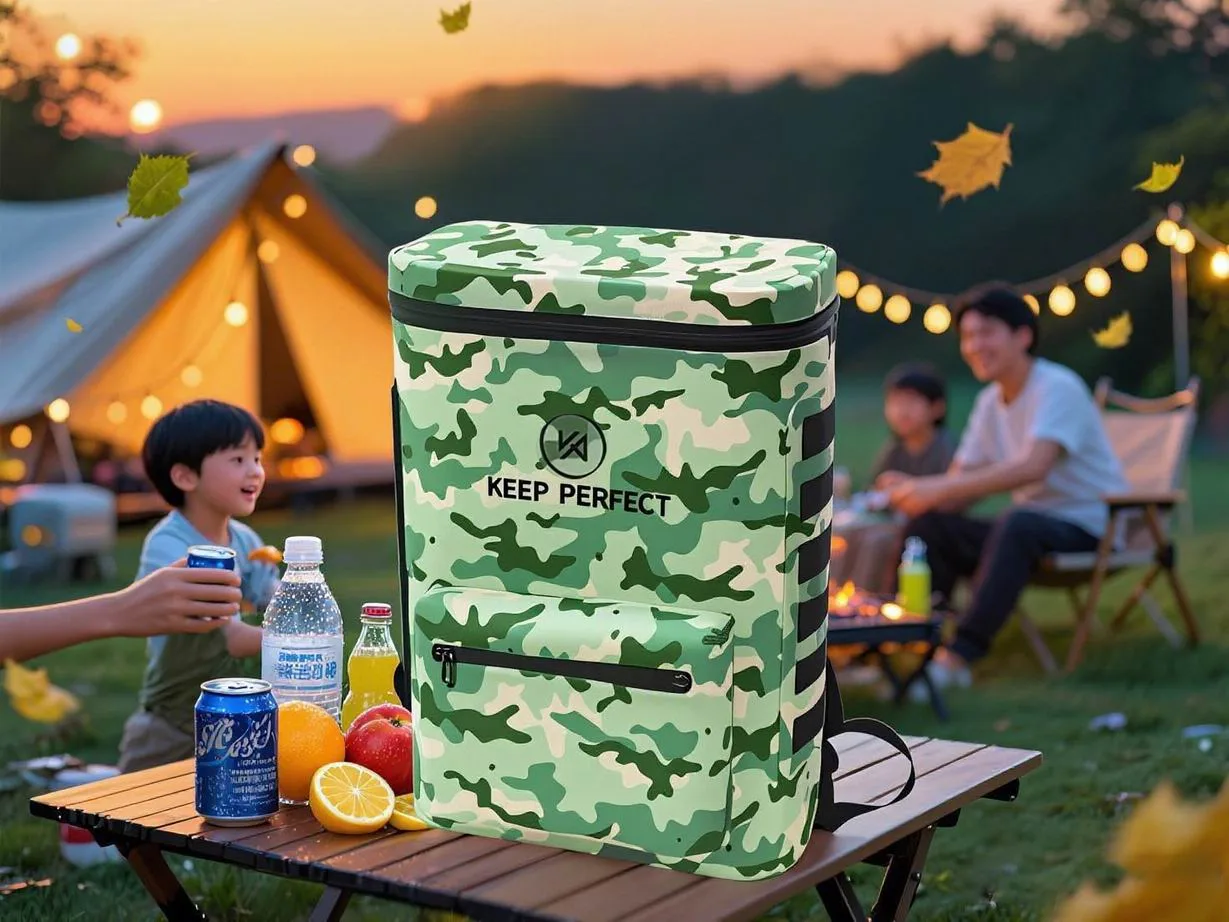
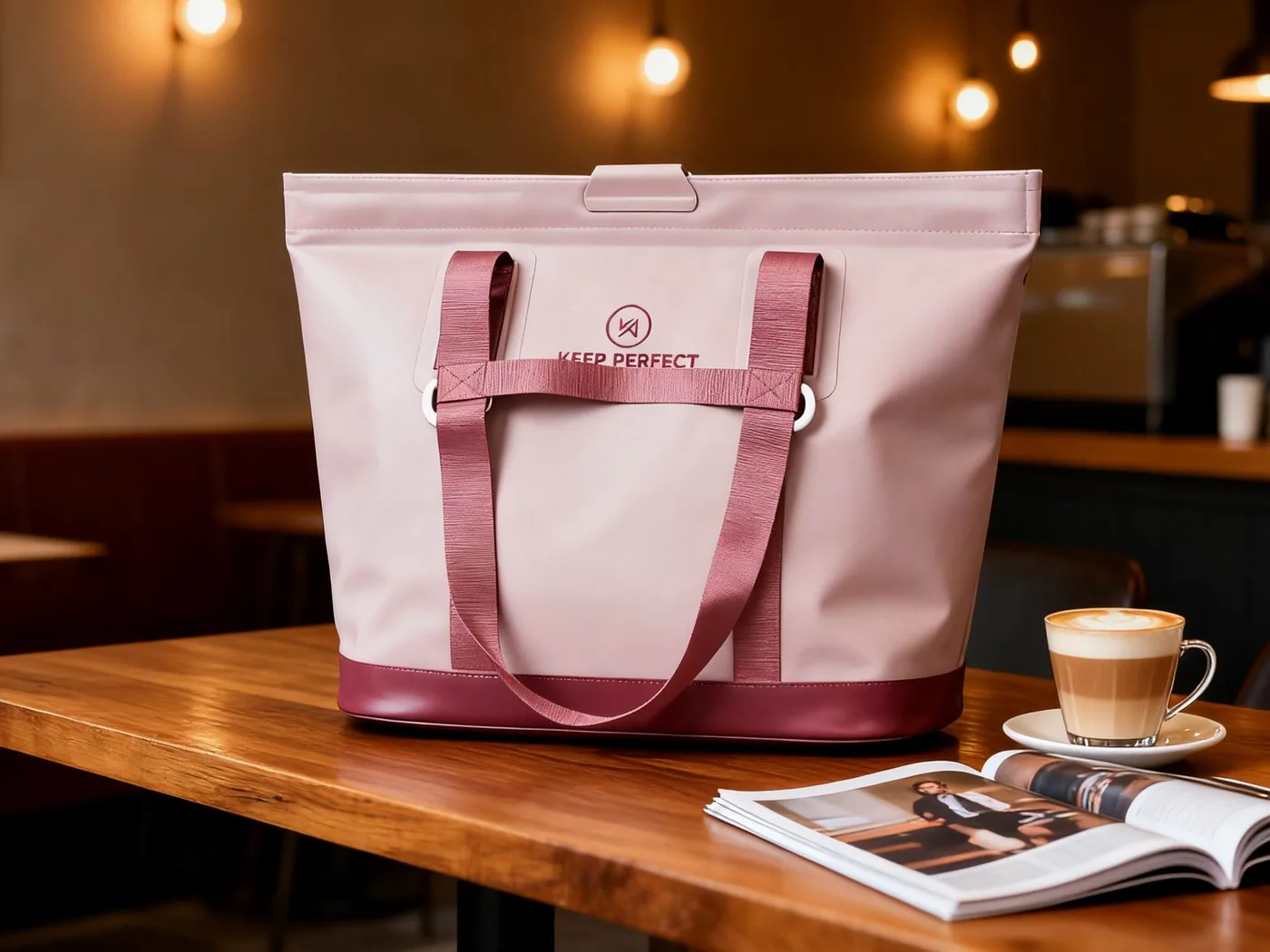
Colour helps more than labels here. Give the day bag a bright colourway you can spot from ten metres in a crowd, keep the camp bag dark so field mud does not show, and make the pocket layer something you would notice missing. Dark green and black roll-top bodies are the common split, with a mint or pink body for anything you need to find fast at night.
| Bag | Role | Size | Contents | Water risk |
|---|---|---|---|---|
| Camp bag | Sleep system and clothing | 30-40 L | Sleeping bag, mat, spare layer | Ground contact, condensation |
| Day bag | Arena and stage kit | 10-15 L | Rain shell, water, snacks, power bank | Direct rain, crowd |
| Pocket layer | Valuables on the body | 1-2 L | Phone, card, ticket, keys | Body moisture, immersion |
| Dirty bag | Wet clothing outbound | 10-20 L | Soaked jacket, muddy shoes | Internal contamination |
The fourth bag in that table is the one people forget, and it is the difference between a dry car and a wet one. A cheap 15L roll-top dedicated to wet clothing and shoes costs very little and keeps mud out of everything else. Bring it empty, use it only on the final morning, and treat everything that goes into it as contaminated until it is dry.
How many litres for two nights in a field
Work from real packed volumes rather than from what the bag claims. A three-season sleeping bag packs to around 5 to 7 litres, a self-inflating mat to 3 to 4, spare clothing to 5 to 8, and toiletries plus a towel to another 2. Add a camp chair cushion or a pillow and the camp bag is at 30 litres before you have packed anything perishable or electronic.
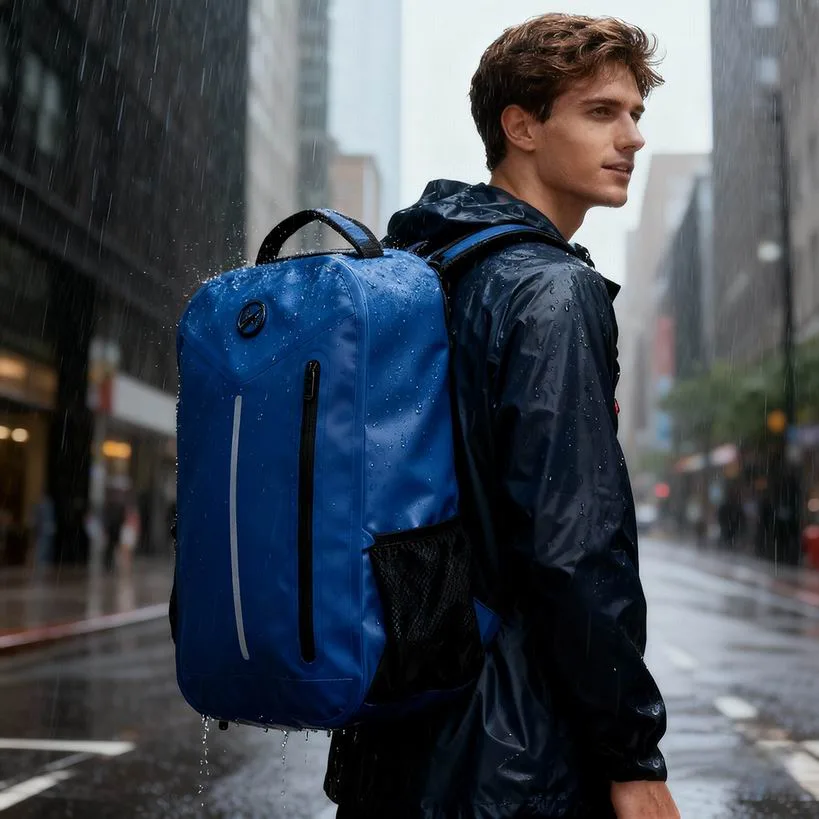
The day bag is deliberately small. Once it exceeds about 15 litres it stops fitting through a crowded gap and starts being put down, which is when it gets wet. A blue waterproof backpack around that size carries a rain shell, one litre of water, a power bank and a snack without inviting you to add a fourth layer that stays unused.
| Item | Packed litres | Weight | Bag | Must stay dry |
|---|---|---|---|---|
| Three-season sleeping bag | 6.0 L | 1.4 kg | Camp | Always |
| Self-inflating mat | 3.5 L | 900 g | Camp | Surface only |
| Spare clothing for two days | 7.0 L | 1.6 kg | Camp | Always |
| Toiletries and towel | 2.0 L | 600 g | Camp | Preferable |
| Rain shell and fleece | 3.5 L | 900 g | Day | Shell is the protection |
| Electronics and cables | 1.5 L | 700 g | Day | Always |
| Total carried, two nights | 28.5 L | 7.2 kg | Camp plus day | - |
Notice that the total lands well inside what most people pack, because a festival is not a wilderness trip. If your working figure exceeds 35 litres you are carrying clothing you will not wear, and the extra volume forces a bigger bag that is harder to keep off the ground. Cut two outfits before you buy a larger bag; the numbers in our weekend capacity breakdown show how rarely a fourth layer is used.
Keeping the sleep system dry when the tent leaks
The sleeping bag is the one item that cannot be dried in a field, so it gets the most protection. Keep it compressed in its own dry bag inside the camp bag, open it only inside the tent, and never unzip it on the porch. A bag that gets damp in the first hour of the first night stays damp for the whole weekend, and a synthetically insulated bag loses roughly a third of its effective warmth when wet.
Secondary protection is cheap insurance. A heavy-duty liner or a second lightweight roll-top around the foot of the bag stops the common failure mode, which is condensation running down the tent wall and wicking into the fabric that is touching it. Keep the foot end at least 10 cm from any tent wall and put the thickest dry layer you have between them.
Air the bag in the middle of the day whenever the sun appears. Even 45 minutes of weak sun removes a surprising amount of absorbed moisture, and a sleeping bag that starts each night at ambient humidity feels noticeably warmer than one that does not. This is the single habit that separates people who sleep well from people who spend two nights cold.
Phone, card, ticket and power in continuous drizzle
Everything valuable goes in a small roll-top that stays on your body, not in a day bag. A 2L bag in a jacket pocket or clipped inside a waistband survives crowd pressure, a queue in heavy rain and the dropped-in-mud scenario that ruins more phones than water does. Put the card and ticket in the same pouch so you are never choosing which one to save.
Power is the rest of the problem. A 10,000 mAh bank gives most phones two full charges and weighs about 220 g; keep it in the day bag with the cable in a separate small roll-top, because cables and water together produce corrosion on contacts that looks like a dead battery later. Charge overnight inside the tent rather than in a phone locker, and reseal everything before you sleep.
Two low-cost habits matter more than any gadget. Screenshot the ticket and the travel confirmation offline, and put a paper note with a contact number inside the pocket pouch, because a flat phone in a field with no network is unrecoverable. Detail on keeping paper safe at festivals sits in our documents protection guide.
Mud: contamination strategy for the last six hours
Mud is a transport problem rather than a waterproofing problem. Once field water is on the outside of a bag, it travels into cars, luggage and hall cupboards, so the rule is simple: the outside of any bag that has touched the ground is contaminated, and nothing contaminated goes into clean luggage. Bag external contact before you leave rather than treating it later.
Give yourself a two-bag boundary at the car. Everything muddy goes into a dedicated wet bag or straight onto a boot liner; everything clean stays sealed in its own roll-top and never touches the ground again. A folded groundsheet or an opened refuse sack on the boot floor costs nothing and protects the vehicle better than any liner product sold for the purpose.
Footwear drives most of the mess. Bring one pair of shoes you accept will be ruined, carry a spare pair of thick socks sealed in a 2L bag, and use a doormat—canvas or an old towel—at the tent entrance. Put shoes into a separate roll-top upside down and treat them as contaminated until they have dried at home for two days.
Food, water and cooking in a wet field
Rain changes how food behaves more than people expect. Anything absorbent left out for ten minutes is ruined, dry packaging turns to paste, and bread crushed in its wrapper becomes unusable. Keep food in rigid containers inside a roll-top rather than loose, and keep the cooked and the raw separate, because a wet environment makes cross-contamination easier to miss at the moment it happens.
Water storage has its own rule: never decant drinking water into a bag that has held anything else, and carry at least 2 litres per person per day in a dedicated container. Once a field is busy, water points queue for 20 minutes, so fill opportunistically rather than when you are already thirsty. Camping hygiene advice from the CDC covers safe handling that applies just as well to a festival campsite.
Cooking under a porch is where most weather failures happen, so keep the stove on a stable board rather than on grass, and never inside a sealed tent. Put the fuel canister away from direct rain but outdoors, and wipe closures before sealing anything that will hold food. Any bag that has held food should be rinsed before it carries clothing home.
Getting through the gate without unpacking everything
Security and ticketing checks are where bags get opened in the rain. Pack so the contents can be inspected without tipping the load out: items grouped in small pouches, nothing loose at the bottom, and the pouches that inspectors always want—power bank, liquids, aerosols—placed within hand's reach of the closure rather than under clothing.
Roll once rather than three times while queuing. A single fold keeps weather out long enough for a search but opens in about four seconds, and then you restore the full seal once you are through. Fumbling with a triple-rolled closure in front of 200 impatient people is how people end up leaving it half closed for the rest of the day.
Carry the bag on your front in dense crowds and keep the closure facing you rather than the sky. Water running down your back enters a top-facing roll seam faster than sideways rain does, and a crowd compresses the bag against your body in a way that squeezes an imperfectly rolled closure open. Re-roll every time you leave a queue.
Night: dew, condensation and where bags should sit
Between midnight and 05:00 the temperature drops, relative humidity approaches saturation, and every surface inside and outside the tent collects dew. Anything left outside will be wet by morning even without rain, so bring in anything you need dry and accept that the outer wall of the bag will be damp whatever you do.
Inside the tent, position matters more than the bag itself. Keep bags away from the walls by 10 to 15 cm, use a spare groundsheet or a folded mat underneath to break capillary contact with the floor, and never leave a roll-top with its closure resting in a puddle at the low point of the groundsheet. If the tent pools anywhere, that is where the mud will be by morning.
Ventilation helps more than sealing. Opening two vents about 10 cm reduces internal humidity noticeably and cuts condensation dramatically, even in rain, because moving air carries more moisture than still air does. Accept a slightly draughtier night in exchange for a dry bag, tent and sleeping system, and check the forecast before you set up through NOAA if you are in the United States.
What earns a place in the day bag
The day bag is decided by what you use between leaving the tent and coming back, and nothing else. A packable rain shell, one litre of water, a power bank and cable, a compact snack, sunscreen, and a small first-aid pouch amount to about 1.6 kg and fit comfortably in 10 litres with room to roll.
Everything else is negotiable. A third warm layer almost never gets worn; a spare t-shirt does nothing once wet; a book is read for ten minutes. Weigh the bag before you leave the tent on the first afternoon and if it exceeds 2.5 kg you are carrying something that will not be used. The list below reflects what people actually reach for.
- Packable rain shell, 300 g, always worn or hand-held rather than packed wet.
- Soft water bottle, one litre full, kept in an outer pocket so it does not leak inward.
- Power bank, 10,000 mAh, plus a cable sealed in a 1L pouch.
- Sunscreen and a small tube of lip balm, both in the pocket layer at night.
- Compact first-aid pouch with plasters, blister pads and painkillers.
- One light layer for the walk back after dark, chosen for warmth at 8 °C.
Packing down wet without ruining your kit at home
Assume you will leave in rain, because you usually do. The priority order matters: dry the tent fly first if there is any break in the weather, then seal clothing loosely rather than tightly, then deal with shoes last, because shoes carry the most contamination and the most water. Nothing important goes into the same bag as anything wet.
Loosely sealed is the key phrase. A tightly rolled bag holding damp clothing holds moisture for the entire journey home and mildew can begin within 48 hours at 20 °C. Roll once, leave the buckle loose, and open everything within two hours of arriving home. Air each item separately rather than the bag as a whole.
| Kit | Wet on Sunday 09:00 | Action at home | Full drying time |
|---|---|---|---|
| Tent flysheet | Always, unless very lucky | Hang over two lines, spread fully | 4-8 h in shade |
| Sleeping bag | Only if it was sealed damp | Loft and air indoors, no direct heat | 12-24 h |
| Cotton clothing | Frequently, from condensation | Machine wash with a full dry | 2-4 h |
| Footwear | Almost always | Newspaper stuffing, changed hourly | 24-48 h |
| Roll-top bags | Outside only | Rinse, dry open in shade | 2-3 h |
Rinse the bags themselves the same day. Field water carries silt, and silt sitting in a closure crease abrades the film every time the bag is rolled afterwards. Our rinsing routine is written for salt water but the sequence is identical for mud, and doing it while the silt is fresh takes three minutes rather than thirty.
Hot weather and storm weather variants
Two failure modes sit at either end of the forecast. In a hot dry weekend the enemies are heat and dehydration rather than water, so the day bag carries more water and less clothing, the power bank stays out of direct sun, and nothing electronic is left in a sealed tent where internal temperature can pass 45 °C by early afternoon.
In a storm weekend the order changes completely. Anything that can fly away goes inside or is weighted down, bags are lashed to something solid rather than left loose, and the dirty bag is used from the first evening rather than the last morning. A sudden 40 km/h gust moves an unsecured 10L bag across a field faster than you can chase it.
Between the two, ordinary British or northern European drizzle is the common case and it is mostly a mud and condensation scenario. Plan for saturation rather than downpour, carry one more pair of socks than you think you need, and treat the watchword as separation: separate clean from dirty, dry from damp, and electronics from everything else.
The condensed festival waterproof plan
If you take one thing from this guide, take the split: 30 to 40 litres for camp, 10 to 15 for the arena, 1 to 2 on your body, plus one dedicated dirty bag for the journey home. Buy the camp bag in a colour toward the darker end of our range, pick a bright body for the day bag, and check every closure before you leave the tent.
For anyone kitting out a group rather than themselves, the same four sizes standardise the whole plan, which is also how most bulk orders are placed. A four-size set at 5L, 10L, 20L and 40L covers every role in the table above, and tooling exists across the range already.
Whatever you carry, remember the numbers that matter most: two litres of water per person per day, a day bag that stays under 2.5 kg, roughly ten litres of space for the visibility items, and a pair of dry shoes waiting in the car. Compare sizes against the current range, and read our notes on festival branding if you are planning for a club rather than yourself.
Frequently asked questions
Q1. What size dry bag do I need for a festival weekend?
Split 22 to 34 litres across three bags: a 30L to 40L camp bag for sleeping kit, a 10L to 15L day bag for the arena, and a 1L to 2L pouch for phone, card and ticket kept on your body.
Q2. How do I keep a sleeping bag dry in a leaking tent?
Keep it in its own roll-top inside the camp bag, open it only inside the tent, and leave 10 cm between the foot and any tent wall where condensation collects. Air it in the middle of the day whenever the sun appears.
Q3. Do I really need a separate bag for wet clothes?
Yes. Otherwise wet clothing goes into the same bag as dry clothing for a six-hour journey home, and mildew can start inside 48 hours. A cheap 15L roll-top used only for the pack-down protects everything else.
Q4. How much water should I carry per day?
Two litres per person per day minimum, rising in hot weather. Fields queue for minutes rather than seconds once the site is busy, so refill whenever you pass a working point rather than waiting until you are thirsty.
Q5. What goes in the arena day bag?
A packable shell, one litre of water, a 10,000 mAh power bank with its cable in a small pouch, a snack, sunscreen and a compact first-aid pouch. That is about 1.6 kg and fits 10 litres with room to roll.
Q6. How heavy should my day bag be?
Keep it under 2.5 kg. Weigh it before you leave the tent on the first afternoon; if it is heavier, you are carrying clothing that will not be worn, and the extra bulk makes it harder to keep off the ground.
Q7. How do I stop my phone getting wet in crowds?
Keep it in a 2L roll-top worn on your body rather than in a day bag, with the ticket and card in the same pouch. Most festival phone failures are drops into mud, not immersion, so body carry beats a pocket inside a bag.
Q8. Should I machine wash a muddy dry bag?
No. Rinse it by hand to remove silt first, wipe the closure line, then air dry open in shade. Silt left in a closure crease abrades the film every time the bag is rolled afterwards.
Q9. How many rolls should I use while queuing?
One fold is enough to pass through a search quickly, then restore three folds once you are through. A three-fold closure takes too long to open in front of a queue, and people often leave it half closed afterwards.
Q10. Can I leave bags outside the tent at night?
Bring in anything you need dry. Dew forms between midnight and 05:00 even with no rain, so anything outside will be wet by morning. Large camp bags can sit under a porch, raised off the ground.
Q11. How long does wet camping gear take to dry at home?
A flysheet 4 to 8 hours spread over two lines, footwear 24 to 48 hours with hourly newspaper changes, and a sleeping bag 12 to 24 hours lofted indoors without direct heat. Start within two hours of arriving.
Q12. What do I do if the tent floor pools?
Move everything that must stay dry at least 15 cm off the floor immediately and use a folded mat or spare groundsheet under the bags. Water always collects at the lowest point, and that is where the mud will be by morning.
Q13. Is a 40L bag too big for a festival?
It is the right size for two people's sleeping system and clothing, and too big for one person's day kit. Keep the 40L in camp and never carry it into the arena; crowd access is why the day bag stays at 15L or below.
Q14. How do I keep mud out of the car?
Use a two-bag boundary: anything muddy goes into a dedicated wet bag or onto a boot liner, and nothing that touched the ground touches clean luggage. Put shoes in upside down, in their own roll-top.
Q15. What should I do about food in heavy rain?
Keep food in rigid containers inside a roll-top, never loose. Anything absorbent left out for ten minutes in drizzle is ruined, so seal immediately after each meal and keep raw and cooked items separate.
Q16. How many spare socks should I bring?
One more pair than you think you need, sealed in a 2L bag. Wet feet are the most common reason people leave a festival early, and socks are the cheapest insurance available.
People also ask
How do you pack for a rainy festival?
Use three layers: a 30L to 40L roll-top for camp that never enters a crowd, a 10L to 15L day bag under 2.5 kg, and a 1L to 2L pouch on your body. Keep a fourth bag for wet kit and pack everything by group, not loose.
Are dry bags worth bringing to festivals?
Yes, because most damage comes from ground water rather than rain. A 20L roll-top costs less than one ruined phone and keeps sleeping kit dry even when the tent leaks at the condensation line.
How do you keep clothes dry camping without a car?
Put clothing in its own roll-top inside the camp bag, open it only inside the tent, and put a folded mat beneath every bag to break contact with the floor. Air each item out during any dry spell.
What size dry bag for a camping sleeping bag?
Around 6 litres of packed volume for a three-season synthetic bag, so a 10L roll-top leaves room to roll three times. Add another capacity step only if you also store a pillow and mat inside it.
Can you use a dry bag instead of a backpack at festivals?
For the walk from car to tent, yes, and a roll-top backpack suits that job well. For the arena, a smaller water-resistant day bag is easier to manage in crowds and quicker to open at a checkpoint.
How do you dry camping gear after a rainy weekend?
Open every bag within two hours of getting home, hang the flysheet fully spread, stuff footwear with newspaper changed hourly, and loft the sleeping bag indoors away from direct heat. Rinse silt out of the bags the same day.
Need this in production volume?
QUANZHOU JUNYUAN BAGS has produced waterproof bags since 2014 in an SGS-verified 4,950 m2 facility in Fujian, China. Minimum order 500 pieces, sampling in 6–10 working days, bulk in 35–50 days, FOB Xiamen — write to service@junyuanbags.com with your spec and target market.