Home / Blog / Travel & Packing
Winter Travel Slush Protection
Winter travel needs a different packing system from summer travel because slush behaves nothing like rain: road-salt brine stays liquid down to about -10 °C, a 20-minute walk through a slushy street puts 200 to 400 g of water on the outside of a bag, and that water refreezes inside zips and buckles overnight. A welded roll-top bag rated IPX6 or better survives that cycle; a coated pack with a stitched zip does not.
This guide covers the three wet zones of a winter travel day, how sub-zero temperature changes a TPU closure, why condensation is a bigger threat than slush inside a sealed bag, and how to dry everything overnight in a hotel room. Every recommendation is tied to a real number: cabin dimensions, drying hours, battery capacity loss at -5 °C, and the weight budget that keeps a winter carry-on under 7 kg.
- What slush actually does to luggage
- The three wet zones of a winter travel day
- Choosing a waterproof bag for sub-zero travel
- How cold changes a roll-top closure
- Condensation: the wet that comes from inside
- What must stay dry on a winter trip
- Salt, grit and the damage they do to hardware
- A two-bag winter system
- Getting through airports and stations in winter
- Drying gear overnight in a hotel room
- Electronics and batteries in the cold
- Weight and volume planning for a winter trip
- A winter travel checklist
What slush actually does to luggage
Rain runs off. Slush does not: it is a mixture of ice crystals, liquid water and dissolved salt that clings, wicks and then refreezes. A bag set down on a slushy pavement picks up water along its entire base seam, and a fabric shell that would shed a shower will hold that water against the seam for hours. On a coated pack, capillary action pulls it through the needle holes of every stitch within about 15 minutes.
The salt is the second problem, and it is the one that causes long-term damage. Road salt is hygroscopic, so it keeps the fabric damp after the water has gone, and it crystallises inside zip teeth and buckle mechanisms. A buckle that has been through one winter of salt exposure and no rinse will start slipping under load by the following season. Full drying and rinsing routines are set out in our saltwater rinsing guide.

The three wet zones of a winter travel day
A winter travel day has three distinct exposures and each one needs a different response. The first is the street: slush spray from traffic, puddle splash at kerbs, and wet snow packed onto the base of the bag. The second is transit: a bag stowed in an overhead locker or under a train seat, sitting in meltwater from someone else's coat. The third is the hotel room, where a wet bag is closed and left to steam overnight.
Most people solve for the first zone and forget the other two. A bag that survives the street but is then shut wet for ten hours creates its own internal weather: the trapped moisture condenses on the cold film and drips onto whatever is inside. The practical answer is to unpack every night, wipe the interior dry, and leave the bag open with the mouth rolled back rather than clipped shut.
| Wet zone | Typical water load | Exposure time | Control that works |
|---|---|---|---|
| Street slush and kerb splash | 200-400 g on the base | 20-40 min per walk | Welded base, no stitched bottom seam |
| Transit stowage | 50-150 g of meltwater | 2-8 h | Bag upright, mouth closed, base wiped |
| Hotel overnight | Condensation from trapped damp | 8-12 h | Unpack, wipe, dry open in room air |
| Boot room or ski lodge | 300-600 g of melt snow | 4-10 h | Bag on a rack, never on the floor |
| Airport apron walk | Rain and jet wash spray | 3-8 min | IPX6 minimum, roll closed before walking |
Choosing a waterproof bag for sub-zero travel
Winter narrows the field in a way summer does not. A PVC coated bag that is perfectly serviceable at 20 °C stiffens noticeably below 0 °C and becomes awkward to roll at -10 °C, while a TPU laminated bag stays workable to roughly -30 °C before it approaches its cold-crack point. If your itinerary includes a night train, an early ski transfer or any walking before dawn, that difference decides the material.
Closure type matters just as much. A waterproof zip needs a lubricant that does not thicken in the cold, and a frozen zip that is forced will tear the tape. A roll-top has no moving parts to freeze, which is why it is the default for winter: three folds and a buckle work with gloved hands at -15 °C. The trade-off is access speed, so plan what you need during the day into a smaller outer bag. Our roll-top versus zip comparison covers that trade-off in detail.
| Feature | Why it matters in winter | Target specification | What to avoid |
|---|---|---|---|
| Film type | Stays flexible when cold | TPU laminate, 0.4-0.5 mm | PVC below 0 °C |
| Closure | Works with gloves | Roll-top, three folds | Long waterproof zip |
| Base seam | Sits in slush for hours | Welded, no stitch line | Stitched and taped base |
| Hardware | Salt crystallises in the mechanism | Coated or stainless, 300 h salt rated | Uncoated steel spring |
| Straps | Wet webbing stiffens | Polyester webbing, 25-40 mm | Cotton or blended tape |
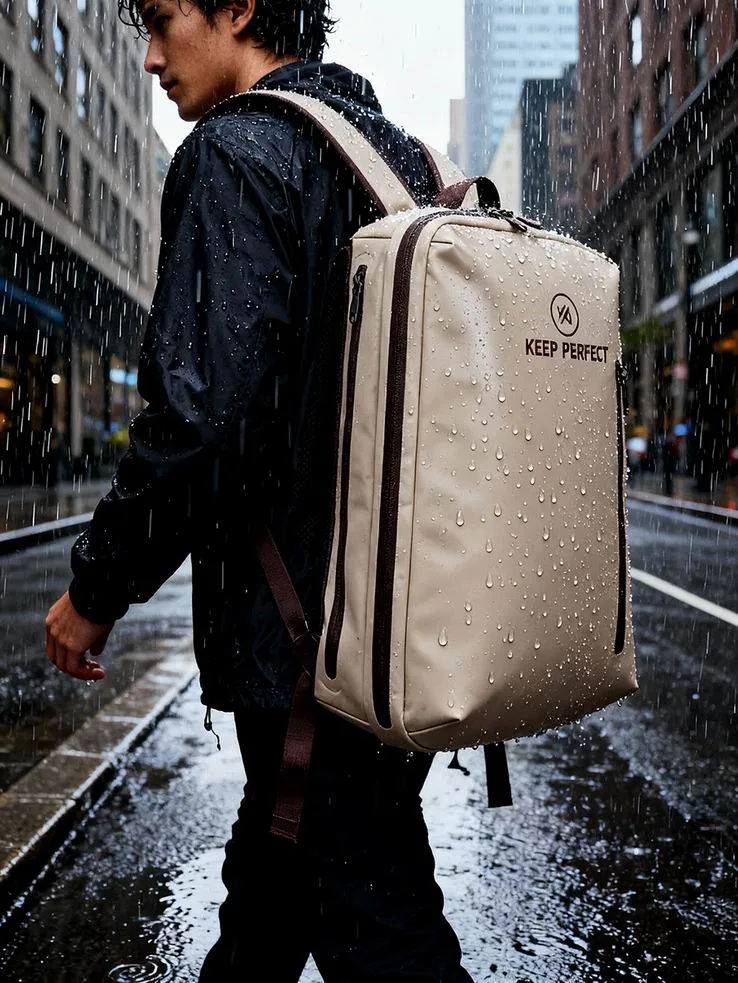
How cold changes a roll-top closure
A roll-top seals by pressing two film surfaces together along a fold. That works because the film is compliant enough to conform around any grit and to hold contact pressure. As temperature drops, the film stiffens, contact pressure at the fold falls, and the seal becomes more sensitive to contamination. In practice a closure that is reliable at 15 °C starts needing four folds rather than three somewhere between -5 and -10 °C.
There is a second, subtler effect. Cold film does not recover from a crease as quickly, so a bag that has been stored tightly folded in a cold car boot arrives with a permanent set at the fold line and needs warm-up time before it will seal. Carry the bag loosely rolled, let it sit in room temperature for 20 to 30 minutes before packing, and check the fold line with a thumb for grit before every close.
| Temperature | Film behaviour | Folds recommended | Practical note |
|---|---|---|---|
| +15 °C and above | Fully compliant | 3 | Standard close, no special care |
| 0 to +10 °C | Slightly stiffer | 3 | Press air out before folding |
| -5 to 0 °C | Noticeably stiff | 3-4 | Wipe the fold line, check for grit |
| -10 to -20 °C | Stiff, slow recovery | 4 | Warm the bag indoors first |
| Below -20 °C | Approaching cold-crack range | 4 plus inner pouch | Avoid sharp folds, store loose |
Condensation: the wet that comes from inside
Condensation surprises people because nothing leaked. A bag packed at 20 °C and carried into -5 °C air reaches dew point on the inner surface of the film, and the moisture that condenses there has nowhere to go: there is no drainage and no breathable panel in a welded bag. A damp jacket put inside the bag contributes far more water than any leak would, sometimes 30 to 60 g over an eight-hour day.
The control is simple and unglamorous: do not pack wet items, and put anything damp in a separate small bag. A 2L or 5L roll-top used as a wet compartment keeps the moisture out of the main load, costs 60 to 90 g of pack weight, and turns a damp problem into a bag you can wipe out at the hotel. The physics behind it is explained in our condensation guide.
What must stay dry on a winter trip
Rank your contents by consequence, not by value. Passport and boarding passes fail catastrophically and are cheap to protect. Down insulation fails quietly: a wet down jacket loses most of its loft and stops insulating, which is a safety issue on a mountain transfer, not just a comfort one. Electronics fail expensively. A wool sweater, by contrast, still insulates when damp and can be dried overnight.
That ranking produces a simple packing rule. Documents and electronics go in a small welded pouch with its own closure, carried inside the main bag. Insulation goes in the main roll-top with as much air pressed out as possible. Anything already damp goes in the wet compartment. Anything that can tolerate water, such as a wash bag or a stuff sack, goes in the outer pockets where splash is most likely.
| Item | Consequence of wetting | Protection level | Bag position |
|---|---|---|---|
| Passport and documents | Trip ends | Two independent seals | Inner 2L pouch, main bag |
| Insulated jacket | Loses loft, cold risk | One seal plus dry liner | Centre of main bag |
| Phone and power bank | Expensive failure | Inner pouch, no loose items | Inner pouch with documents |
| Spare gloves and hat | Cold hands, discomfort | One seal | Top of main bag |
| Damp base layer | No further consequence | Wet compartment | Separate 5L bag |
| Wash bag and toiletries | Minor | Outer pocket acceptable | External pocket |
Salt, grit and the damage they do to hardware
Winter streets carry far more grit than summer ones, and grit is what damages closures. A single grain of salt or sand trapped in a roll-top fold creates a capillary channel that will move water into the bag over an hour of walking. The same grain caught between a buckle tongue and its frame scores the coating and starts corrosion that spreads under the finish.
Rinse at the end of every travel day, not at the end of the trip. Warm water at about 30 °C dissolves road salt far faster than cold water, and a soft cloth along the fold line takes 30 seconds. Work each buckle through its full travel while it is still wet so the mechanism flushes itself, then dry the bag open overnight. Our buckle cleaning notes cover the same routine for beach grit.
A two-bag winter system
One bag cannot do everything in winter because the bag you carry through slush is not the bag you want inside your hotel room. The system that works is a carrier bag and an inner bag. The carrier is a waterproof backpack or a roll-top sized to the day, and it gets wet, salty and gritty. The inner bag is a smaller dry bag holding documents, electronics and insulation, and it never touches the outside world.
This split also solves the airline problem. Most European carriers allow a cabin bag around 55 x 40 x 20 cm at 7 to 10 kg, and a winter coat plus boots eats most of that allowance. Putting the coat in its own compression bag and the boots in a separate 10L roll-top keeps the main cabin bag under the weight gate and keeps wet snow away from everything else in the locker.
| Bag | Size | Job | Stays dry? |
|---|---|---|---|
| Waterproof backpack | 25-35 L | Carrier, day kit, coat | No, it is the wet layer |
| Main roll-top dry bag | 20-30 L | Clothing and insulation | Yes, sealed |
| Documents pouch | 2 L | Passport, cards, boarding pass | Yes, two seals |
| Boot bag | 10 L | Wet boots and snow | Keeps wet in, not out |
| Wet compartment | 5 L | Damp base layers | Keeps wet in |
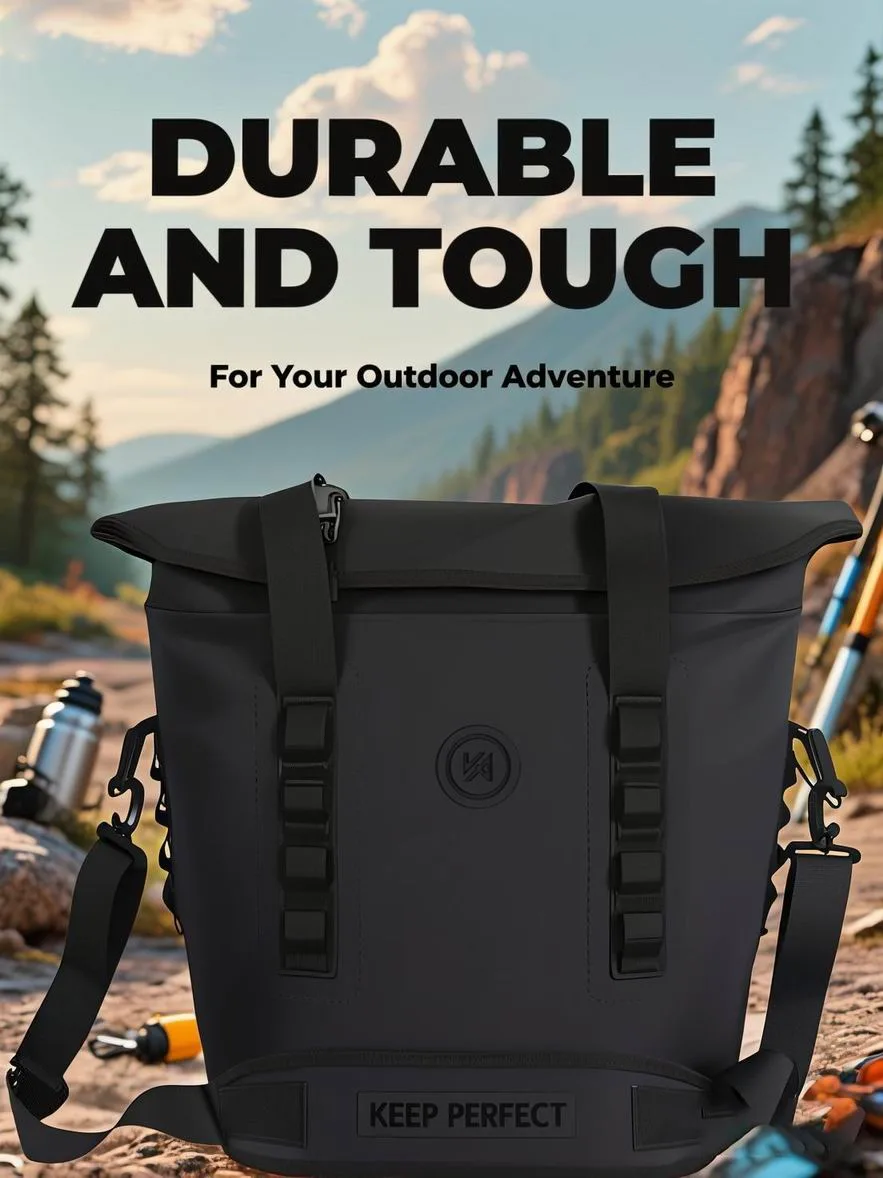
Getting through airports and stations in winter
Airports add two exposures that a normal city walk does not: the apron walk in rain or blowing snow, and the security tray. Both are short and both are avoidable with a little sequencing. Roll the main closure before you leave the terminal door, not at the aircraft steps, and keep documents in a pouch you can pull one-handed rather than in the bottom of the bag.
Security trays are wet more often than people expect, because every coat and umbrella in the queue ahead of you sheds onto them. Put the documents pouch inside your coat pocket rather than into the tray, and place the bag on the belt with the base facing up so any contact water runs away from the seam. Cabin sizing and weight tactics are covered in our cabin bag guide.
Drying gear overnight in a hotel room
- Empty the bag completely and tip out any meltwater before you do anything else.
- Wipe the interior with a microfibre cloth; a 20 L bag needs about two minutes.
- Rinse salt off the base and the fold line with warm water around 30 °C.
- Hang the bag upside down with the mouth open, above a towel, for two hours.
- Dry insulated items flat on a towel, never on a radiator above 40 °C.
- Work every buckle through its travel while still damp, then leave it open.
- Repack only when the interior is dry to the touch, then roll three or four folds.
Hotel rooms are dry, which helps: heated air at 20 to 22 °C and 30 to 40% relative humidity will remove 200 g of water from a bag interior in about six hours if the mouth is open. The mistake is closing the bag to save space. A closed bag holds its own moisture and greets you with condensation the next morning, which is exactly what you were trying to avoid.
Radiators are a trap for a different reason. Direct heat above 40 °C softens a TPU laminate and can distort a welded seam if the bag is pressed against a hot surface, and it degrades downproof fabrics on an insulated jacket. Use room air, use airflow, and if the room has a fan, point it into the open mouth of the bag rather than at the outside.
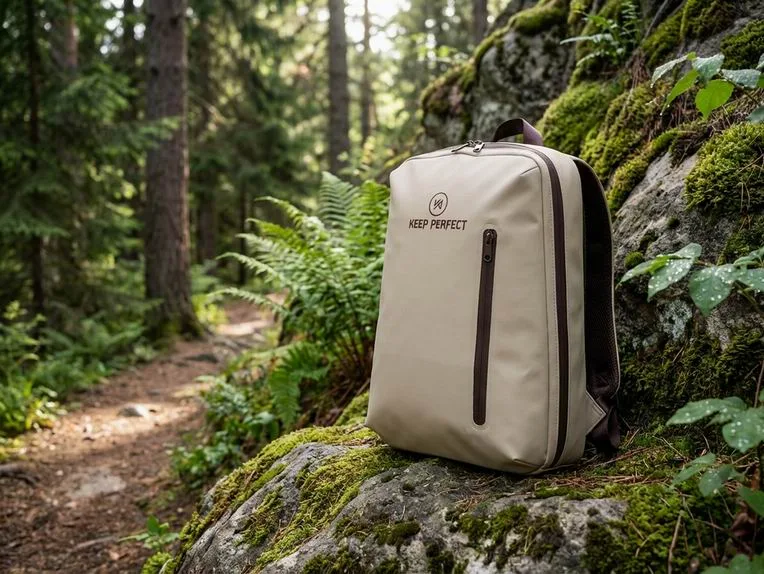
Electronics and batteries in the cold
Cold hits batteries before it hits electronics. A lithium-ion cell that delivers full capacity at 20 °C may deliver only 60 to 70% of it at -5 °C and closer to 50% at -15 °C, even though the same cell recovers fully once warmed. The practical consequence is that a phone used for navigation on a winter street will appear to fail and then behave normally indoors, which is a battery temperature effect rather than a defect.
Keep batteries close to your body, not in the outer pocket of a bag. An inner pocket against a torso keeps a cell near 25 °C in freezing air, which preserves most of its capacity and avoids the condensation risk of bringing a cold device into a warm room. Condensation is the real killer: a cold phone taken into a humid lobby will collect moisture internally, so let devices warm up inside a sealed bag before opening it.
The numbers are stark once you measure them. A typical power bank delivers full rated capacity at 20 °C, about 80 to 85% at 0 °C, roughly 60 to 70% at -5 °C and only 45 to 55% at -15 °C, recovering fully once warmed. Practically, that means a phone used for navigation on a winter street can fall from eight hours of screen time to a little over three, and the recovery is immediate when the device returns to room temperature.
Weight and volume planning for a winter trip
Winter packing fails on volume rather than weight. A carry-on limit of 7 kg is easy to hit with summer clothing and hard to hit with a coat, boots and knitwear, because the coat alone occupies 8 to 12 litres. Compression helps up to a point: a roll-top with a purge valve will compress a fleece to roughly 60% of its loose volume, but down loses loft if it is compressed for more than a few days.
Plan by litres first and kilos second. Allocate 12 litres to outer layers, 8 to 10 litres to mid layers and base layers, 4 litres to footwear, and 3 litres to documents and electronics, which totals 27 to 29 litres before the coat is worn rather than packed. Wear the coat and the heaviest boots through transit and the whole load fits a 25 to 30 L carrier with a dry bag inside.
A winter travel checklist
- Choose a TPU roll-top rather than a PVC bag if any part of the trip drops below 0 °C.
- Confirm the cabin allowance before packing; most European carriers allow 55 x 40 x 20 cm at 7-10 kg.
- Give documents and electronics their own 2L inner pouch with a second seal.
- Pack a 5L wet compartment so damp layers never share space with insulation.
- Press air out before folding and use four folds below -5 °C.
- Wipe the fold line with a thumb before every close; one grain of grit defeats a seal.
- Rinse salt off the base and buckles at 30 °C at the end of every travel day.
- Dry the bag open in room air for at least two hours; never on a radiator above 40 °C.
- Keep batteries in an inner pocket and let cold devices warm up sealed before opening.
- Compare formats in the full product range before you commit to a size.
Two choices decide whether a winter trip stays dry: the material and the two-bag split. Material decides whether your closure still works after a night in a cold car; the split decides whether a soaked carrier ever reaches your insulation. Both are cheaper to get right before departure than to fix in a hotel room at midnight. Our roll-top dry bag range covers 5L to 90L on the same closure geometry, so a small inner pouch and a large carrier seal identically.
If you are specifying bags for a travel programme rather than buying one for yourself, the winter questions become spec lines: cold-flex temperature of the film, salt-rating of the hardware, weld temperature control on pale colourways, and a documented immersion or spray rating rather than an adjective.
Weather is the one variable you cannot control, so check it properly rather than assuming. The NOAA forecast service gives road and winter weather warnings for US destinations, and the CDC publishes cold-exposure guidance worth reading before a trip that involves long outdoor transfers. For the packing side, our carry-on-only packing guide and the temperature limits guide cover the two questions this article only summarises.
Frequently asked questions
Q1. What is the best way to keep luggage dry in winter slush?
Use a welded TPU roll-top as the carrier and a smaller sealed dry bag inside it for clothing and documents. Wipe the fold line before each close, press the air out, and rinse salt off the base at 30 °C at the end of every travel day.
Q2. Do dry bags work below freezing?
Yes. A TPU laminate stays workable to about -30 °C while a PVC coated bag stiffens noticeably below 0 °C. Use four folds rather than three below -5 °C, and let a cold bag warm indoors for 20 to 30 minutes before packing it.
Q3. How much water does a bag pick up on a slushy street?
A 20 to 40 minute winter walk typically puts 200 to 400 g of water on the base and lower panels of a bag. On a coated pack with a stitched base seam, capillary action moves that water inward within about 15 minutes.
Q4. Is condensation or leakage the bigger winter problem?
Condensation. A welded bag does not leak, but a damp jacket packed inside can release 30 to 60 g of water over an eight-hour day, and that water has nowhere to drain. Keep damp items in a separate 5L compartment.
Q5. Can I put wet boots in a dry bag?
Yes, but treat the bag as a wet compartment rather than a dry one: a roll-top keeps water in as reliably as it keeps water out. Use a dedicated 10L bag for boots so snow melt never reaches clothing or insulation.
Q6. How many folds should I use in cold weather?
Three folds above 0 °C, three to four between -5 and 0 °C, and four below -10 °C. Cold film stiffens and loses contact pressure at the fold, so the extra fold restores the seal margin.
Q7. Will salt damage a dry bag?
It damages hardware more than fabric. Salt crystallises inside buckles and zips and keeps fabric damp through its hygroscopic effect. Rinse at 30 °C, work each buckle through its travel while wet, and dry the bag open.
Q8. What cabin size should I plan for on a winter trip?
Most European carriers allow around 55 x 40 x 20 cm at 7 to 10 kg. Winter coats occupy 8 to 12 litres, so wear the coat and heaviest boots through transit and pack everything else in a 25 to 30 L carrier.
Q9. How long does a wet bag take to dry in a hotel room?
About six hours for 200 g of water at 20 to 22 °C and 30 to 40% relative humidity, with the mouth open. A closed bag holds its moisture and will show condensation the following morning.
Q10. Can I dry a dry bag on a radiator?
Avoid it. Direct heat above 40 °C softens a TPU laminate and can distort a welded seam pressed against a hot surface. Use room air and, if available, point a fan into the open mouth of the bag.
Q11. Why does my phone battery die faster in winter?
A lithium-ion cell delivers roughly 60 to 70% of its capacity at -5 °C and 45 to 55% at -15 °C, then recovers when warmed. Keep devices in an inner pocket near your body and carry a spare cell on long days.
Q12. Is a waterproof zip or a roll-top better for winter?
A roll-top. It has no moving parts to freeze and works with gloved hands at -15 °C. A waterproof zip needs a cold-stable lubricant and will tear if forced open while frozen.
Q13. Should I keep documents in the main bag?
No. Give passport, cards and boarding pass a 2L inner pouch with its own closure inside the main bag, so they sit behind two independent seals and can be pulled one-handed at security.
Q14. How do I stop grit getting into the closure?
Wipe the fold line with a thumb before every close and rinse it at the end of the day. One grain of salt or sand in the fold creates a capillary channel that moves water into the bag within an hour.
Q15. What size wet compartment do I need?
A 5L roll-top for damp base layers and a 10L bag for boots. Together they add about 150 g of pack weight and keep meltwater away from insulation, which is the item that matters most in cold weather.
Q16. Do I need a different bag for a ski transfer?
Yes, plan for the boot room. Melt snow on a lodge floor puts 300 to 600 g of water on a bag base over four to ten hours, so keep the bag on a rack rather than the floor and dry it open that evening.
People also ask
How do you protect luggage from slush and road salt?
Use a welded roll-top carrier with no stitched base seam, keep clothing in a sealed inner dry bag, wipe the fold line before each close, and rinse the base and buckles with warm water at the end of every day.
Do dry bags crack in freezing temperatures?
A TPU film approaches its cold-crack point around -30 °C, well below most travel conditions, while PVC stiffens from about 0 °C. Store the bag loosely rolled rather than tightly folded so the film does not take a permanent set.
Why is there water inside my dry bag after a winter trip?
Almost always condensation rather than leakage. Warm, damp items packed inside a cold sealed bag release moisture that condenses on the film, and a welded bag has no drain and no breathable panel to remove it.
Can you take a dry bag as cabin luggage?
Yes. Roll-top bags have no fixed frame, so they conform to a 55 x 40 x 20 cm sizer easily. Keep documents in a separate inner pouch so they can be pulled out at security without unpacking the whole bag.
How do you dry a wet bag quickly while travelling?
Empty it, wipe the interior, hang it upside down with the mouth open above a towel, and use room air at 20 to 22 °C or a fan directed into the mouth. Expect about six hours for 200 g of water.
Are waterproof backpacks better than dry bags for winter travel?
They are different layers. A waterproof backpack is the carrier that takes the slush; a roll-top dry bag inside it is what keeps clothing and documents dry. Most winter trips are best served by one of each.
Need this in production volume?
QUANZHOU JUNYUAN BAGS has produced waterproof bags since 2014 in an SGS-verified 4,950 m2 facility in Fujian, China. Minimum order 500 pieces, sampling in 6–10 working days, bulk in 35–50 days, FOB Xiamen — write to service@junyuanbags.com with your spec and target market.