Home / Blog / Travel & Packing
Gym Bag for Rainy Climates
A gym bag used in a rainy climate needs 25 to 35 litres, a welded waterproof shell rated at least IPX6, and a wet compartment that can be emptied and dried in under 8 hours at 60 percent relative humidity. The failure mode is not the walk to the gym, which any coated bag survives; it is the fourth day in a row when a damp towel, wet trainers and a soaked training top sit sealed inside the bag between 7 am and 6 pm. At 20 °C and 80 percent humidity, a sealed bag with a wet towel in it grows visible mould in 48 to 72 hours, which is why ventilation matters as much as waterproofing.
This guide measures a real gym kit, compares single-shell and two-compartment designs, sets out the fabric and closure choices that survive 250 trips a year, and gives a drying schedule tied to actual humidity numbers rather than to guesswork. Every figure is tied to a load you can weigh: a 900 g pair of trainers, a 400 g towel, a 1.2 kg water bottle, a 1.4 kg laptop. Use the tables to size the bag, then use the weekly routine to decide whether the bag you already own can be saved or replaced.
- Why wet-climate gym bags fail differently
- Measuring a real gym kit
- One waterproof shell or a separate wet compartment
- Fabric and closure choices for daily rain
- Shoes, towels and the smell problem
- Carrying a wet bag on public transport
- Work kit, laptop and the same-bag question
- The weekly drying routine
- Hardware that survives 250 trips a year
- Size by commute type
- Lockers, floors and changing-room contact
- Twelve-month running cost
- Buying checklist for a wet-climate gym bag
Why wet-climate gym bags fail differently
A dry-climate gym bag has one job: move clean kit from A to B. A wet-climate gym bag has two jobs that fight each other, keeping outside rain out and keeping inside moisture moving. A bag that is perfectly sealed does the first job brilliantly and the second one badly, which is why a fully welded roll-top used as a gym bag often develops an odour within a month while a cheaper bag with a mesh panel does not.
Rain also arrives sideways. A five-minute walk in 8 mm per hour rain with a 30 km/h wind wets the front and one shoulder of a bag far more than the top, and the strap contact area is where coated fabrics abrade first. Add the changing-room floor, which is the wettest surface most bags ever touch, and the design requirement becomes clear: welded seams, a base that can be wiped, and a closure that does not need dry hands to operate.
- Light rain at 2-4 mm per hour for 10 minutes: zipper tape wets through first, so choose a coated zip with a storm flap.
- Driving rain at 8-15 mm per hour with 30 km/h wind for 15 minutes: the shoulder strap soaks, so choose closed-cell padding that holds no water.
- Changing-room floor, standing water for 20 minutes: a fabric base wicks, so choose a welded base with no stitched panel.
- Wet kit sealed inside for 8-10 hours: odour and mildew appear within 48-72 hours, so choose a ventilated wet compartment.
- Bus or train seat, 30 minutes of contact: a woven back panel stains and marks, so choose a smooth film back that wipes dry.
Measuring a real gym kit
Size the bag from the kit, not from the shelf. A typical gym load is trainers, shorts, top, socks, towel, wash bag, water bottle, padlock, headphones and a phone, which packs to 17 to 22 litres before you add anything for work. Add a laptop and a charger and the figure reaches 24 to 28 litres. Add a swimming kit and it passes 30 litres, which is the point where a duffel or tote becomes more practical than a backpack.
| Item | Packed volume | Weight | Wet or dry | Where it belongs |
|---|---|---|---|---|
| Trainers | 6.0 L | 900 g | Often wet | Ventilated base compartment |
| Towel, medium | 2.4 L | 400 g | Wet after use | Wet compartment or external strap |
| Training top and shorts | 2.2 L | 350 g | Wet after use | Wet compartment |
| Wash bag | 1.6 L | 500 g | Dry | Main compartment |
| Water bottle, 1 L | 1.2 L | 1.2 kg | Dry outside | External or main, upright |
| Laptop, 14 inch, in sleeve | 2.4 L | 1.4 kg | Must stay dry | Padded sleeve inside main |
| Swim kit, packed wet | 3.5 L | 700 g | Wet | Separate pouch, not loose |
| Socks and underwear | 1.0 L | 180 g | Dry | Small pouch in main |
The two rows that decide the design are the trainers and the towel, because together they carry 300 to 600 g of water out of the building. Everything else either stays dry or is already dry. That is why a bag with a 6-litre ventilated base compartment and a 20-litre dry main compartment outperforms a single 28-litre welded shell for daily gym use, even though the single shell has the better waterproof rating on paper.
One waterproof shell or a separate wet compartment
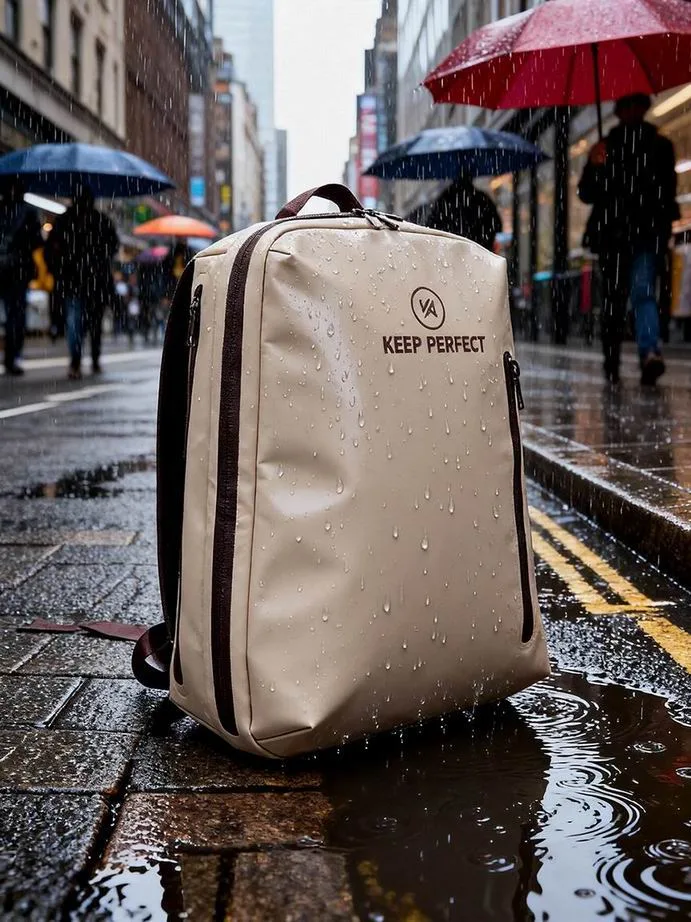
Both designs work, and the choice depends on how many hours your kit stays packed. If you empty the bag within two hours of training, a single welded shell is simpler and has one less seam to fail. If the bag sits closed from 7 am until 6 pm four days a week, a separate wet compartment with drainage is worth the extra complexity, because it stops the water from reaching clothing that would otherwise stay dry.
| Design | Waterproof rating | Drying time for wet towel | Odour risk at 250 uses a year | Best for |
|---|---|---|---|---|
| Single welded shell | IPX6-IPX7 | 10-14 h | High, needs daily emptying | Short window, 1-2 h |
| Shell plus vented base compartment | IPX6 | 6-8 h | Medium | Full workday, 8-10 h |
| Shell plus removable wet pouch | IPX6 | 4-6 h | Low | Swimmers, daily training |
| Coated fabric with mesh panel | IPX4 | 3-5 h | Low | Light rain, covered commute |
| Roll-top dry bag as gym bag | IPX7 | 12 h or more | High | Boat or beach, not daily gym |
Notice that the best waterproof rating in that table belongs to the option with the worst odour risk. A roll-top dry bag is genuinely IPX7 and genuinely wrong for daily gym use, because the same seal that keeps rain out keeps sweat in. The backpack versus duffel comparison sets out where each format sits on this trade-off, and the wet kit storage guide covers the pouch systems that work for swimmers.
Fabric and closure choices for daily rain
Two fabric families appear in gym bags: TPU laminated to a woven face, and PVC coated onto polyester. For a bag that is opened five times a day, folded in a locker and wiped down weekly, TPU is the better choice: it stays flexible at 5 °C, it has no plasticiser to migrate, and radio-frequency welded seams stay airtight after thousands of flex cycles. A 0.4 to 0.5 mm film on a 420D or 500D face gives a bag that survives being scraped along a changing-room bench.
Closures split into roll-top and coated zip. A roll-top is more waterproof and slower; a coated zip is faster and needs maintenance. For a gym bag opened five times a day, a coated zip with a storm flap is the honest answer, provided you rinse the teeth monthly and never force it closed over a trapped towel corner. If your commute is genuinely exposed, choose the roll-top and accept the extra three seconds; the TPU backpack range shows the welded construction used on our own daily-carry shells.
Shoes, towels and the smell problem
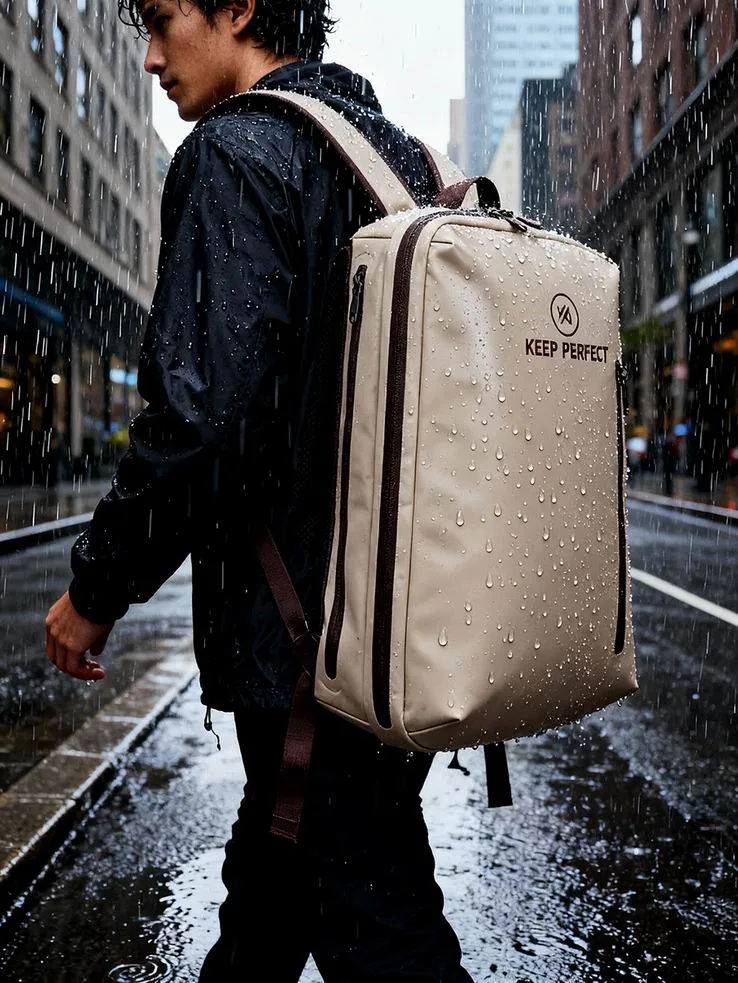
Odour is a moisture problem, not a fabric problem. A 400 g towel leaving the gym holds roughly 250 g of water; sealed in a bag at 22 °C, that water raises internal humidity to near saturation within 40 minutes and stays there for hours. Bacteria and mould grow fastest in exactly that window, and the smell you notice on Friday was created on Tuesday.
The practical fixes are ordered by effectiveness. First, wring the towel hard and carry it in a ventilated compartment rather than loose. Second, keep trainers in a separate shoe pocket with the tongue open. Third, empty the bag the same evening, every evening. Fourth, once a week, wipe the interior with a mild solution and dry it open overnight. Full deodorising steps that will not damage TPU film are in the deodorising guide, and the longer version is in how to stop a bag smelling.
Carrying a wet bag on public transport
A wet bag on a train seat is a social problem as much as a practical one. A smooth TPU back panel wipes dry in ten seconds with a paper towel, whereas a woven back panel holds 30 to 50 g of water and marks the seat. This is the single most underrated reason to choose a film-faced bag over a textile-faced one for a commuting gym routine.
Think about where the bag sits, too. A 30-litre duffel carried by hand puts wet fabric against your trousers; the same load in a backpack with a wipeable back panel contacts nothing but your shoulders. If you cycle to the gym, choose a harness with a sternum strap so the bag does not swing in the rain, and check the strap adjustment every month, since webbing stretches about 2 percent in its first year of loaded use.
Work kit, laptop and the same-bag question
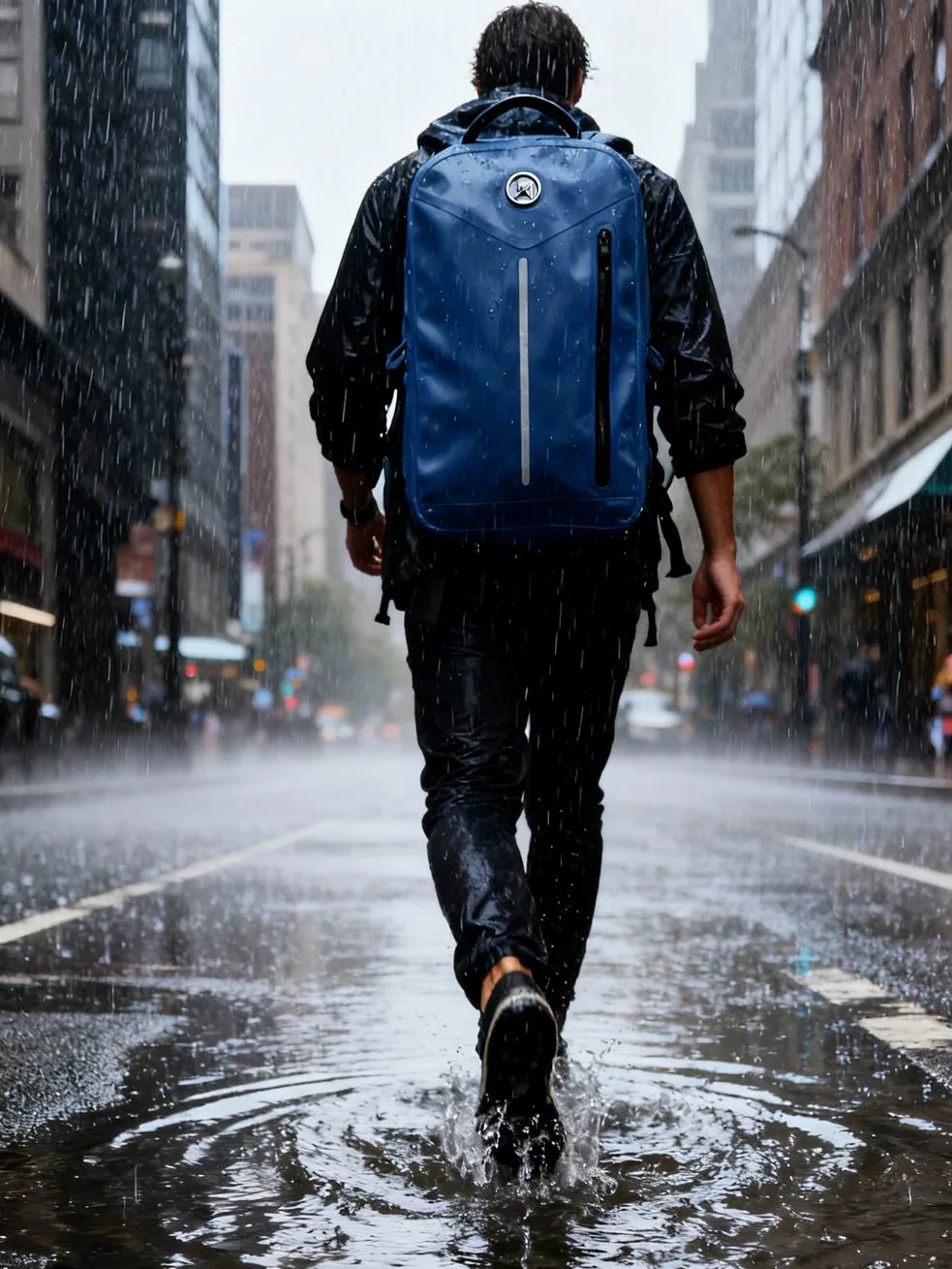
Carrying a laptop to the gym is common and slightly dangerous. Two risks matter: water from the wet compartment migrating through a shared lining, and heat. A 14-inch machine in a padded sleeve, placed in the main compartment away from the wet pocket, is fine; the same machine loose in a bag with a damp towel is not. Lithium batteries also dislike heat, so do not leave the bag in a car that reaches 55 °C in summer sun.
If you carry documents as well, separate them by compartment rather than by pouch, and put absorbent items, meaning the towel and trainers, at the opposite end of the bag from paper. The dedicated sizing and padding notes for machines and paperwork are in laptop protection and document protection, and both apply to a daily gym bag as much as to travel.
The weekly drying routine
Drying time is predictable if you know the humidity. At 40 percent relative humidity a wet compartment empties and dries in 3 to 4 hours on a rack with air on two sides; at 80 percent the same compartment needs 10 to 14 hours and may not finish before the next session. Plan the routine around the number rather than around hope.
| Relative humidity | Air movement | Drying time, towel | Drying time, trainers | Mould risk at 24 h |
|---|---|---|---|---|
| 40% | Rack, room air | 3-4 h | 6-8 h | None |
| 55% | Rack, room air | 4-6 h | 8-10 h | None |
| 70% | Rack plus fan | 6-9 h | 12-16 h | Low |
| 80% | Rack plus fan | 10-14 h | 18-24 h | Medium |
| 90% | Dehumidifier needed | 14-20 h | 24-36 h | High |
Two habits cut those numbers roughly in half. Wring the towel until it stops dripping, which removes 40 to 60 percent of the water before the bag ever closes, and store trainers with the tongue pulled open and the insole lifted if it comes out. Rack design and airflow spacing are covered in the drying rack guide; the principle is air on two faces, never a bag lying flat on a solid surface.
Hardware that survives 250 trips a year
A daily gym bag is opened and closed roughly 1,300 times a year. The components that fail first are not the fabric: they are the zip slider, the buckle spring and the strap attachment. A metal slider outlives a plastic one by a factor of three in this duty cycle, and a welded strap attachment outlasts a bar-tacked one because there are no needle holes to start a tear.
- Plastic zip slider: 3,000 to 5,000 cycles before it cracks at the pull; a metal slider reaches about 15,000.
- Side-release buckle: 8,000 to 10,000 cycles before spring fatigue makes it slip; an alloy cam buckle lasts far longer.
- Bar-tacked strap: about two years of daily use before it tears at the needle holes; a welded attachment has no holes to start a tear.
- Foam shoulder pad: roughly 18 months before it holds water and smells; closed-cell padding absorbs nothing.
- Mesh vent panel: around three years before it tears at the weld edge, unless the weld has a reinforced border.
Service intervals follow from that table: rinse the zip monthly, check buckle tension quarterly, and inspect strap attachments twice a year by pulling hard across the weld line. A 20-second inspection catches the failure before it becomes a bag on the floor of a bus. Buckle replacement and field repairs are set out in buckle replacement, and the strap-load side in strap load ratings.
Size by commute type
Commute shape, not body size, decides the format. A covered commute of under 15 minutes with a locker at the far end suits a 25-litre tote or duffel that can be carried by hand. An exposed 20-minute walk with no locker suits a 28 to 32-litre backpack with a wipeable back panel and a wet compartment, because the load has to travel with you the whole way.
- Under 15 minutes, covered: 25 L tote or duffel, IPX4 shell is enough.
- 15 to 30 minutes, exposed: 28-32 L backpack, IPX6, welded base, wet compartment.
- Cycling commute: 25-30 L backpack with sternum strap and reflective accents.
- Gym before work with laptop: 30-35 L with padded sleeve and separate wet pocket.
- Swim sessions three times a week: 30 L with a removable wet pouch and a vented base.
- Gym and pool at a hotel: 25 L tote plus a small roll-top for the wet kit.
When the trip includes a pool rather than a gym, the packing problem changes shape: the wet load is larger and the walk is shorter. The hotel, gym and pool kit guide covers that combination, and poolside kit covers the family version where one bag carries four peoples towels.
Lockers, floors and changing-room contact
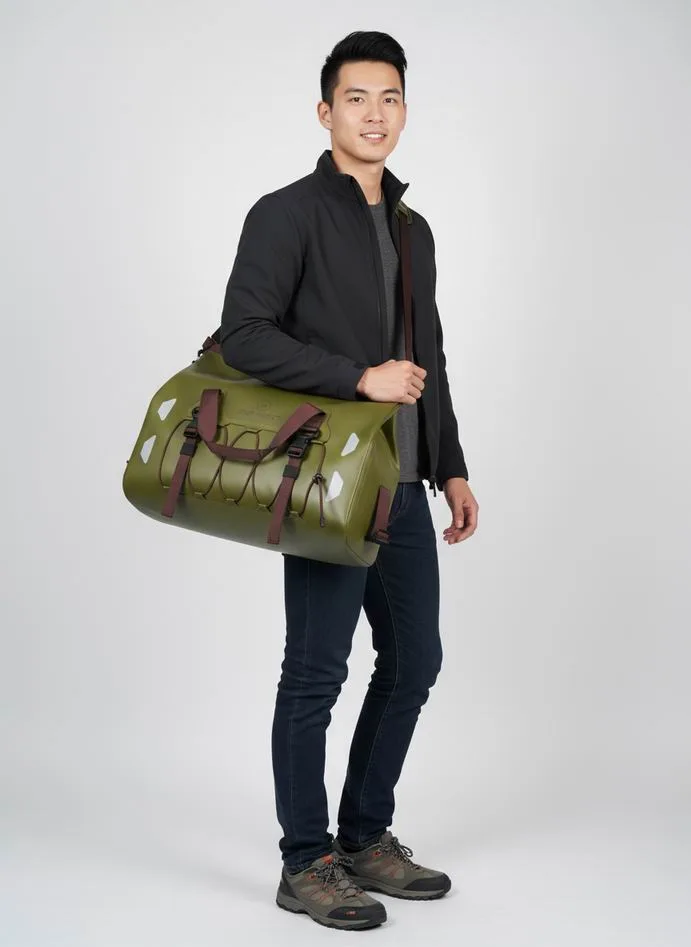
The most damaging surface for a gym bag is the changing-room floor, which combines standing water, grit and cleaning chemicals. A welded base with no stitched panel can be wiped and shows no wear after hundreds of floor contacts; a fabric base with a coated underside starts to delaminate at the abrasion points after about 18 months of daily contact.
Lockers add a second problem: compression. A bag forced into a 40 cm locker three times a week develops creases at the same place, and a creased weld is where film fatigue starts. Choose a bag 3 to 5 cm narrower than your locker, or accept that the bag will be stored on top of the locker and choose a shape that stands up on its own when full.
Twelve-month running cost
The cost of a gym bag is not the purchase price; it is the price divided by the months it lasts, plus the kit it fails to protect. A cheap coated bag at a low price that delaminates in 14 months costs more per year than a welded TPU bag that lasts six years, and it puts a laptop at risk once or twice in that period, which dwarfs both numbers.
| Bag type | Purchase price | Expected life, daily use | Cost per year | Kit at risk |
|---|---|---|---|---|
| Coated polyester, stitched | Low | 12-18 months | Highest of the four | Laptop, phone |
| Coated polyester, welded seams | Low-mid | 24-36 months | Moderate | Paper, clothing |
| PVC tarpaulin | Mid | 36-48 months | Moderate | Low |
| TPU laminated 500D | Mid-high | 60-84 months | Lowest of the four | Very low |
| TPU with vented wet compartment | High | 72-96 months | Low | Very low |
Read the last two rows together with the drying table: a bag that lasts seven years only reaches that figure if it is dried properly. The cheapest ownership path is a mid-priced TPU bag plus a disciplined evening routine, not the most expensive bag with no routine at all.
Buying checklist for a wet-climate gym bag
- 25 to 35 litres, chosen from your measured kit plus a padded laptop sleeve.
- Welded seams and a welded base that can be wiped, not a stitched fabric base.
- IPX6 or better on the closure, with a storm flap if you choose a coated zip.
- A ventilated wet compartment sized for trainers at about 6 litres.
- Smooth film back panel so the bag can sit on a train seat without marking it.
- Metal zip slider and welded strap attachments rather than bar-tacked webbing.
- Drying plan: wring towels, empty the bag nightly, rack it with air on two sides.
- Compare the shortlist against the full product line before buying.
Two health points are worth stating plainly. Damp kit carried for hours is a skin-infection risk, not just an odour one, and public health guidance on hygiene in shared facilities is published by the CDC; indoor moisture and mould guidance sits with the EPA. And if your commute is already fully waterproof for a laptop and documents, the same setup transfers directly to the gym: see the rainy commute setup for the layering approach.
Frequently asked questions
Q1. What size gym bag do I need in a rainy climate?
Measure your kit: 25 litres for gym only, 28 to 32 litres with a laptop, and 30 to 35 litres if swim kit travels too. An exposed commute pushes you to the larger end because the load never leaves your back.
Q2. Is a fully waterproof bag best for the gym?
Not necessarily. A fully sealed roll-top keeps rain out but also keeps sweat in, so a wet towel sealed for eight hours will smell. A welded shell with a ventilated wet compartment is better for daily use.
Q3. How long does a wet towel take to dry inside a gym bag?
Too long: 10 to 14 hours at 80 percent humidity and it may still be damp the next morning. That is why the wet compartment should be emptied and racked the same evening.
Q4. Should I choose a backpack or a duffel for the gym?
A backpack for an exposed walk or a cycle, because it keeps the wet back panel off your clothes and leaves your hands free. A duffel or tote for a short covered walk with a locker at the far end.
Q5. What waterproof rating does a gym bag need?
IPX6 is the sensible target, which covers heavy rain and jets. IPX7 adds immersion protection you will not use on the way to the gym, and it usually comes with a seal that traps moisture inside.
Q6. Can I put wet trainers in the main compartment?
Only in a shoe pocket with the tongue open. A 900 g pair of trainers can carry 150 to 250 g of water, which will spread through clothing in a shared compartment within an hour.
Q7. How do I stop my gym bag smelling?
Wring towels hard, use the ventilated compartment, empty the bag every evening, and once a week wipe the interior and dry it open overnight. Odour comes from standing moisture, not from the fabric itself.
Q8. Will rain damage a laptop inside a gym bag?
Not if the machine sits in a padded sleeve in the main compartment, away from the wet pocket. The real risks are a shared lining wicking water and leaving the bag in a hot car above 50 °C.
Q9. How often should I clean a gym bag?
Wipe the interior weekly and rinse the closure monthly. A daily-use bag accumulates salt from sweat and grit from the floor, and both abrade welded seams if they are left in place.
Q10. What fabric lasts longest for daily gym use?
TPU laminated to a 420D or 500D face. It stays flexible in the cold, has no plasticiser to migrate, and welded seams survive thousands of flex cycles, giving five to eight years of daily use.
Q11. Is a coated zip or a roll-top better on a gym bag?
A coated zip with a storm flap, because you open the bag five times a day and speed matters. Choose a roll-top only if your commute is genuinely exposed, and accept the extra few seconds each time.
Q12. Can I machine wash a gym bag?
No. Machine washing abrades the film and twists welded seams. Wipe by hand with a mild solution, rinse the closure, and dry open on a rack with air on two sides.
Q13. How much water does gym kit actually carry out of the building?
Between 300 and 600 g: about 250 g in a medium towel and 150 to 250 g in trainers. That is the water your bag has to manage, and it is why ventilation beats a higher waterproof rating.
Q14. Why does my bag smell worse in winter?
Because cold air holds less moisture, indoor heating keeps humidity high, and wet kit stays sealed longer between sessions. At 70 to 80 percent humidity, drying takes roughly twice as long as at 40 percent.
Q15. Do I need a separate bag for swim kit?
A separate pouch, yes. A packed wet swimsuit carries 150 to 200 g of water and should never share a compartment with clothing, paperwork or electronics.
Q16. How long should a good gym bag last?
A TPU laminated bag with welded seams lasts six to eight years at 250 trips a year if it is dried properly. A coated stitched bag typically gives 12 to 18 months before the base delaminates.
People also ask
What makes a gym bag good for wet weather?
A welded shell and base rated at least IPX6, a wipeable back panel, a ventilated wet compartment, and a closure that works with wet hands. Ventilation matters as much as waterproofing because wet kit sits inside for hours.
How do you keep a gym bag from smelling in a humid climate?
Wring towels until they stop dripping, keep trainers in a vented pocket, empty the bag the same evening, and rack it with air on two sides. Add a weekly wipe-down and monthly closure rinse.
Can you use a dry bag as a gym bag?
You can, but it is the wrong tool for daily use. A roll-top dry bag is IPX7 and seals moisture in, so a damp towel left for eight hours will smell. A welded shell with a wet compartment works better.
What size dry bag holds gym kit and a laptop?
About 28 to 32 litres: roughly 22 litres of gym kit plus a padded 14-inch sleeve at 2.4 litres, with 4 litres of headroom so the closure seals without strain.
How long does it take wet gym kit to dry?
A towel dries in 3 to 4 hours at 40 percent humidity and 10 to 14 hours at 80 percent. Trainers take two to three times longer, which is why they need their own vented pocket.
Are waterproof gym bags worth the extra cost?
Yes over the full life of the bag. A TPU welded bag costs more up front but lasts six to eight years against 12 to 18 months for a coated stitched bag, and it protects a laptop that costs far more than either.
Need this in production volume?
QUANZHOU JUNYUAN BAGS has produced waterproof bags since 2014 in an SGS-verified 4,950 m2 facility in Fujian, China. Minimum order 500 pieces, sampling in 6–10 working days, bulk in 35–50 days, FOB Xiamen — write to service@junyuanbags.com with your spec and target market.