Home / Blog / Design & Branding
Limited-Edition Dry Bag Drops
A limited-edition drop of 500 to 1,500 pieces is the smallest run that still reads as scarce: under 300 pieces the unit cost climbs 18 to 25 percent because the line changes over twice, and above 2,000 pieces buyers stop believing the word limited. Working to a 500-piece minimum with sampling in 6 to 10 working days and bulk in 35 to 50 days, a drop briefed in week one can be on a shelf 47 to 62 days later. The versions that hold a premium are the ones nobody can buy in the core range: a pigment mixed once and never repeated, a numbered hang tag, or a 20L roll-top paired with a roll of colour no other retailer carries.
This guide sets out the volume maths, the colourway split that protects you from dead stock, the calendar from artwork freeze to launch morning, the packaging touches that make a drop feel collectible, and the four numbers that decide whether you run a second one. Every figure below comes from mixed-colour waterproof bag programmes run on seven production lines, inspected to AQL 2.5 and shipped FOB Xiamen. Treat a drop as a repeatable process rather than a one-off stunt, because the second and third drops are where the margin appears.
- What a limited-edition drop is actually for
- Choosing the drop size: 300, 800 or 2,000 pieces
- Which formats earn a limited run
- Colourway strategy and how to split the run
- Numbering, hang tags and the details buyers notice
- The calendar from brief to launch morning
- Pricing a limited run without cheapening the core line
- Packaging that makes a drop feel collectible
- Keeping drop quality identical to the core range
- Allocating a drop across channels
- Leftovers, returns and the second life of a drop
- Metrics that decide whether you repeat the drop
- Checklist before you commit to a drop
What a limited-edition drop is actually for
A drop has three legitimate jobs and one bad one. It can test demand for a colourway or a capacity before you commit it to the permanent range, it can give a retail partner something no competitor stocks, and it can generate press and social activity that a steady range never produces. The bad job is clearing slow stock by relabelling it, which buyers spot within a season and which costs more in trust than the stock was worth.
The discipline is to change something with real content. A 20L roll-top in a pigment mixed for one run is a genuine difference. The same bag in a near-identical grey with a new swing tag is not, and the sell-through curve shows it: content changes hold a 30 to 45 percent higher sell-through in the first 14 days than repackaged cores. Decide which job your drop is doing before you brief artwork, because the volume, the price and the channel split all follow from it.
Choosing the drop size: 300, 800 or 2,000 pieces
Volume is the decision that sets everything else. Below 300 pieces you pay for two line changeovers, extra welding set-up time and a separate colour batch, which pushes unit cost up by roughly a fifth. Between 800 and 1,500 pieces you get a single clean run with enough material bought at one time to hold colour consistency, and the per-unit premium of a limited product still applies. Above 2,000 pieces the economics improve further but scarcity disappears, so the price premium erodes by the second month.
| Drop size | Unit cost index | Line time | Scarcity premium | Stock risk |
|---|---|---|---|---|
| 300 pieces | 118-125 | 1 day, two changeovers | High | Low, sells out fast |
| 500 pieces | 108-112 | 1 day, one changeover | High | Low |
| 800 pieces | 100 | 1.5 days | Medium-high | Moderate |
| 1,200 pieces | 96 | 2 days | Medium | Moderate |
| 2,000 pieces | 92 | 3 days | Low | High leftovers |
| 3,000 pieces | 89 | 4 days | None | Very high |
Read that table against your channel count rather than against ambition. One web store with a waitlist of 400 names can absorb 500 pieces comfortably. Three retail partners plus your own site need 1,200 pieces to avoid the awkward outcome where the biggest partner receives 40 percent of the run and sells out in four days, leaving two partners with nothing to talk about. Work the allocation backwards before you fix the number, then round to the nearest hundred so the roll call on hang tags stays clean.
Which formats earn a limited run
Not every bag deserves scarcity. The formats that work are the ones with high visibility and repeat-purchase logic: a 5L grab bag that a buyer collects in three colours, a 20L roll-top that becomes the default day bag, a 30L dry duffel that a paddle club orders twice, and a waterproof tote that crosses from beach to supermarket. Formats that fail in drops are the specialist ones with a narrow use case, where the buyer cannot imagine owning two.
- 5L roll-top: cheap to collect, low shelf space, strongest second-purchase rate at 22 to 28 percent.
- 20L roll-top: the workhorse, best press photography, suits a numbered edition.
- 25L waterproof backpack: highest unit value, so the premium is worth the most in absolute money.
- 30L dry duffel: club and team appeal, strong group orders above 20 units per account.
- Waterproof tote: crosses into non-outdoor retail, useful for a collaboration.
- Roll-top cooler bag: seasonal, so the drop window is tight and leftovers are expensive.
Pick one hero format and at most one companion size. A drop of five sizes in one colourway is a range launch dressed as a limited edition, and it dilutes both the story and the stock risk management. If you want a family, run the hero at 70 percent of the volume and the companion at 30 percent, then compare sell-through per size at day 30 and let the winner become the core size next season.

Colourway strategy and how to split the run
Colour is where a drop succeeds or dies, and it is also where the inventory risk hides. The safe structure is one familiar anchor colour at roughly 40 percent of the run, one mid-risk fashion colour at 35 percent, and one genuinely bold colour at 25 percent. The anchor pays for the run, the fashion colour gives the press image, and the bold colour generates the social posts and the waitlist for the next drop.
| Colourway | Share of run | Expected sell-through at 30 days | Risk | Repeat next season |
|---|---|---|---|---|
| Black | 40% | 70-80% | Low, always liquid | Yes, as core |
| Olive | 20% | 65-75% | Low | Yes |
| Camo | 15% | 60-70% | Low-medium | Rotate pattern |
| Mint | 12% | 55-70% | Medium, season-linked | Maybe |
| Pink | 8% | 50-70% | Medium | Maybe |
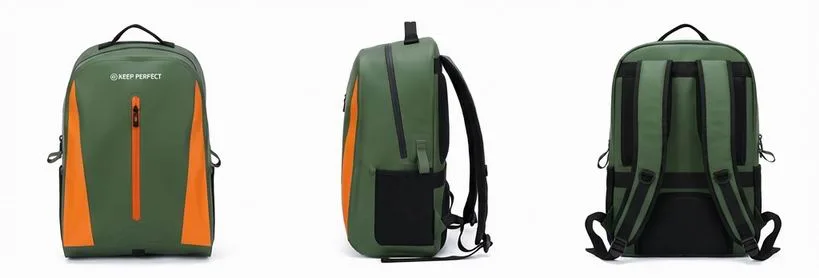
| Orange and green | 5% | 80-95% | Low volume, high noise | Rarely |
Note the last row: the loudest colourway often has the highest sell-through precisely because you made only 60 to 100 pieces of it. Scarcity is a function of absolute quantity, not of courage. When a bold colour sells out in 48 hours, resist re-running it immediately; the value of that colourway is partly that it became hard to find, and a second run inside the same season resets the story to zero.
Numbering, hang tags and the details buyers notice
The details that convince a buyer a drop is real are cheap and physical. A numbered hang tag, printed 001/800 through 800/800, costs a fraction of a unit but turns the bag into an object with a position in a series. A woven label with the drop year, a colour-matched buckle, and a printed inner card naming the pigment all do the same work without touching the tooling budget.
Keep the numbering honest and keep it consistent with the packing sequence. Buyers compare numbers with each other online, and a run where the same number appears twice destroys the effect faster than no numbering at all would have. Our production team numbers at pack-out against a printed sequence sheet, and the hang tag and label guide covers the print methods that survive saltwater and sun.
The calendar from brief to launch morning
A drop is a schedule problem before it is a design problem. The critical path is artwork freeze, sampling, approval, bulk, inspection and freight, and the two stages that slip are almost always artwork approval and the courier leg of sample delivery. Build slack into the approval stage rather than the production stage, because compressing welding and inspection is how a limited run ends up with colour drift between the first and last cartons.
| Stage | Working days | Owner | Freeze point | What slips it |
|---|---|---|---|---|
| Brief and volume sign-off | 2 | Brand | Volume locked | Channel allocation |
| Artwork and colour standard | 5-7 | Design | Pantone reference agreed | Late colour changes |
| Sampling | 6-10 | Production partner | Sample approved | Courier and import clearance |
| Bulk production | 35-50 | Production line | Material booked | Pigment lead time |
| Inspection at AQL 2.5 | 2-3 | QC team | Report accepted | Re-inspection |
| Freight and receipt | 18-30 | Logistics | Booked vessel | Port congestion |
| Launch | 1 | Brand | Stock counted | Photography |
Add the two slowest rows together and you have the honest launch date. A sea-freight drop booked on day one of sampling lands between day 59 and day 92; air freight compresses the last leg to 5 to 8 days and roughly triples the freight cost per unit, which only makes sense above a 40 percent gross margin. The full step-by-step of sampling into bulk sits in our sample-to-bulk timeline, and the volume planning side is in the small-batch order guide.
Pricing a limited run without cheapening the core line
A drop should carry 15 to 30 percent over the equivalent core product, and the premium has to be visible in the object. Numbered tags, a second colour in the webbing, a printed liner and a rigid box all justify it; a plain price rise does not. If the core 20L roll-top sells at 39, the drop version at 49 needs roughly 4 to 6 units of visible difference, otherwise the same buyer who paid 49 will wait for the next core promotion and never pay full price again.
Watch the anchor effect in the other direction as well. When the drop sells out, the core colourways benefit: we see core sell-through lift 8 to 12 percent in the eight weeks after a successful drop, because the traffic and the reviews carry over. That halo is worth more than the margin on the drop itself, which is why under-pricing a drop to move volume quickly is usually a mistake.
Packaging that makes a drop feel collectible
Packaging is the cheapest lever in a drop and the one most often left to the last week. A rigid board box with a one-colour print, a numbered belly band, and a printed card explaining the colourway costs a few units per bag and converts the unboxing into the marketing asset. Compare that with the cost of buying the same attention in paid social, and the box wins by an order of magnitude.
Keep the box practical for the retailer as well: a hang hole, a barcode on a flat face, and a size mark readable from two metres. A drop that cannot be merchandised on a hook gets moved to a shelf and forgotten. More packaging formats, including plastic-free options that still protect a welded bag in transit, are covered in the packaging ideas guide, and the shelf-facing side in retail-ready presentation.

Keeping drop quality identical to the core range
The fastest way to damage a brand with a drop is to let quality drift because the run was small. Welding parameters, film thickness, buckle grade and seam geometry should be exactly the same as the core product; only colour, print and packaging change. A drop that leaks because a line was set up in a hurry generates returns at 3 to 6 percent instead of the usual 0.5 to 1 percent, and it contaminates reviews for the whole range.
Hold the drop to the same inspection standard as any other order: AQL 2.5 on appearance and function, an immersion or spray check on a per-carton sample, and a colour check against the approved reference under controlled light. Test methods referenced in ASTM standards and the quality-management framework published by ISO are what serious retail buyers ask to see, so name the method in your spec rather than describing the result in adjectives.
Allocating a drop across channels
Decide allocation before production, not after the vessel lands. The workable split for a 1,200-piece drop is roughly 45 percent to your own direct channel, 40 percent to retail partners weighted by their previous-season sell-through, and 15 percent held back as a reserve for replacements, press requests and a second release. The reserve is not dead stock; it is the buffer that lets you react when one channel outperforms.
Set a per-account cap at launch. Without a cap, one large account takes 300 pieces on day one and the drop story collapses into a single listing. A cap of 60 units per account in the first 72 hours keeps the product visible across the market, and the cap can be lifted on day four once the noise has been generated. Record the day-one, day-seven and day-thirty numbers per channel, because that table is the input to next season allocation.
Leftovers, returns and the second life of a drop
Assume 8 to 15 percent of a drop will not sell in the planned window and decide in advance what happens to it. Three options work: hold it for a second release with the numbers intact, convert it to a gift set with a second item, or release it to an outlet channel with the hang tag removed so the numbered edition stays credible. What never works is discounting the numbered version in the same window, which teaches buyers to wait.
Returns deserve their own rule. A returned numbered bag re-entering stock breaks the sequence story unless you renumber it, which is expensive and visible. Better practice is to inspect returns, refurbish where possible, and sell them through one clearly labelled channel with the number voided. Track the return reason separately for drops, since a drop-specific defect points at a set-up problem rather than a design problem.
Metrics that decide whether you repeat the drop
Four numbers decide the second drop, and only one of them is revenue. Sell-through speed tells you whether the story landed, return rate tells you whether quality held, waitlist conversion tells you whether demand was real or manufactured by discounting, and repeat-purchase rate tells you whether the format has a future in the core range. Anything else is commentary.
| Metric | Good result | Warning sign | Decision it drives |
|---|---|---|---|
| Sell-through at 14 days | 55-70% | Below 30% | Cut the next drop size by half |
| Sell-through at 30 days | 75-90% | Below 50% | Move colourway to outlet, keep format |
| Return rate | Under 1.5% | Above 4% | Pause drops, audit the line |
| Waitlist conversion | 35-50% | Below 15% | The waitlist was not real demand |
| Repeat purchase in 90 days | 18-28% | Below 8% | Keep format, change the story |
| Press and social mentions | 2x core baseline | Below baseline | Invest in launch assets |
Compare each metric against your own core range, never against another brand. A drop that sells 70 percent in 14 days when your core sells 40 percent in 14 days is a genuine success even if it looks slow next to a streetwear benchmark. Write the comparison down while the data is fresh, because the brief for drop two should open with last season numbers rather than with an opinion.
Checklist before you commit to a drop
- State the job: demand test, partner exclusive or press moment, and let volume follow from it.
- Fix the hero format and one companion size; split 70 and 30 percent.
- Split colourways 40 anchor, 35 fashion, 25 bold, and hold the bold colour under 100 pieces.
- Freeze artwork against a physical colour reference, not a screen image.
- Confirm the calendar: 6 to 10 sampling days, 35 to 50 bulk days, 18 to 30 freight days.
- Hold 15 percent of the run as reserve and cap day-one orders per account at about 60 units.
- Specify identical welding, film and hardware to the core range and inspect to AQL 2.5.
- Plan the leftover route in advance: second release, gift set or outlet with the number voided.
If you are building this as a retail or club programme rather than a one-off, the same checklist becomes the purchasing brief, and the colour decisions carry into the permanent range. Our team has produced waterproof bags since 2014 in an SGS-verified 4,950 m2 facility with 137 staff across seven lines, at 200,000 pieces a month, with a 500-piece minimum and T/T 30/70 terms.
Two further readings will tighten the plan: the colour range guide for building a palette that shares base materials, and the colour matching notes for keeping a pigment consistent between a 5L bag and a 40L bag. Start from the full product line when you choose the hero format, and check the season timing against the seasonal colour trends before you commit to a pigment that may date within one summer.
Frequently asked questions
Q1. How many pieces should a limited-edition dry bag drop be?
Between 500 and 1,500 pieces. Under 300 the unit cost rises 18 to 25 percent from extra line changeovers; above 2,000 the scarcity premium disappears and leftovers become the real cost.
Q2. What is the minimum order for a limited drop?
The practical floor is 500 pieces per colourway, which matches the standard production minimum. Below that you pay for a second set-up and the per-unit cost climbs sharply.
Q3. How long does a drop take from brief to launch?
Roughly 47 to 62 working days on sea freight: sampling 6 to 10 days, bulk 35 to 50 days, inspection 2 to 3 days, then 18 to 30 days on the water. Air freight cuts the last leg to 5 to 8 days.
Q4. Should a limited drop cost more than the core product?
Yes, 15 to 30 percent more, and the difference has to be visible in the object: numbered tags, matched hardware, a printed liner or a rigid box. A price rise with no visible change damages the core line more than it helps the drop.
Q5. Which dry bag format works best for a drop?
A 20L roll-top is the strongest hero because it photographs well and suits a numbered edition, with a 5L grab bag as companion. Specialist formats with narrow uses rarely earn a second purchase.
Q6. How should I split a run across colourways?
About 40 percent in an anchor colour such as black, 35 percent in a mid-risk fashion colour, and 25 percent in one bold colour kept under 100 pieces. The anchor funds the run; the bold colour generates the attention.
Q7. Do numbered hang tags actually help sell a drop?
They do when the numbering is honest and unique. Buyers compare numbers online, so the sequence must be generated at pack-out against a printed sheet, never duplicated across cartons.
Q8. Can I use leftover drop stock in a later promotion?
Yes, but remove or void the number first. Discounting a numbered edition inside its own launch window teaches buyers to wait for the markdown and destroys the next drop.
Q9. What percentage of a drop should I hold in reserve?
About 15 percent. The reserve covers replacements, press requests and a second release, and it lets you react when one channel outperforms rather than watching a bestseller go out of stock everywhere.
Q10. How do I stop one big retailer taking the whole drop?
Cap day-one orders at roughly 60 units per account and lift the cap after 72 hours. Without a cap, a single large listing absorbs the run and the scarcity story never forms.
Q11. Should drop quality be the same as the core range?
Identical. Welding parameters, film thickness, buckle grade and seam geometry must match the core product; only colour, print and packaging change. Return rates above 4 percent on a drop point to a set-up problem.
Q12. What sell-through rate means a drop succeeded?
Sell-through of 55 to 70 percent by day 14 and 75 to 90 percent by day 30 is a strong result for waterproof bags. Always compare against your own core baseline rather than another category.
Q13. Is air freight worth it for a drop?
Only above roughly 40 percent gross margin. Air cuts 18 to 30 sea days down to 5 to 8 but roughly triples freight cost per unit, which erodes the premium you built the drop to earn.
Q14. How do I keep colour consistent across sizes in one drop?
Buy the pigment for the whole run in one batch and approve against a physical reference under controlled light. Screen images are not a colour standard, and a second material buy is where drift starts.
Q15. What happens to returned numbered bags?
Inspect them, refurbish where possible, and sell them through one clearly labelled channel with the number voided. Re-issuing a duplicate number breaks the sequence story for everyone who bought one.
Q16. Should the drop colourway become a core colour?
Only if repeat purchase in 90 days lands above 18 percent and the pigment can be sourced again at the same price. Otherwise retire it deliberately, because the scarcity is what made it valuable.
People also ask
How do you plan a limited-edition bag drop?
Fix the job the drop is doing, choose one hero format and one companion size, split colourways 40/35/25, freeze artwork against a physical reference, then book 6 to 10 sampling days plus 35 to 50 bulk days and 18 to 30 freight days.
Are limited-edition dry bags worth more money?
A drop can carry 15 to 30 percent over the equivalent core bag if the premium is visible in numbered tags, matched hardware, printed liners or a rigid box. Without visible differences the premium damages core pricing.
What is a good sell-through for a product drop?
For waterproof bags, 55 to 70 percent by day 14 and 75 to 90 percent by day 30 is strong. Compare against your own core baseline, not against a different product category.
How many colourways should one drop have?
Three: one anchor colour at 40 percent of the run, one fashion colour at 35 percent, and one bold colour at 25 percent kept under 100 pieces so scarcity stays real.
Why do limited drops sell out so quickly?
Because absolute quantity is small and the story has a deadline. A bold colourway made at 60 to 100 pieces sells out in days even when the same colour at 800 pieces would sit on the shelf.
Can you reorder a limited-edition colourway?
You can, but a second run inside the same season resets the scarcity story to zero. Better practice is to retire the colour deliberately or promote it to the core range after a full season of data.
Need this in production volume?
QUANZHOU JUNYUAN BAGS has produced waterproof bags since 2014 in an SGS-verified 4,950 m2 facility in Fujian, China. Minimum order 500 pieces, sampling in 6–10 working days, bulk in 35–50 days, FOB Xiamen — write to service@junyuanbags.com with your spec and target market.